Artwork
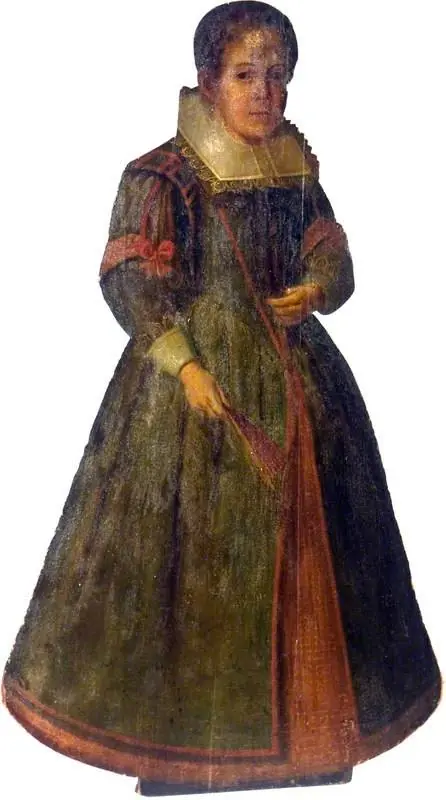
Woman with a Broom (dummy board)
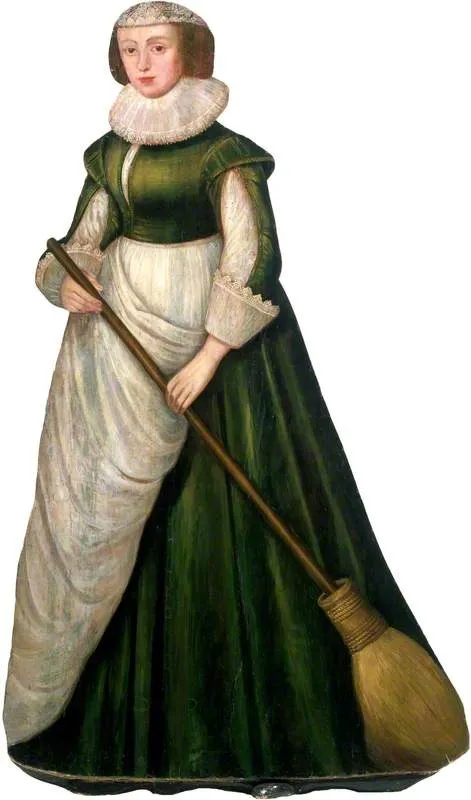
Woman with a Broom (dummy board) is an unspecified painting by the Dutch Golden Age artist Unknown. It dates from 1640 and is held in the collection of the Victoria and Albert Museum.
About this work
Overview
The figure is posed formally, with restrained posture and direct gaze, aligning with 17th-century Dutch portraiture conventions.
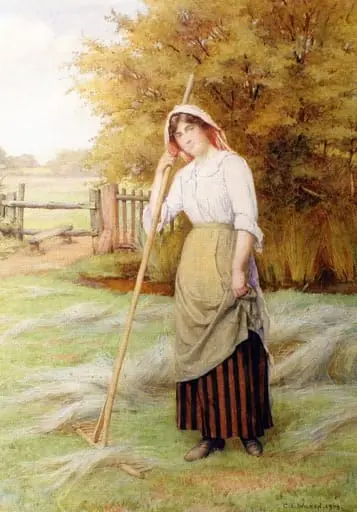
This painting presents a life-sized figure of a woman holding a broom, rendered as a dummy board—a decorative panel meant to mimic a real person standing in an architectural space. The figure is posed formally, with restrained posture and direct gaze, aligning with 17th-century Dutch portraiture conventions. The work blends domestic subject matter with the gravitas of formal portraiture, blurring boundaries between utility and art.
Subject & Meaning
The woman, dressed in a dark green gown with a white apron and cap, represents a domestic servant, yet her dignified bearing elevates her beyond mere labor. Her stillness and direct gaze invite contemplation rather than pity, suggesting an idealized respect for quiet, everyday roles. The broom, a tool of cleanliness, becomes a symbol of order and moral virtue, common themes in Dutch genre scenes of the period.
Technique & Style
The artist employs chiaroscuro to model the figure with subtle gradations of light and shadow, enhancing the three-dimensionality of the face, hands, and fabric folds. Brushwork is precise, particularly in rendering the texture of linen, wool, and the broom’s bristles. The background is muted and flat, focusing attention entirely on the figure, a hallmark of Dutch portrait panels designed for architectural integration.
History & Provenance
Created in the mid-17th century, the painting likely originated as a decorative element in a Dutch home or public building, where such dummy boards were used to enhance spatial depth or convey social values. Its survival is uncommon, as these panels were often discarded or repurposed. The work’s attribution remains tentative, with stylistic links to artists in Haarlem or Leiden.
Context
During the Dutch Golden Age, domestic labor was increasingly idealized in art, reflecting civic pride in order, thrift, and moral discipline. Dummy boards featuring servants or laborers were popular in affluent households, serving both aesthetic and didactic purposes. This work aligns with a broader trend of elevating ordinary life through careful observation and refined technique.
Legacy
Though not widely known today, this painting exemplifies how Dutch artists transformed mundane subjects into vehicles for quiet dignity. Its survival offers insight into the visual culture of domesticity and the nuanced social hierarchies embedded in everyday objects. It remains a quiet testament to the artistic value assigned to labor in early modern Dutch society.
Artist & collection

 Domestic Scene
 Giacomo and Cardinal Marco, investing Andrea, Abbot of San Zeno, with his Benefice
 The Nymph of Fontainebleau
 Portrait of a Woman
 Madonna and Child with Saints in the Enclosed Garden
 Venus and Minerva
 Family Group of Four on Sofa
 Wall painting from Room H of the Villa of P. Fannius Synistor at Boscoreale