Artwork
Kakemono
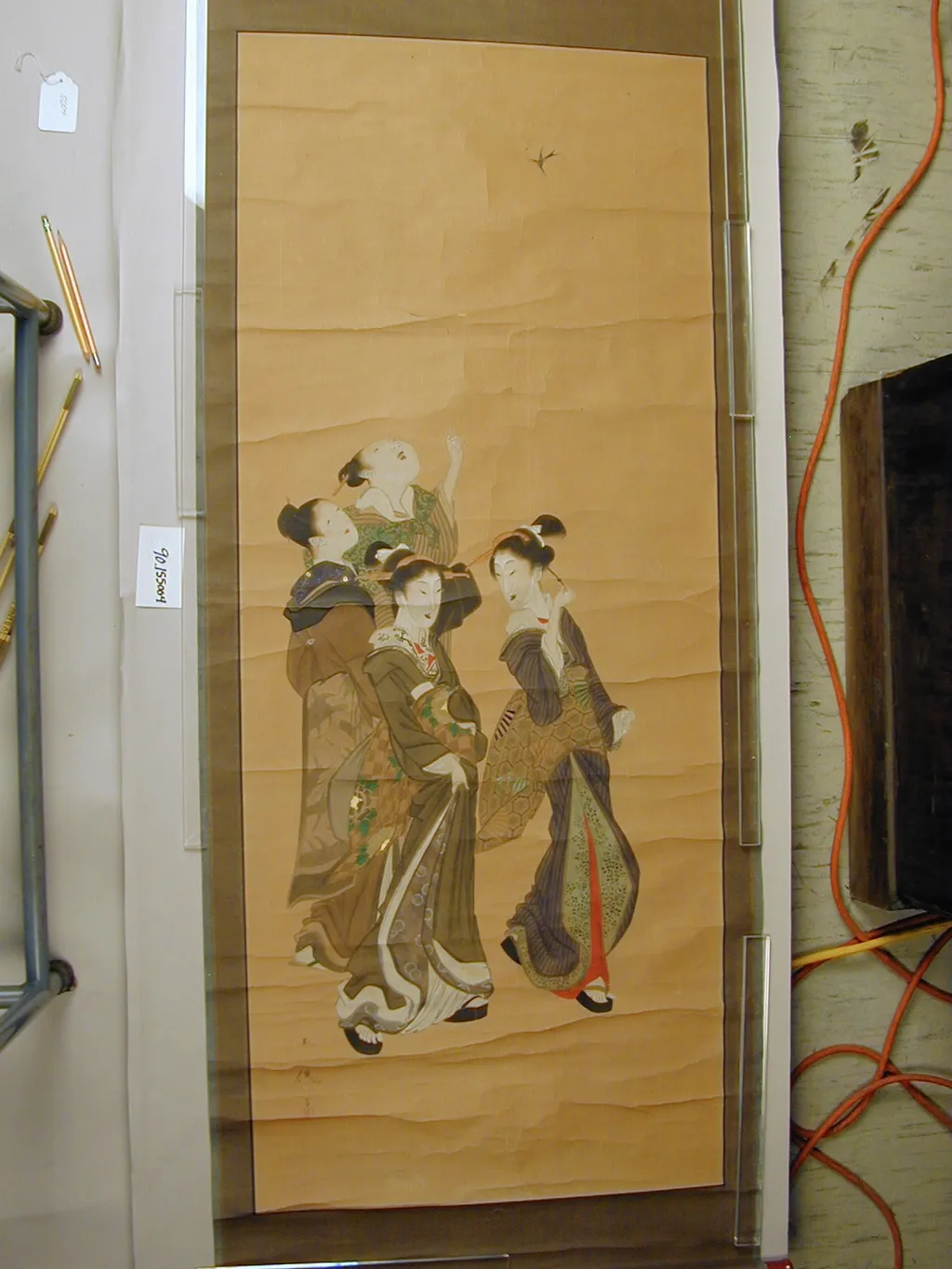
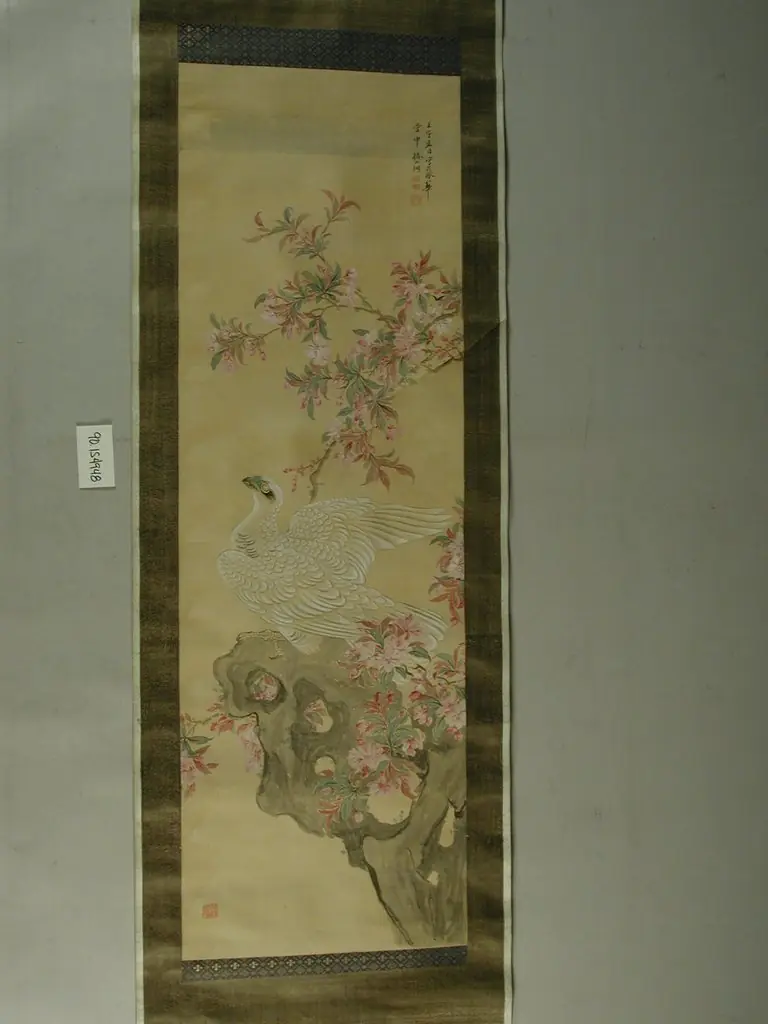
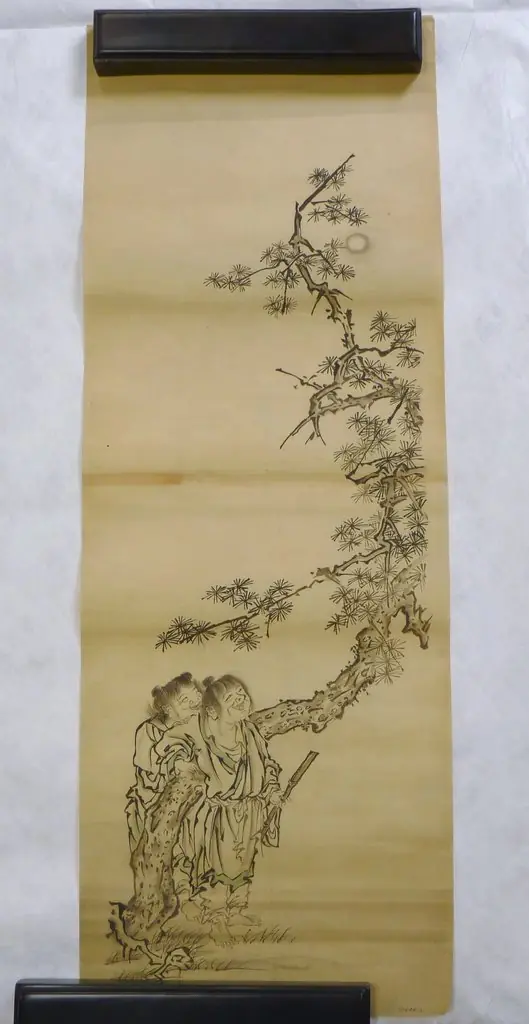
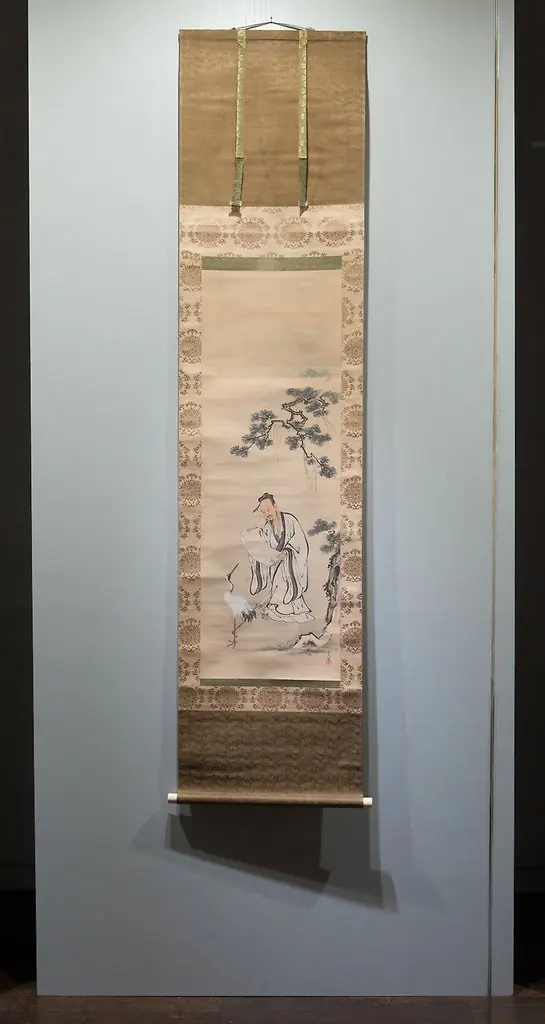
Kakemono is an unspecified painting by Unknown. It dates from 1800 and is held in the collection of the Detroit Institute of Arts.
About this work
Overview
A kakemono is a vertical scroll painting traditionally displayed in Japanese homes or tea rooms, mounted on silk or paper and hung temporarily for contemplation. This example is executed in ink and color on paper, consistent with classical Japanese scroll formats. Its format invites intimate, sequential viewing, aligning with aesthetic practices emphasizing transience and quiet observation.
Subject & Meaning
The subject depicts a solitary figure in a landscape, possibly a scholar or hermit, set against mist-shrouded mountains and sparse vegetation. The imagery evokes themes of solitude, retreat from worldly affairs, and harmony with nature—common motifs in Zen-influenced art. The minimal composition suggests inner stillness rather than narrative action.
Technique & Style
The painting employs ink wash techniques with subtle gradations, using diluted pigment to suggest depth and atmosphere. Brushwork is restrained, favoring economy of line over detail. Color is applied sparingly, primarily in muted earth tones, reinforcing the meditative tone. The composition follows asymmetrical balance, a hallmark of Japanese aesthetic principles.
History & Provenance
The scroll likely originated in the Edo period, when kakemono were widely collected by literati and temple communities. Its mounting materials and seal impressions suggest it was owned by a scholar or monk. No documented exhibition history exists prior to the 20th century, and its early ownership remains unverified.
Context
Kakemono were integral to Japanese domestic and spiritual life, often displayed in the alcove of a room during specific seasons or occasions. This piece reflects the influence of Chinese ink painting traditions adapted to Japanese sensibilities, particularly among the educated elite who valued understated expression and naturalism over grandeur.
Legacy
As a representative of Edo-period scroll painting, this work contributes to the continuity of a tradition that prioritized personal reflection over public spectacle. Though not widely known outside specialized collections, it exemplifies how Japanese artists sustained philosophical themes through restrained visual language, influencing later modernist approaches to space and suggestion.
Artist & collection

 Domestic Scene
 Giacomo and Cardinal Marco, investing Andrea, Abbot of San Zeno, with his Benefice
 The Nymph of Fontainebleau
 Portrait of a Woman
 Madonna and Child with Saints in the Enclosed Garden
 Venus and Minerva
 Family Group of Four on Sofa
 Wall painting from Room H of the Villa of P. Fannius Synistor at Boscoreale
![The Ten Kings of Purgatory: King Who Turns the Wheel [of Rebirth] of the Tenth Court, by Unknown](https://artifactworldgallery.com/img/unknown--the-ten-kings-of-purgatory-king-who-turns-the-wheel-of-rebir--23b32c0dc6c2eb18-w320.webp)