Artwork
The Ten Kings of Purgatory: King Qinguang of the First Court
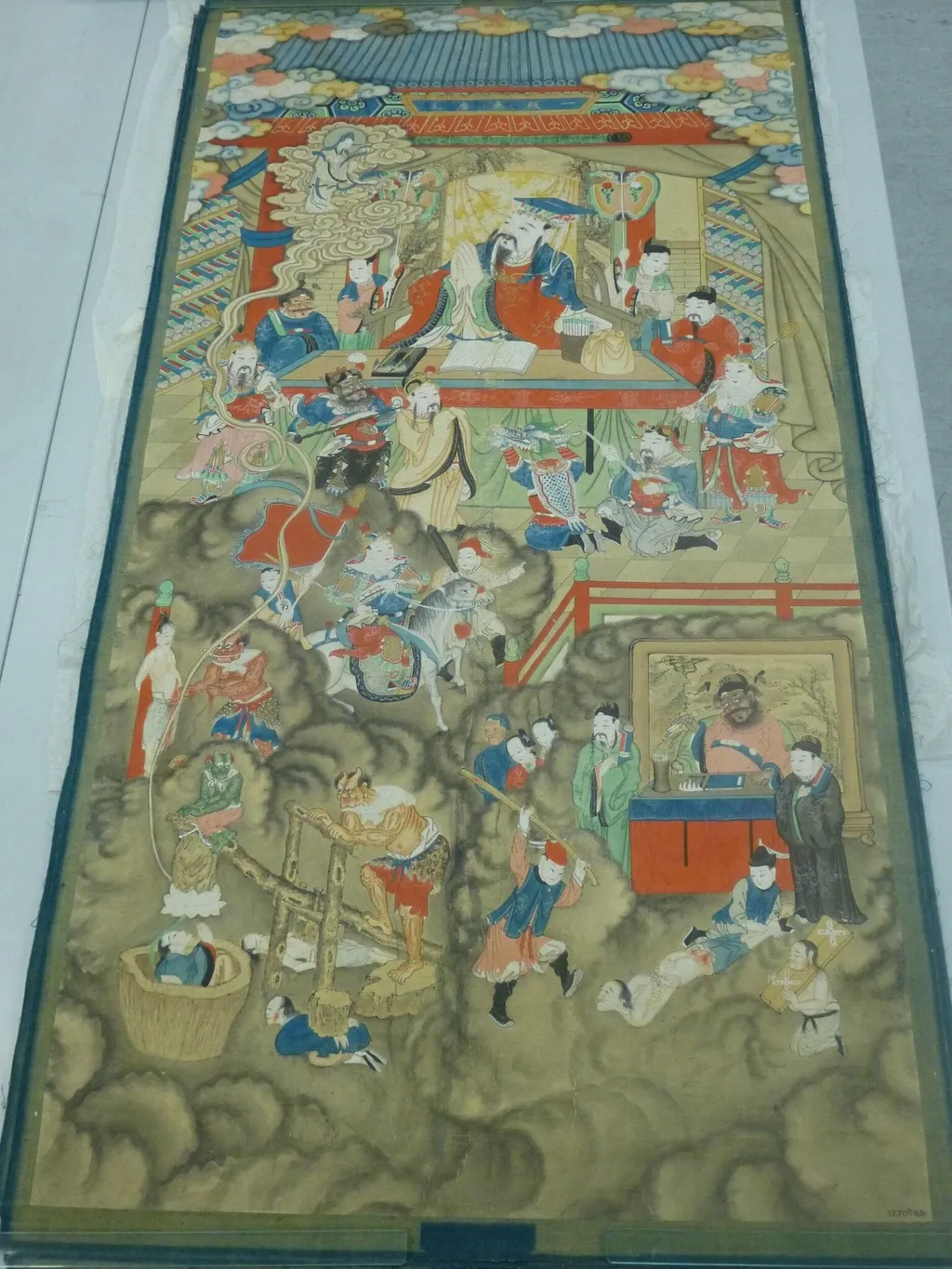
The Ten Kings of Purgatory: King Qinguang of the First Court is a paint painting by the Romanticist artist Unknown. It dates from 1800 and is held in the collection of the Victoria and Albert Museum.
About this work
Overview
This ink-and-color painting, dated to 1800, depicts a scene from Buddhist eschatology, specifically the first of ten judicial courts in the afterlife. Created by an anonymous artist, it was acquired by the museum in 1869 through a donation by Miss Fortescue. Provenance research in 2022 confirmed its entry into the collection, though the artist’s identity remains undocumented.
Subject & Meaning
Below, a tumultuous crowd of the damned, monstrous beings, and tormented souls reflects the consequences of moral transgressions.
The composition illustrates King Qinguang, ruler of the first purgatorial court, presiding over the judgment of souls. Above, serene figures in robes—likely celestial judges or scribes—hold scrolls recording deeds. Below, a tumultuous crowd of the damned, monstrous beings, and tormented souls reflects the consequences of moral transgressions. The division between calm authority and chaotic suffering conveys Buddhist teachings on karma and moral accountability.
Technique & Style
The artist employs vivid pigments—crimson, cobalt, and emerald—against a muted, smoky green ground to heighten visual contrast. Figures in the upper register are rendered with restrained lines and stillness, while those below are rendered with agitated brushwork and exaggerated gestures. This deliberate stylistic dichotomy separates the divine realm from the infernal, using color and movement to guide the viewer’s moral interpretation.
History & Provenance
The painting entered the museum’s collection in 1869 following a donation by Miss Fortescue. Its origins prior to donation are unrecorded. A 2022 provenance review, conducted as part of the Asia Department’s archival initiative, verified its acquisition date and donor details, though no earlier ownership history has been traced. The work’s journey from its place of creation to the museum remains partially obscure.
Context
This image belongs to a larger set of ten paintings illustrating the Ten Kings of Hell, a tradition rooted in medieval Chinese Buddhist texts like the Sutra of the Ten Kings. Such works were used in funerary rituals to guide the deceased through posthumous judgment. The visual language reflects syncretic influences from Daoist cosmology and folk beliefs, blending doctrinal themes with popular imagery to reinforce ethical conduct in life.
Legacy
Though not widely exhibited, the painting contributes to scholarly understanding of late Qing religious art and its role in mortuary practice. Its preservation offers insight into how visual narratives were used to convey complex spiritual concepts to lay audiences. Similar works survive in temple and private collections, but few have been systematically studied in Western institutions.
Artist & collection

 Domestic Scene
 Giacomo and Cardinal Marco, investing Andrea, Abbot of San Zeno, with his Benefice
 The Nymph of Fontainebleau
 Portrait of a Woman
 Madonna and Child with Saints in the Enclosed Garden
 Venus and Minerva
 Family Group of Four on Sofa
 Wall painting from Room H of the Villa of P. Fannius Synistor at Boscoreale
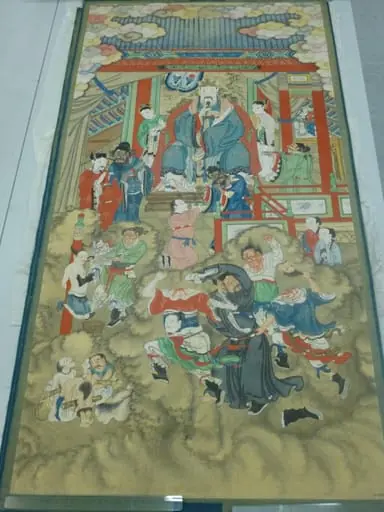 The Ten Kings of Purgatory: King of the River of Suffering of the Second Court
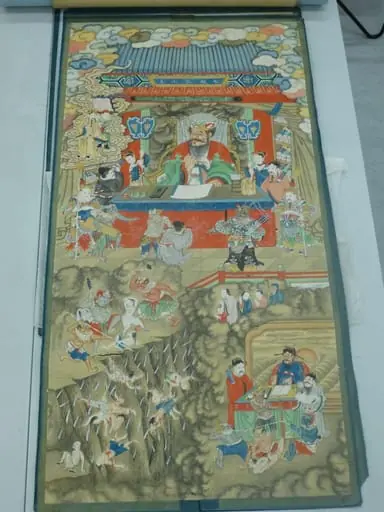 The Ten Kings of Purgatory: King of Mount Tai of the Seventh Court
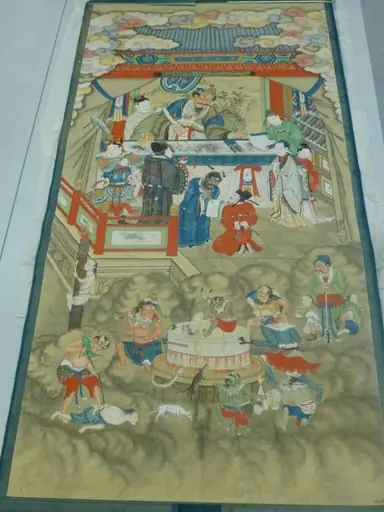 The Ten Kings of Purgatory: King of the Five Offices of the Fourth Court
![The Ten Kings of Purgatory: King Who Turns the Wheel [of Rebirth] of the Tenth Court, by Unknown](https://artifactworldgallery.com/img/unknown--the-ten-kings-of-purgatory-king-who-turns-the-wheel-of-rebir--23b32c0dc6c2eb18-w320.webp) The Ten Kings of Purgatory: King Who Turns the Wheel [of Rebirth] of the Tenth Court
The Ten Kings of Purgatory: King Who Turns the Wheel [of Rebirth] of the Tenth Court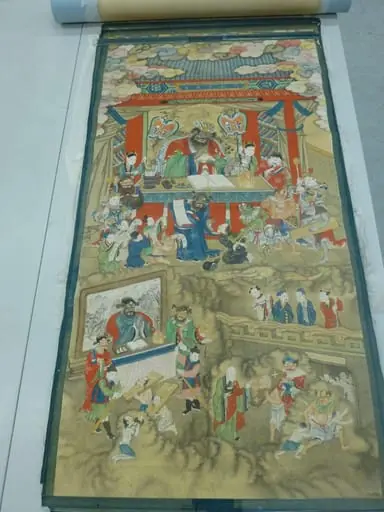 The Ten Kings of Purgatory: King of Transformations of the Sixth Court
 The Ten Kings of Purgatory: King Songdi of the Third Court