Artwork
The Ten Kings of Purgatory: King Who Turns the Wheel [of Rebirth] of the Tenth Court
![The Ten Kings of Purgatory: King Who Turns the Wheel [of Rebirth] of the Tenth Court, by Unknown, paint, 1800](https://artifactworldgallery.com/img/unknown--the-ten-kings-of-purgatory-king-who-turns-the-wheel-of-rebir--23b32c0dc6c2eb18-w1024.webp)
The Ten Kings of Purgatory: King Who Turns the Wheel [of Rebirth] of the Tenth Court is a paint painting by the Mughal Painting artist Unknown. It dates from 1800 and is held in the collection of the Victoria and Albert Museum. This hanging scroll is one of ten depicting the Ten Kings of Purgatory in Buddhist cosmology, created in 1800 by an anonymous artist.
About this work
Overview
This hanging scroll is one of ten depicting the Ten Kings of Purgatory in Buddhist cosmology, created in 1800 by an anonymous artist.
This hanging scroll is one of ten depicting the Ten Kings of Purgatory in Buddhist cosmology, created in 1800 by an anonymous artist. It illustrates the ruler of the Tenth Court, who oversees the cycle of rebirth. The work entered the collection in 1869 via a gift from Miss Fortescue. Rendered in mineral pigments on silk, it follows the traditional format of Chinese religious scroll paintings, intended for ritual use and public display during memorial ceremonies.
Subject & Meaning
The scene centers on the Tenth King, seated beneath a red canopy, holding a scroll that records the deeds of the dead. Below him, souls are shown in varied states—kneeling, fleeing, or struggling—reflecting their karmic outcomes. A floating white ox symbolizes the force of rebirth, guiding souls toward their next existence. The composition visualizes Buddhist teachings on moral accountability and the inevitability of reincarnation after death.
Technique & Style
The painting employs flat, unmodulated colors and sharp outlines typical of late Qing dynasty religious art. Figures are arranged in hierarchical layers, with the king elevated above the chaotic lower realm. There is no perspective or shading; spatial depth is suggested by overlapping forms. The energetic arrangement of bodies and the vivid reds, blues, and whites enhance the narrative urgency without naturalistic detail.
History & Provenance
The scroll was produced in 1800, likely in a regional workshop specializing in Buddhist funerary art. It remained in private or temple use until 1869, when it was donated by Miss Fortescue to the institution. No documentation survives regarding its earlier ownership or geographic origin, though stylistic elements suggest a southern Chinese provenance, possibly linked to Daoist-Buddhist syncretic traditions.
Context
The Ten Kings scrolls emerged from Chinese Buddhist funerary practices, blending indigenous beliefs with Indian Buddhist concepts of judgment after death. These images were used in rituals to guide the deceased through the afterlife’s ten courts. While Western Romanticism emphasized individual emotion and sublime drama, this work’s intensity stems from doctrinal instruction, not personal expression, reflecting a distinct East Asian devotional tradition.
Legacy
As part of a complete set, this scroll contributes to the understanding of how Buddhist cosmology was visually codified in East Asia. Though largely overlooked in Western art histories, such works remain vital to studies of religious material culture. Their continued preservation highlights the enduring role of visual narrative in shaping beliefs about death, justice, and moral consequence across centuries.
Artist & collection

 Domestic Scene
 Giacomo and Cardinal Marco, investing Andrea, Abbot of San Zeno, with his Benefice
 The Nymph of Fontainebleau
 Portrait of a Woman
 Madonna and Child with Saints in the Enclosed Garden
 Venus and Minerva
 Family Group of Four on Sofa
 Wall painting from Room H of the Villa of P. Fannius Synistor at Boscoreale
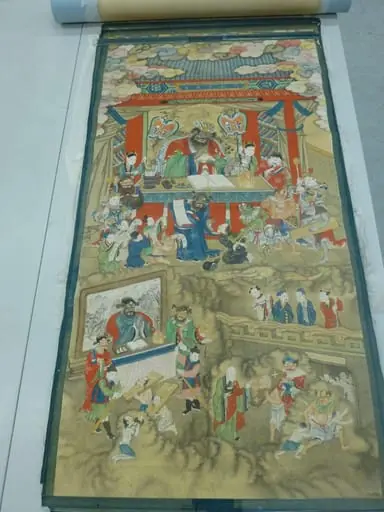 The Ten Kings of Purgatory: King of Transformations of the Sixth Court
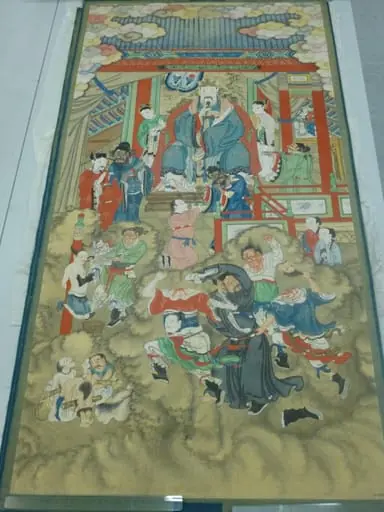 The Ten Kings of Purgatory: King of the River of Suffering of the Second Court
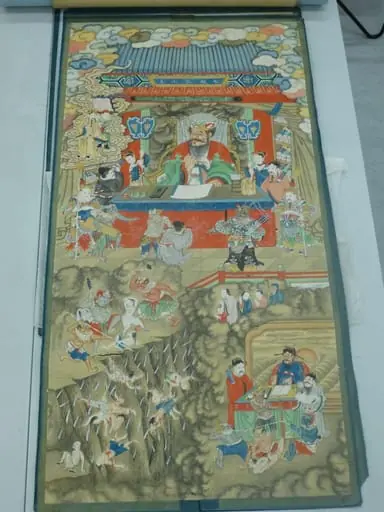 The Ten Kings of Purgatory: King of Mount Tai of the Seventh Court
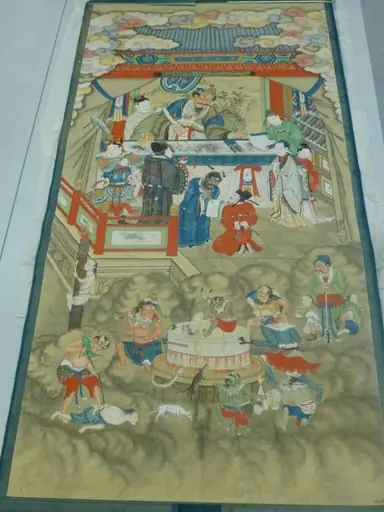 The Ten Kings of Purgatory: King of the Five Offices of the Fourth Court
 The Ten Kings of Purgatory: King Songdi of the Third Court
 The Ten Kings of Purgatory: King Qinguang of the First Court
 The Ten Kings of Purgatory: King Yama rājā of the Fifth Court