Artwork
Ecce Homo
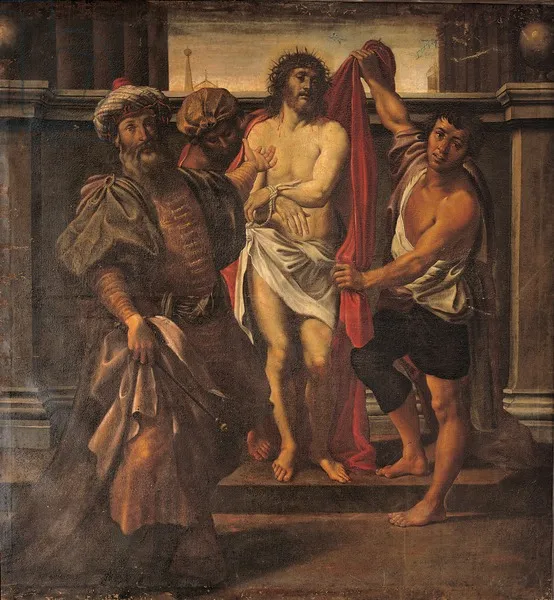
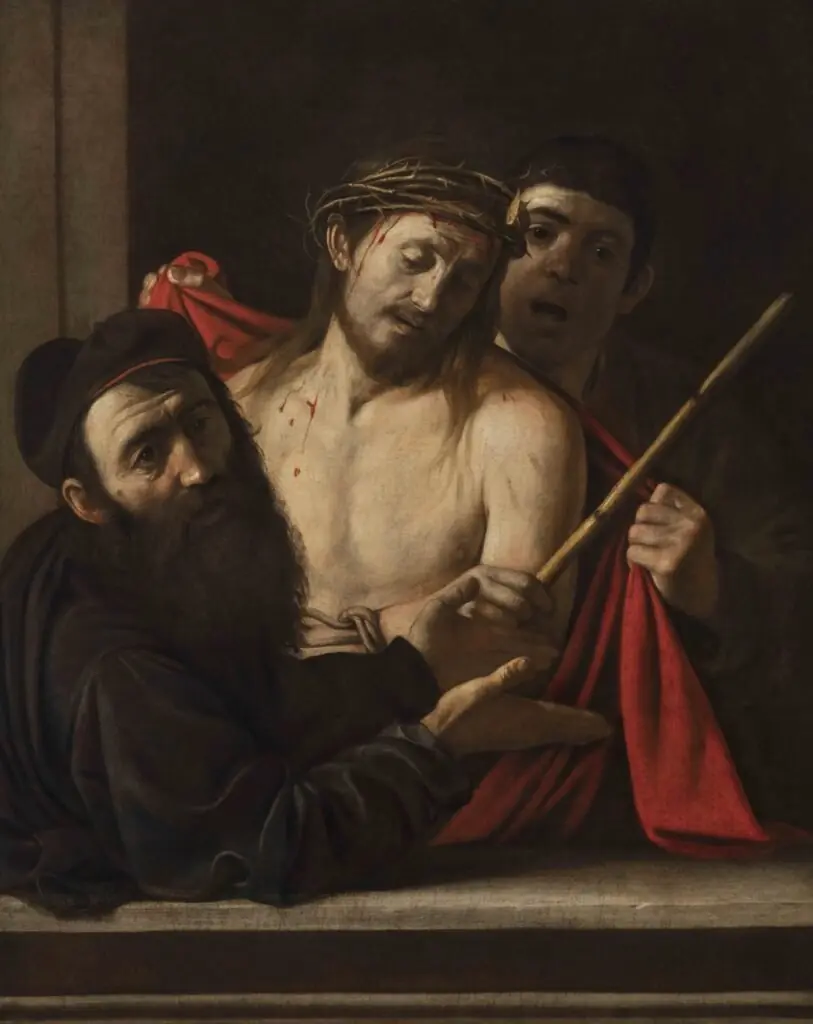
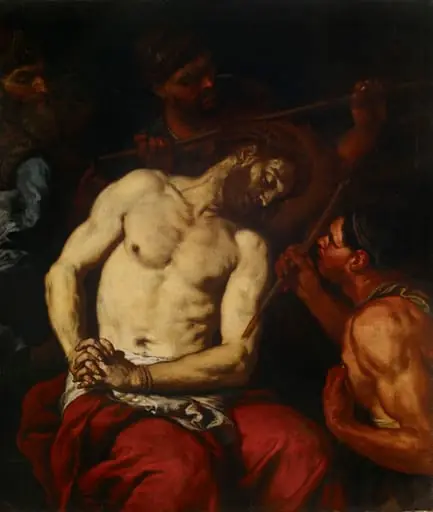
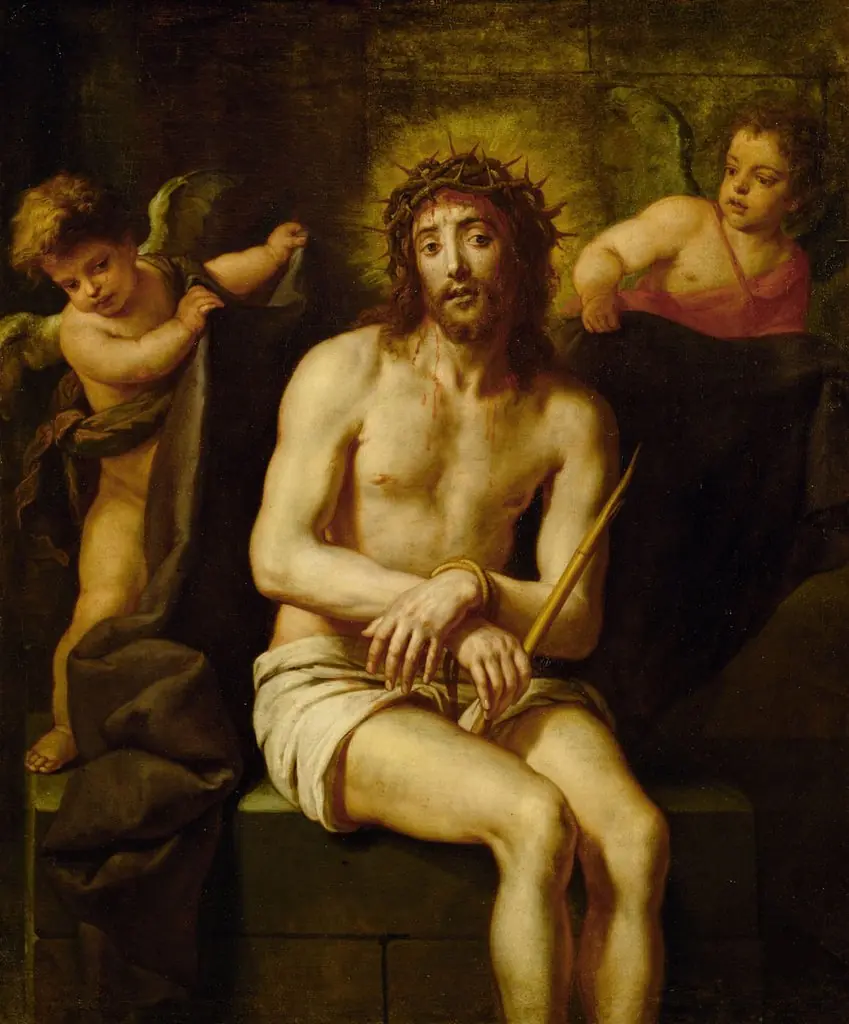
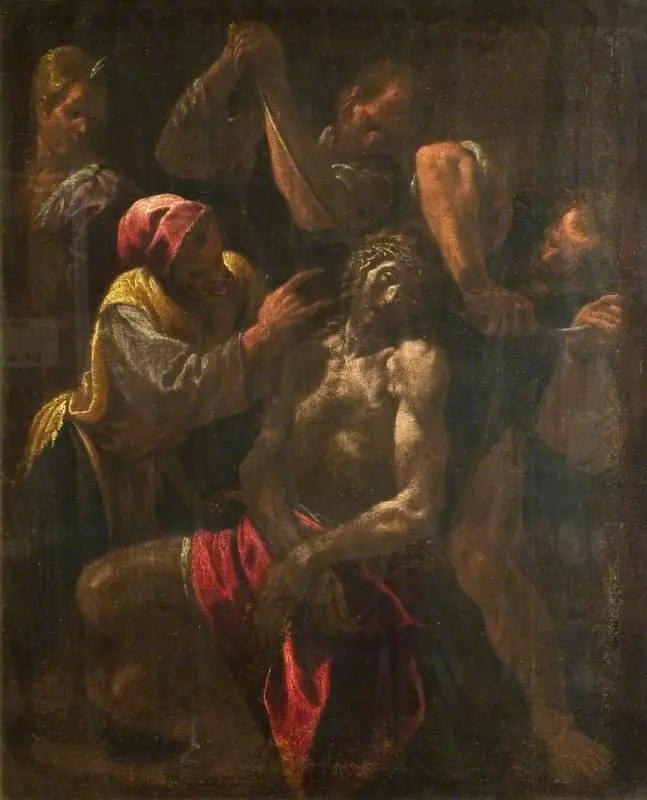
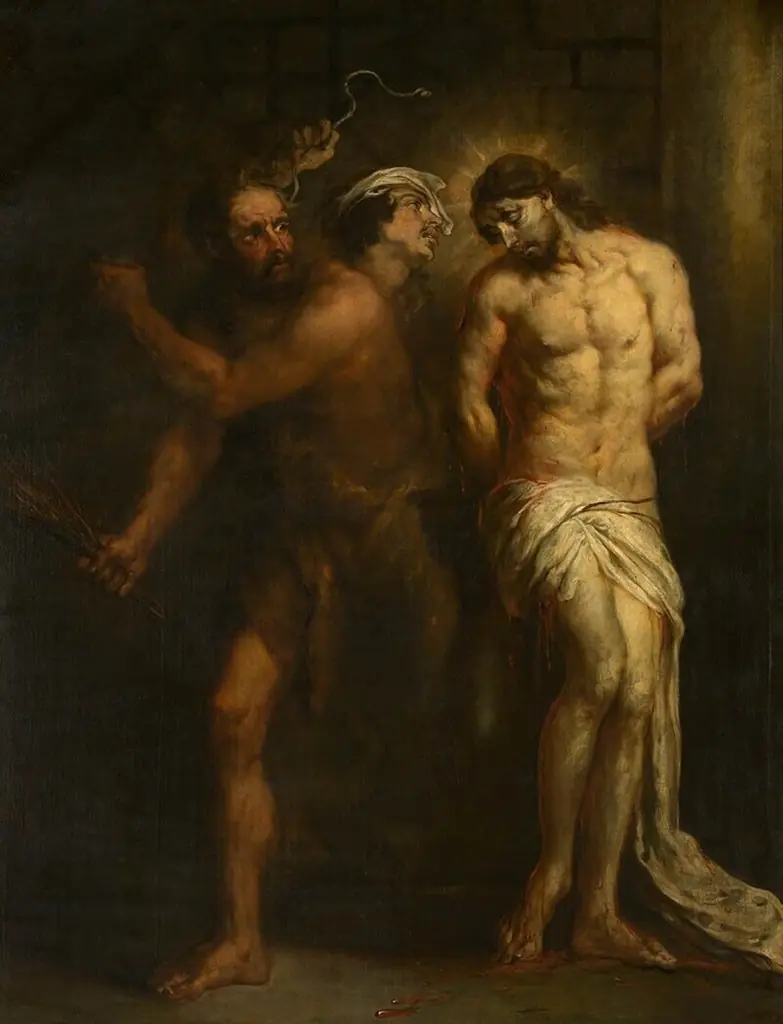
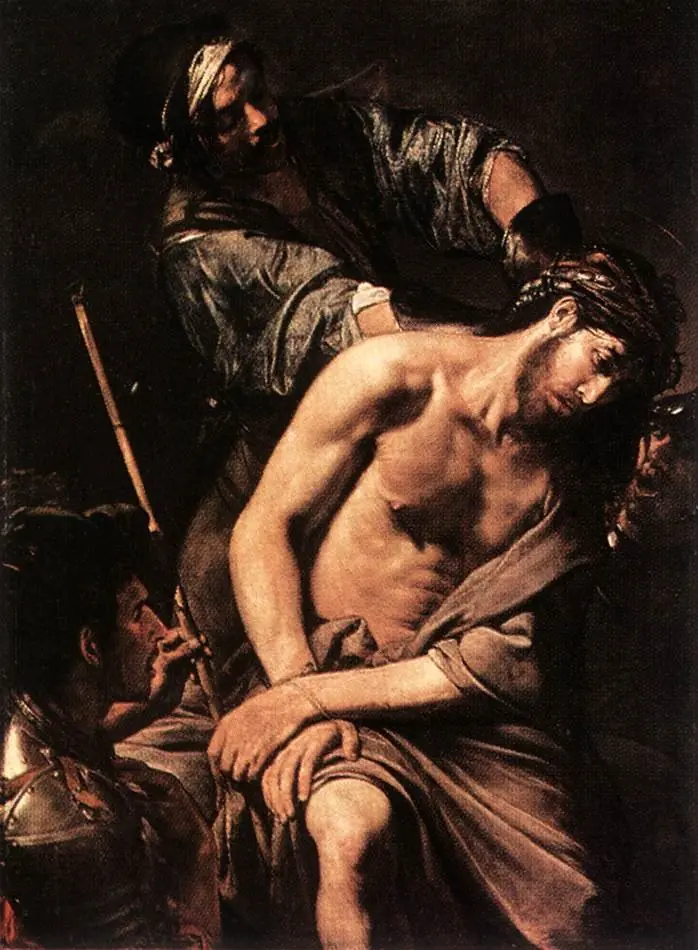
Ecce Homo is an oil painting by the Mannerist artist Unknown. It dates from 1550 and is held in the collection of the Pinacoteca di Brera. This oil painting depicts a solitary male figure standing on a raised platform, bound and crowned with thorns.
About this work
Overview
Chiaroscuro modeling enhances the three-dimensionality of the figure, guiding focus to his posture and expression without overt drama.
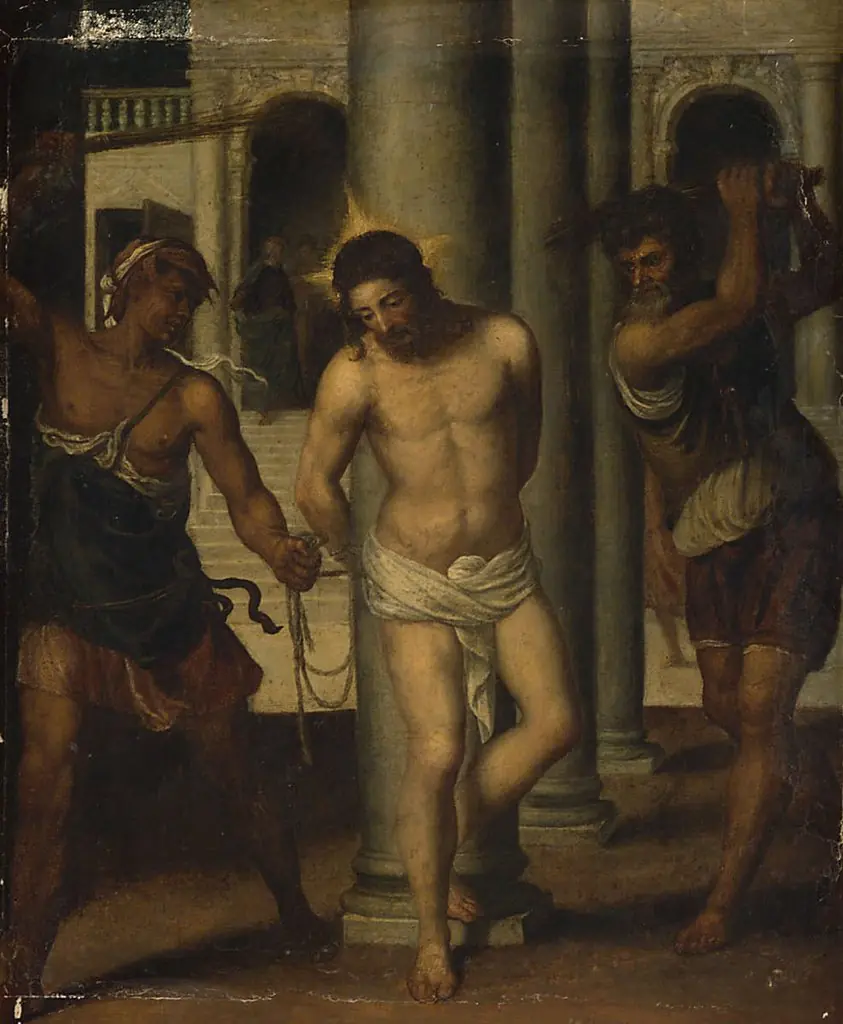
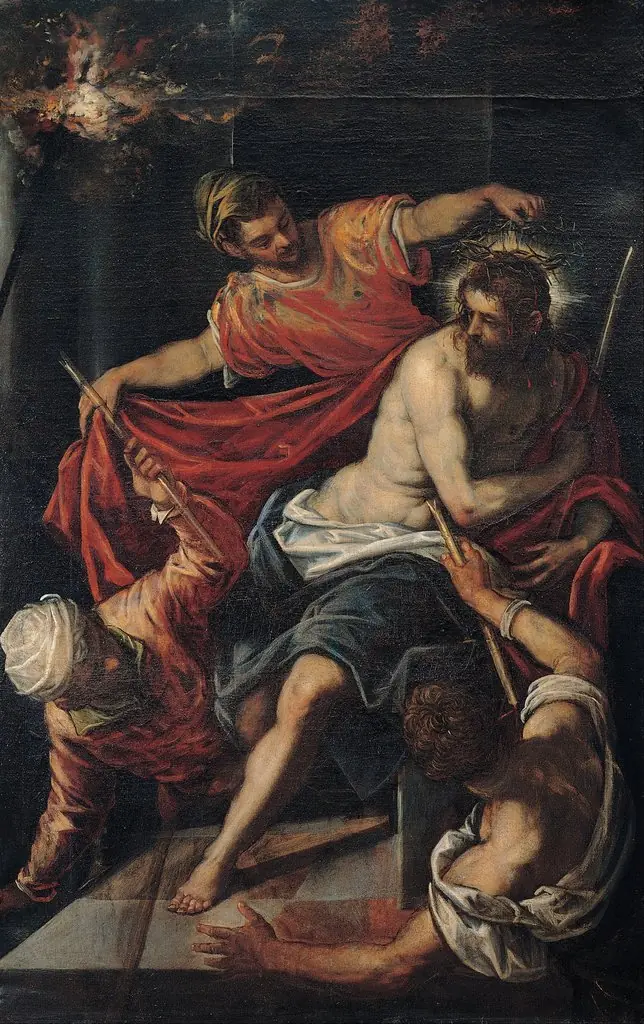
This oil painting depicts a solitary male figure standing on a raised platform, bound and crowned with thorns. The composition centers on his stillness amid two attendants holding cloths, set against a backdrop of classical columns. Muted browns and grays dominate the palette, reinforcing a quiet gravity. Chiaroscuro modeling enhances the three-dimensionality of the figure, guiding focus to his posture and expression without overt drama.
Subject & Meaning
The figure is identified as Christ prior to his crucifixion, representing the moment of judgment described in the Gospel of John. The crown of thorns and bound hands signify suffering and submission, while the cloths held by the figures may allude to ritual preparation or mockery. The scene avoids overt violence, instead emphasizing contemplation and resignation, inviting reflection on human endurance and divine sacrifice.
Technique & Style
The artist employs subtle chiaroscuro to model the figure’s form, creating volume through soft transitions between light and shadow. The palette is restrained, avoiding vivid hues in favor of earth tones that unify the composition. Brushwork is controlled and precise, with attention to the texture of fabric and the roughness of the thorn crown. The background’s architectural elements are rendered with linear clarity, grounding the scene in a tangible space.
History & Provenance
The painting’s origin remains undocumented in public records, with no verified attribution or early ownership history. It has not appeared in major auction catalogs or institutional collections prior to recent scholarly interest. Its stylistic qualities suggest a 17th-century European workshop influenced by Caravaggisti traditions, though no definitive maker has been established.
Context
Created during a period when religious imagery was widely produced for private devotion, the work reflects a trend toward intimate, psychologically grounded depictions of biblical scenes. Unlike grand altarpieces, this painting emphasizes quiet solemnity, aligning with Counter-Reformation ideals that encouraged personal meditation on Christ’s suffering through accessible, emotionally restrained visuals.
Legacy
Though not widely exhibited or reproduced, the painting contributes to a broader corpus of early modern devotional art that prioritized emotional restraint over theatricality. Its understated composition and focus on the human dimension of sacred narrative have influenced later artists seeking to convey spiritual gravity without spectacle, preserving a quiet lineage within religious painting traditions.
Artist & collection

 Domestic Scene
 Giacomo and Cardinal Marco, investing Andrea, Abbot of San Zeno, with his Benefice
 The Nymph of Fontainebleau
 Portrait of a Woman
 Madonna and Child with Saints in the Enclosed Garden
 Venus and Minerva
 Family Group of Four on Sofa
 Wall painting from Room H of the Villa of P. Fannius Synistor at Boscoreale