Artwork
Wild Flowers and Black Hare
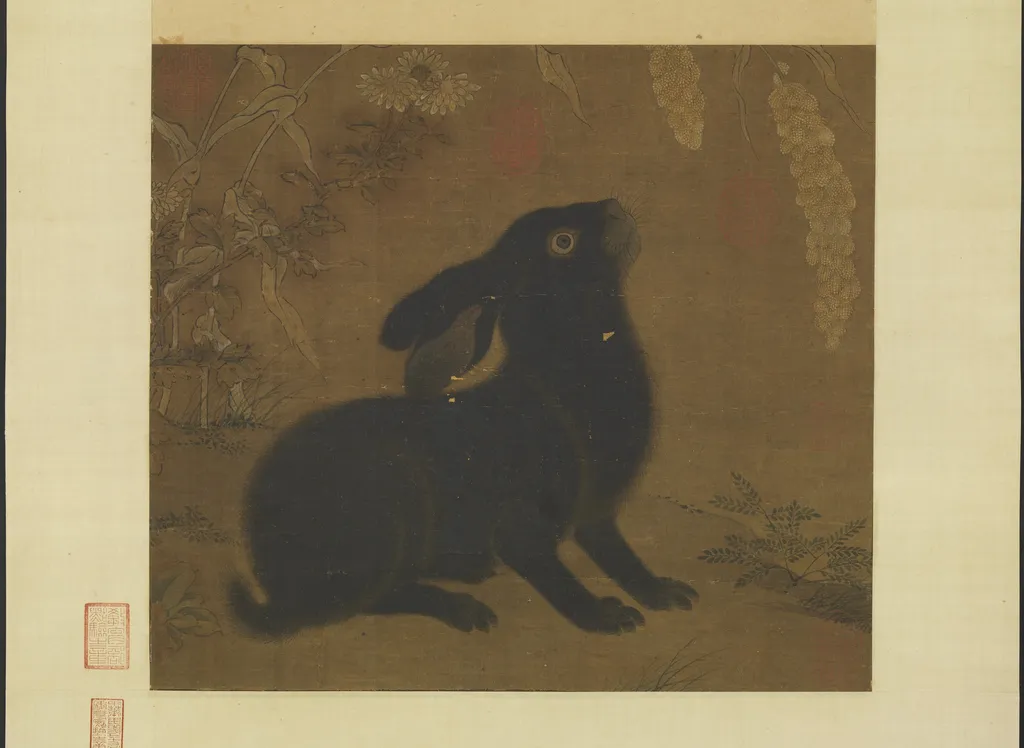
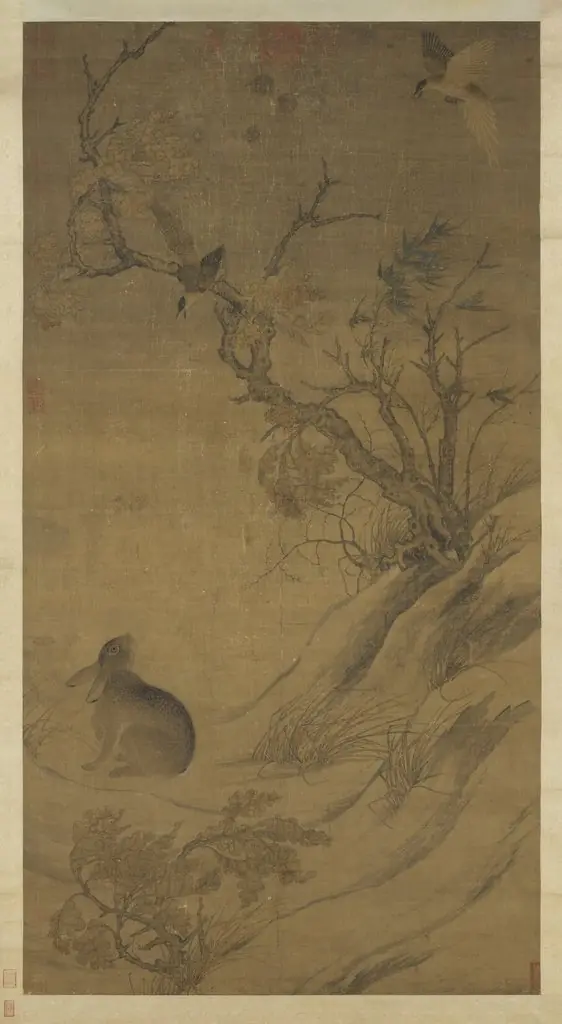
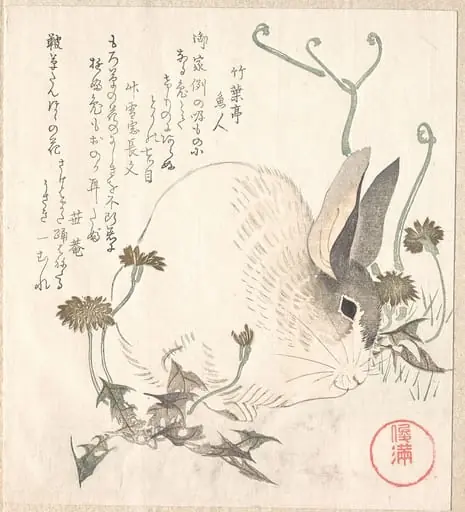
Wild Flowers and Black Hare is an unspecified painting by the Northern Renaissance artist Unknown. It dates from 1500 and is held in the collection of the National Palace Museum. This painting presents a solitary black hare amid a quiet arrangement of wild flora.
About this work
Overview
This painting presents a solitary black hare amid a quiet arrangement of wild flora. The animal is centrally placed, oriented to the right but glancing toward the viewer, creating a subtle sense of engagement. The background consists of muted browns and beiges, with no clear horizon or spatial cues, anchoring the scene in a neutral, intimate space that emphasizes stillness and observation.
Subject & Meaning
The black hare, often associated with solitude or mystery in folklore, is rendered without symbolic embellishment. Its presence, calm and alert, invites contemplation rather than narrative. The surrounding flowers and foliage are not idealized but observed with quiet precision, suggesting an interest in the natural world as it exists—unadorned, unembellished, and quietly present.
Technique & Style
The artist employs a restrained palette of earth tones to model form and texture, using subtle gradations to suggest the softness of fur and the dryness of dried petals. Brushwork is deliberate but unobtrusive, avoiding dramatic contrast or flourish. The composition is deliberately sparse, with the hare’s gaze directing attention inward, reinforcing a meditative tone through minimalism.
History & Provenance
The painting’s origin and early ownership are undocumented in available records. It appears to have been created in the late 19th or early 20th century, likely by an artist working outside mainstream academic traditions. Its survival suggests it was privately held, possibly by a collector drawn to quiet naturalism rather than grand historical or mythological themes.
Context
This work aligns with a broader trend among regional painters who turned away from urban or heroic subjects to focus on rural solitude and overlooked wildlife. It reflects a growing interest in intimate natural observation during a time when industrialization was reshaping the landscape, offering a quiet counterpoint to rapid societal change.
Legacy
Though not widely exhibited or reproduced, the painting endures as an example of understated naturalism. Its influence is seen in later artists who favored quiet, unembellished depictions of wildlife, valuing presence over spectacle. It remains a quiet testament to the dignity of the ordinary in nature.
Artist & collection

 Domestic Scene
 Giacomo and Cardinal Marco, investing Andrea, Abbot of San Zeno, with his Benefice
 The Nymph of Fontainebleau
 Portrait of a Woman
 Madonna and Child with Saints in the Enclosed Garden
 Venus and Minerva
 Family Group of Four on Sofa
 Wall painting from Room H of the Villa of P. Fannius Synistor at Boscoreale