Artwork
猫図|Cat Seen from Behind
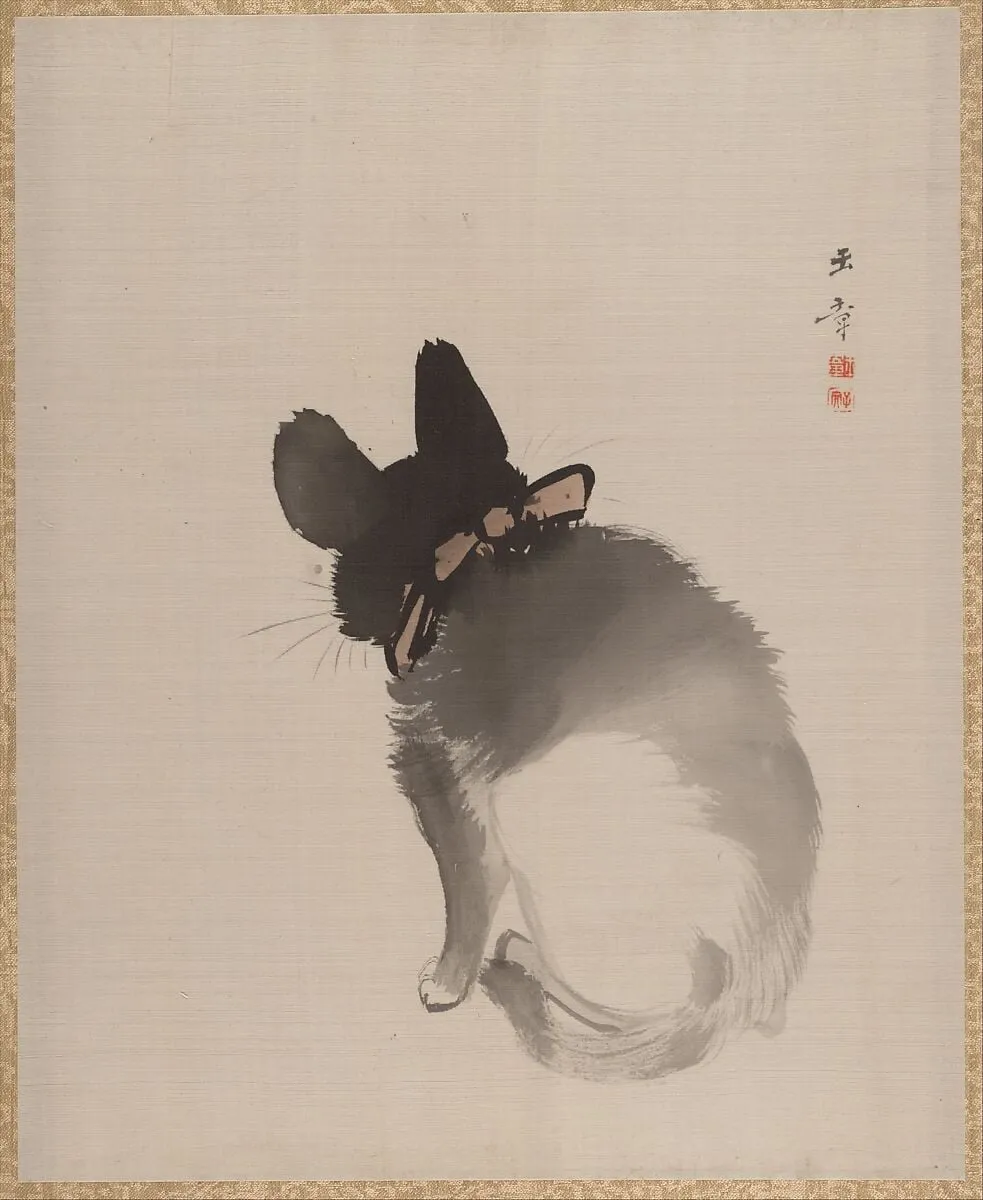
猫図|Cat Seen from Behind is an ink painting by the Impressionist artist Kawabata Gyokushō. It dates from 1890 and is held in the collection of the Metropolitan Museum of Art.
About this work
Overview
Created around 1890, this ink and color work on silk by Kawabata Gyokushō presents a solitary cat viewed from behind. Rendered on an album leaf, the composition isolates the animal against an empty space, emphasizing its form and the quiet intimacy of the scene. The piece belongs to the broader tradition of Japanese animal studies that flourished in the late nineteenth century.
Subject & Meaning
The painting captures a domestic cat seated with its tail wrapped around its paws, its back turned toward the viewer. By omitting any surrounding décor, the artist draws attention to the animal’s posture and the subtle suggestion of warmth, evoking a moment of calm observation common in everyday Japanese households of the era.
Technique & Style
Gyokushō employs delicate ink lines combined with pale color washes on silk, allowing soft, fluid strokes to suggest the texture of the cat’s fur. The use of silk as a support contributes a luminous quality, while the restrained palette and minimal background reflect the aesthetic of simplicity and restraint characteristic of Meiji‑period painting.
History & Provenance
The work is an example of Gyokushō’s later output, produced during a period when Japanese artists increasingly explored genre subjects. It remains documented as part of a private collection of album leaves, and its attribution to the artist is supported by stylistic analysis and the dating of similar works from the 1890s.
Artist & collection