Artwork
The sentinel in the employ of the Shah of Tabaristan prepares to sacrifice his son to the ghost of the Shah’s soul, from a Tuti-nama (Tales of a Parrot): Second Night
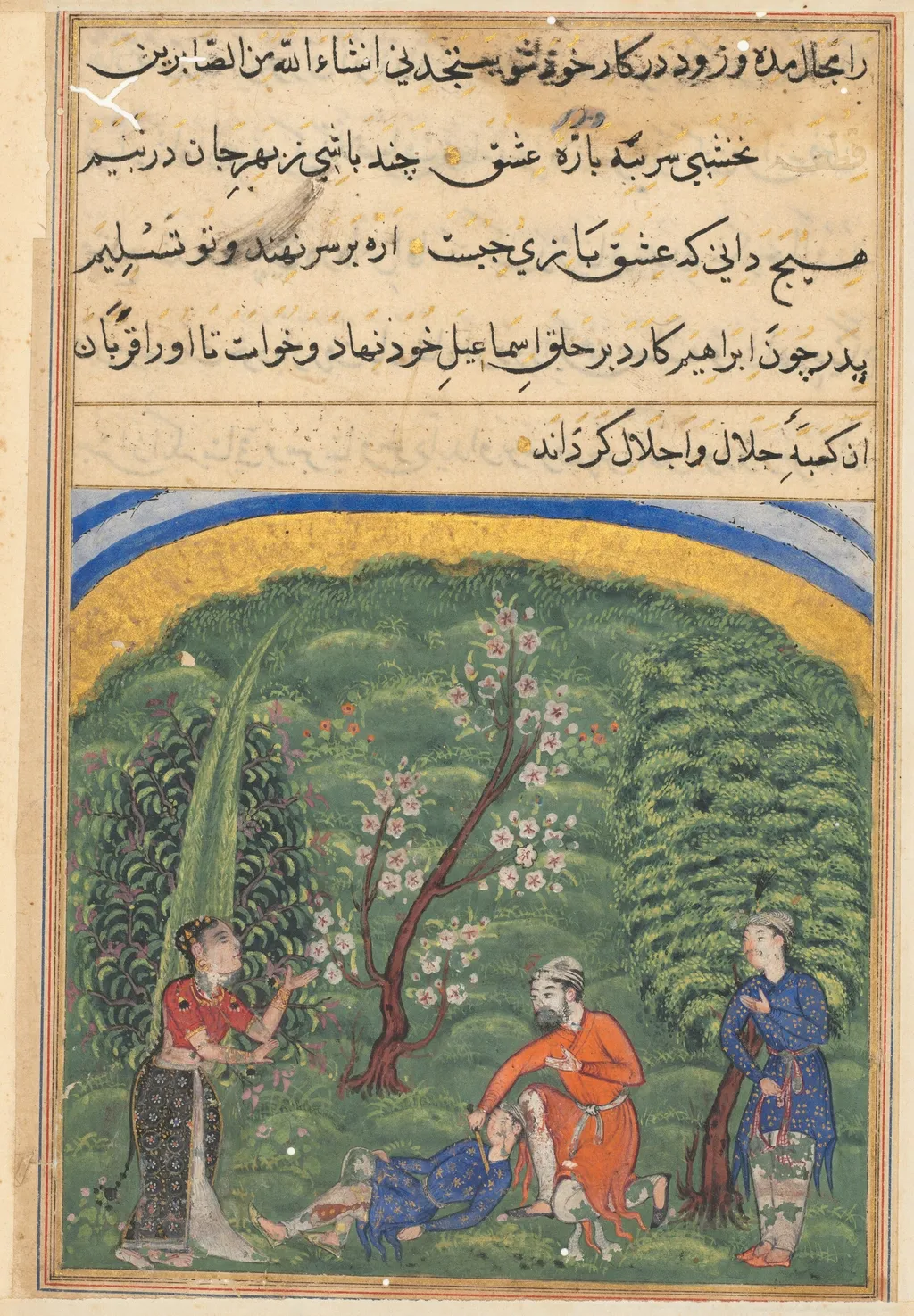
The sentinel in the employ of the Shah of Tabaristan prepares to sacrifice his son to the ghost of the Shah’s soul, from a Tuti-nama (Tales of a Parrot): Second Night is an unspecified painting. It dates from 1560 and is held in the collection of the Cleveland Museum of Art.
About this work
Overview
The work, titled *The sentinel in the employ of the Shah of Tabaristan prepares to sacrifice his son to the ghost of the Shah’s soul*, depicts a dramatic moment from the second night of the Persian illustrated manuscript *Tuti‑nama* (Tales of a Parrot). Executed as a miniature painting, it presents a forest clearing populated by four adult figures and a young boy, arranged to emphasize a central, kneeling sentinel holding the child.
Subject & Meaning
The scene illustrates a ritual sacrifice ordered by a royal sentinel, who is about to offer his son to the lingering spirit of the Shah. The surrounding men watch in solemn anticipation, underscoring themes of loyalty, duty, and the supernatural that pervade the narrative of the *Tuti‑nama*.
Technique & Style
Rendered in the traditional Persian miniature manner, the painting employs delicate brushwork and a restrained palette of earth tones and muted greens to convey the forest setting. Linear perspective is suggested through overlapping foliage, while the composition draws the eye to the kneeling figure, creating depth and a sense of tension.
Context
The *Tuti‑nama* is a 16th‑century illustrated manuscript that blends Persian courtly literature with moral allegory. This particular illustration belongs to the second night of the tale, a segment that explores the interplay between royal authority and the spiritual realm, reflecting the cultural values of the Safavid period.
Artist & collection

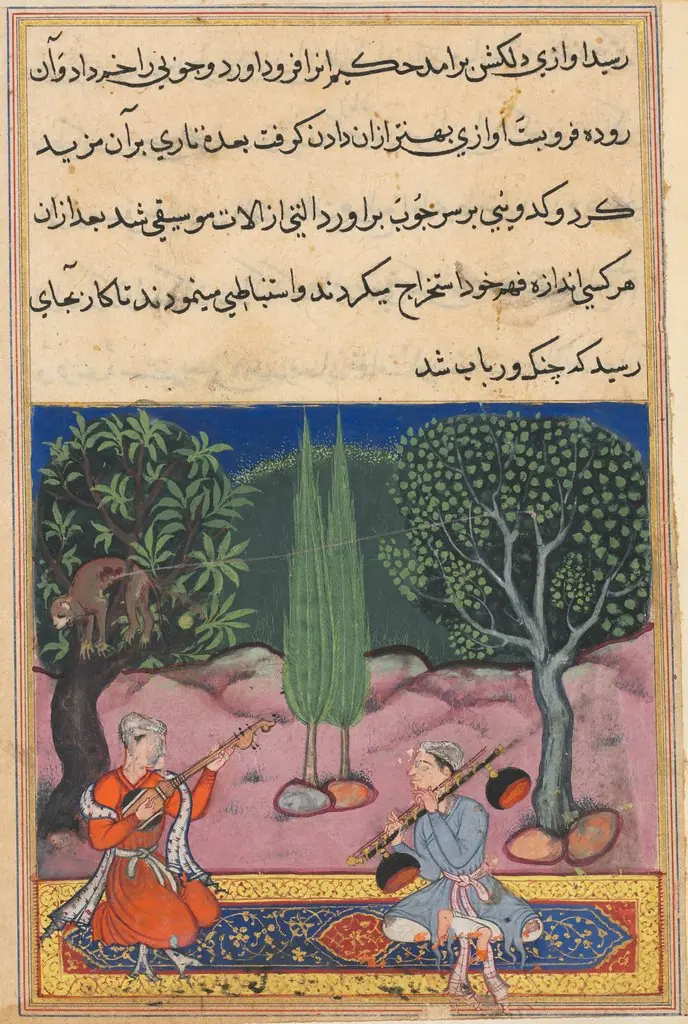 The invention of musical instruments from the intestines of a monkey, from a Tuti-nama (Tales of a Parrot): Fourteenth Night
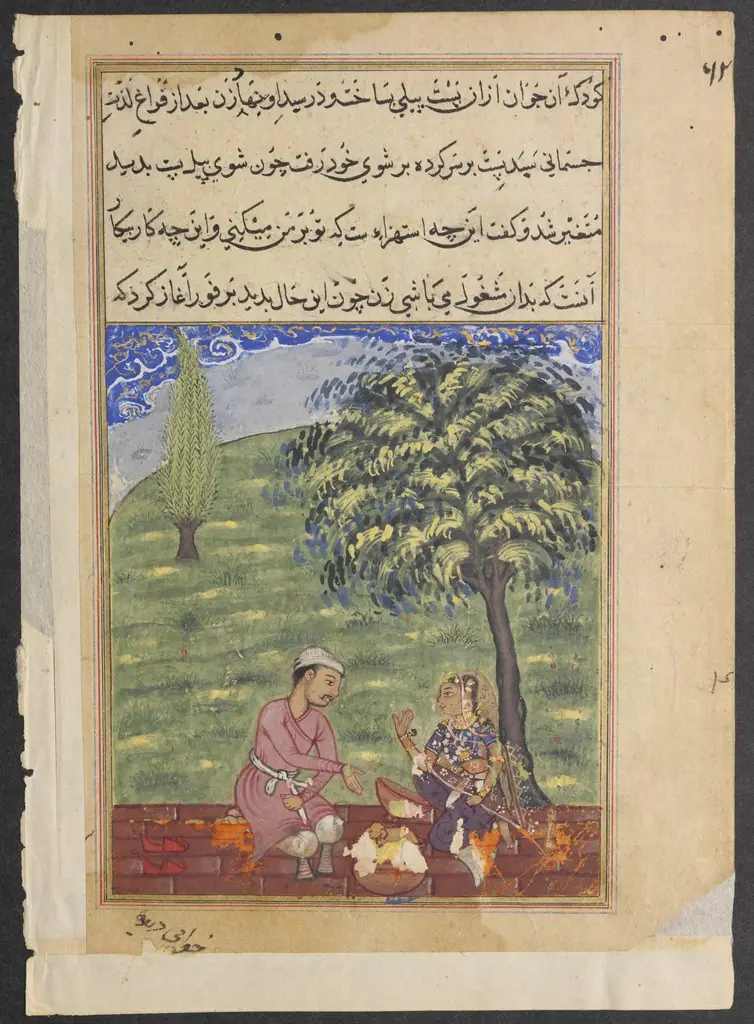 The unfaithful wife explaining away the presence of the dough elephant, from a Tuti-nama (Tales of a Parrot): Eighth Night
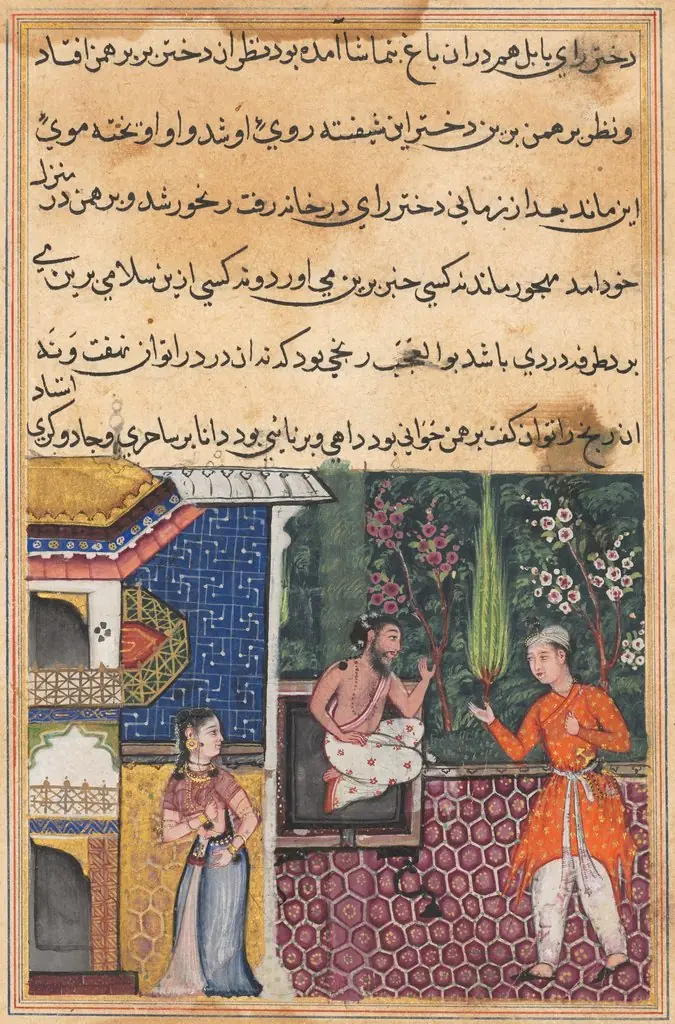 The Brahman gives an account of his falling in love with the king of Babylon’s daughter to his friend, the magician, from a Tuti-nama (Tales of a Parrot): Thirty-fifth Night
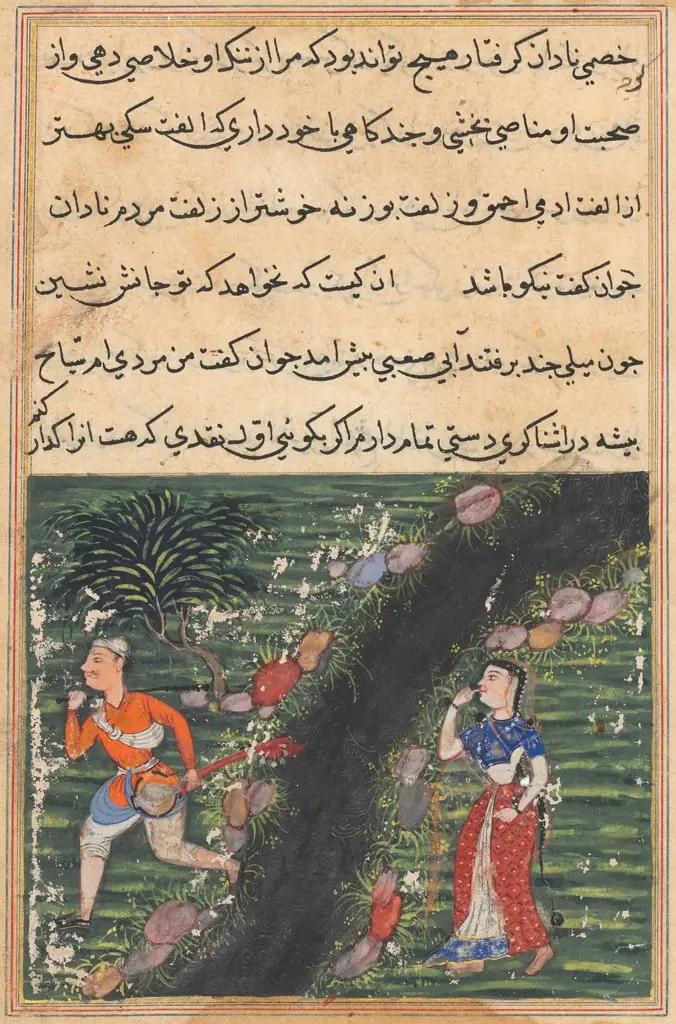 The vagabond crosses a stream with the possessions of the daughter-in-law of the king of Banaras and absconds, from a Tuti-nama (Tales of a Parrot): Sixteenth Night
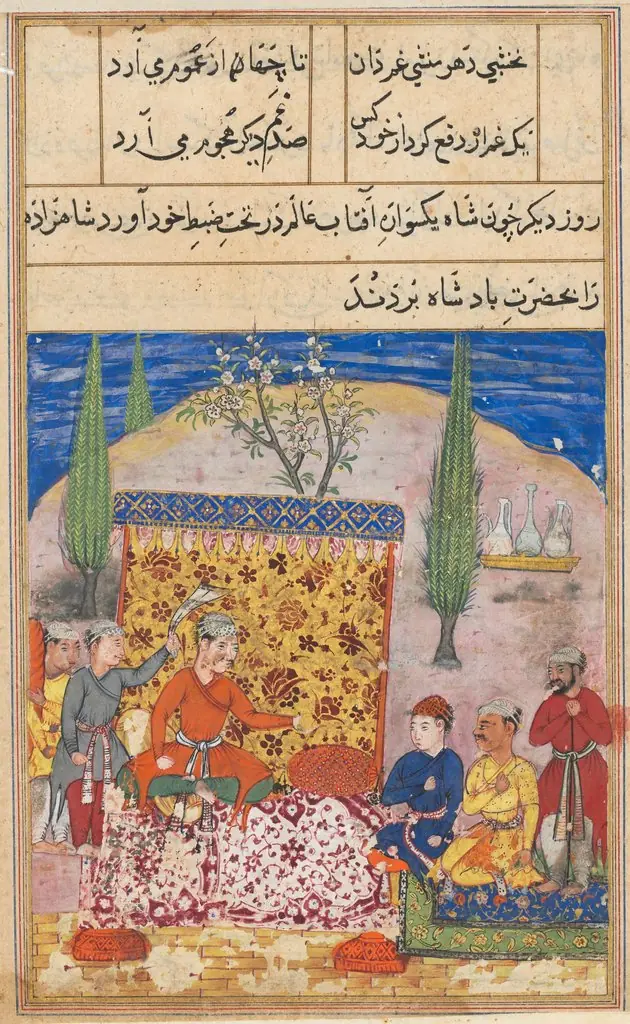 The young prince is presented to the king, his father, by his teacher, but refuses to speak, from a Tuti-nama (Tales of a Parrot): Eighth Night
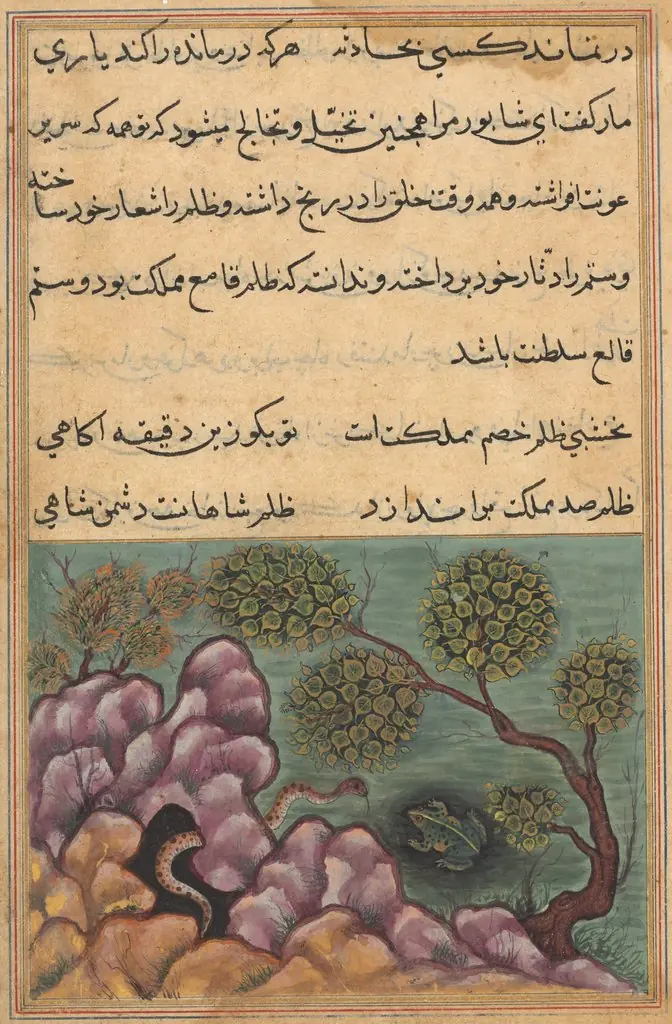 The dethroned frog Shapur seeks the help of the serpent, from a Tuti-nama (Tales of a Parrot): Twenth-sixth Night
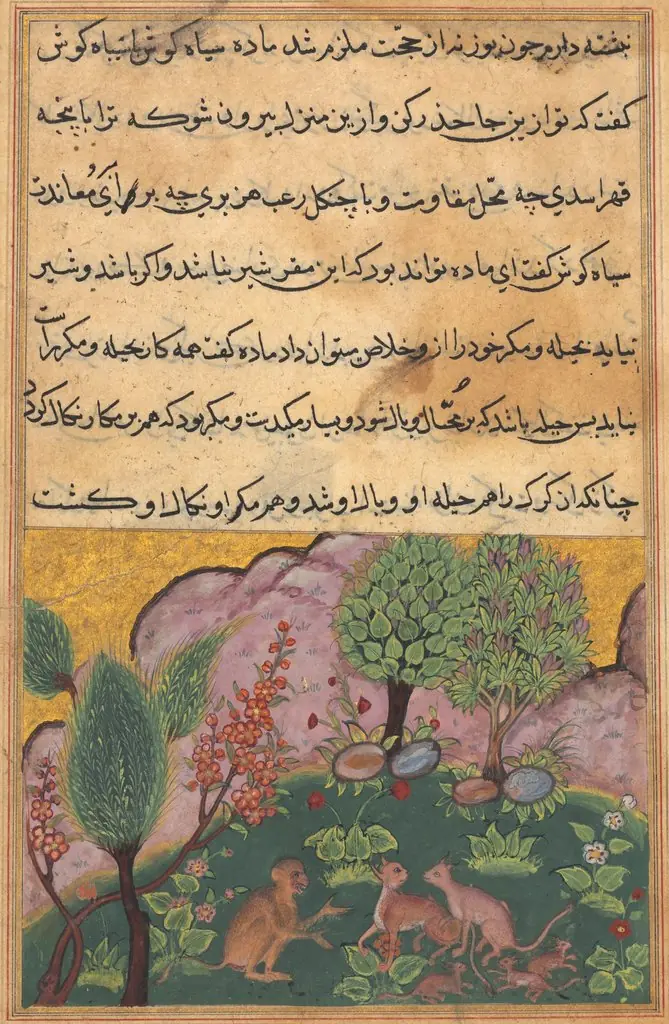 The monkey, serving as the lion’s chamberlain, converses with the lynx and its mate who have arrived with their cubs to settle in the lion’s domain, from a Tuti-nama (Tales of a Parrot): Twenty-ninth Night
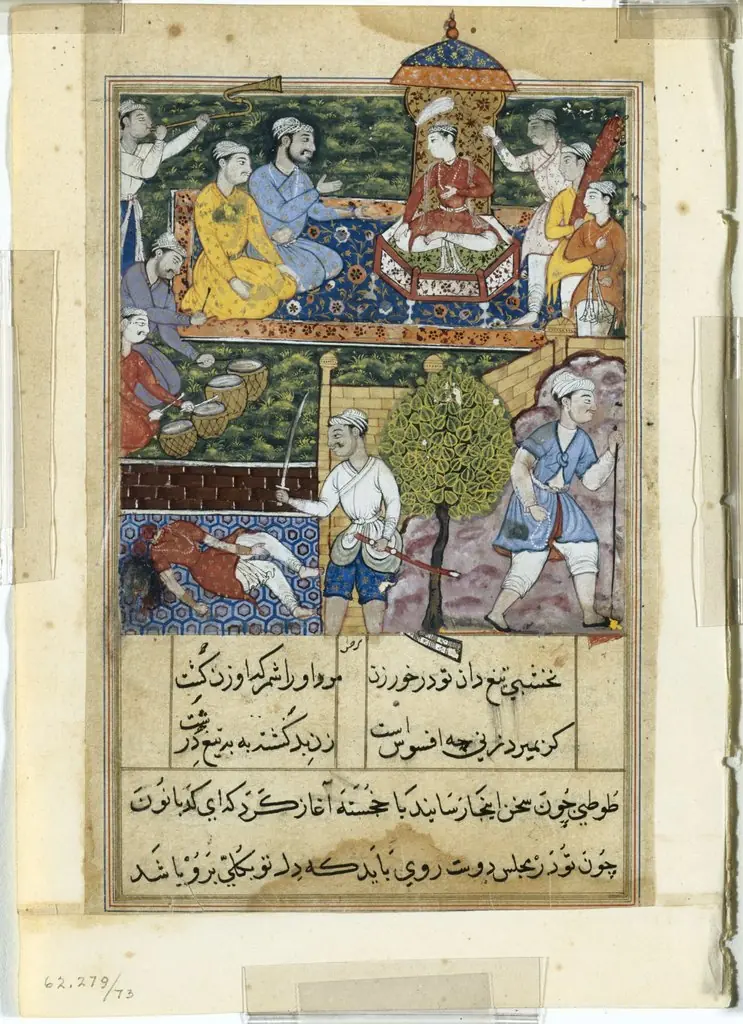 The young prince is crowned and the wicked handmaiden is executed, from a Tuti-nama (Tales of a Parrot): Eighth Night
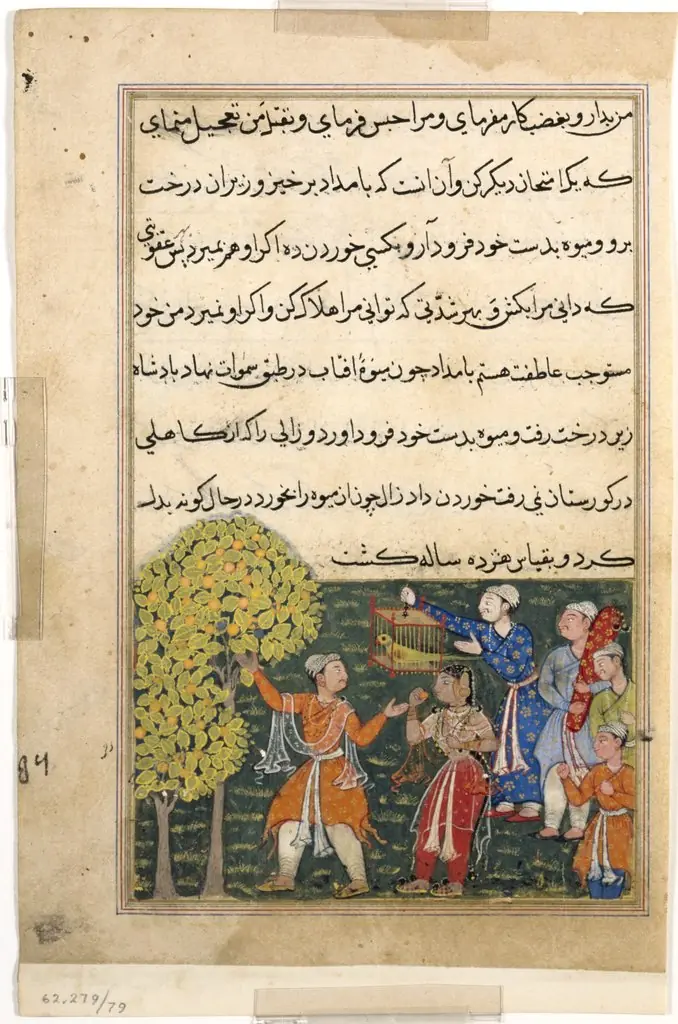 The king plucks fruit from the Tree of Life with his own hands and feeds it to a lady, from a Tuti-nama (Tales of a Parrot): Ninth Night
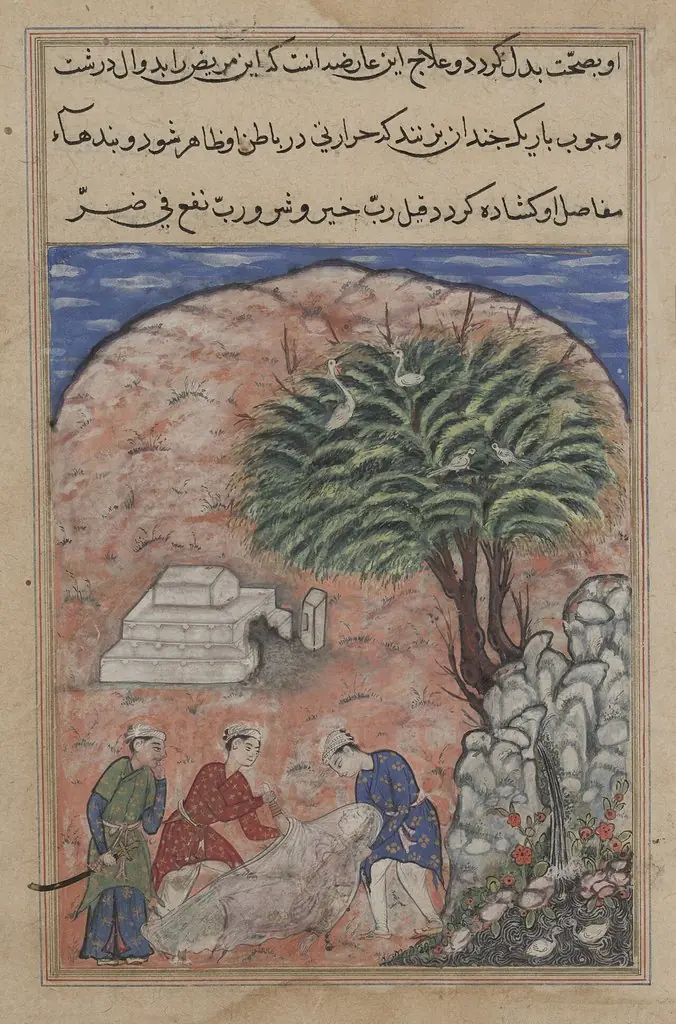 The suitors take the devotee’s daughter out of her tomb after breaking it open, when the physician discovers she is still alive, from a Tuti-nama (Tales of a Parrot): Twentieth Night