Artwork
The princess discovers the dead bodies, with heads severed, of her husband and his Brahman friend, from a Tuti-nama (Tales of a Parrot): Thirty-fourth Night
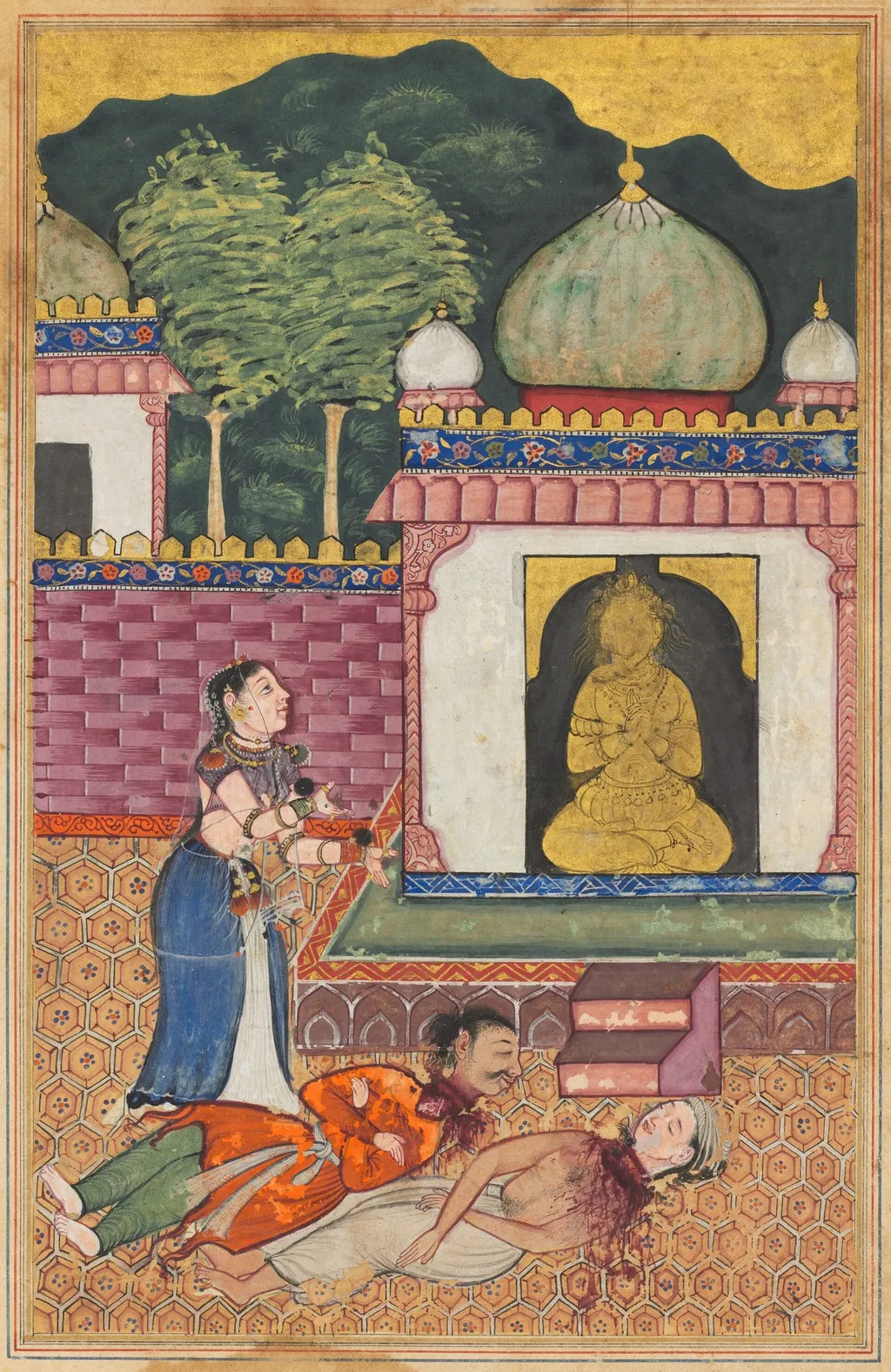
The princess discovers the dead bodies, with heads severed, of her husband and his Brahman friend, from a Tuti-nama (Tales of a Parrot): Thirty-fourth Night is an unspecified painting. It dates from 1560 and is held in the collection of the Cleveland Museum of Art. The work depicts a dramatic episode from a Persian narrative collection, showing a woman in a blue garment confronting a grisly tableau.
About this work
Overview
On the floor lie two decapitated bodies, their heads removed, creating a stark contrast between the vivid colors and the violent subject matter.
The work depicts a dramatic episode from a Persian narrative collection, showing a woman in a blue garment confronting a grisly tableau. She stands before a red‑walled structure with patterned flooring; through an open window a seated figure cradles a child. On the floor lie two decapitated bodies, their heads removed, creating a stark contrast between the vivid colors and the violent subject matter.
Subject & Meaning
The scene captures the moment a princess discovers the severed corpses of her husband and his Brahman companion, a pivotal point in the tale’s unfolding tragedy. Her expression of shock underscores the sudden revelation of betrayal and loss, while the juxtaposition of domestic interior and brutal aftermath invites reflection on the fragility of royal security within the story’s moral framework.
Technique & Style
Executed in bright, saturated pigments, the painting employs a flat decorative approach characteristic of Persian miniature traditions. The red walls, intricate geometric patterns, and gold accents frame the figures, while the composition balances interior and exterior spaces through a shallow perspective. The stylized rendering of faces and garments emphasizes narrative clarity over naturalistic detail.
History & Provenance
The image originates from a 34th‑night illustration in a manuscript of the Tuti‑nama, a collection of parrot‑told tales compiled in the Persian literary tradition. The specific panel now resides in the collection of the Cleveland Museum of Art, where it is displayed as part of the museum’s holdings of South‑Asian miniature paintings.
Artist & collection

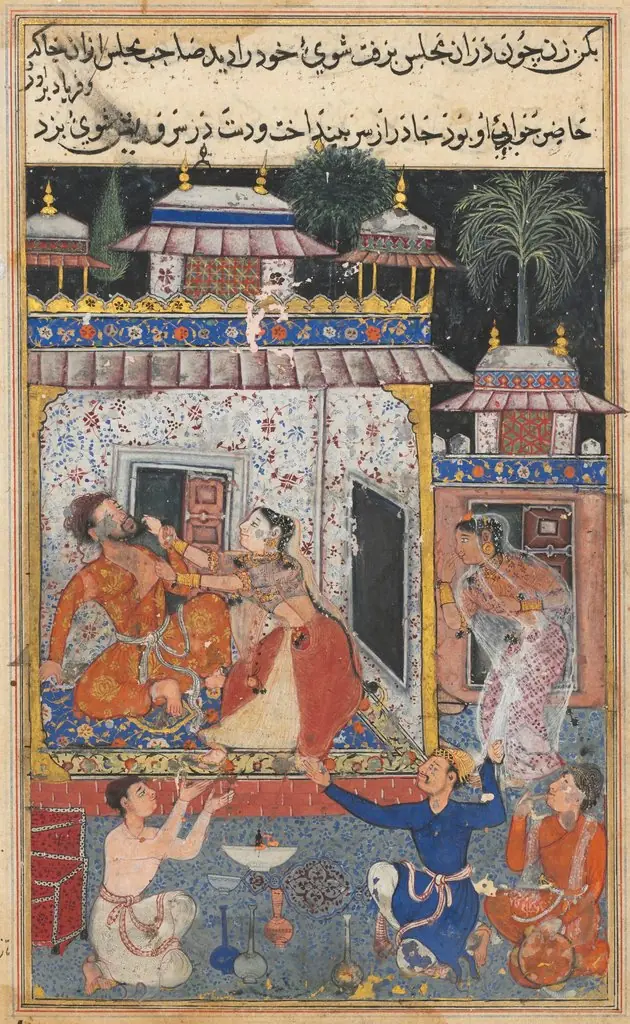 The deceitful wife assaults her erring husband, from a Tuti-nama (Tales of a Parrot): Eighth Night
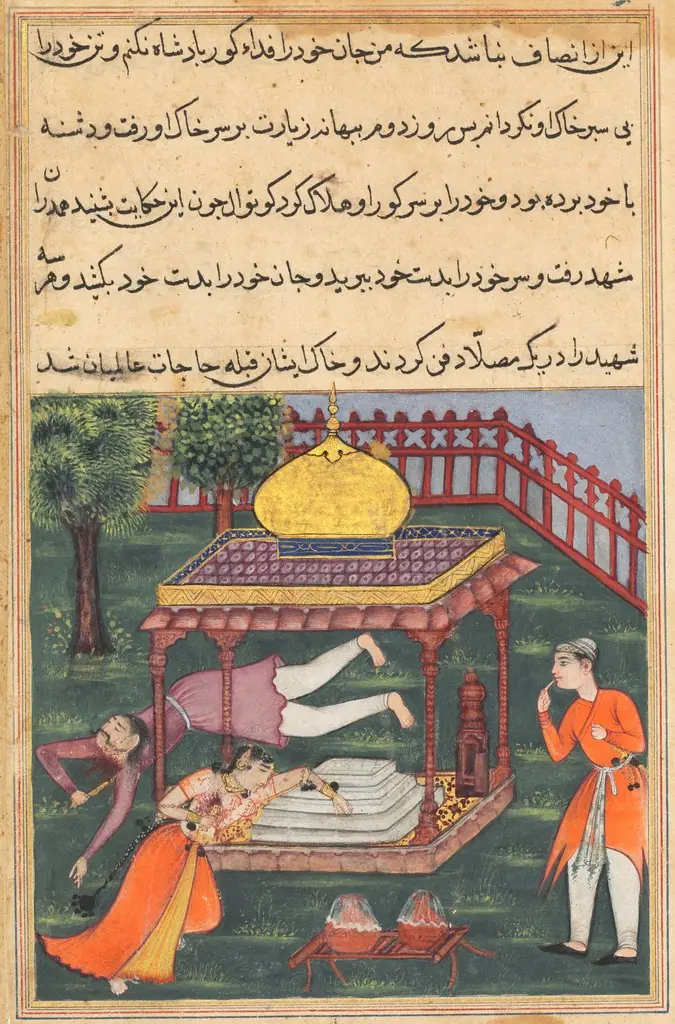 Mahrusa kills herself at the tomb of the king of Zabul, and her husband does likewise, from a Tuti-nama (Tales of a Parrot): Thirty-sixth Night
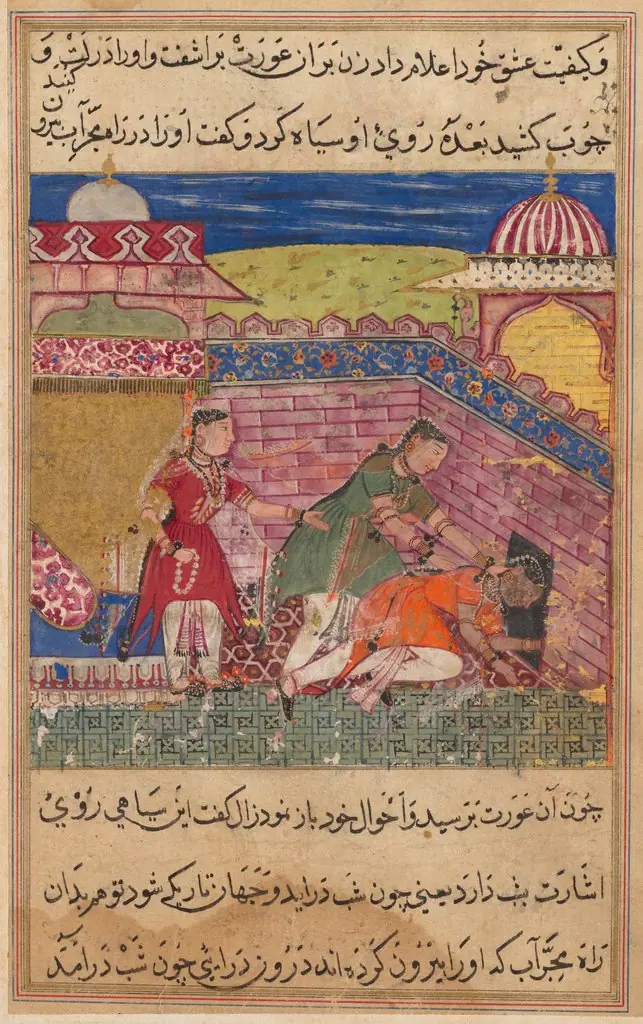 The deceitful wife ejects the procuress after blackening her face, from a Tuti-nama (Tales of a Parrot): Eighth Night
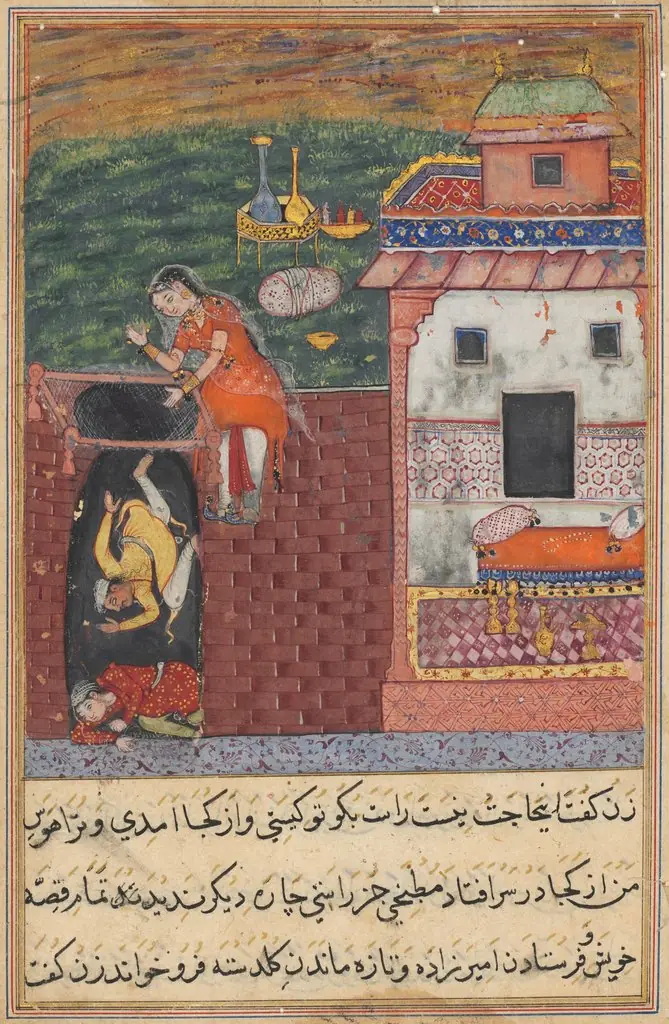 The two cooks, who attempt to seduce the warrior’s loyal wife, are trapped by her in a cellar, from a Tuti-nama (Tales of a Parrot): Fourth Night
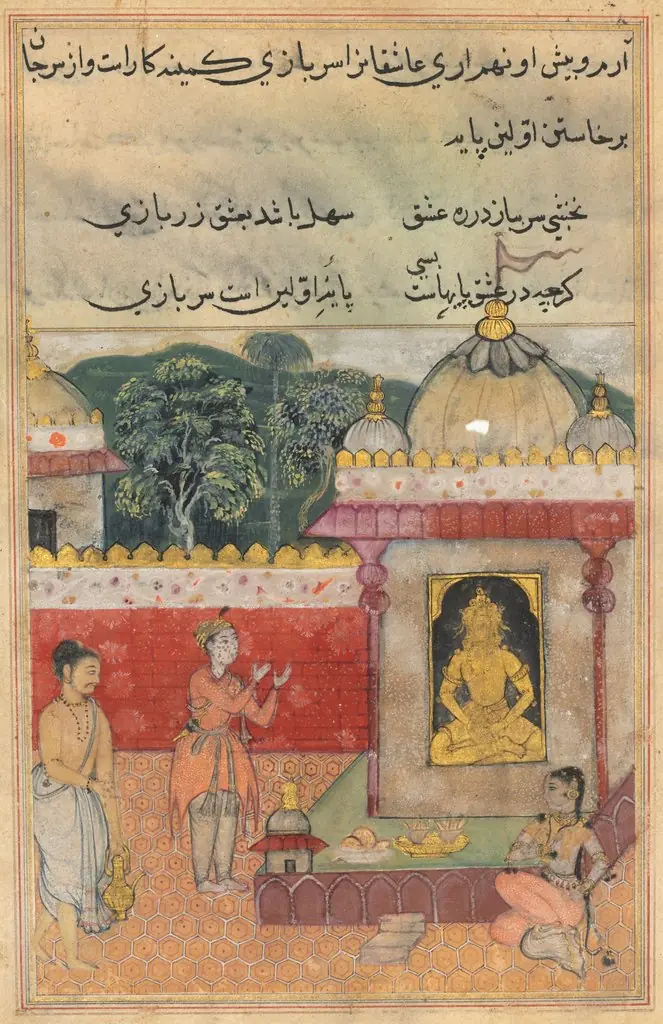 The Raja’s son vows to sever his head and offer it to the image if he is united with the princess he has seen in the temple, from a Tuti-nama (Tales of a Parrot): Thirty-fourth Night
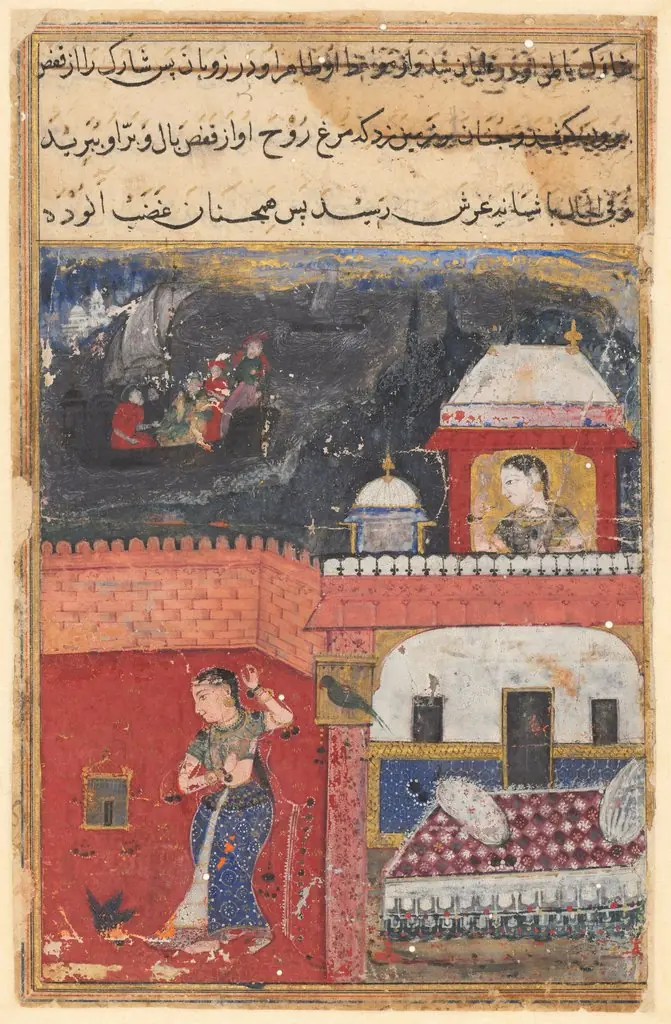 Khujasta kills the pet mynah who advises her not to be unfaithful to Maymun, her husband, from a Tuti-nama (Tales of the Parrot): First Night
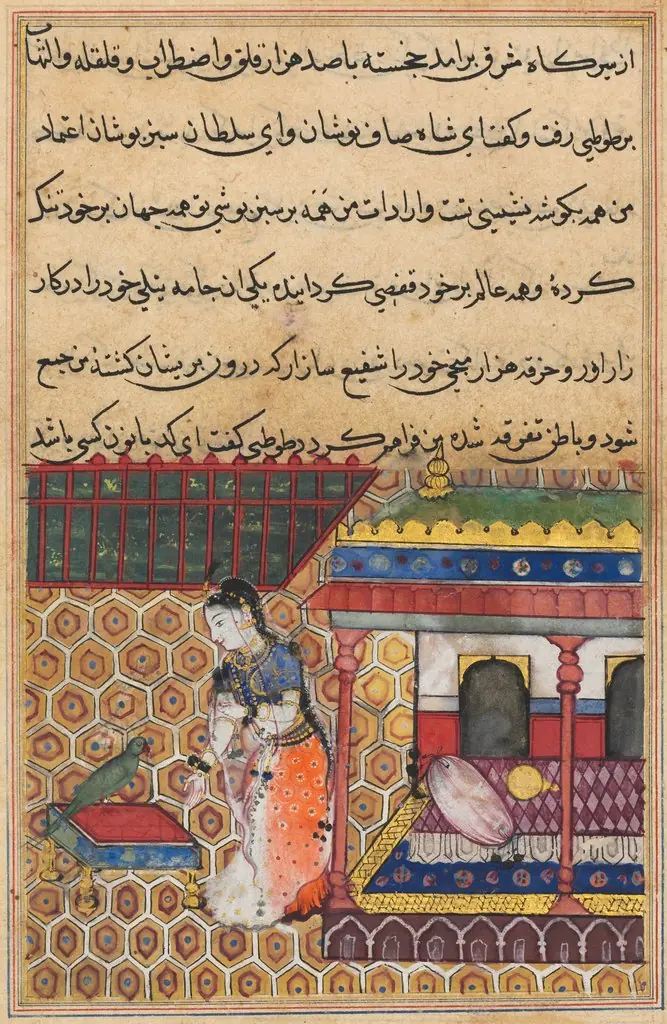 The parrot addresses Khujasta at the beginning of the thirty-eighth night, from a Tuti-nama (Tales of a Parrot)
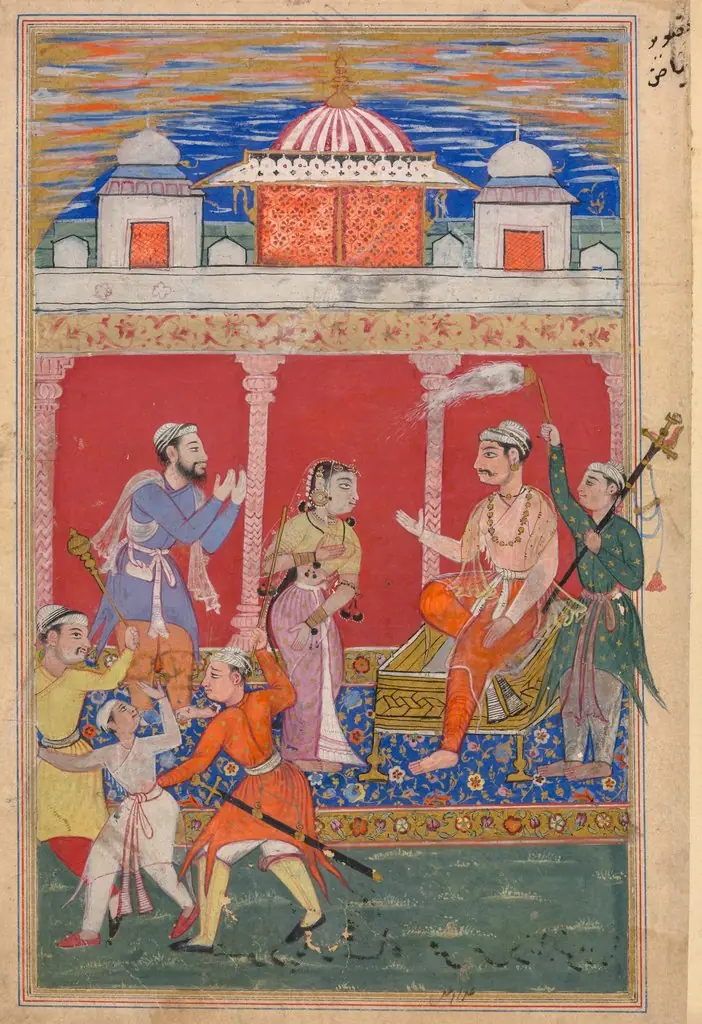 Page from Tales of a Parrot (Tuti-nama): text page
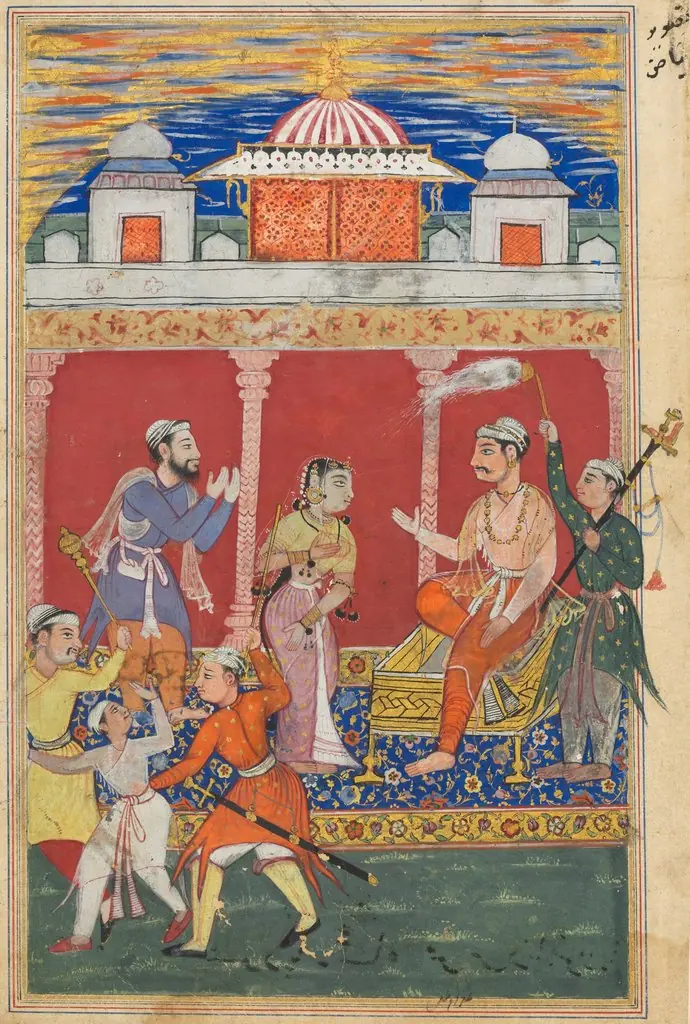 The prince’s ordeal continues, he is ordered away to be executed for the fifth time, from a Tuti-nama (Tales of a Parrot): Eighth Night
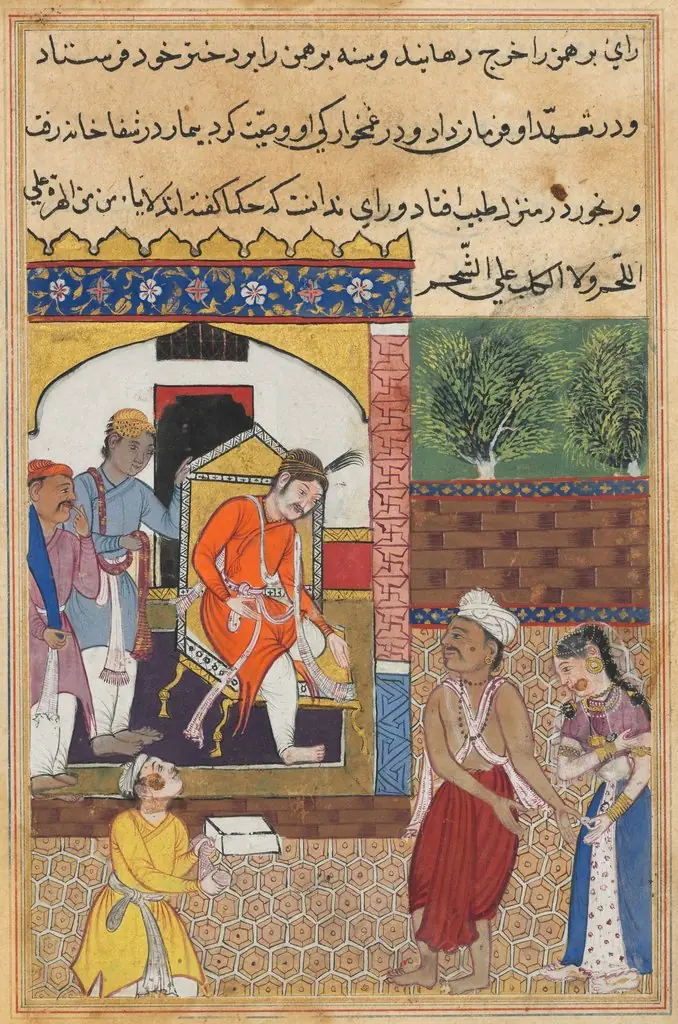 The magician, disguised as a Brahman, visits the king of Babylon, from a Tuti-nama (Tales of a Parrot): Thirty-fifth Night