Artwork
The magician, disguised as a Brahman, visits the king of Babylon, from a Tuti-nama (Tales of a Parrot): Thirty-fifth Night
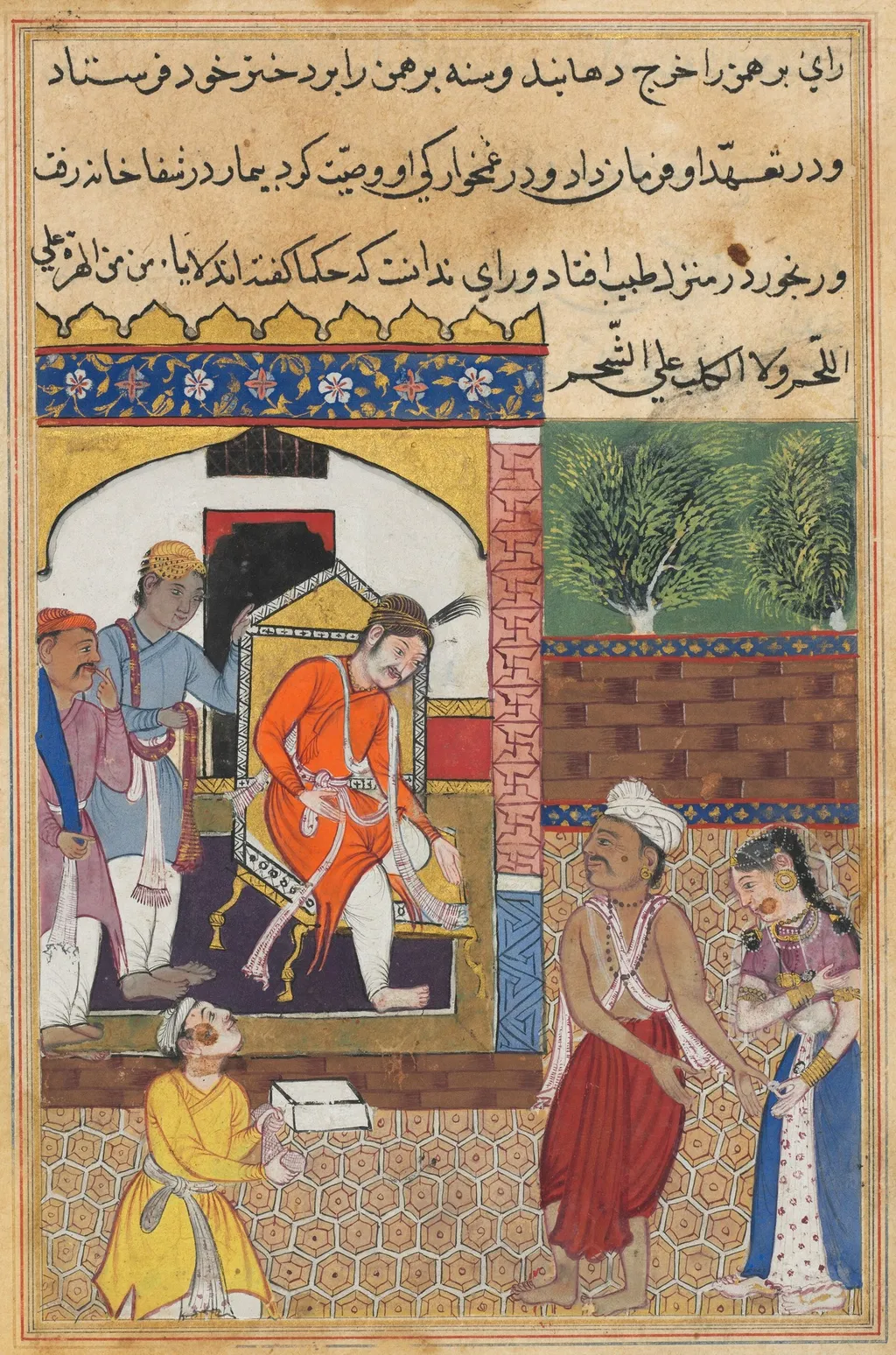
The magician, disguised as a Brahman, visits the king of Babylon, from a Tuti-nama (Tales of a Parrot): Thirty-fifth Night is an unspecified painting. It dates from 1560 and is held in the collection of the Cleveland Museum of Art. The work is a painted illustration from the medieval Persian collection known as the Tuti‑nama, or "Tales of a Parrot.
About this work
Overview
In the left panel a figure in an orange robe steps through a small arched doorway while onlookers observe, and a kneeling attendant holds a box.
The work is a painted illustration from the medieval Persian collection known as the Tuti‑nama, or "Tales of a Parrot." It presents two narrative panels divided vertically. In the left panel a figure in an orange robe steps through a small arched doorway while onlookers observe, and a kneeling attendant holds a box. The right panel shows a bearded man in red and gold standing beside a woman in blue who cradles an infant.
Subject & Meaning
The left scene depicts the magician‑trickster, disguised as a Brahman, entering the king’s palace in Babylon, a moment that emphasizes his cunning and the curiosity of the court. The right scene portrays the royal couple, suggesting the magician’s audience and the political context of his performance. Together the panels illustrate a narrative episode from the thirty‑fifth night of the Tuti‑nama, highlighting themes of deception and royal authority.
Technique & Style
The illustration employs bold black outlines that separate figures and architectural elements, while flat areas of vivid pigment fill the composition. Decorative geometric patterns cover the floor and wall surfaces, characteristic of Persian miniature painting. The use of bright orange, red, gold, and blue creates visual contrast, and the lack of perspective depth focuses attention on the narrative action rather than realistic space.
History & Provenance
The miniature originates from a Persian manuscript dating to the 14th‑15th century, part of the larger Tuti‑nama tradition that blended Indian and Islamic storytelling. The specific sheet has been conserved and displayed by the Cleveland Museum of Art, where it forms part of the museum’s collection of Persian illustrated books.
Artist & collection

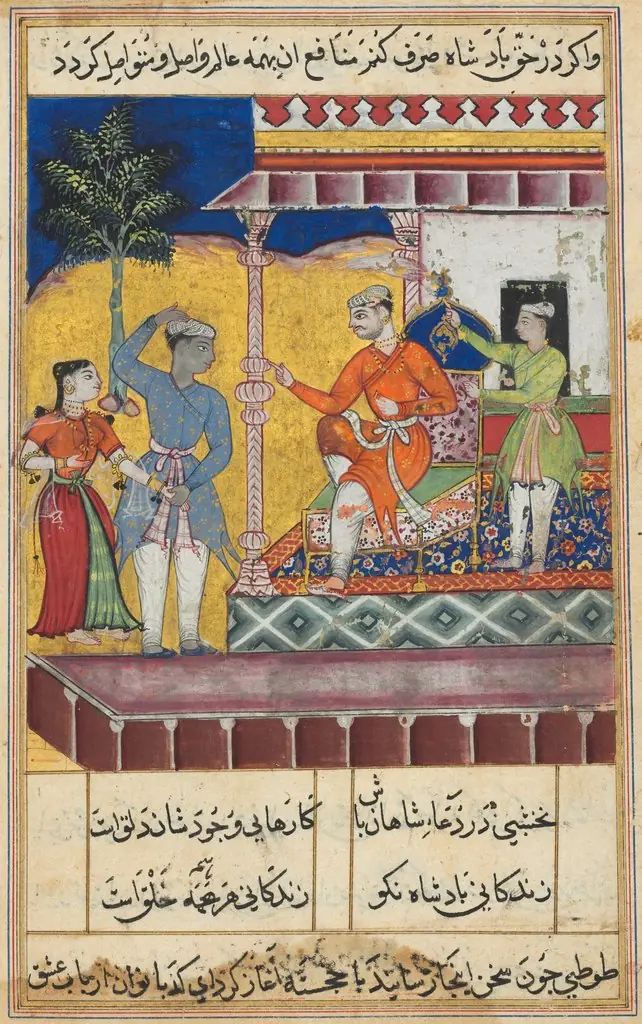 The rejuvenated old man and the daughter of the king of the jinns take leave of the King of Kings, from a Tuti-nama (Tales of a Parrot): Seventh Night
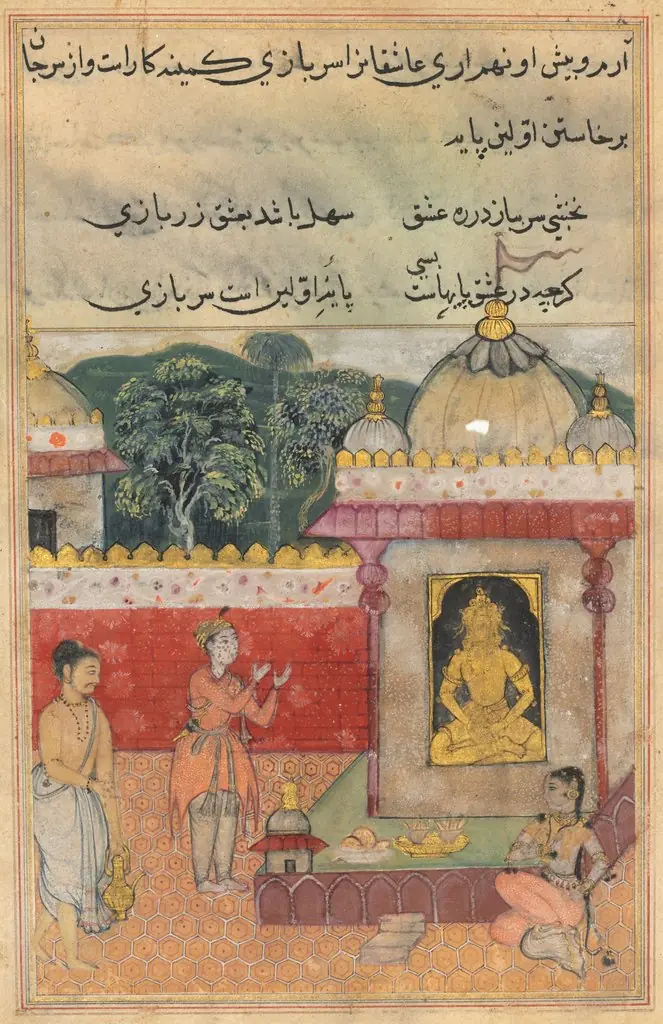 The Raja’s son vows to sever his head and offer it to the image if he is united with the princess he has seen in the temple, from a Tuti-nama (Tales of a Parrot): Thirty-fourth Night
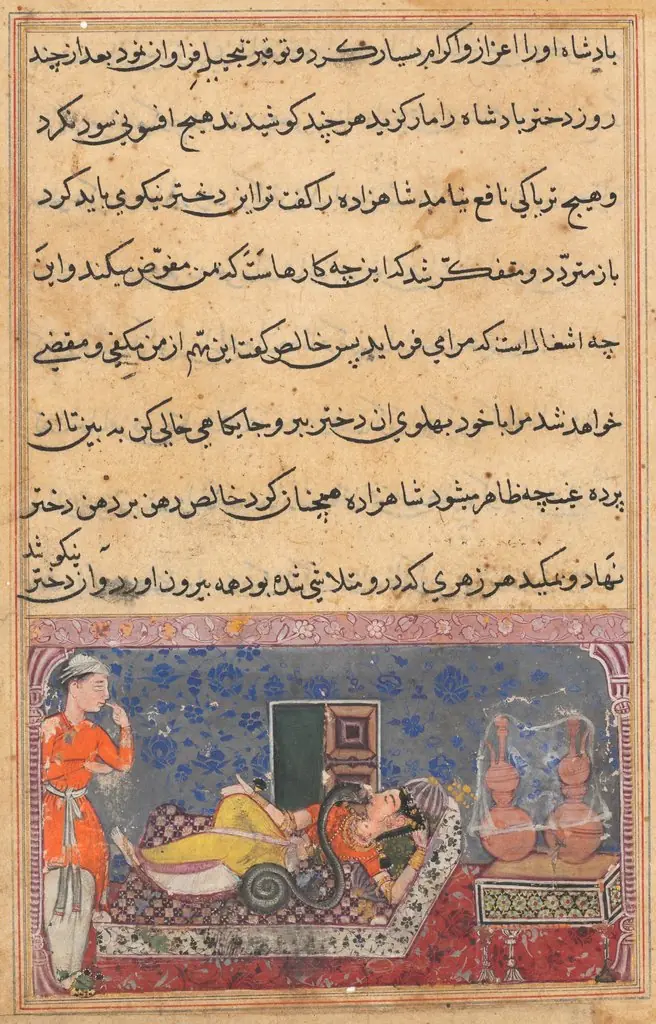 Khalis repays the prince for his kindness by changing into a snake and sucking the poison from the king’s daughter, from a Tuti-nama (Tales of a Parrot): Eighteenth Night
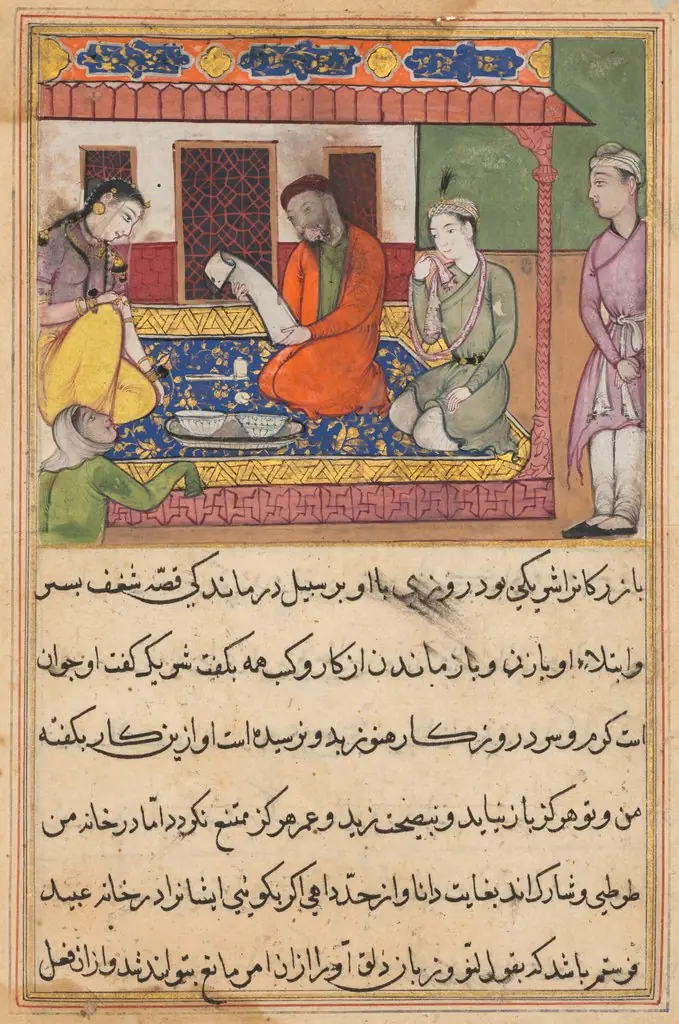 The marriage of ‘Ubaid, son of a merchant of Tirmiz, from a Tuti-nama (Tales of a Parrot): Forty-second Night
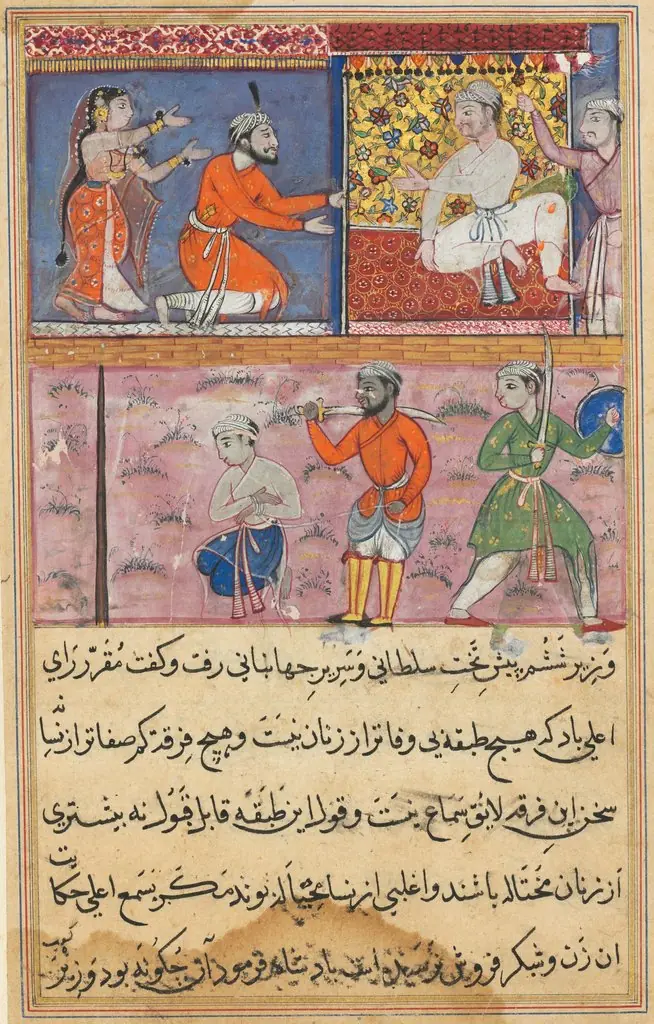 The prince sent back to the place of execution for the sixth time, from a Tuti-nama (Tales of a Parrot): Eighth Night
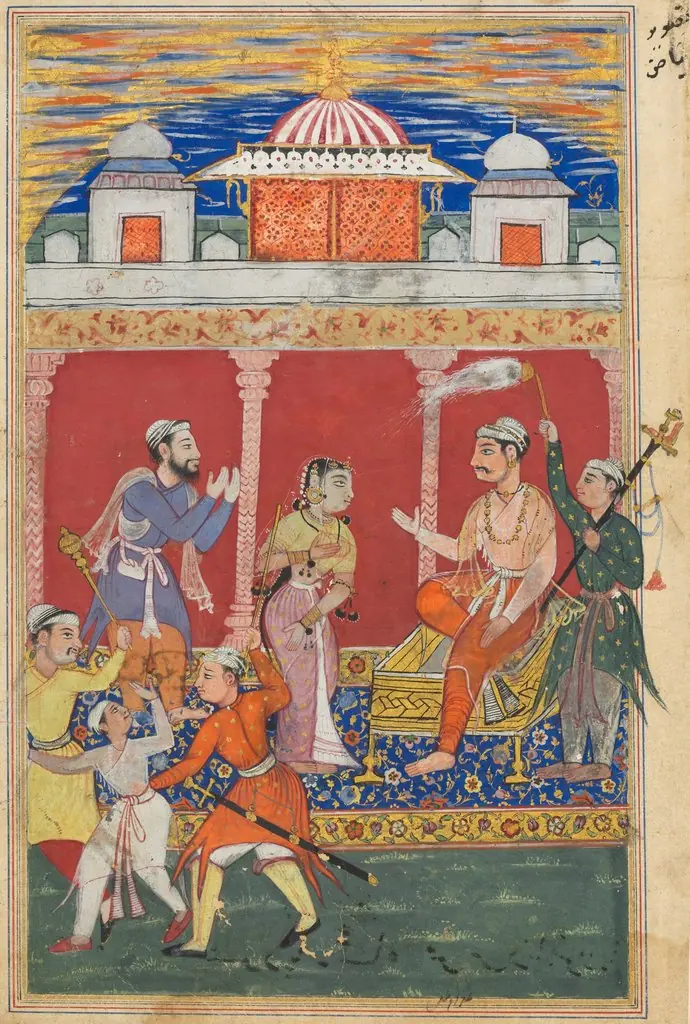 The prince’s ordeal continues, he is ordered away to be executed for the fifth time, from a Tuti-nama (Tales of a Parrot): Eighth Night
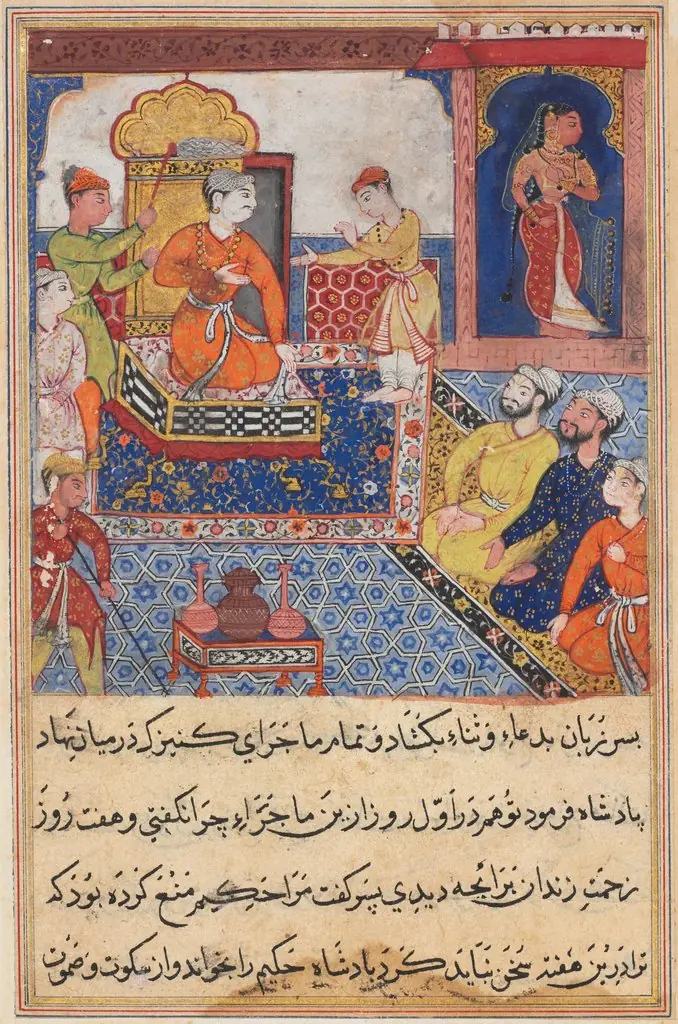 The young prince recounts his experiences to his father, the king, from a Tuti-nama (Tales of a Parrot): Eighth Night
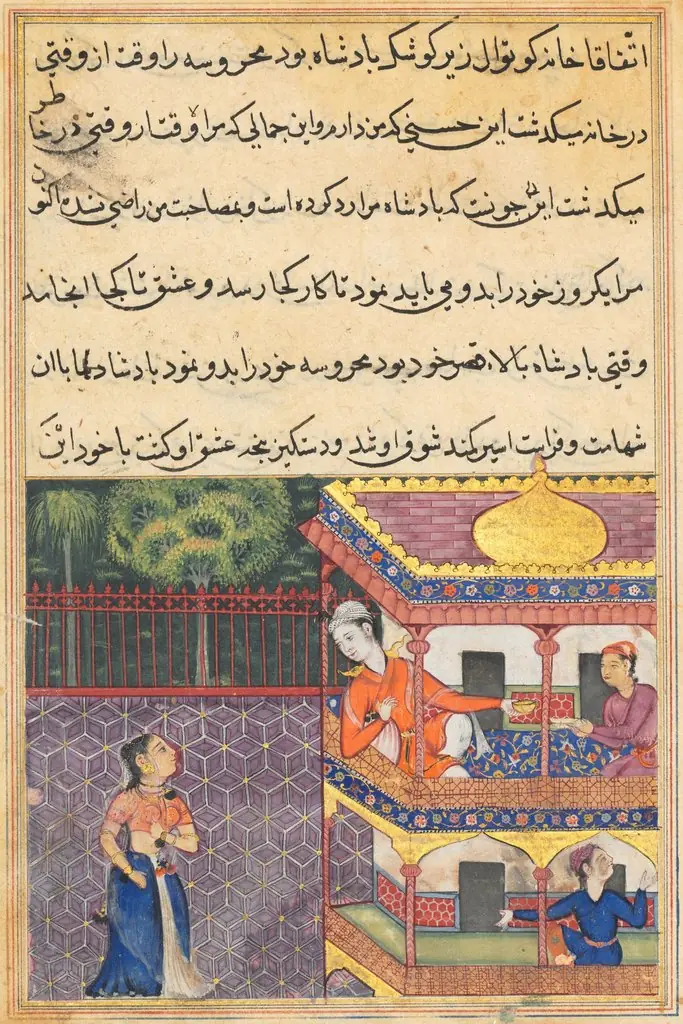 The king of Zabul sees Mahrusa from his palace balcony, from a Tuti-nama (Tales of a Parrot): Thirty-sixth Night
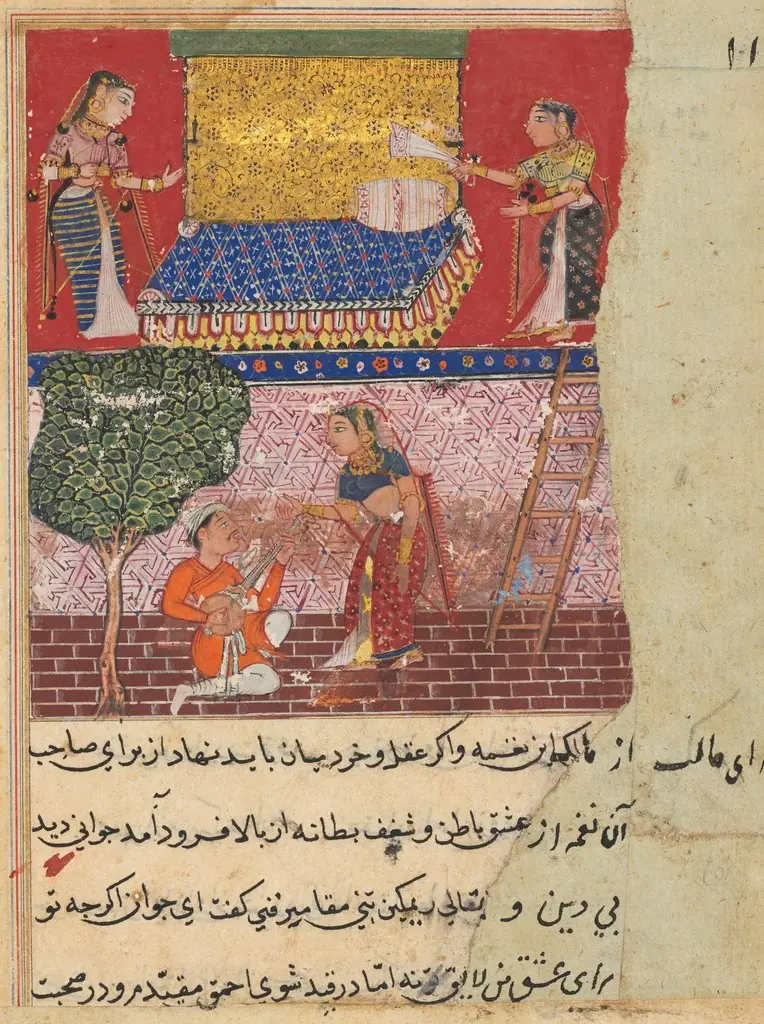 The daughter-in-law of the king of Banaras, charmed by the music of a vagabond, comes down to meet him, from a Tuti-nama (Tales of a Parrot): Sixteenth Night
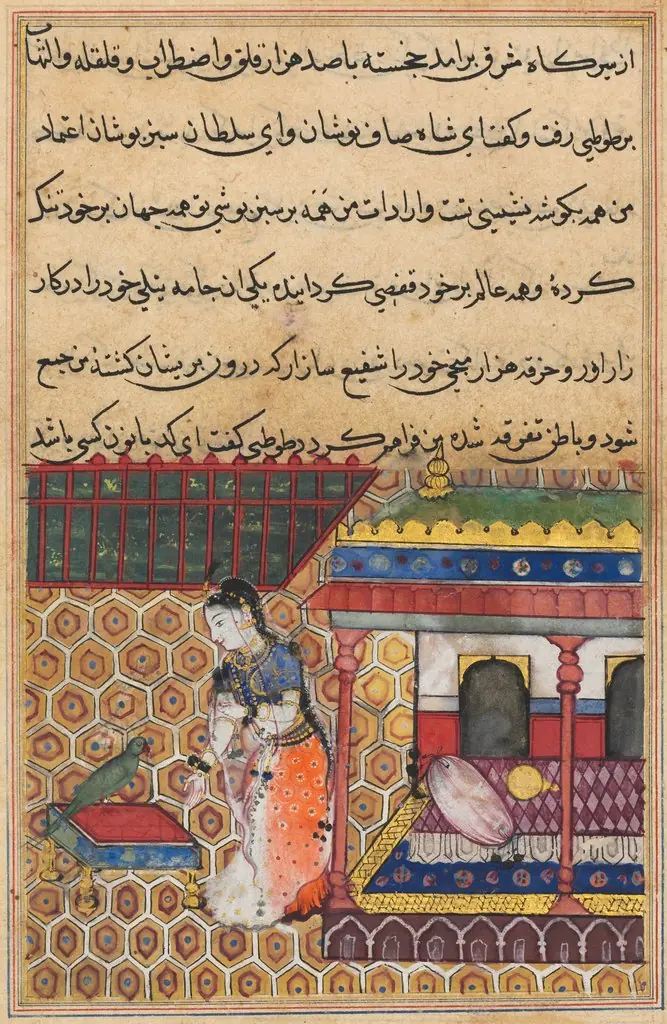 The parrot addresses Khujasta at the beginning of the thirty-eighth night, from a Tuti-nama (Tales of a Parrot)
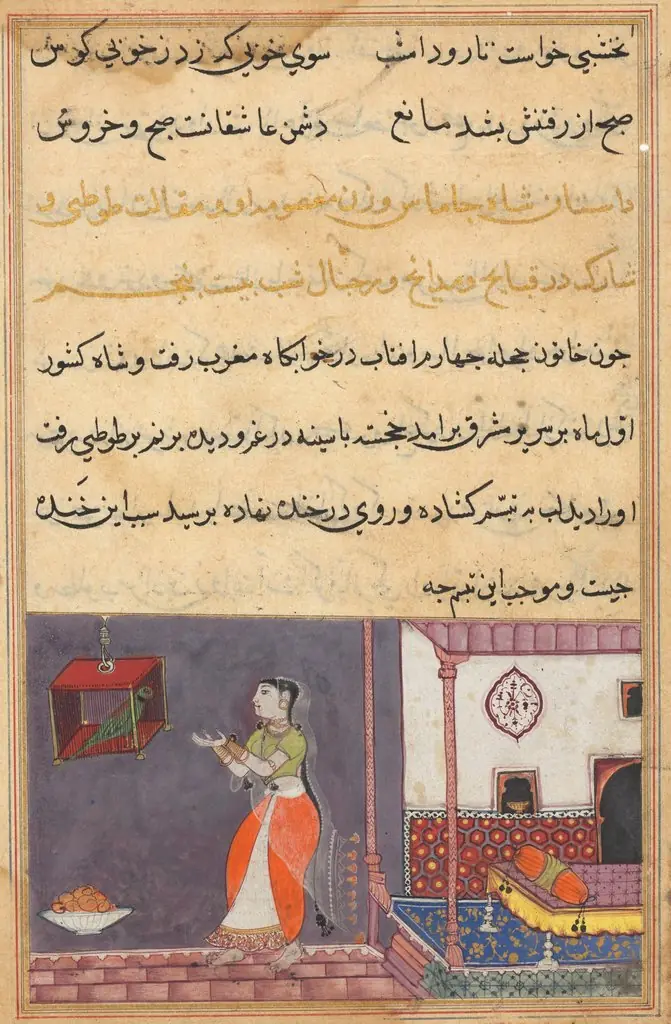 The Parrot Addresses Khujasta at the Beginning of the Twenty-fifth Night, from a Tuti-nama (Tales of a Parrot)