Artwork
Der alte Tobias begräbt die Juden in Ninive
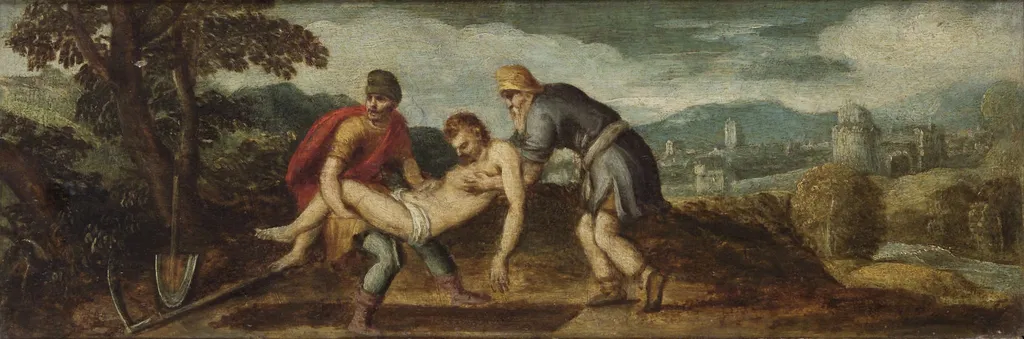
Der alte Tobias begräbt die Juden in Ninive is an unspecified painting by the Early Baroque Italian artist Unknown. It dates from 1550 and is held in the collection of the Kunsthistorisches Museum.
About this work
Overview
The composition emphasizes quiet devotion over dramatic spectacle, grounding a sacred act in the rhythms of ordinary existence.
This painting depicts a somber moment from the biblical narrative of Tobit, in which three men transport the lifeless body of a fellow Israelite for burial in Nineveh. The scene unfolds along a rural path, framed by muted landscape elements—a solitary tree, rolling hills, and a distant fortress—while the figures’ strained postures convey the weight of their task. The composition emphasizes quiet devotion over dramatic spectacle, grounding a sacred act in the rhythms of ordinary existence.
Subject & Meaning
The work illustrates an episode from the deuterocanonical Book of Tobit, where the protagonist, Tobias, dutifully inters deceased Jews in defiance of Assyrian decrees. The limp, unclothed corpse underscores vulnerability and mortality, while the attendants’ focused expressions signal reverence and resolve. Their varied attire—ranging from humble robes to a crimson cloak—suggests differing social roles united by shared obligation, reinforcing themes of communal responsibility and piety in the face of persecution.
Technique & Style
Executed with restrained naturalism, the painting balances precise figural rendering with atmospheric depth. Subtle tonal shifts in the landscape create spatial recession, while the men’s musculature and drapery folds reveal an attention to anatomical structure. The palette remains subdued, save for the striking red cape, which draws the eye and anchors the composition. Brushwork ranges from smooth transitions in the sky to more textured strokes in the earthen path, reflecting a controlled yet expressive approach.
History & Provenance
Little is documented about the painting’s early ownership or commission, though its subject aligns with Counter-Reformation interests in Old Testament exemplars of faith. The work likely circulated within private collections before entering institutional holdings, though specific records of its acquisition remain fragmentary. Conservation assessments suggest it was executed in the seventeenth century, though the artist’s identity has not been definitively established.
Context
The scene’s emphasis on clandestine burial resonates with periods of religious conflict, particularly in regions where Catholic communities faced restrictions. By depicting an act of defiance as a mundane yet sacred duty, the painting may have served as moral instruction or consolation for viewers enduring similar hardships. Its unidealized portrayal of labor and loss reflects broader shifts toward narrative realism in post-Renaissance sacred art.
Legacy
While not widely reproduced, the painting contributes to the visual tradition of Tobit’s story, a subject explored by artists from Rembrandt to lesser-known contemporaries. Its understated treatment of martyrdom and solidarity offers a counterpoint to more theatrical depictions of biblical suffering. Today, it provides insight into how seventeenth-century artists negotiated devotional themes within increasingly naturalistic frameworks, bridging private piety and public art.
Artist & collection

 Domestic Scene
 Giacomo and Cardinal Marco, investing Andrea, Abbot of San Zeno, with his Benefice
 The Nymph of Fontainebleau
 Portrait of a Woman
 Madonna and Child with Saints in the Enclosed Garden
 Venus and Minerva
 Family Group of Four on Sofa
 Wall painting from Room H of the Villa of P. Fannius Synistor at Boscoreale
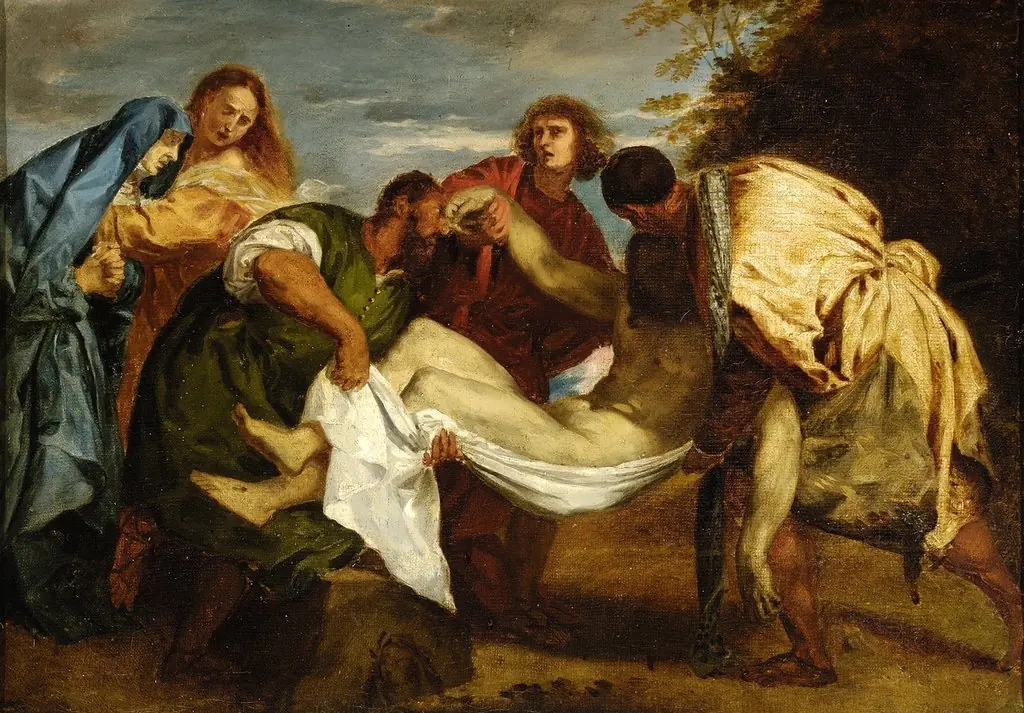 The Entombment
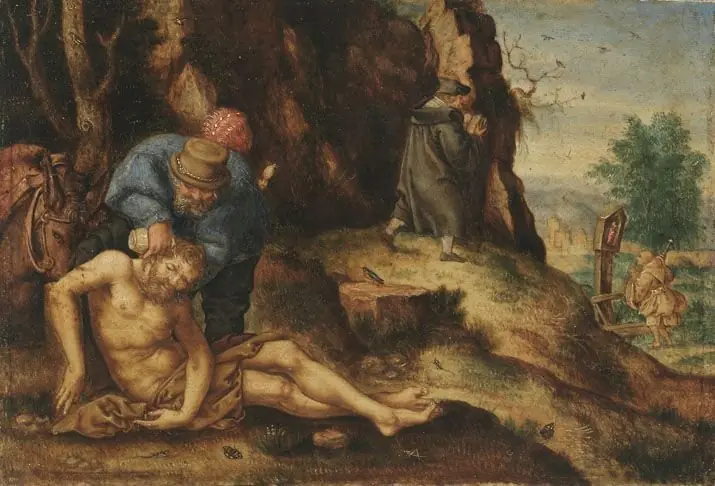 Der barmherzige Samariter pflegt den Verletzten (nach)
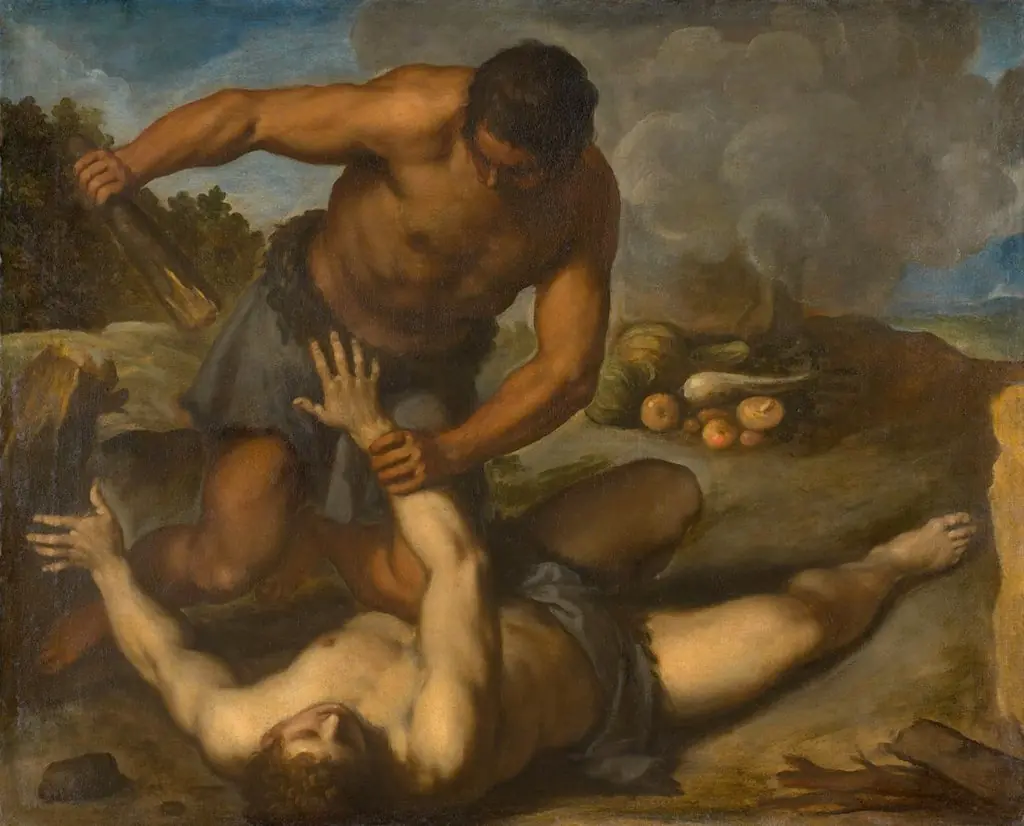 Cain and Abel
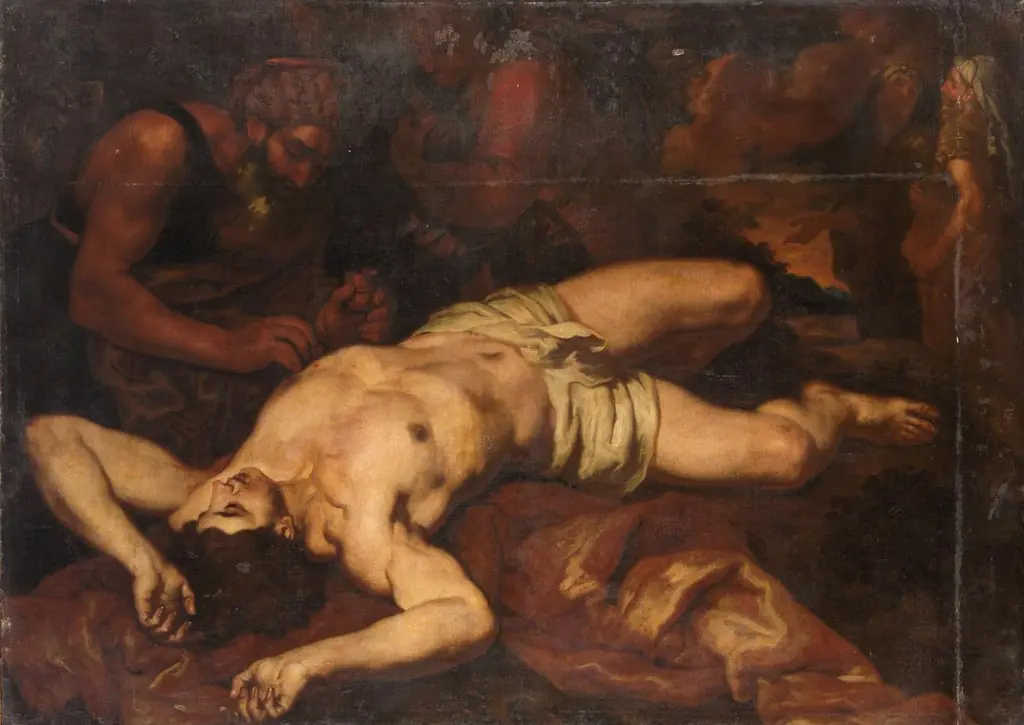 The Good Samaritan
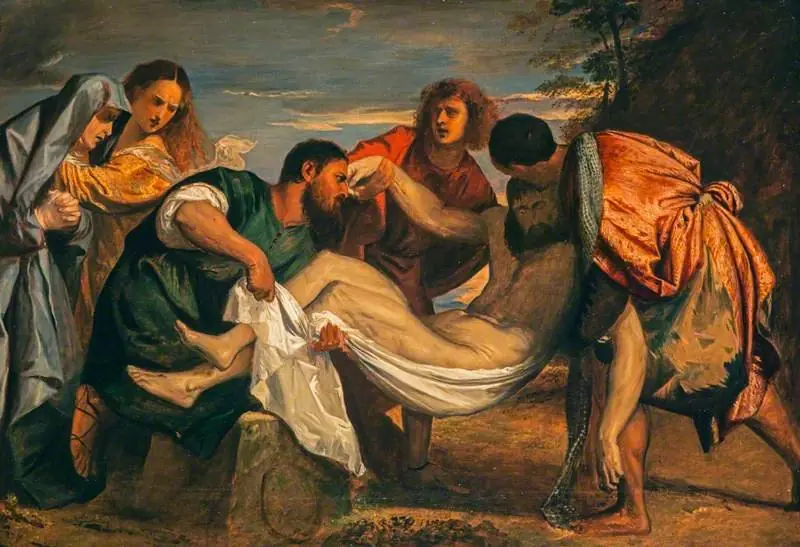 The Entombment of Christ (after Titian)
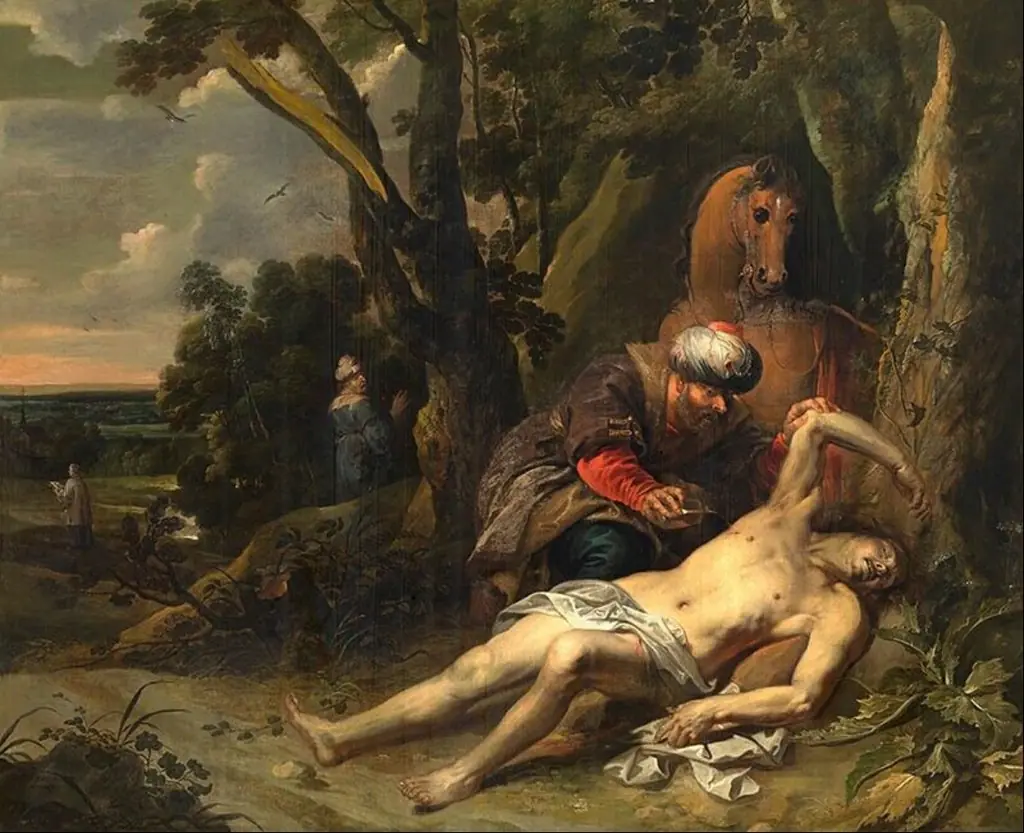 The Good Samaritan
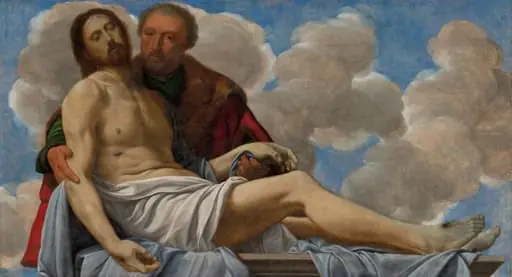 Christ with Joseph of Arimathea
 The Martyrdom of St. Peter
 Überführung der Bundeslade durch David; der Tod des Usa
 The Martyrdom of Saint Sebastian of Rome
 The Good Samaritan
 The Good Samaritan