Artwork
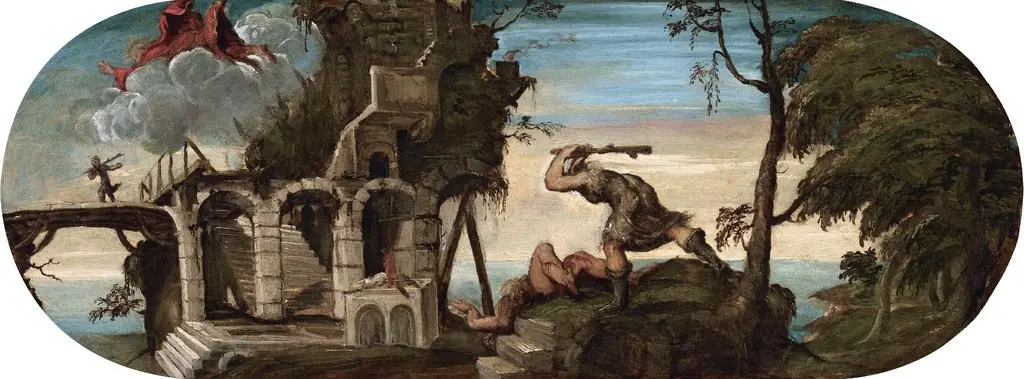
Überführung der Bundeslade durch David; der Tod des Usa

Überführung der Bundeslade durch David; der Tod des Usa is an unspecified painting by the Mannerist artist Jacopo Tintoretto. It dates from 1543 and is held in the collection of the Kunsthistorisches Museum.
About this work
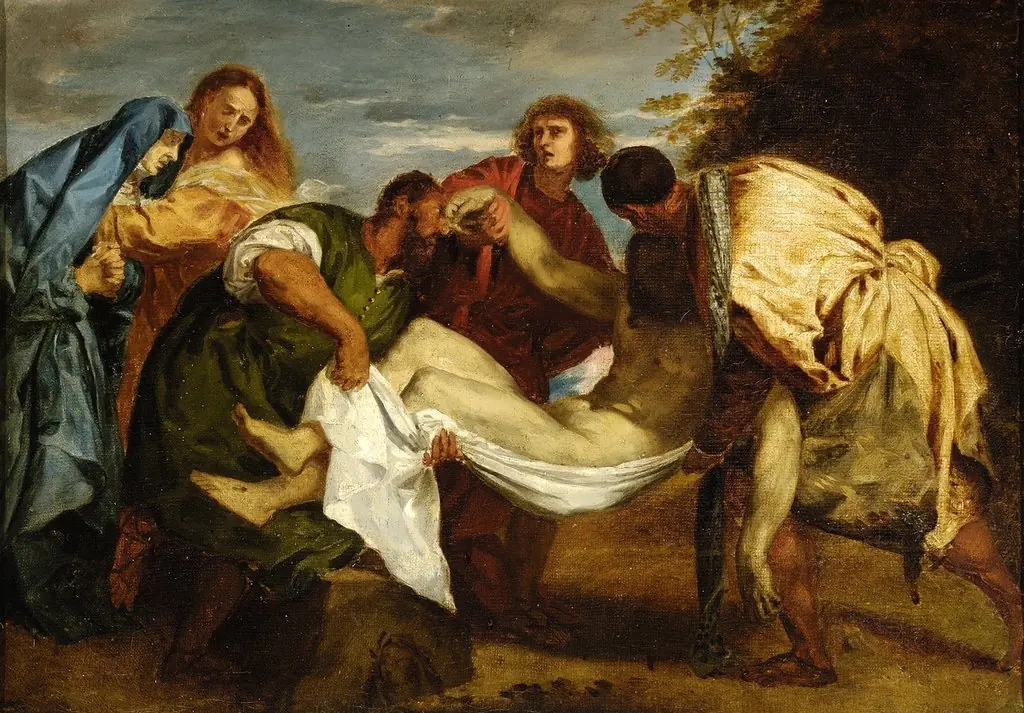
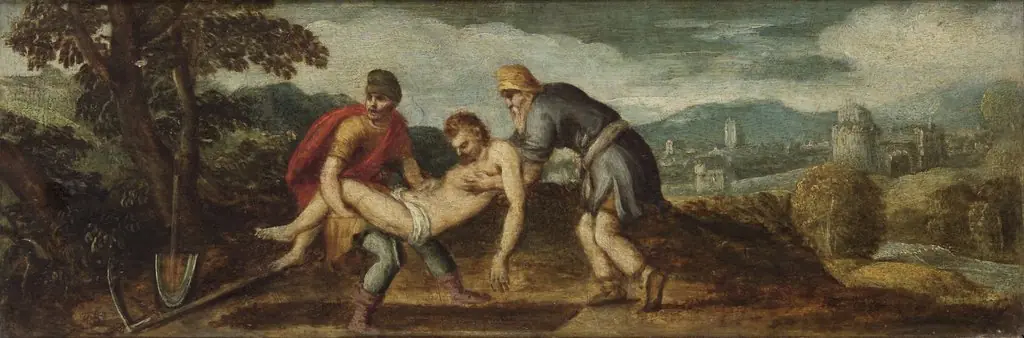
This painting depicts a scene of people in a landscape, with a group of figures in the foreground and a bridge and building in the background.
This painting depicts a scene of people in a landscape, with a group of figures in the foreground and a bridge and building in the background. The figures are dressed in clothing from the 16th century, and some are carrying objects or interacting with each other.
In the foreground, a man is shown being pulled by a group of people, while another man stands nearby, holding a staff. The scene is set against a backdrop of rolling hills and a body of water, with a bridge and building visible in the distance.
The painting's use of chiaroscuro creates a sense of depth and drama, drawing the viewer's eye to the central figures. For more on this artistic technique, look up "chiaroscuro".
Overview
Tintoretto’s 1543 canvas, titled *Überführung der Bundeslade durch David; der Tod des Usa*, presents a complex biblical narrative rendered in the Venetian Mannerist idiom. The composition combines a dynamic foreground with a distant landscape, employing dramatic lighting to guide the eye toward the central action.
Subject & Meaning
The work illustrates two intertwined events from the Hebrew Scriptures: the relocation of the Ark of the Covenant and the fatal encounter of Uza, who is struck down for touching the sacred vessel. By juxtaposing these moments, the painting underscores themes of reverence, divine authority, and the peril of transgression.
Technique & Style
Tintoretto’s characteristic vigor is evident in swift, energetic brushstrokes and a pronounced use of perspective that compresses space. Chiaroscuro intensifies the scene, casting deep shadows that model the figures and enhance the sense of drama typical of Mannerist experimentation.
Context
Created during Tintoretto’s early career, the painting reflects the Venetian workshop’s engagement with biblical subjects for devotional and civic commissions. Its German title suggests a later provenance or intended audience beyond Italy, hinting at the work’s circulation in Northern collections.
Artist & collection
Artist
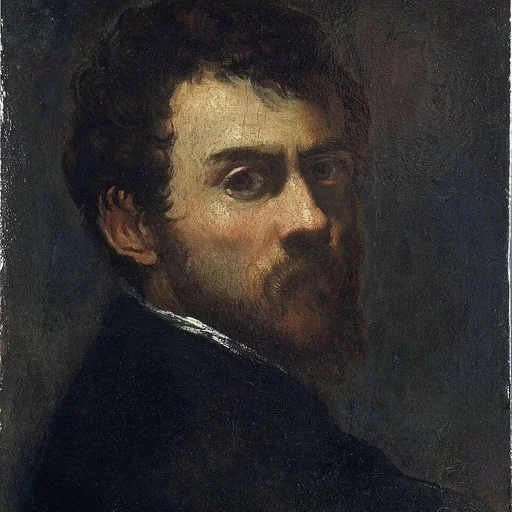
Jacopo Robusti (late September or early October 1518 – 31 May 1594), best known as Tintoretto ( TIN-tə-RET-oh; Italian: ; Venetian: ), was an Italian Renaissance painter of the Venetian school.