Artwork
Dish (piatto): Man Washing the Mouth of an Ass
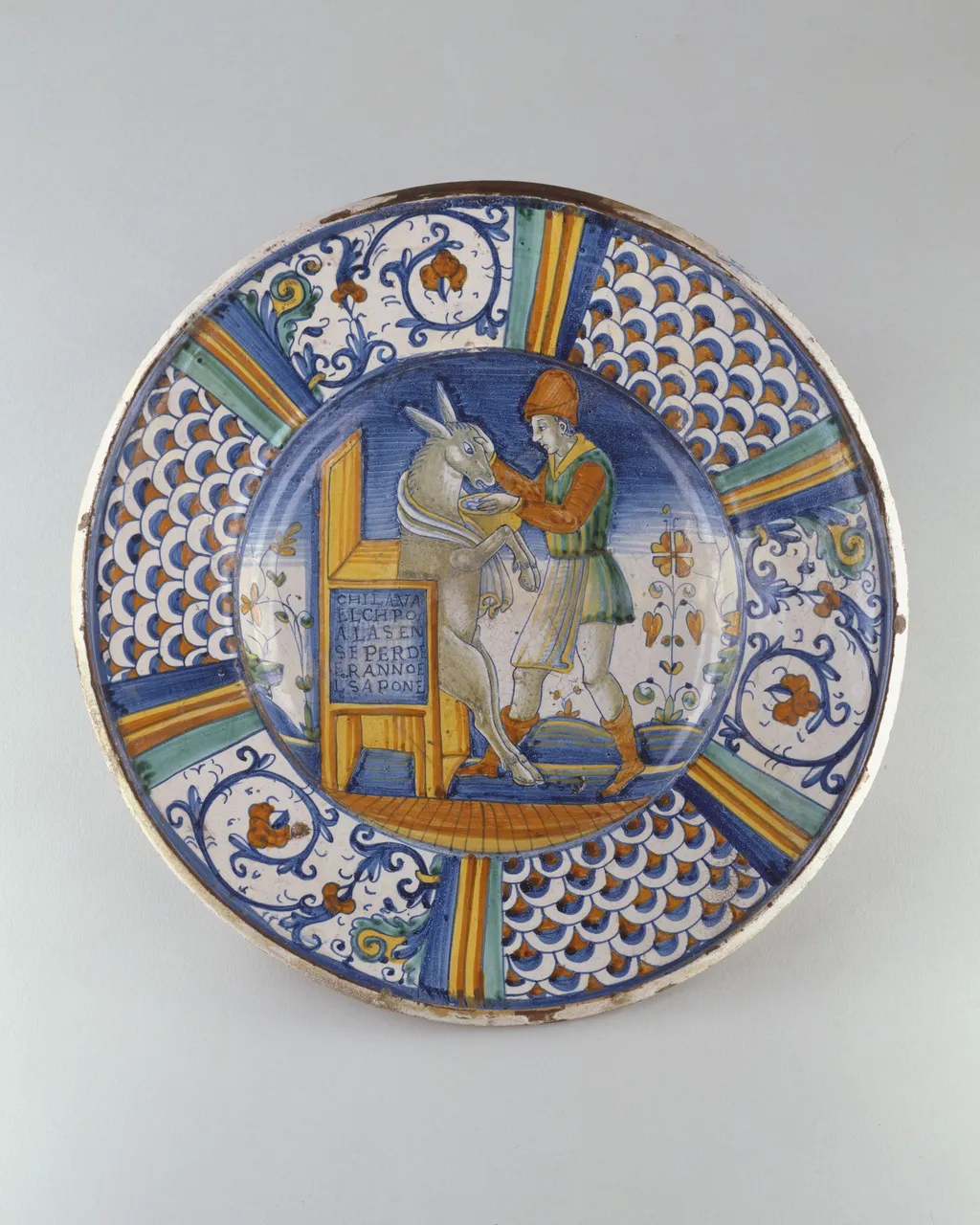
Dish (piatto): Man Washing the Mouth of an Ass is an unspecified painting. It dates from 1555 and is held in the collection of the Metropolitan Museum of Art. The work is a circular painted panel depicting a figure in vivid red and green attire attending to a donkey perched on a low platform.
About this work
Overview
The work is a circular painted panel depicting a figure in vivid red and green attire attending to a donkey perched on a low platform. The animal’s mouth is being brushed as if being cleaned, while a small bowl rests on the ground. Behind the scene a wooden crate bears a Latin inscription, and the surrounding space is filled with striking blue, white and orange decorative motifs.
Subject & Meaning
The composition presents a humorous tableau in which a man appears to wash the mouth of a donkey, treating the animal as though it were a human participant in a ritual. The absurdity of the act, combined with the presence of a Latin‑scripted box, suggests a satirical commentary, possibly mocking pretensions of learning or the folly of certain customs.
Technique & Style
Executed on a round surface, the painting employs flat areas of saturated colour and bold geometric patterns that frame the central figures. The brushwork is precise, rendering the clothing’s folds and the donkey’s texture with clarity, while the background relies on repetitive swirls and stripes to create a lively, ornamental setting typical of decorative plate art.
History & Provenance
The piece originates from a tradition of painted ceramic dishes used for both functional and decorative purposes. Its exact date and creator remain undocumented, but the use of Latin lettering and the stylised motifs align it with European workshop productions of the late Renaissance to early Baroque period, when such novelty items were popular among collectors.
Context
During the era of its creation, painted plates often served as vehicles for allegorical or humorous scenes, reflecting contemporary tastes for wit and visual riddles. The inclusion of a donkey—a common symbol of stubbornness or folly—paired with a human figure in bright costume would have resonated with viewers familiar with emblematic literature and moralizing art.
Artist & collection