Artwork
Vision des hl. Dominikus von Christus mit den drei Lanzen
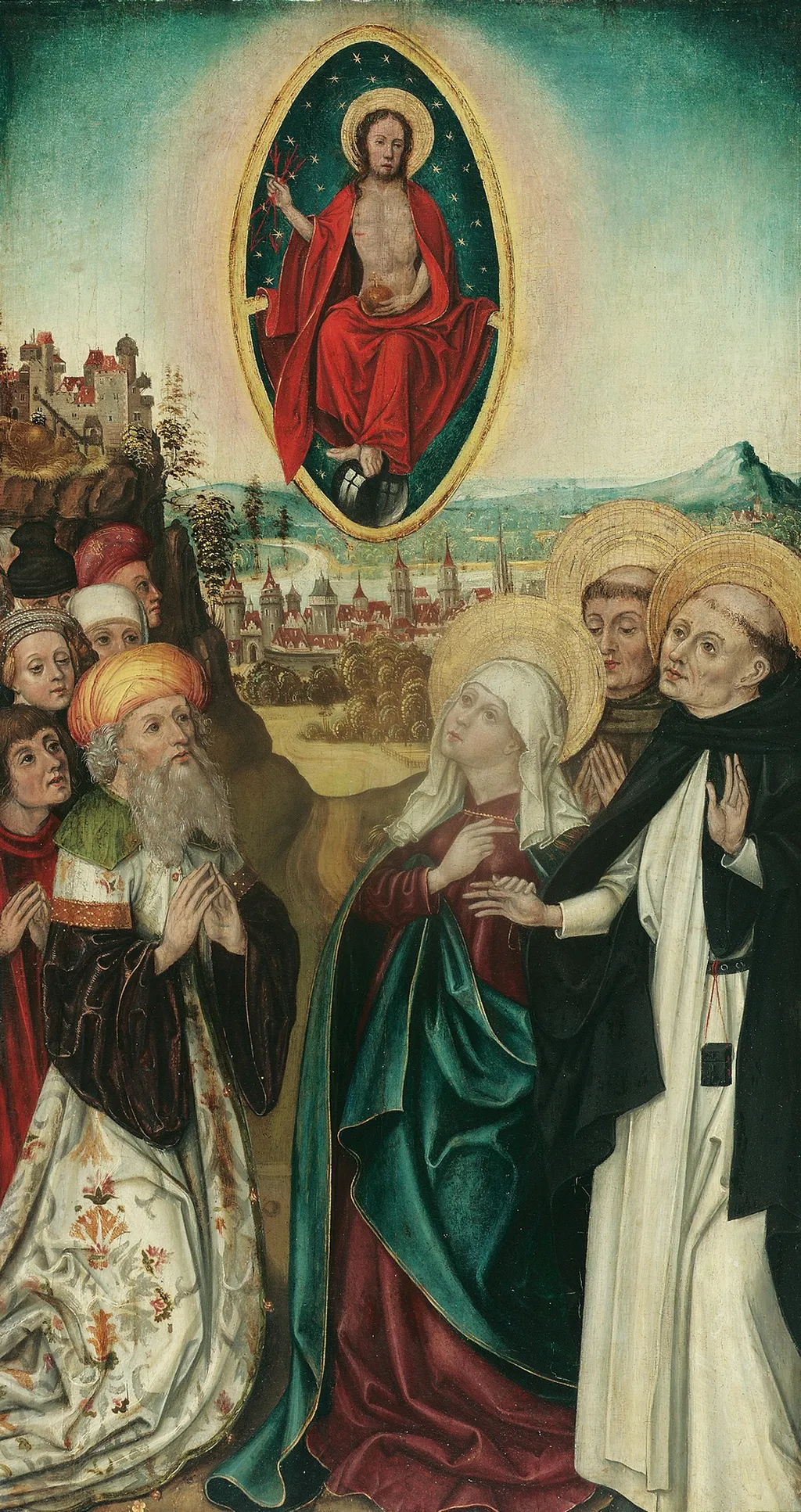
Vision des hl. Dominikus von Christus mit den drei Lanzen is an unspecified painting by the Early Renaissance artist Unknown. It dates from 1490 and is held in the collection of the Kunsthistorisches Museum. The work, titled *Vision des hl.
About this work
Overview
A distant cityscape and rolling hills recede beneath a pale sky, framing the visionary scene.
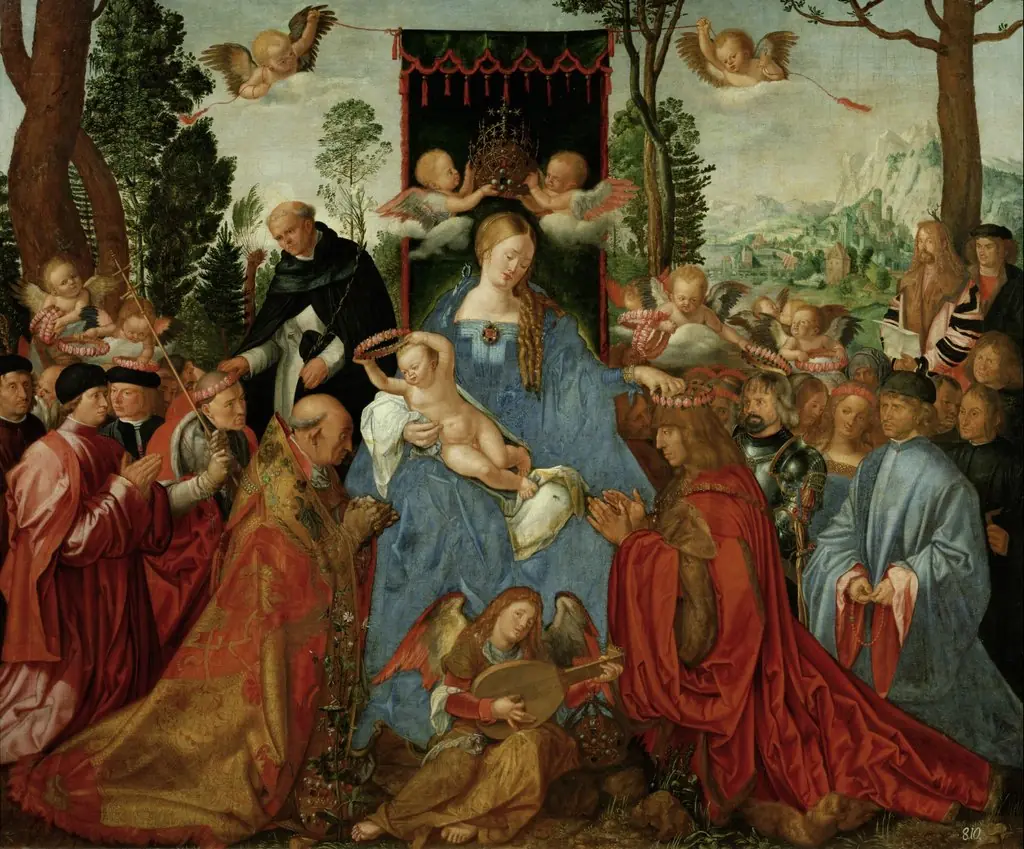
The work, titled *Vision des hl. Dominikus von Christus mit den drei Lanzen*, depicts a celestial figure suspended within a luminous golden aureole, surrounded by a gathering of earthly observers. The central human figures include a woman in a blue‑green robe and a monk in white, while other attendants in varied habits look upward, some touching their chests in reverence. A distant cityscape and rolling hills recede beneath a pale sky, framing the visionary scene.
Subject & Meaning
The central floating figure, robed in red and crowned with a halo studded with stars, holds a small cross‑shaped object, suggesting a sacred revelation or divine instruction. The composition conveys a moment of spiritual encounter, with the assembled group—clergy and laypersons alike—responding to the heavenly vision, emphasizing themes of faith, devotion, and the transmission of holy insight.
Technique & Style
Executed in a manner that emphasizes chiaroscuro, the painting balances bright, radiant light emanating from the aureole against the subdued shadows of the surrounding figures. The contrast heightens the drama of the revelation, while the careful modeling of drapery and facial expressions reflects a late medieval or early Renaissance sensibility, merging symbolic iconography with emerging naturalism.
History & Provenance
The artwork is attributed to an anonymous workshop that produced devotional images for monastic contexts, likely in the German-speaking regions where Saint Dominic was venerated. It entered the museum collection through a 19th‑century acquisition from a private estate, documented in early catalogues as part of a larger series of visionary paintings.
Context
The painting belongs to a tradition of visionary depictions that illustrate mystical experiences of saints, a genre popular in late medieval devotional practice. The inclusion of the three lances—symbolic of the Holy Trinity—aligns the work with contemporary theological emphasis on Christ’s triumph over sin, a motif frequently employed in liturgical art of the period.
Artist & collection

 Domestic Scene
 Giacomo and Cardinal Marco, investing Andrea, Abbot of San Zeno, with his Benefice
 The Nymph of Fontainebleau
 Portrait of a Woman
 Madonna and Child with Saints in the Enclosed Garden
 Venus and Minerva
 Family Group of Four on Sofa
 Wall painting from Room H of the Villa of P. Fannius Synistor at Boscoreale
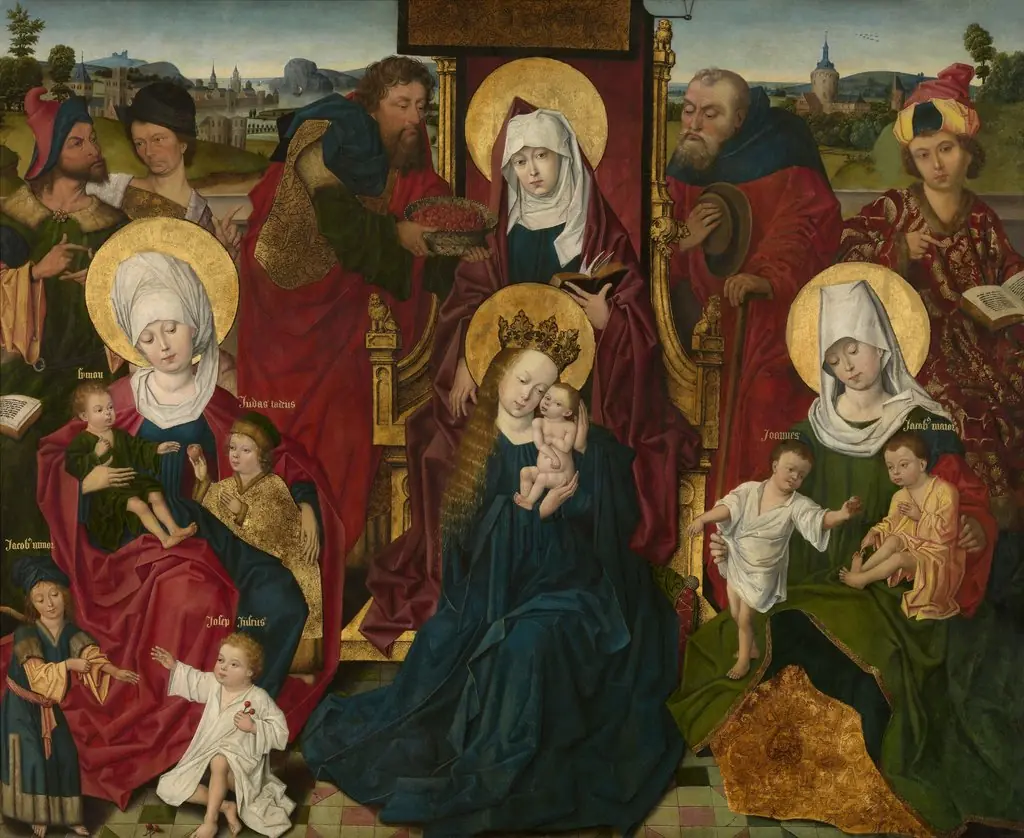 Holy Kinship
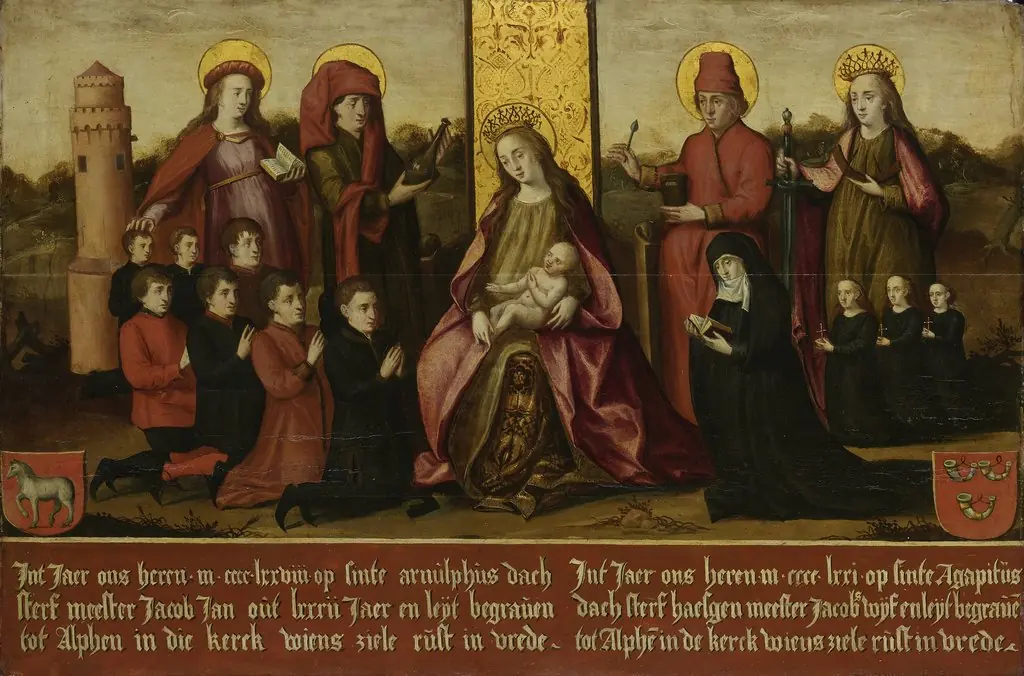 Memorial tablet of Jacob Jan van Assendelft (1396-1478) and his wife Haesgen van Outshoorn (?-1471)
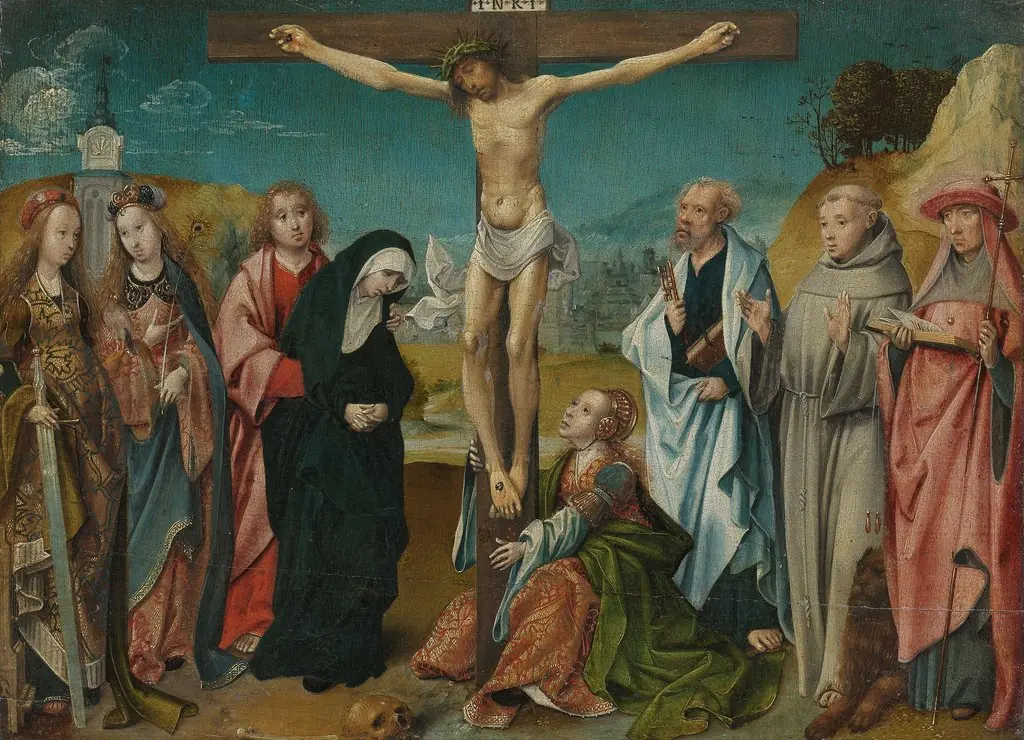 Christ on the cross with the Virgin, St John the Evangelist, Mary Magdalen, and Sts Cecilia and Barbara (left), and Sts Peter, Francis and Jerome (right)
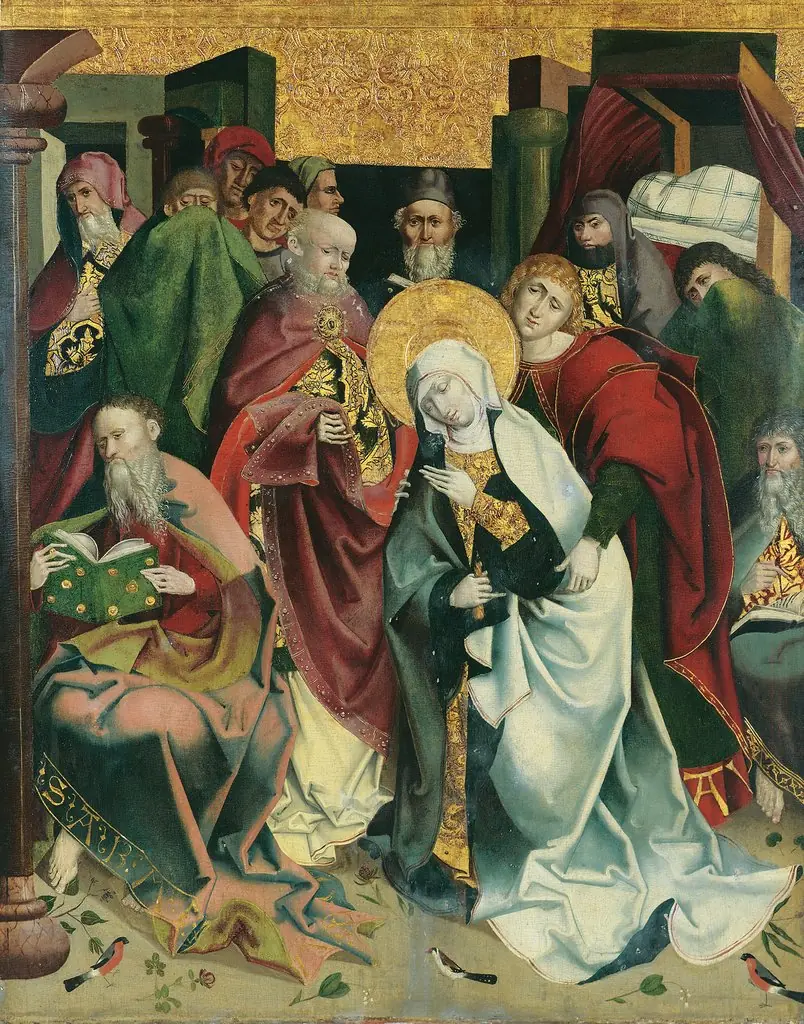 Tod Mariens
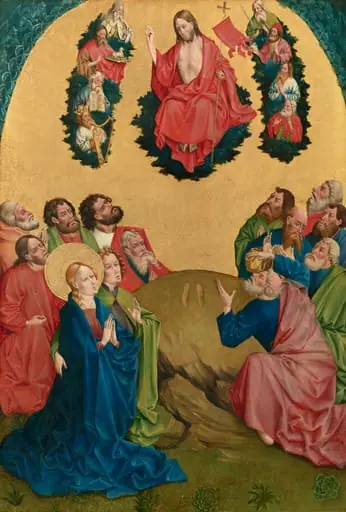 The Ascension
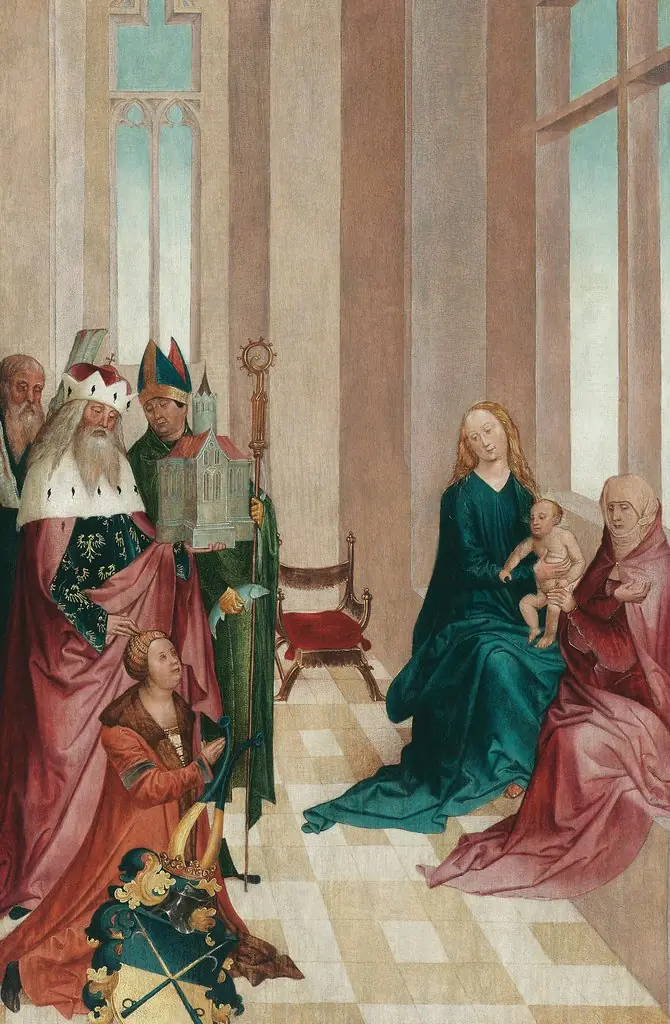 Anna Selbdritt
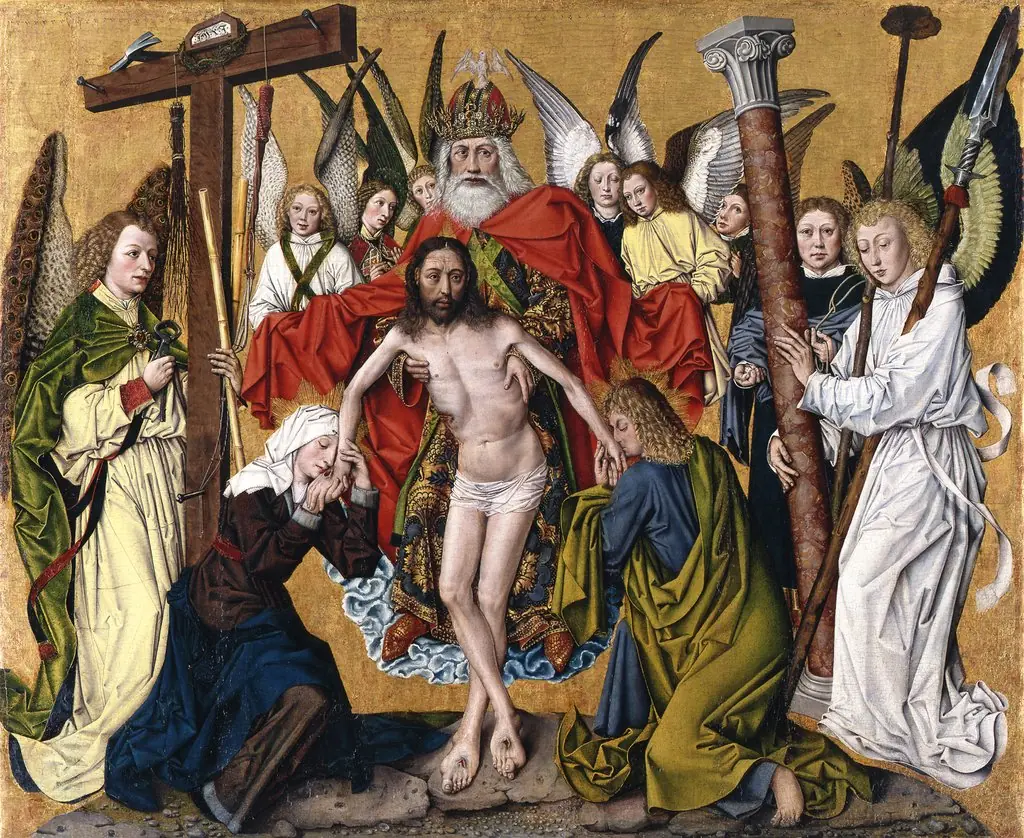 The Throne of Mercy with the Virgin, St. John, and Angels with the Arma Christi
 Rosenkranzfest