Artwork
The Throne of Mercy with the Virgin, St. John, and Angels with the Arma Christi
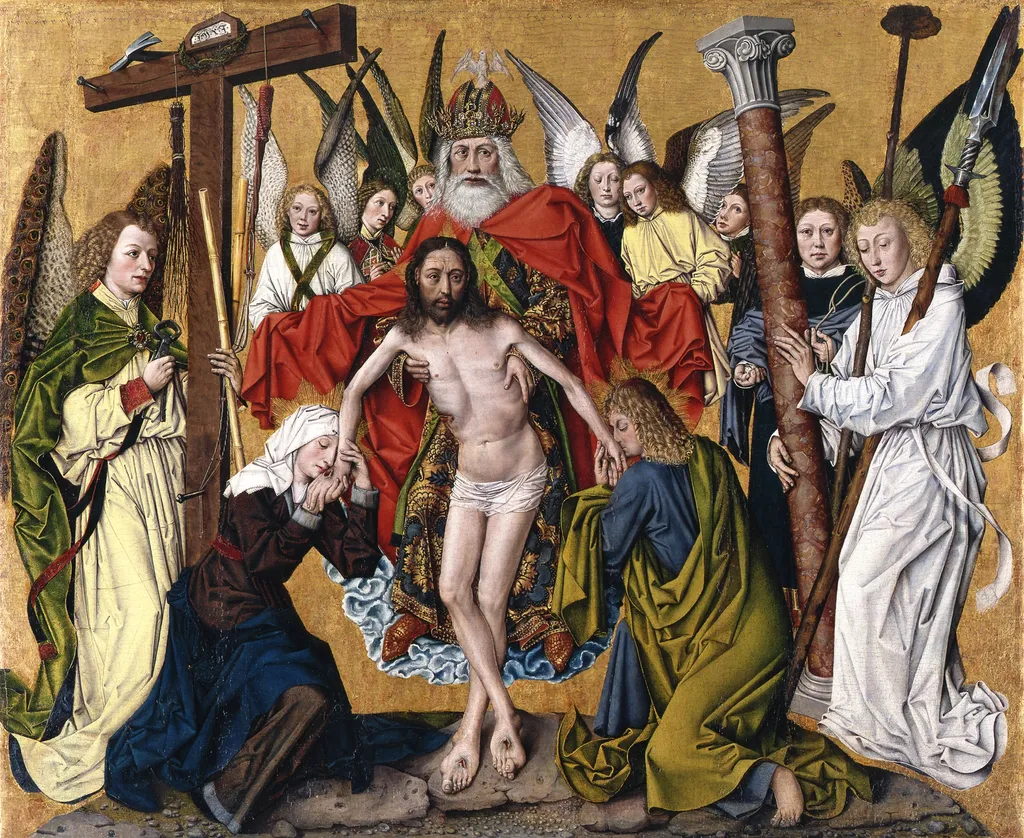
The Throne of Mercy with the Virgin, St. John, and Angels with the Arma Christi is an unspecified painting by Unknown. It dates from 1475 and is held in the collection of the Gemäldegalerie Berlin.
About this work
Overview
This devotional painting depicts the Throne of Mercy, a theological image in which Christ, crowned and bearded, sits in judgment upon a throne.
This devotional painting depicts the Throne of Mercy, a theological image in which Christ, crowned and bearded, sits in judgment upon a throne. He is flanked by the Virgin Mary and Saint John the Evangelist, while angels surround them, holding instruments of the Passion. The golden background and richly detailed robes emphasize sacred space, and the composition directs focus toward the central figure through careful arrangement and lighting.
Subject & Meaning
The scene illustrates the concept of divine mercy, with Christ as the seated judge, his wounds visible, and the Virgin and Saint John interceding on humanity’s behalf. The angels bear the Arma Christi—the tools of Christ’s crucifixion—symbolizing sacrifice and redemption. The arrangement reflects medieval theological ideas of intercession, where saints and angels mediate between the divine and the faithful.
Technique & Style
The artist employs chiaroscuro to model forms with subtle gradations of light and shadow, lending volume to the figures and enhancing spatial depth. Elaborate drapery, fine gold leaf accents, and precise rendering of textures suggest a workshop trained in late Gothic or early Renaissance conventions. The flat, luminous background contrasts with the three-dimensionality of the figures, reinforcing their sacred presence.
History & Provenance
The painting likely originated in a monastic or ecclesiastical setting during the late 14th or early 15th century, a period when Throne of Mercy imagery was common in altarpieces across Southern Europe. Its survival suggests it was preserved in a church or private chapel, possibly commissioned by a religious order or wealthy patron seeking spiritual intercession through visual devotion.
Context
This work belongs to a tradition of devotional art that flourished before the full emergence of humanist naturalism. It reflects liturgical practices centered on Christ’s sacrifice and the intercessory role of saints. Similar compositions appear in panel paintings from Italy, France, and the Low Countries, often used in private prayer or as focal points during Mass.
Legacy
Though later artistic movements shifted toward more naturalistic or emotionally charged depictions, this painting preserves a key visual language of medieval piety. Its structured symbolism and reverence for sacred hierarchy influenced early Renaissance altarpieces and remain a reference point for understanding pre-humanist religious expression in European art.
Artist & collection

 Domestic Scene
 Giacomo and Cardinal Marco, investing Andrea, Abbot of San Zeno, with his Benefice
 The Nymph of Fontainebleau
 Portrait of a Woman
 Madonna and Child with Saints in the Enclosed Garden
 Venus and Minerva
 Family Group of Four on Sofa
 Wall painting from Room H of the Villa of P. Fannius Synistor at Boscoreale
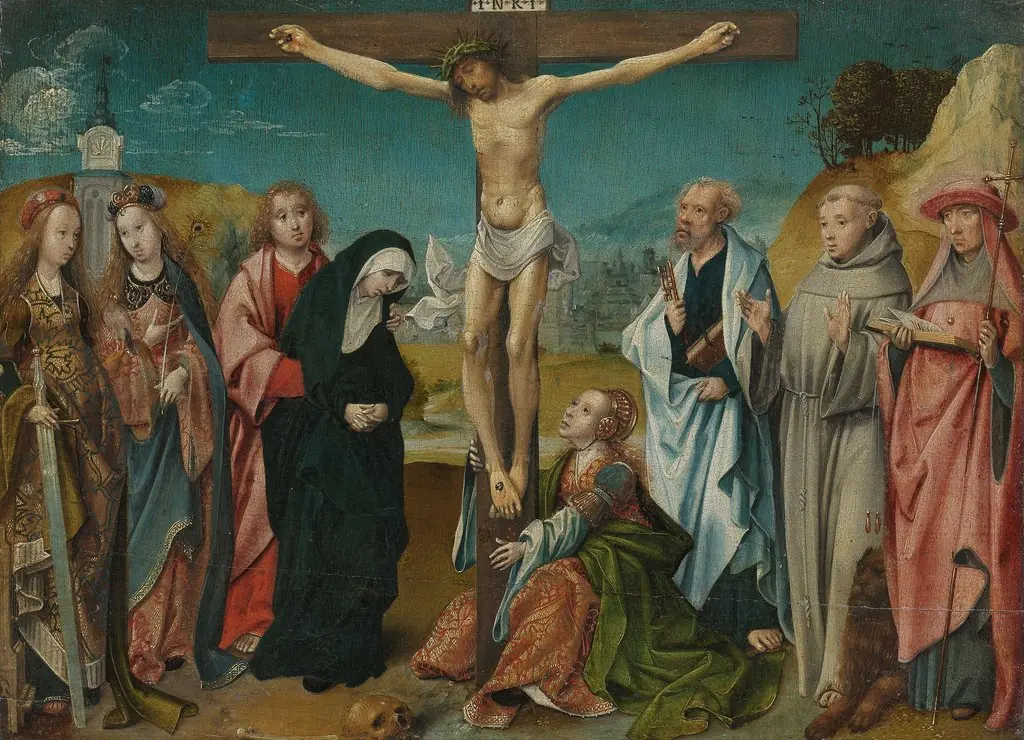 Christ on the cross with the Virgin, St John the Evangelist, Mary Magdalen, and Sts Cecilia and Barbara (left), and Sts Peter, Francis and Jerome (right)
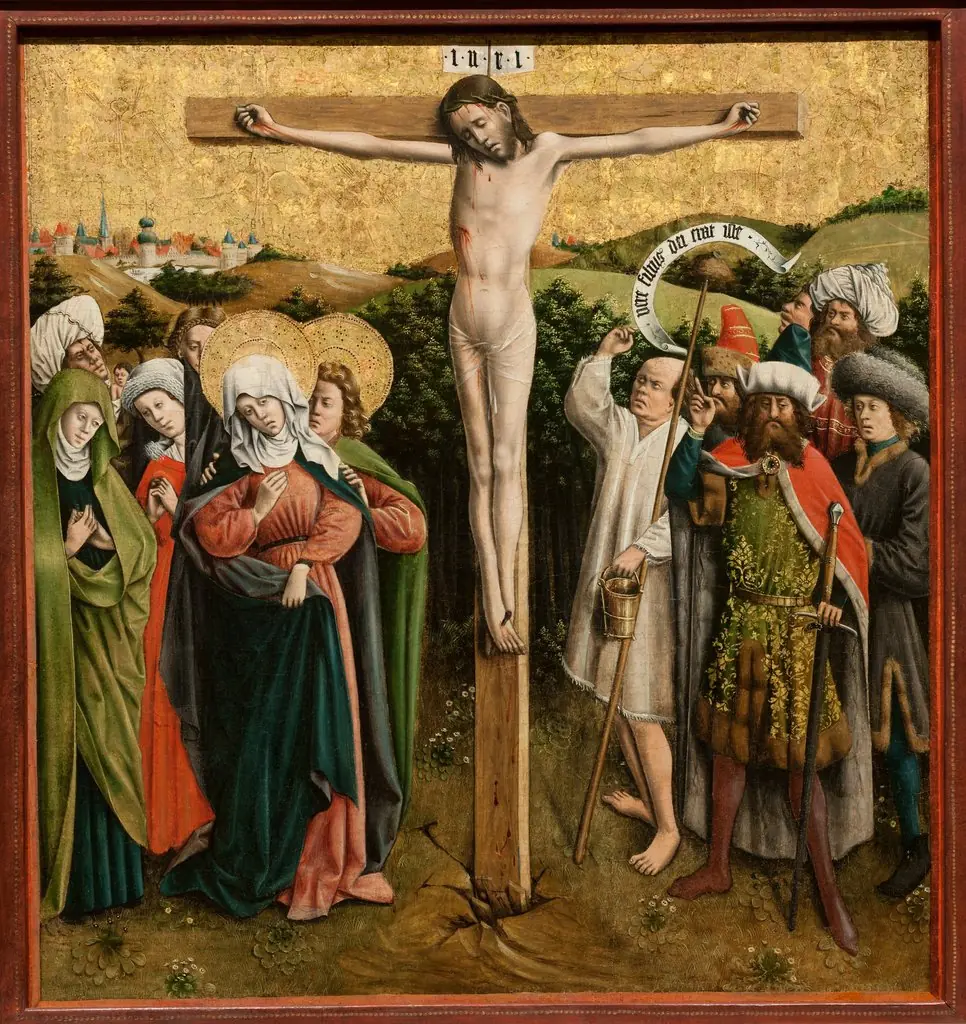 Altarpiece with The Passion of Christ
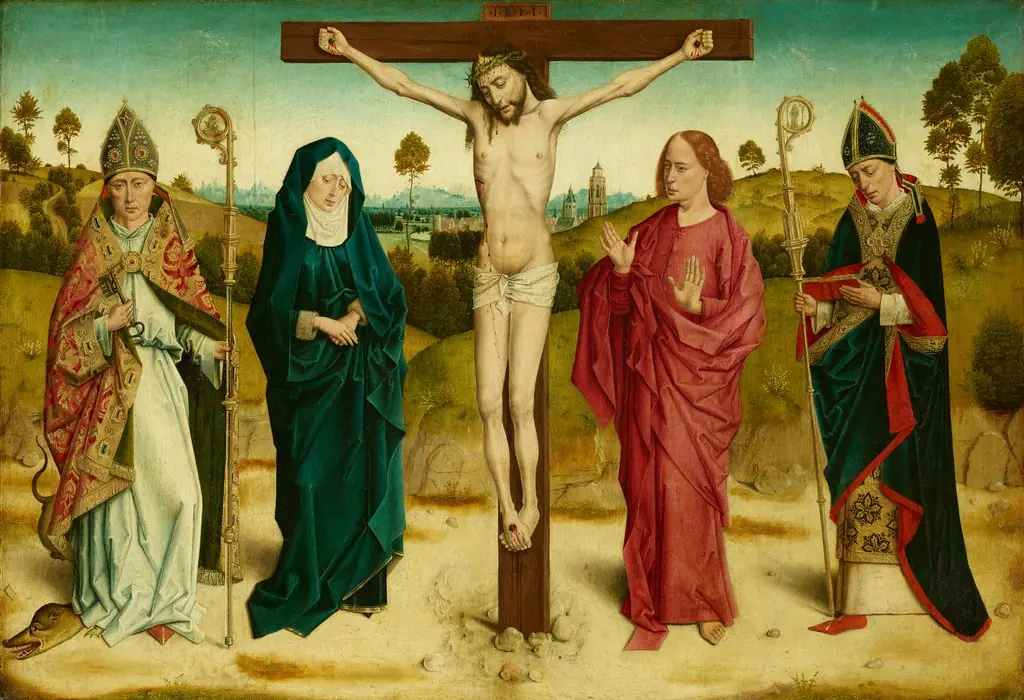 Christ crucified between Mary and John the Evangelist and the saints Adolphus and Ambrosius
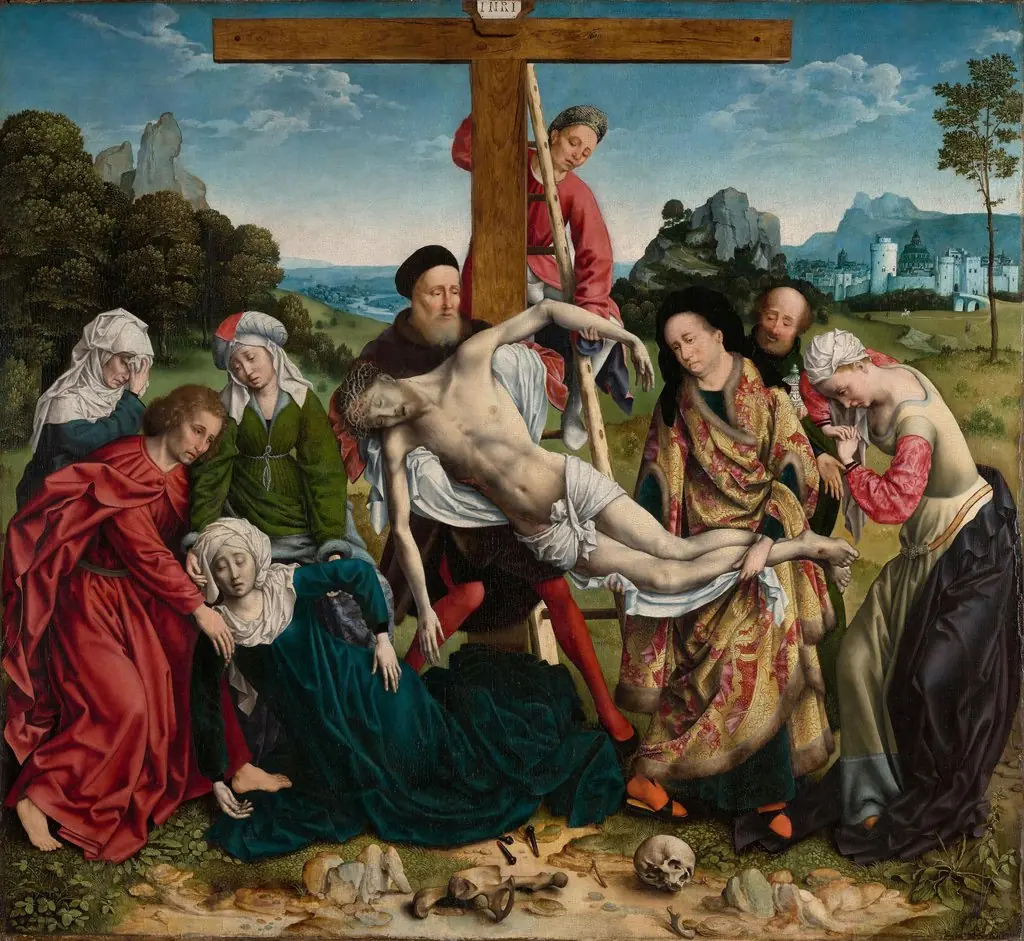 The Descent from the Cross
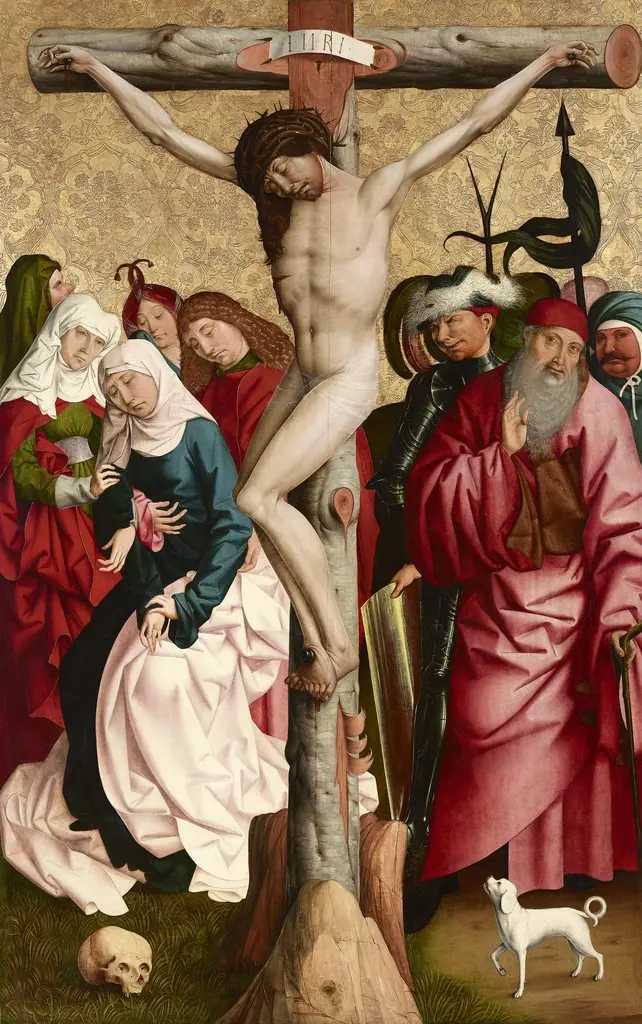 Kreuzigung Christi
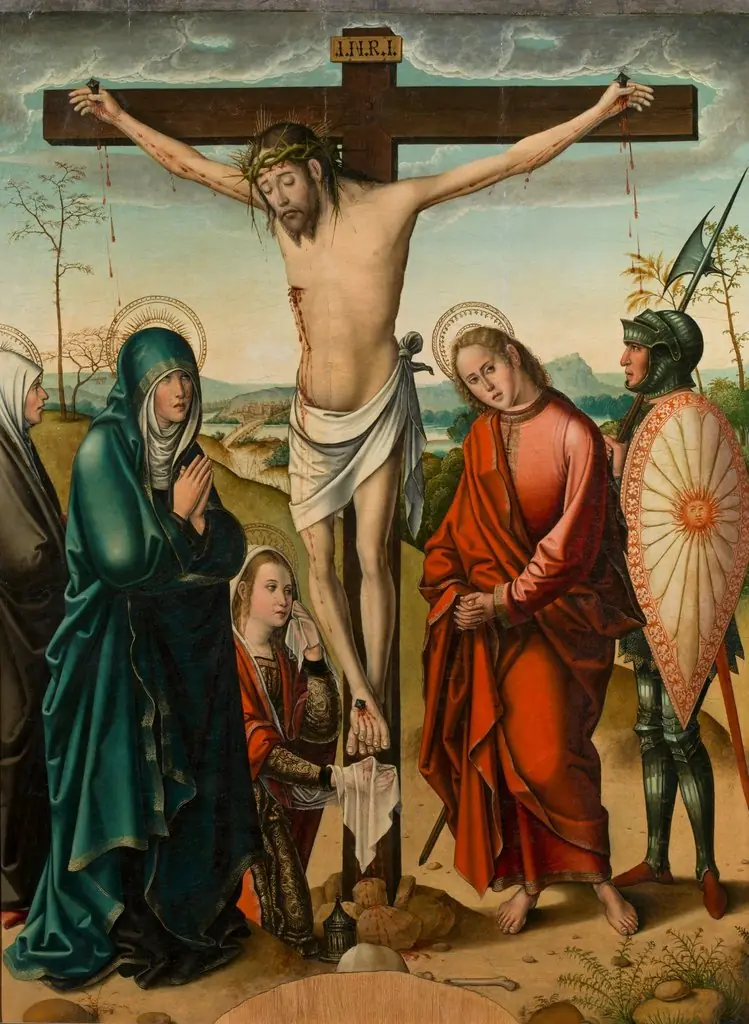 Crucifixión
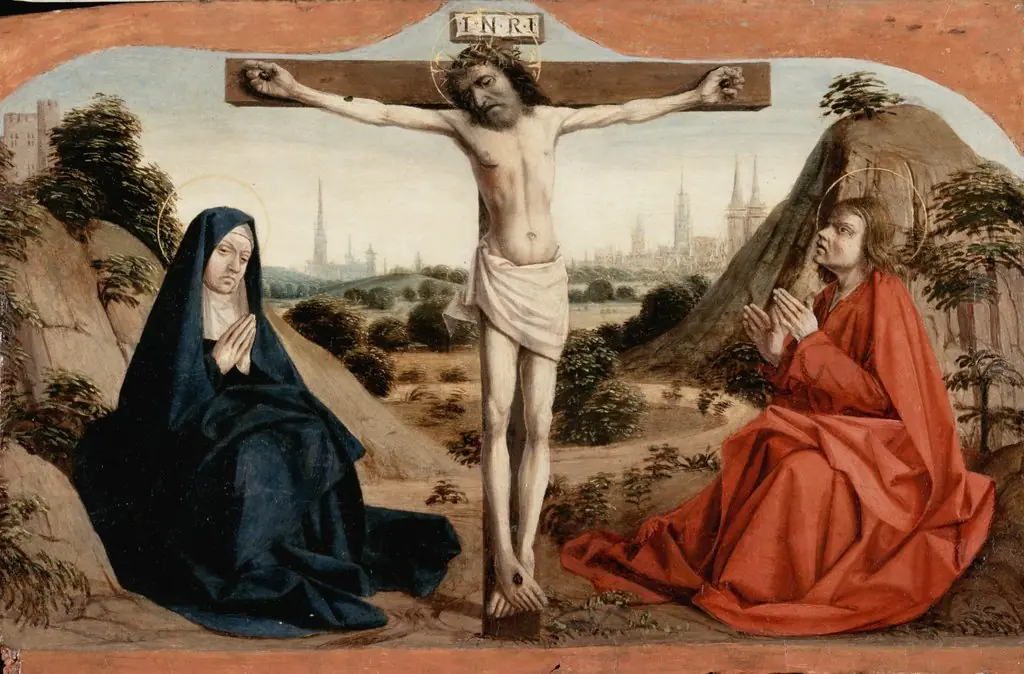 Crucifixion
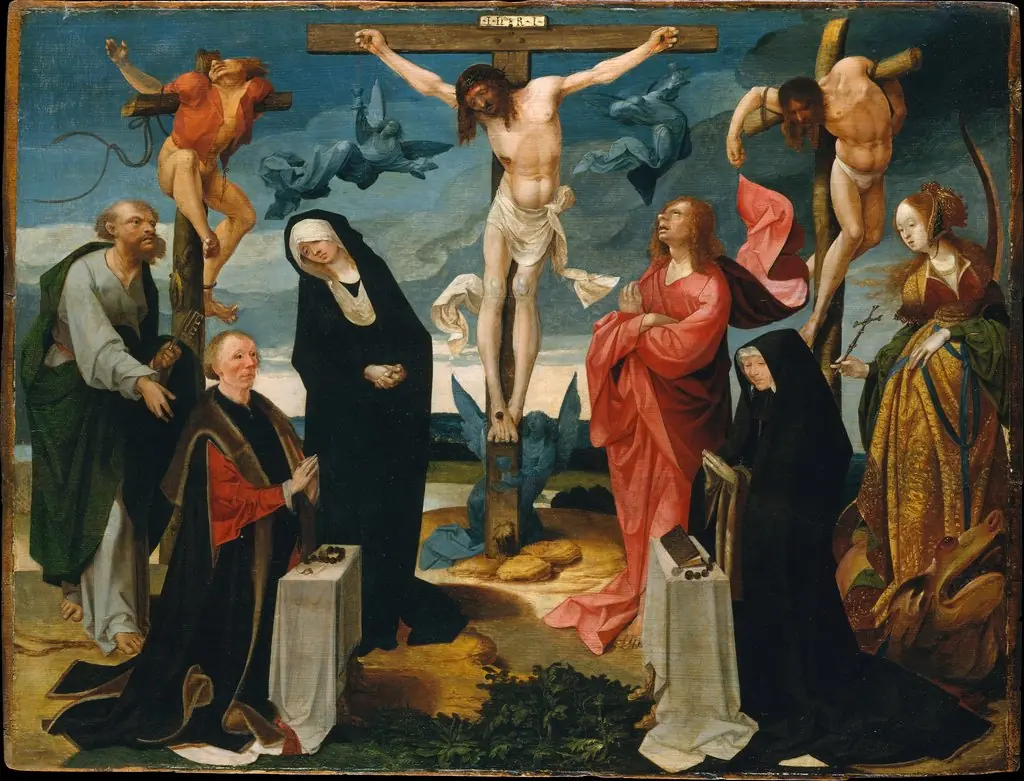 The Crucifixion with Donors and Saints Peter and Margaret
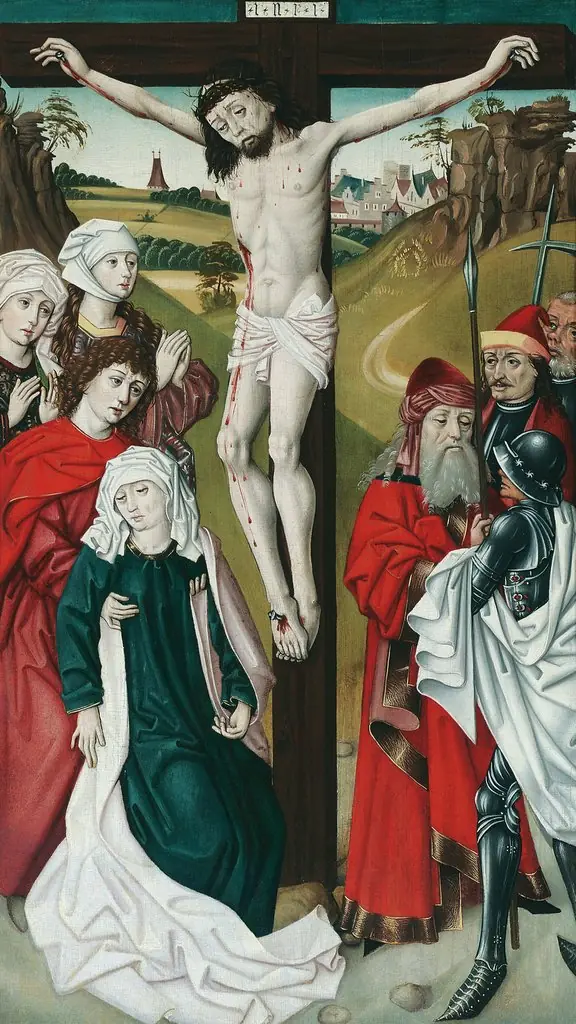 Kreuzigung Christi
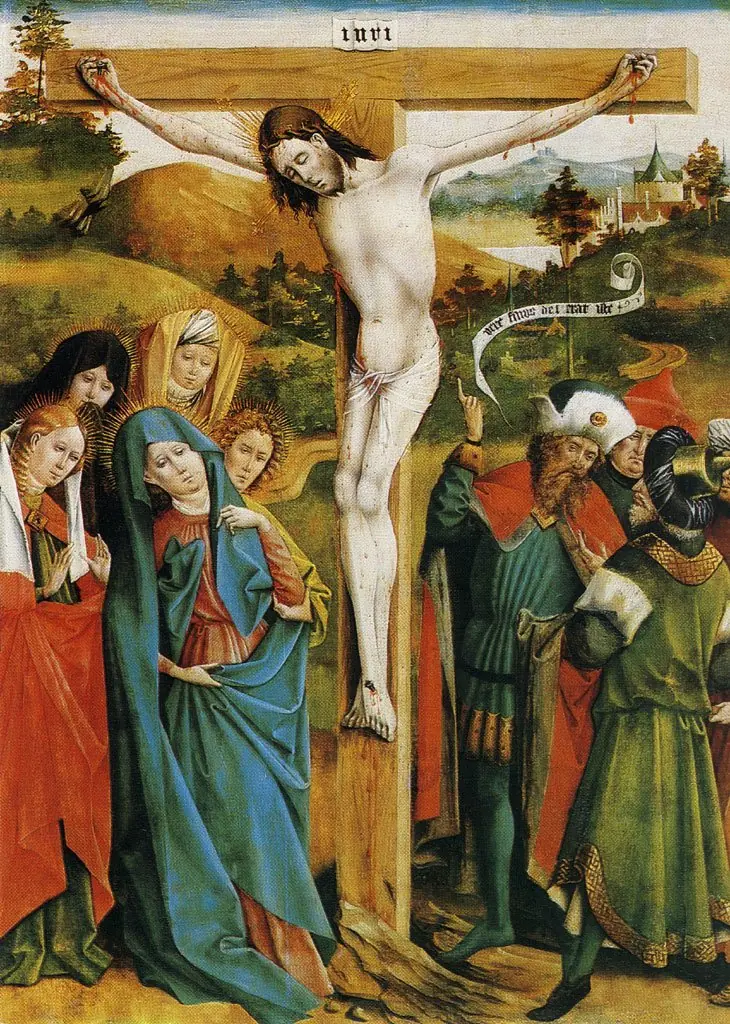 Crucifixion of Christ
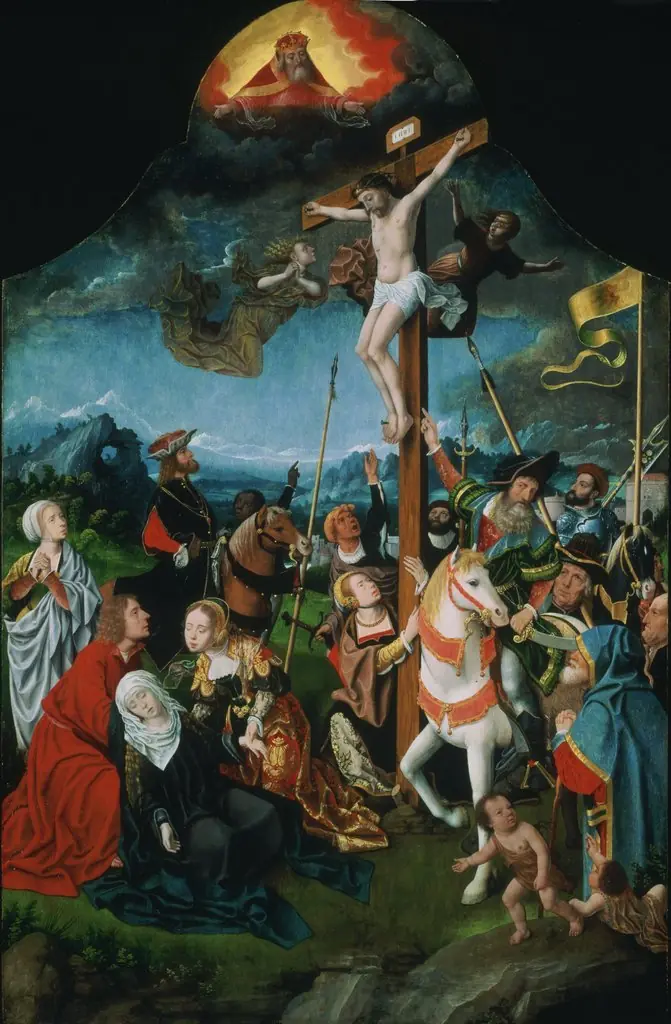 The Crucifixion
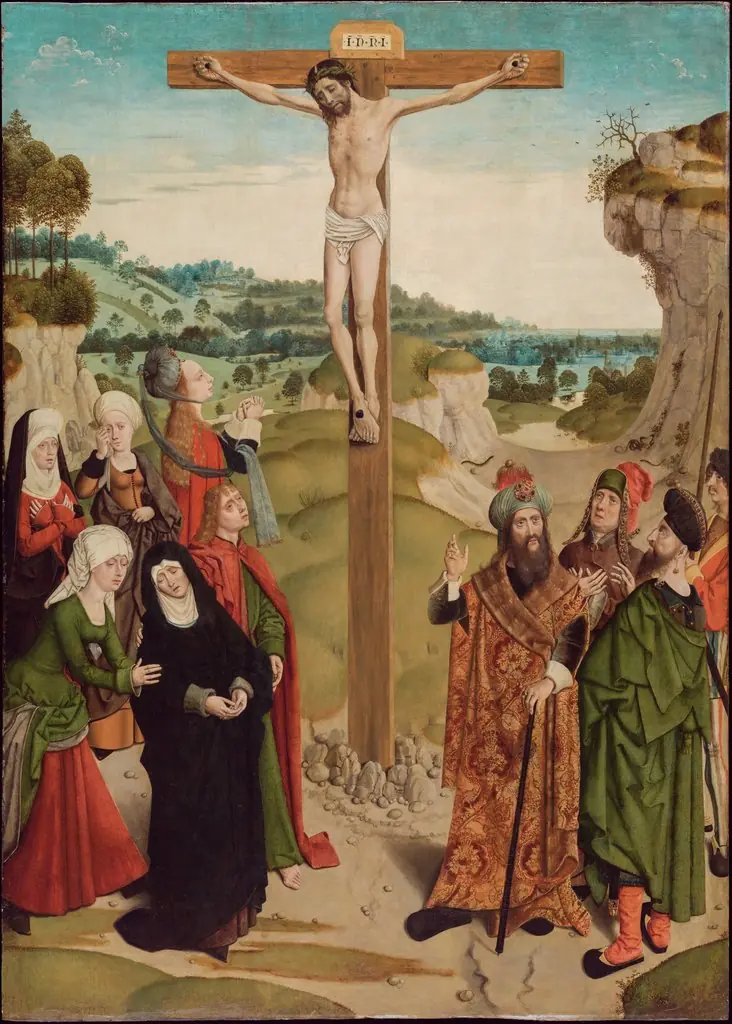 Crucifixion