Artwork
Römische Ruinenlandschaft
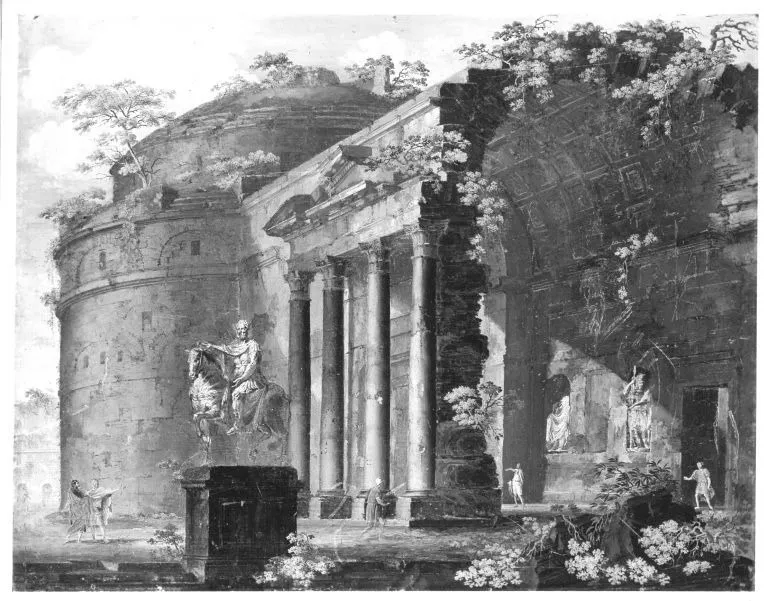
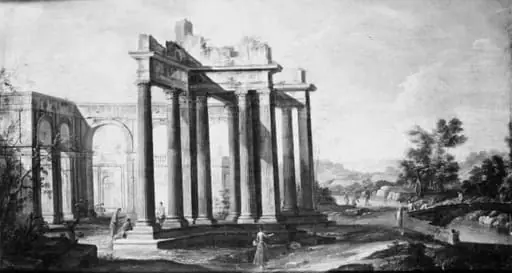
Römische Ruinenlandschaft is an unspecified painting by the Rococo painting artist Unknown. It dates from 1700 and is held in the collection of the Bavarian State Painting Collections. This painting presents a tranquil scene of Roman architectural remnants overgrown by nature.
About this work
Overview
Figures in the foreground engage in quiet, contemplative activities, reinforcing the mood of stillness and time passed.
This painting presents a tranquil scene of Roman architectural remnants overgrown by nature. A central domed structure, flanked by columns, stands amid dense vegetation that has reclaimed the stones. Figures in the foreground engage in quiet, contemplative activities, reinforcing the mood of stillness and time passed. The composition balances architectural grandeur with the quiet persistence of the natural world.
Subject & Meaning
The scene evokes the passage of time through the contrast between human-made structures and the encroaching wilderness. The figures—reading, playing music—suggest a quiet reverence for the past, as if the ruins serve as a stage for enduring human ritual. There is no narrative drama, only a meditative sense of loss and continuity, where culture lingers in the silence of decay.
Technique & Style
The artist employs soft, diffused lighting to enhance the texture of weathered stone and the lushness of foliage. Brushwork is deliberate but unobtrusive, allowing layers of moss, cracked marble, and draped vines to emerge with subtle detail. Colors are muted, dominated by earth tones and pale greens, reinforcing the painting’s somber, reflective tone without theatricality.
History & Provenance
Created in the 18th century, the work reflects a growing European fascination with antiquity during the Grand Tour era. Likely painted by an artist familiar with Roman ruins, it may have been commissioned by a collector seeking to capture the romantic allure of classical remains. Its early provenance traces to private collections in Germany or Italy, where such landscapes were prized for their intellectual and aesthetic resonance.
Context
This painting emerged amid a broader cultural interest in antiquity, fueled by archaeological discoveries and Enlightenment ideals. Unlike grand historical scenes, it focuses on quiet ruin, aligning with emerging sensibilities that valued melancholy and introspection. It resonated with contemporaries who saw in ancient ruins not just relics, but mirrors of civilization’s impermanence.
Legacy
The work contributed to a genre that prioritized atmosphere over narrative, influencing later landscape painters who explored time and decay. Its restrained emotional tone and attention to natural reclamation set a precedent for 19th-century Romantic interpretations of antiquity. Though not widely reproduced, it remains a quiet example of how ruins were used to contemplate history’s quiet persistence.
Artist & collection

 Domestic Scene
 Giacomo and Cardinal Marco, investing Andrea, Abbot of San Zeno, with his Benefice
 The Nymph of Fontainebleau
 Portrait of a Woman
 Madonna and Child with Saints in the Enclosed Garden
 Venus and Minerva
 Family Group of Four on Sofa
 Wall painting from Room H of the Villa of P. Fannius Synistor at Boscoreale
 Roman Ruins and Gravemonuments
 Roman Ruins and Gravemonuments
 Imaginary Architectural Monuments
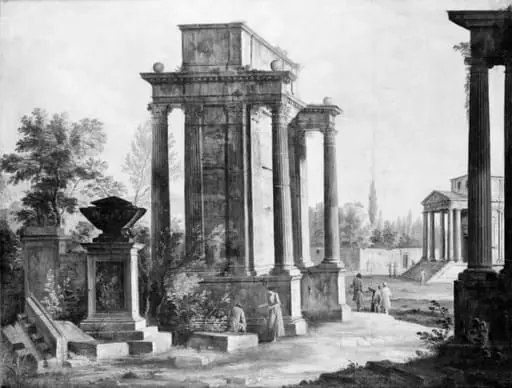 Imaginary Architectural Monuments
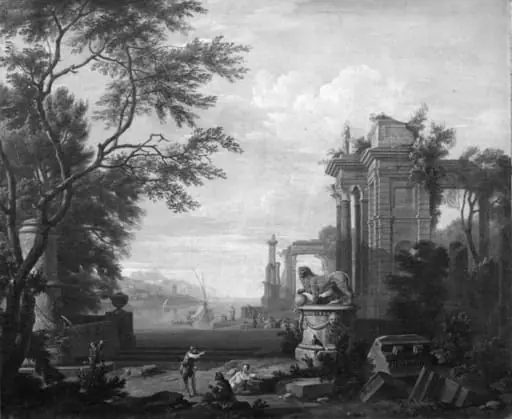 Southern Harbour
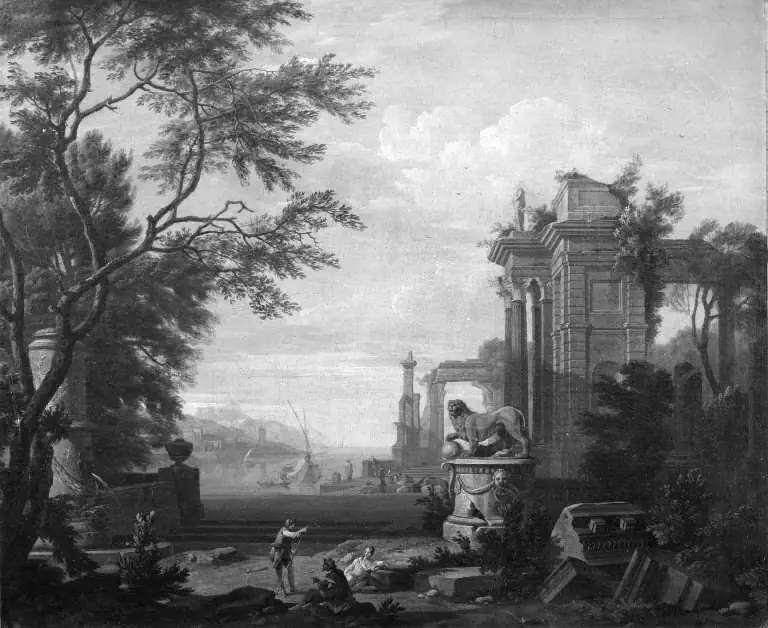 Southern Harbour
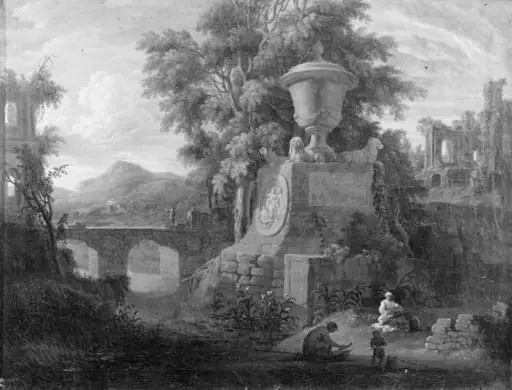 River Landscape
 Architekturbild
 Italienisch-klassische Landschaft
 AEdis antiquae, AEdificiorumque adiacentium fragmenta
 Nymphs in a Cave with Antique Ruins
 Landskab med ruiner