Artwork
The Magdalen at the Tomb of Christ
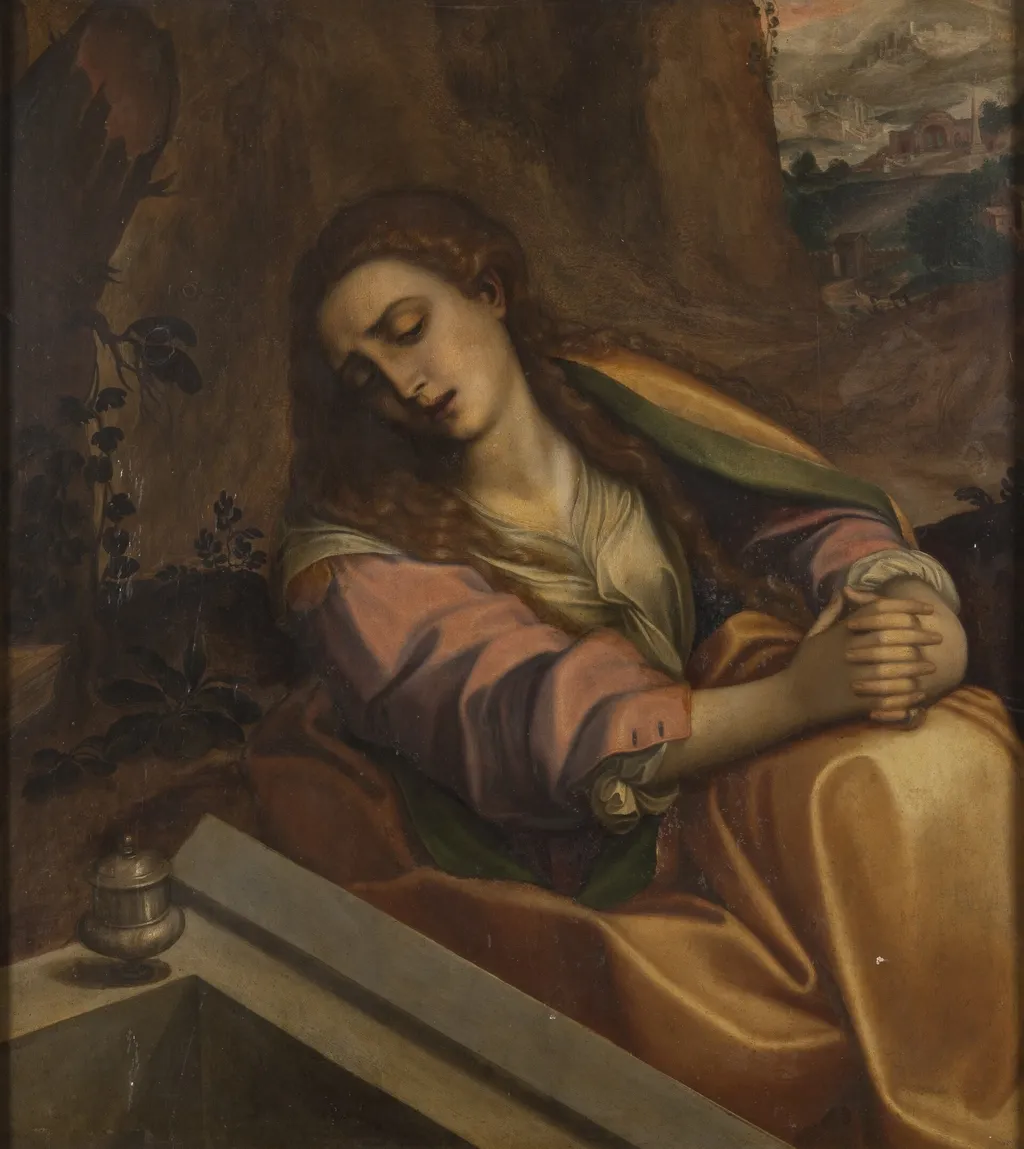
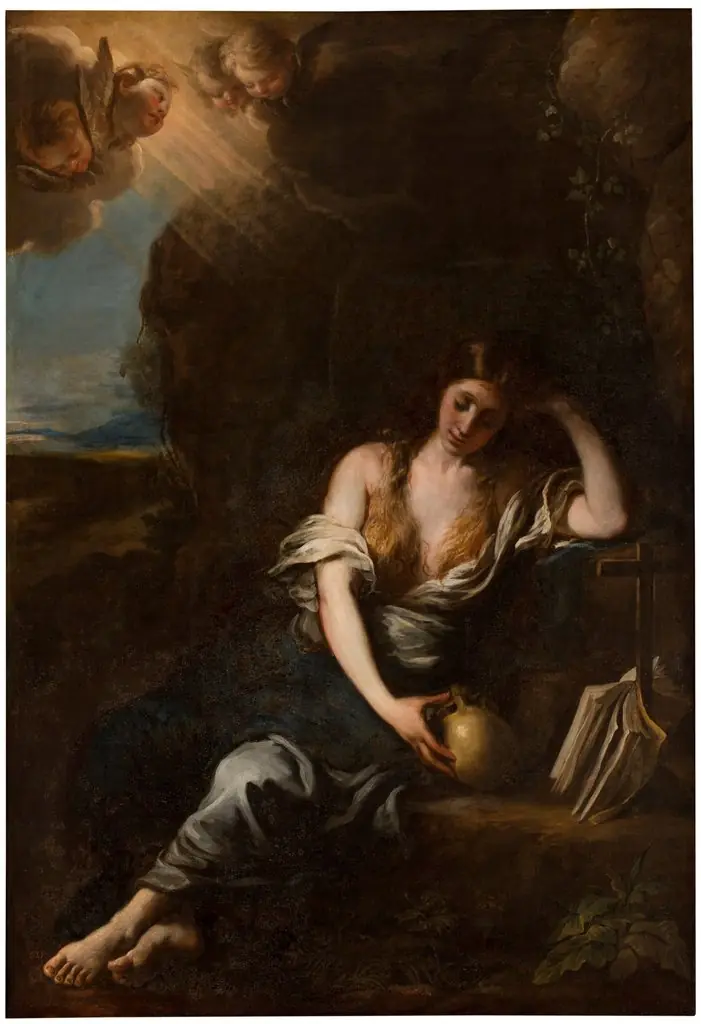
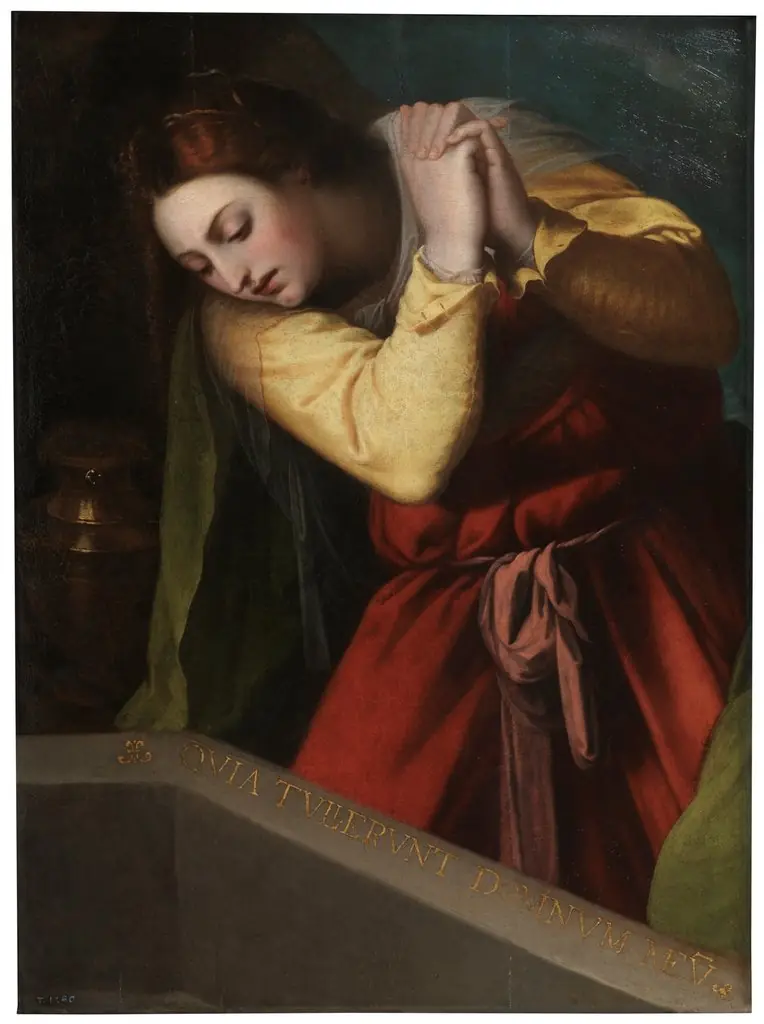
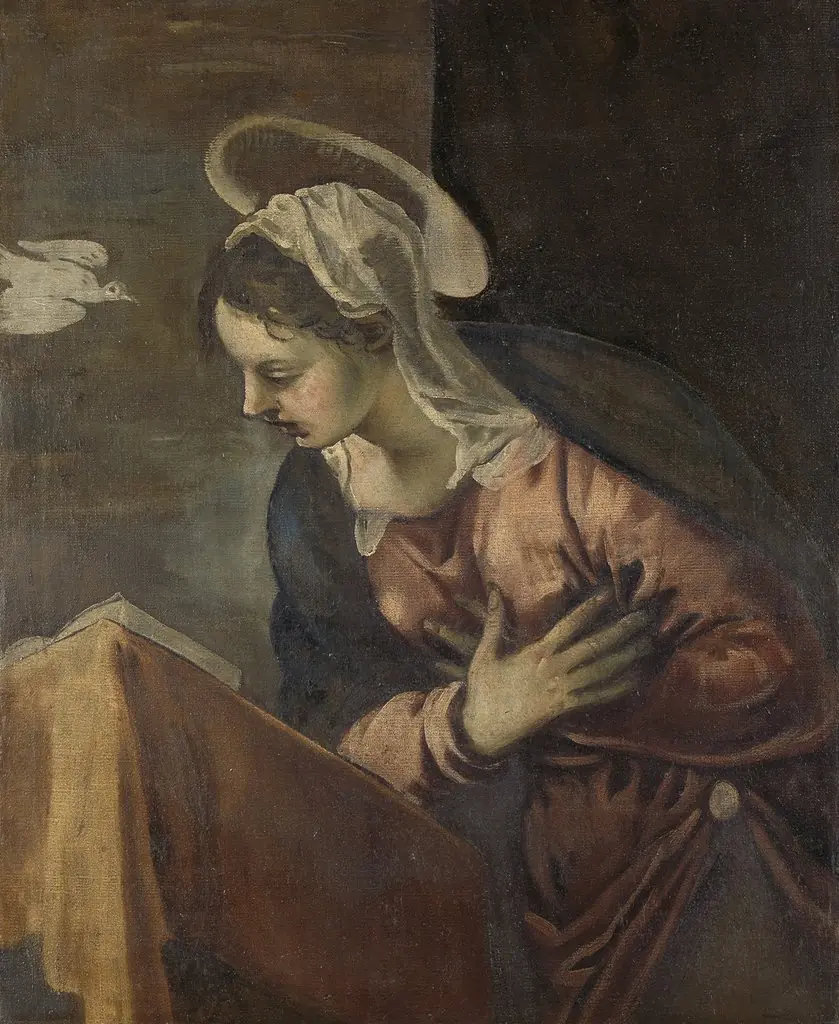
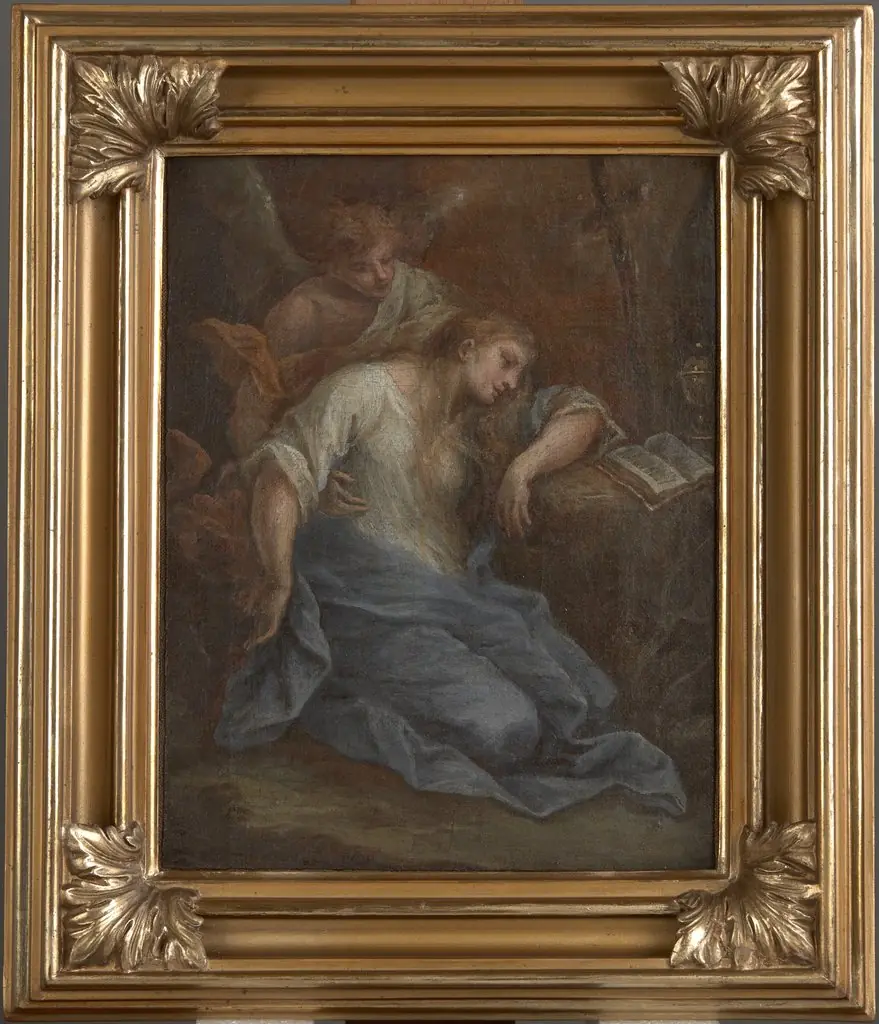
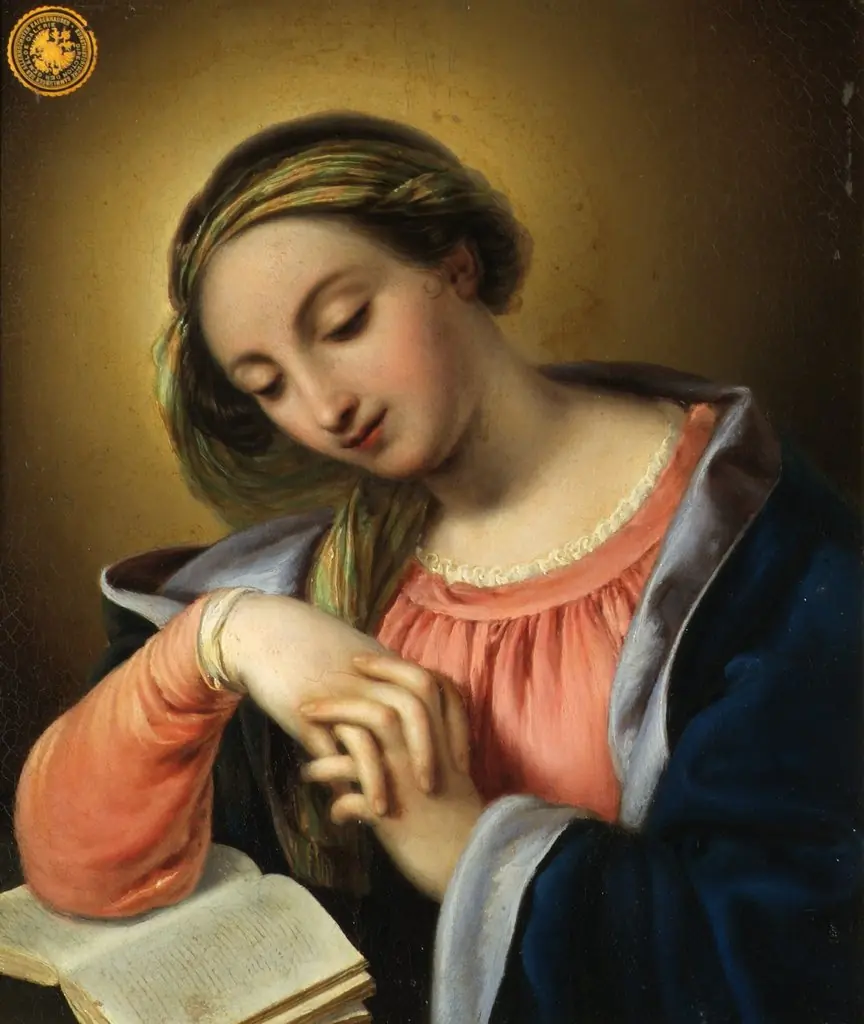
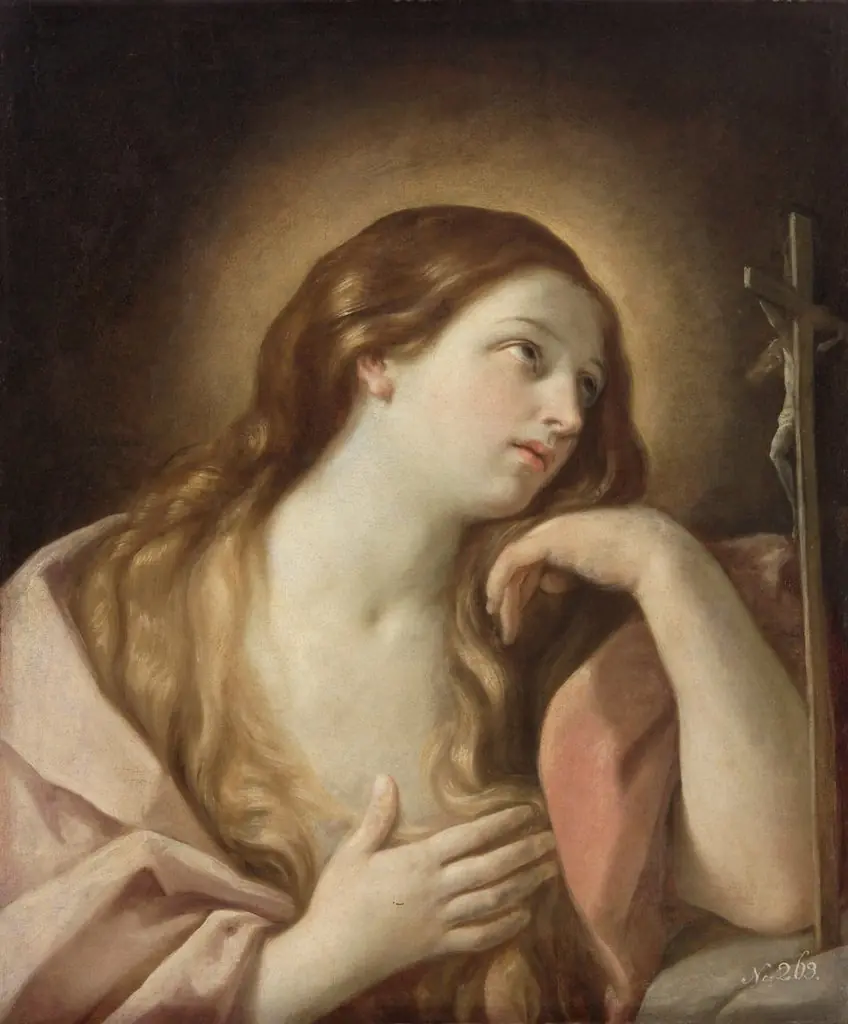
The Magdalen at the Tomb of Christ is an oil painting by Unknown. It is held in the collection of the Nationalmuseum. This oil painting portrays Mary Magdalene seated beside the tomb of Christ, her posture conveying quiet grief.
About this work
Overview
The use of chiaroscuro enhances the three-dimensionality of her form and focuses attention on her expression, reinforcing the painting’s contemplative tone.
This oil painting portrays Mary Magdalene seated beside the tomb of Christ, her posture conveying quiet grief. The composition centers on her solitary figure against a dim, atmospheric background, with subtle landscape elements faintly visible behind her. The use of chiaroscuro enhances the three-dimensionality of her form and focuses attention on her expression, reinforcing the painting’s contemplative tone.
Subject & Meaning
The figure represents Mary Magdalene in the moment after Christ’s resurrection, as described in the Gospels, when she encounters the empty tomb. Her downward gaze and slumped posture suggest mourning and introspection rather than joy, emphasizing her personal sorrow and spiritual awakening. The tomb, though unadorned, serves as both a physical site and a symbolic threshold between death and revelation.
Technique & Style
The artist employs chiaroscuro to model the figure with soft transitions between light and shadow, lending volume to the robe and cloak. The palette is restrained, dominated by muted earth tones and the cool green of the drapery, which contrasts subtly with the dark background. Brushwork is smooth and deliberate, avoiding dramatic flourish in favor of quiet emotional resonance.
History & Provenance
The painting’s origin is not definitively documented, but its style aligns with late Renaissance or early Baroque devotional works from Italy or the Low Countries. It likely served as a private meditation piece, commissioned for personal or chapel use. No known records trace its early ownership, though its intimate scale suggests domestic rather than public display.
Context
During the Counter-Reformation, images of Mary Magdalene were widely used to evoke penitence and devotion. Her depiction as a solitary mourner at the tomb resonated with contemporary spiritual ideals emphasizing inner reflection and emotional piety. Artists often avoided overt drama, favoring stillness to invite viewers into personal contemplation.
Legacy
The painting exemplifies a quiet strand of religious art that prioritized psychological depth over narrative spectacle. While not widely reproduced or celebrated in major collections, it reflects a broader trend in early modern devotional imagery that valued subtlety and emotional authenticity, influencing later generations of painters seeking to convey inner life through gesture and light.
Artist & collection

 Domestic Scene
 Giacomo and Cardinal Marco, investing Andrea, Abbot of San Zeno, with his Benefice
 The Nymph of Fontainebleau
 Portrait of a Woman
 Madonna and Child with Saints in the Enclosed Garden
 Venus and Minerva
 Family Group of Four on Sofa
 Wall painting from Room H of the Villa of P. Fannius Synistor at Boscoreale