Artwork
Herzog Albrecht IV. Wittelsbach Bayern
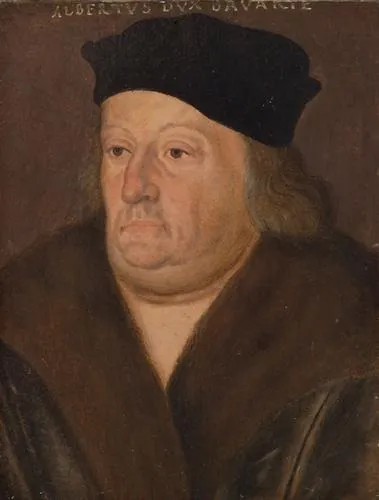
Herzog Albrecht IV. Wittelsbach Bayern is an unspecified painting by the Mannerist artist Unknown. It dates from 1550 and is held in the collection of the Kunsthistorisches Museum.
About this work
Overview
The painting’s focus on facial structure and textile detail reflects a growing interest in individual identity during the late 15th century.
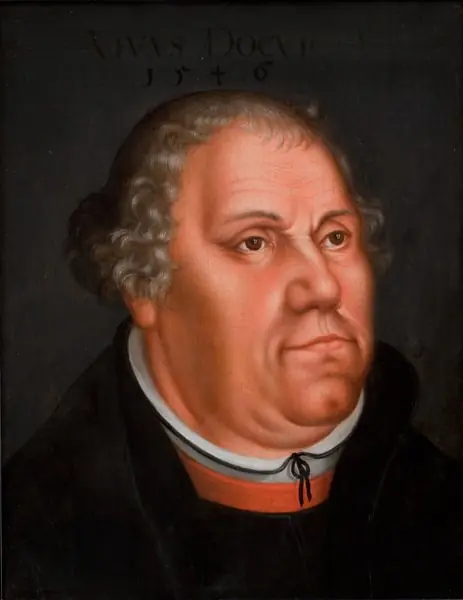
This portrait depicts Albrecht IV, Duke of Bavaria from the Wittelsbach dynasty, rendered in a detailed, lifelike style characteristic of early Renaissance portraiture. The subject is shown in three-quarter view against a plain brown background, emphasizing his presence without distraction. The painting’s focus on facial structure and textile detail reflects a growing interest in individual identity during the late 15th century.
Subject & Meaning
Albrecht IV, ruler of Bavaria-Munich from 1465 to 1508, is portrayed with solemn dignity, his expression conveying authority and introspection. His attire—a dark robe and close-fitting black hat—signals his noble status and adherence to courtly decorum. The absence of symbols or heraldry suggests an emphasis on personal presence rather than dynastic display, aligning with emerging humanist ideals of individual character.
Technique & Style
The artist employs fine brushwork to capture the texture of fabric, with subtle gradations of shadow defining the folds of the robe and the contours of the face. The rendering of skin and the slight modeling of the double chin and nose reflect a commitment to naturalism. The solid, unadorned background enhances the figure’s three-dimensionality, a technique common in Northern Renaissance portraiture of the period.
History & Provenance
The painting likely originated in Munich during Albrecht IV’s reign, commissioned by the ducal court or a close associate. It remained within Bavarian collections for centuries, documented in 18th-century inventories of the Wittelsbach family’s holdings. Its survival through political upheavals suggests it was valued as a dynastic record rather than a decorative object.
Context
Created around the turn of the 16th century, the portrait emerges during a time when German courts increasingly adopted Renaissance aesthetics from the Low Countries. While Italian art emphasized idealization, Northern artists prioritized precise observation. Albrecht’s likeness aligns with this regional trend, reflecting the cultural exchange between Bavaria and centers like Nuremberg and Brussels.
Legacy
The portrait serves as a visual archive of Bavarian nobility during a period of territorial consolidation. It contributes to the corpus of early German Renaissance portraiture, illustrating how local rulers used visual representation to assert legitimacy. Though not widely exhibited today, it remains a key reference for studies of courtly identity in late medieval Germany.
Artist & collection

 Domestic Scene
 Giacomo and Cardinal Marco, investing Andrea, Abbot of San Zeno, with his Benefice
 The Nymph of Fontainebleau
 Portrait of a Woman
 Madonna and Child with Saints in the Enclosed Garden
 Venus and Minerva
 Family Group of Four on Sofa
 Wall painting from Room H of the Villa of P. Fannius Synistor at Boscoreale
 Portrait of a Man
 Portrait of a Man holding a Peach
 Portrait of Cardinal Albert of Brandenburg
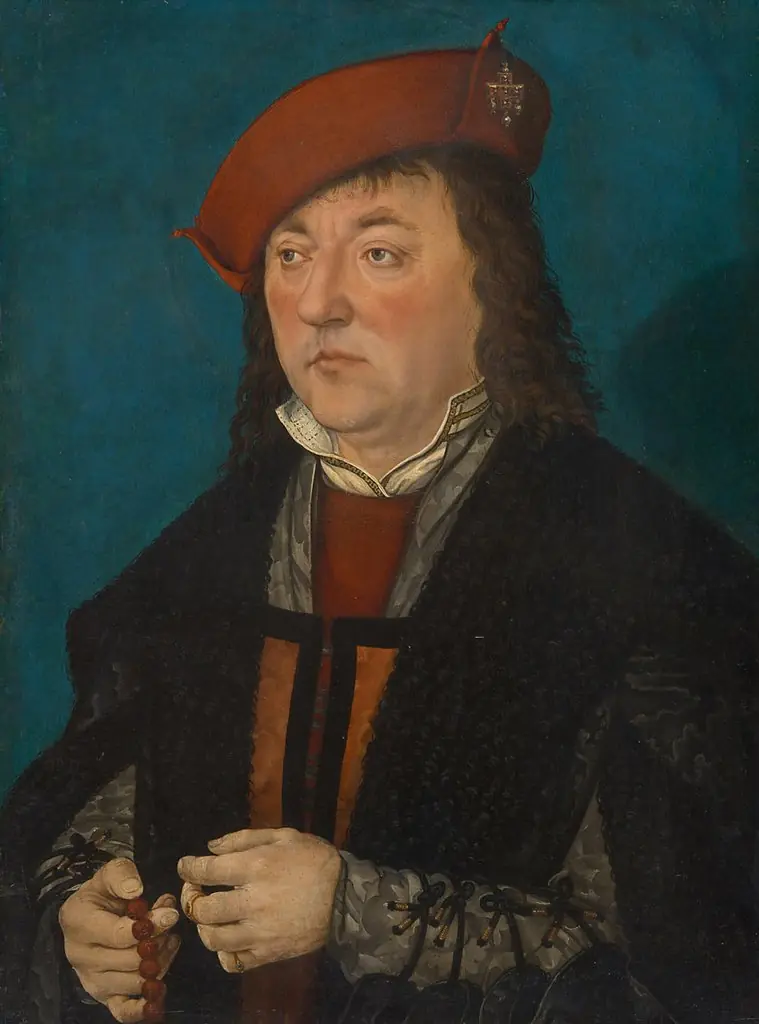 Bildnis eines Mannes mit Rosenkranz
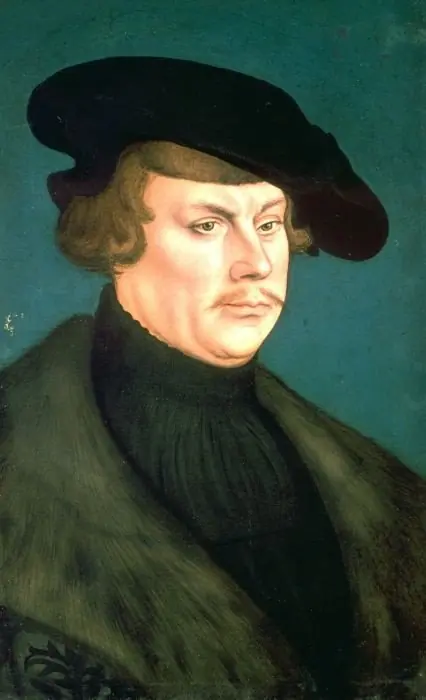 Portrait of an unknown man
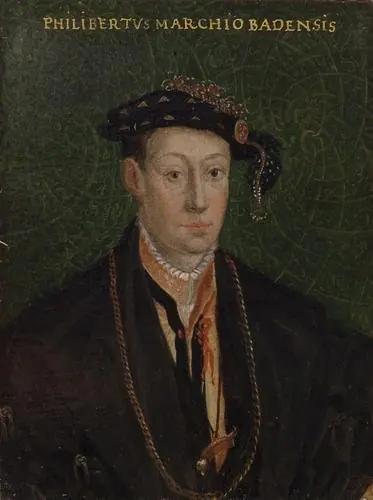 Philibert, Markgraf, Sohn Bernhards III., gestorben 1569
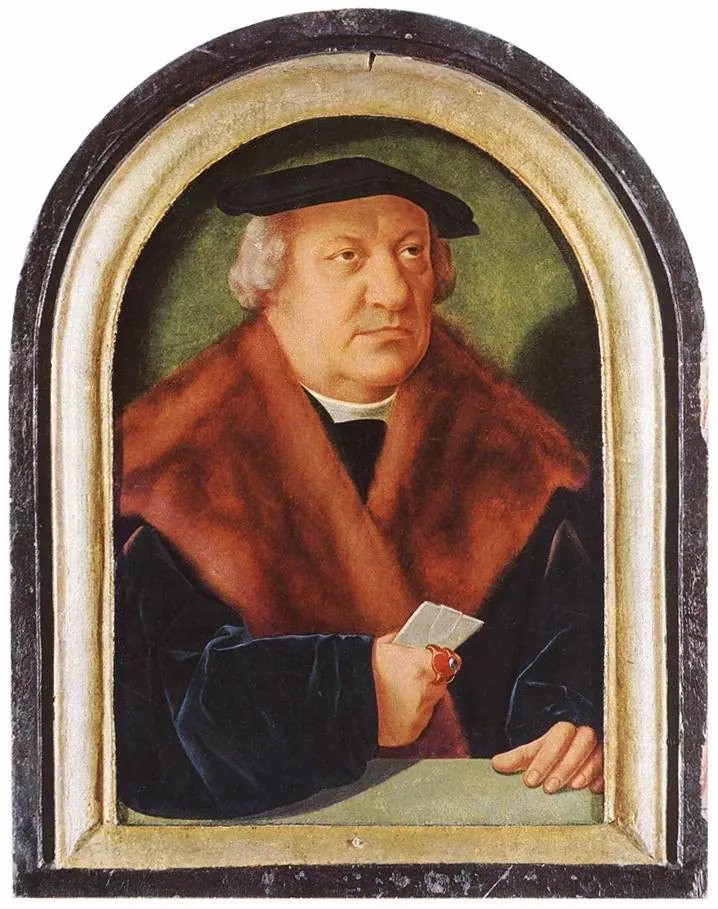 Portrait of Scholar Petrus von Clapis
 Portrait of Jean d'Albon, seigneur de Saint-André (1472–1549)
 Portrait of the Mayor of Weißenfels
 Portrait of Leonhard Holzhalb
 Portrait of William of Croÿ, lord of Chièvres
 Portrait of Martin Luther (1483–1546)