Artwork
Portrait of a Man holding a Peach
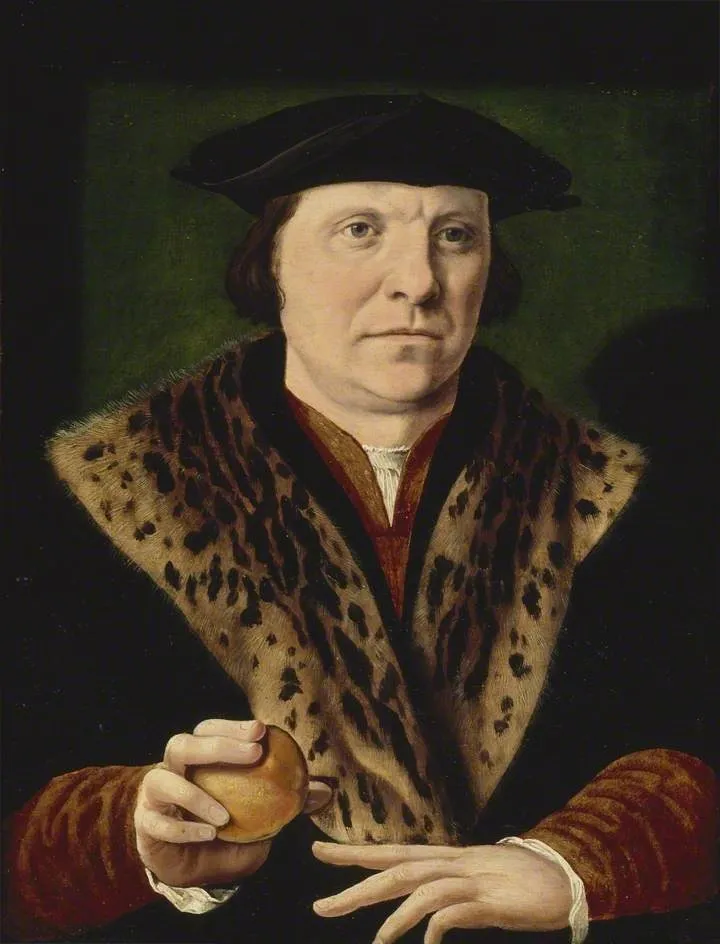
Portrait of a Man holding a Peach is an oil painting by the Dutch Golden Age artist Jan Cornelisz Vermeyen. It dates from 1539 and is held in the collection of the Ashmolean Museum. Painted around 1539 by Jan Cornelisz.
About this work
Overview
It is currently held in the Ashmolean Museum, Oxford, as part of its collection of Renaissance-era paintings.
Painted around 1539 by Jan Cornelisz. Vermeyen, this oil-on-panel portrait depicts a man holding a peach with quiet composure. Vermeyen, a Dutch artist active in the Habsburg court, specialized in portraiture and historical subjects. The work reflects the refined visual language of Northern European court art in the early 16th century. It is currently held in the Ashmolean Museum, Oxford, as part of its collection of Renaissance-era paintings.
Subject & Meaning
The sitter, dressed in dark garments with a leopard-print fur collar and red-sleeved jacket, presents an air of dignified restraint. His direct gaze and the deliberate placement of the peach suggest a symbolic gesture, possibly indicating wealth, sensuality, or the transience of life. The fruit, rendered with subtle sheen, contrasts with the somber tones of his attire, drawing attention to its delicate form and the hand that cradles it.
Technique & Style
Vermeyen employed oil paint with careful layering to achieve texture in the fur, fabric, and fruit. Brushwork is visible in the rendering of the peach’s surface and the folds of the jacket, suggesting a tactile realism. The dark green background isolates the figure, enhancing the focus on his expression and gesture. Subtle contrasts of light and shadow, though not fully developed as chiaroscuro, contribute to the sitter’s three-dimensionality.
History & Provenance
The painting was created during Vermeyen’s tenure as a court artist for the Habsburgs in the Netherlands, a period when portraiture served both personal and political functions. Its early provenance is undocumented, but it entered the Ashmolean Museum’s collection in the 19th century. The work’s survival in good condition reflects its continued appreciation among collectors of Northern Renaissance art.
Context
In the early 1500s, portraiture in the Low Countries increasingly emphasized individual identity and material detail. Vermeyen’s work aligns with this trend, reflecting the influence of both Flemish realism and the humanist ideals circulating in Habsburg circles. The inclusion of a peach—a fruit associated with luxury and fleeting beauty—echoes broader Northern European conventions of symbolic still-life elements in portraiture.
Legacy
Though Vermeyen is less widely known than contemporaries like Holbein, this portrait exemplifies his skill in capturing psychological presence through restrained composition. The painting contributes to the understanding of how courtly identity was visually constructed in the early 16th century. Its preservation allows ongoing study of Northern European techniques and the symbolic use of everyday objects in Renaissance portraiture.
Artist & collection
Artist
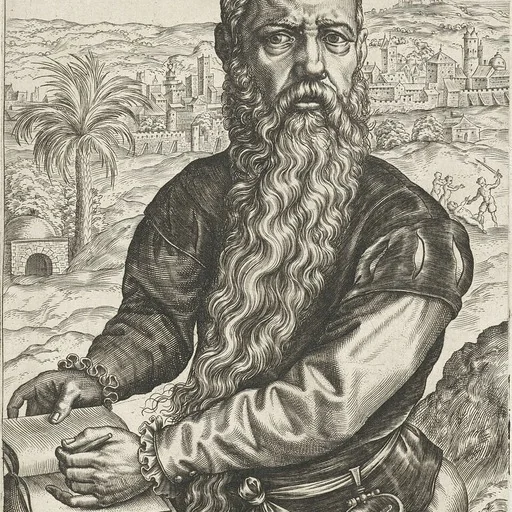
Jan Cornelisz. Vermeyen, also known as Juan del Mayo (c. 1503 – 1559) was a Dutch painter, printmaker and tapestry designer. He is known for his portraits, history scenes and genre subjects. He worked in Mechelen and…

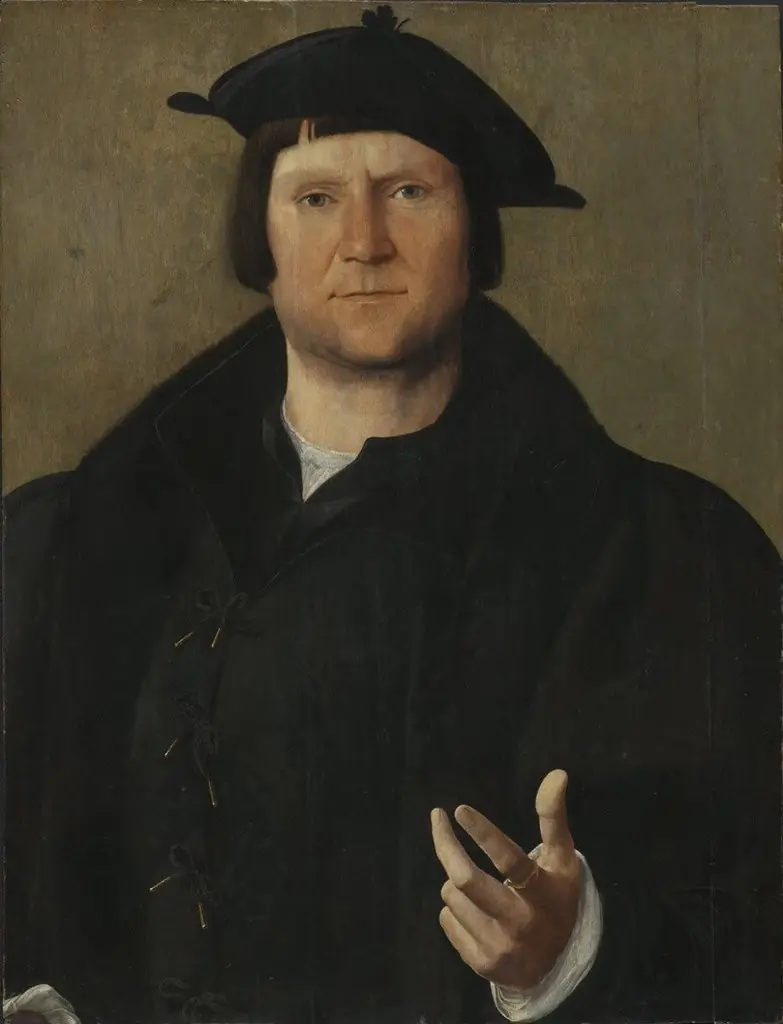
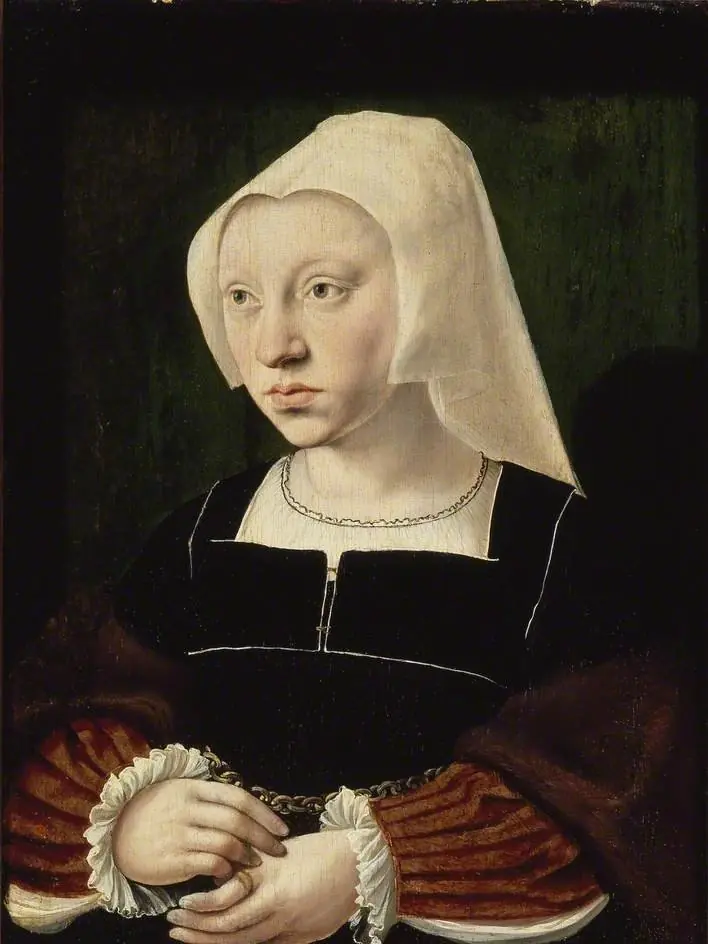
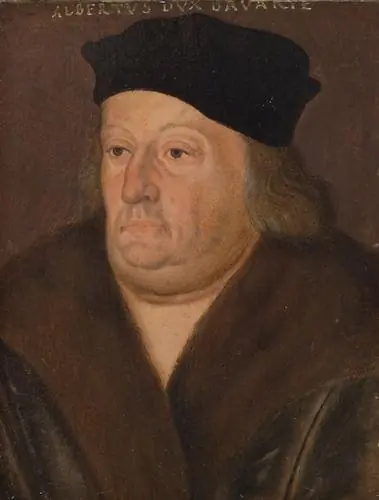 Herzog Albrecht IV. Wittelsbach Bayern
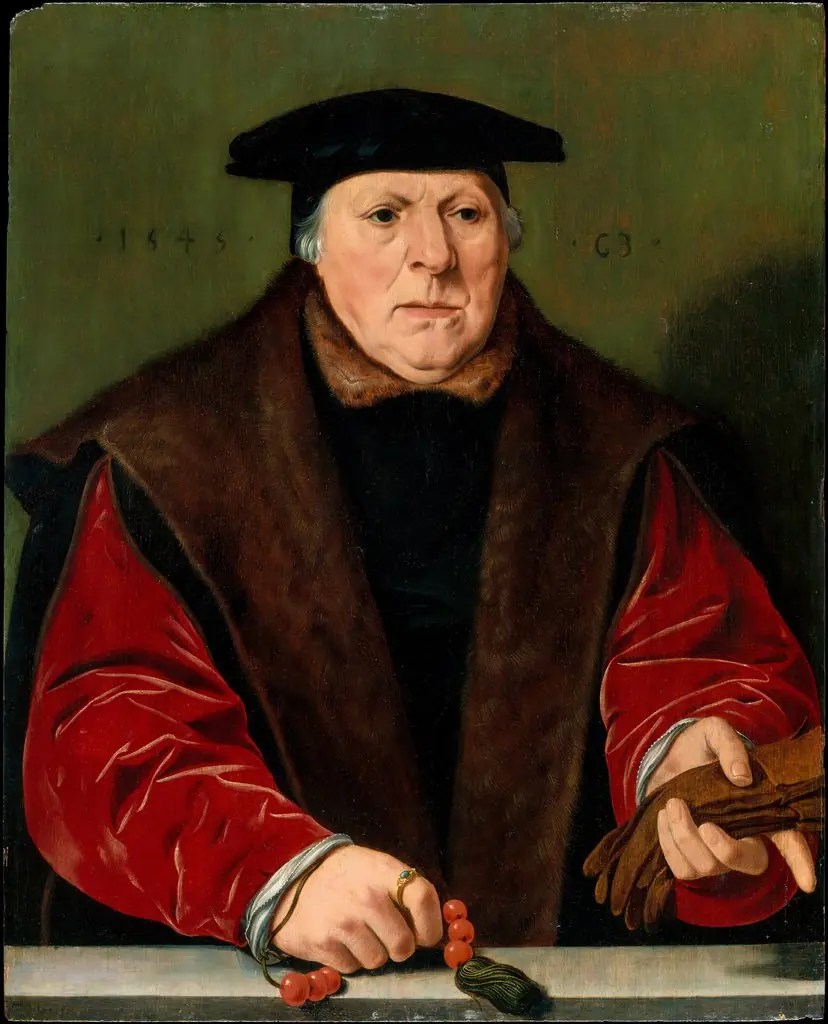 Portrait of a Man with a Rosary
 Der Augsburger Patrizier Ulrich Sulzer (1463-1545)
 Portrait of Jean de Carondelet
 The Nuremberg dressmaker Hans Pirkel the Younger
 Portrait of a Man of the Rad Family
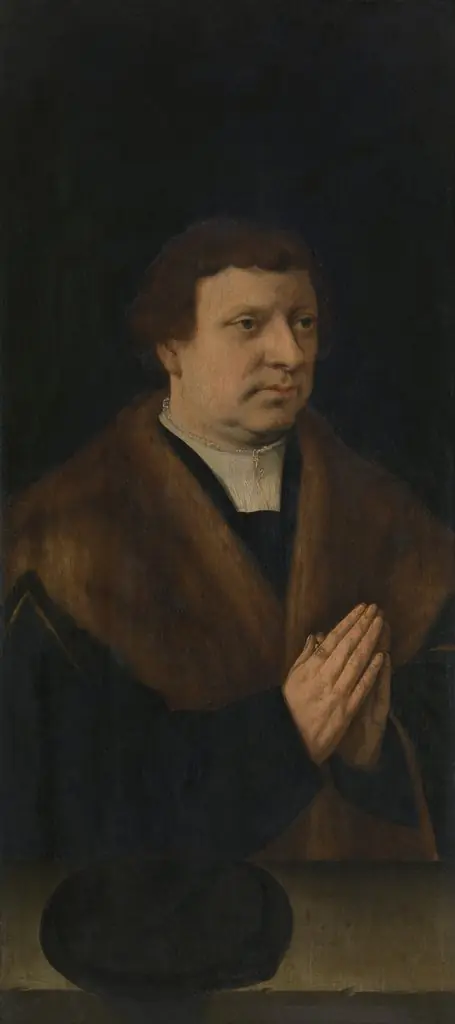 Portrait of a Man
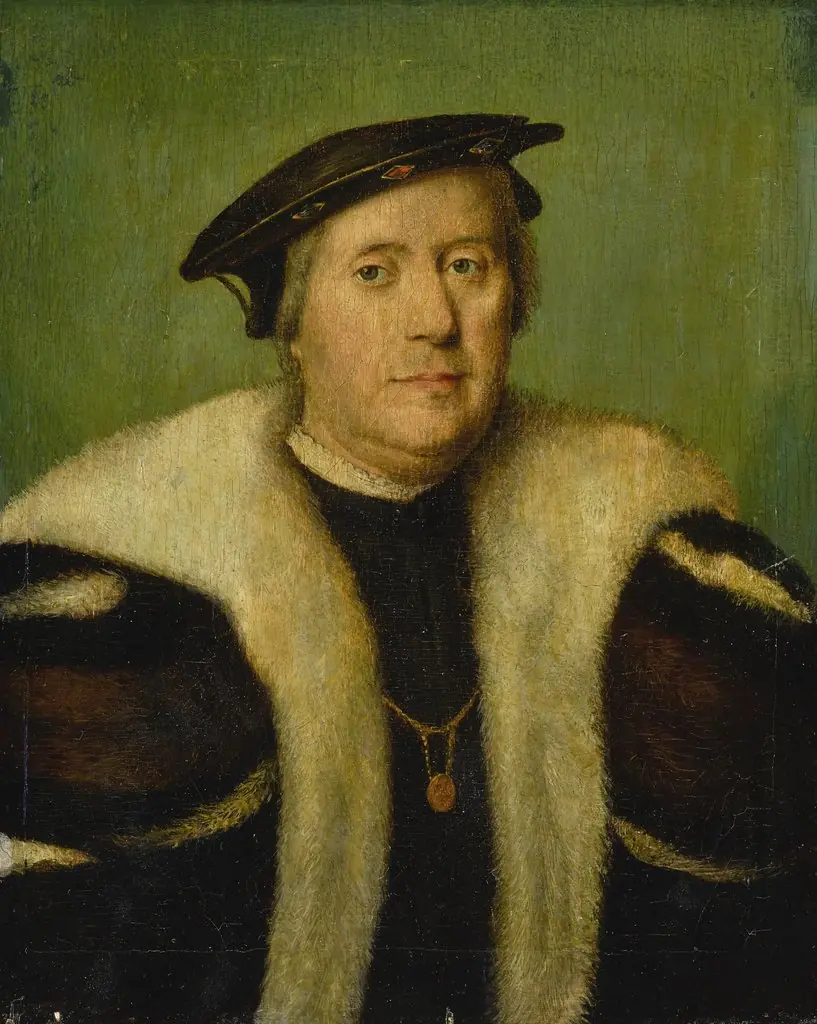 Portrait of Jean d'Albon, seigneur de Saint-André (1472–1549)
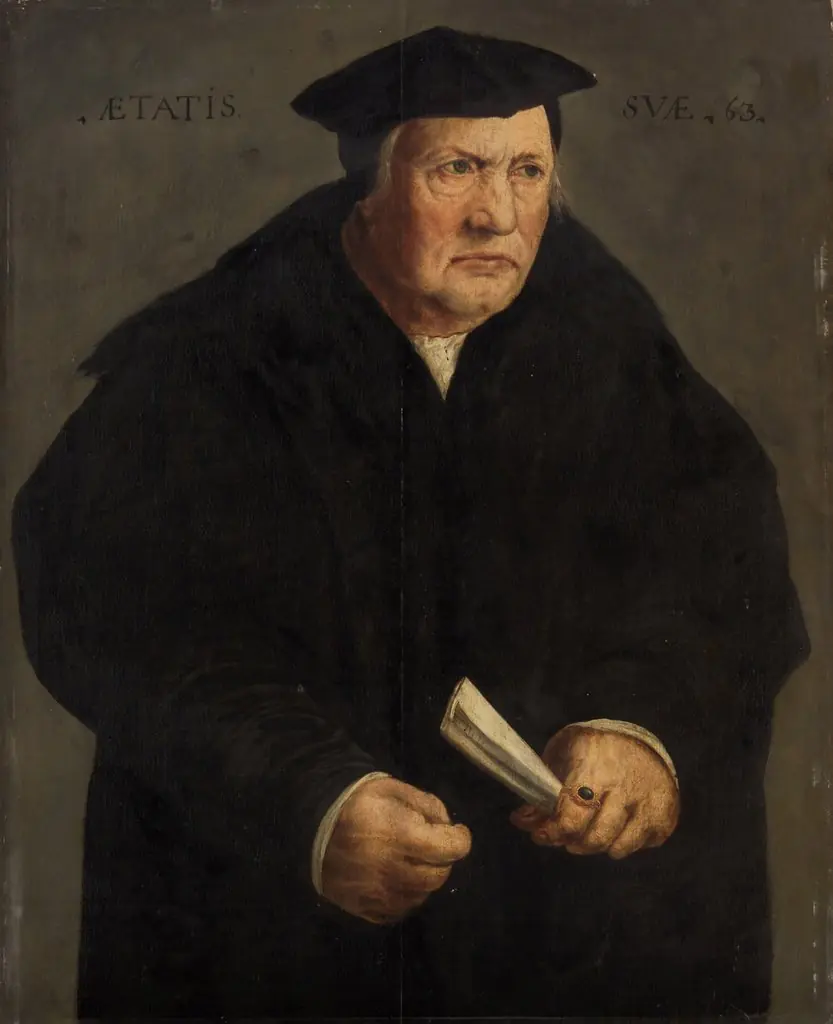 Männliches Bildnis
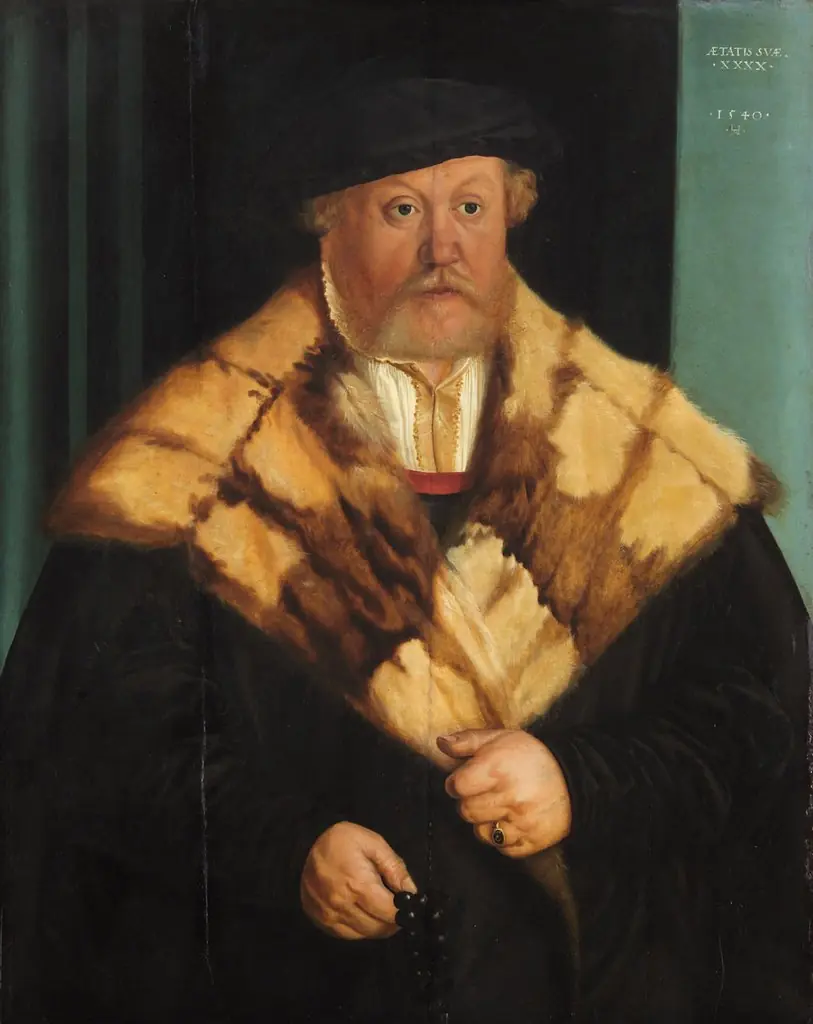 Hanns Mädl
 Portrait of Otho Stochoven
 Portrait of Cornelis Aerentsz van der Dussen (1481-1556)