Artwork
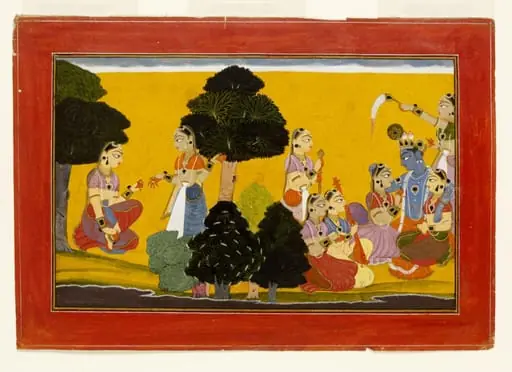
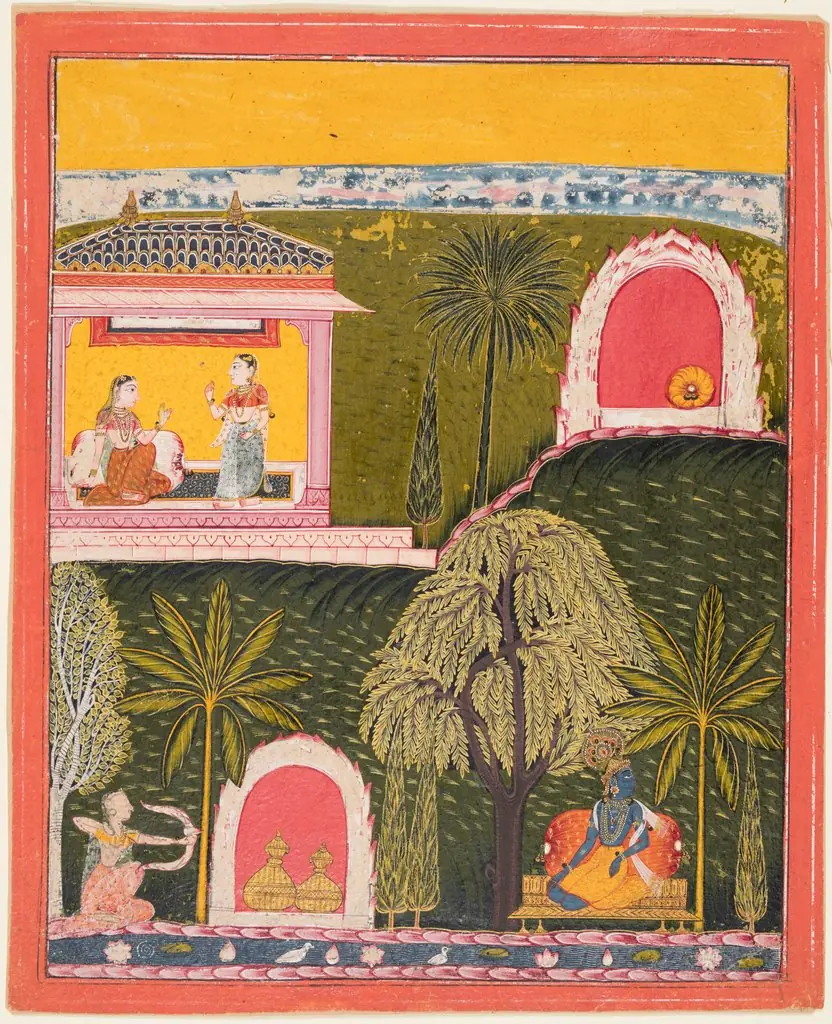
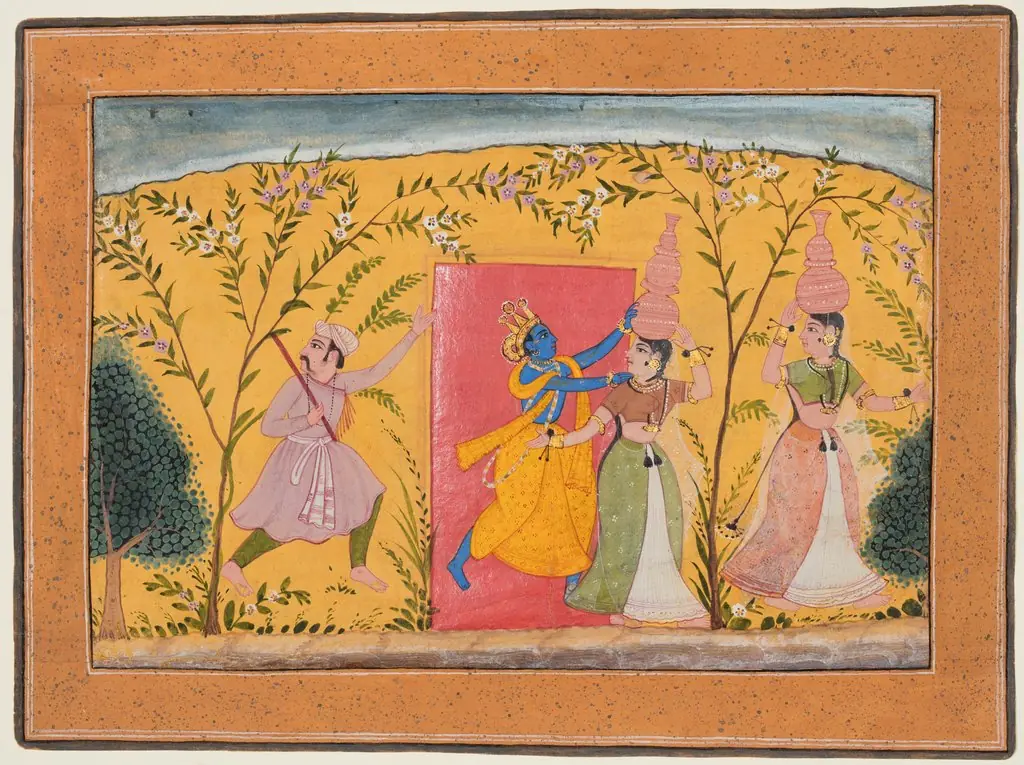
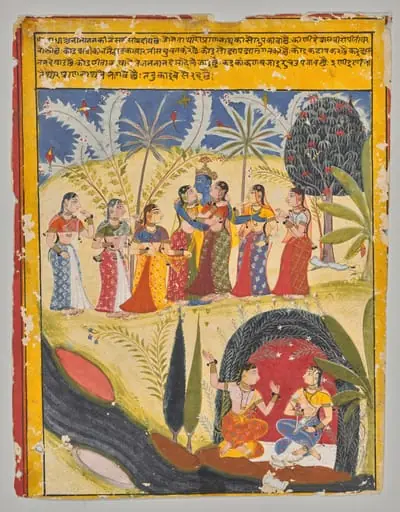
Radha's Attendant Converses with Krishna and Woman Travels By Moonlight to Meet her Lover (page from the Gita Govinda)
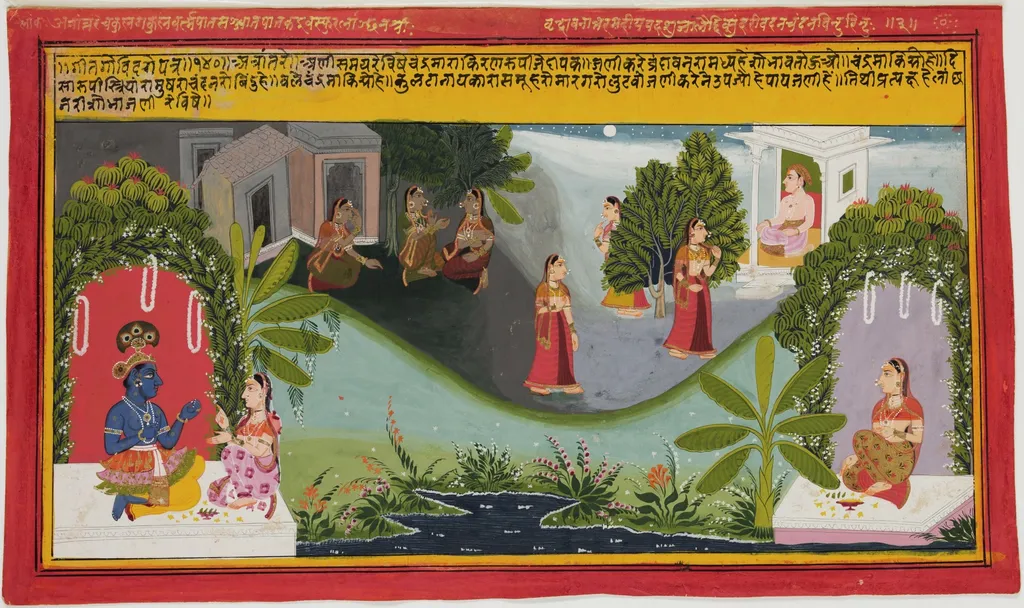
Radha's Attendant Converses with Krishna and Woman Travels By Moonlight to Meet her Lover (page from the Gita Govinda) is an unspecified painting by the Mughal Painting artist Unknown. It dates from 1600 and is held in the collection of the Detroit Institute of Arts. This painting is a folio from a manuscript illustrating the Gita Govinda, a 12th-century Sanskrit poem by Jayadeva.
About this work
Overview
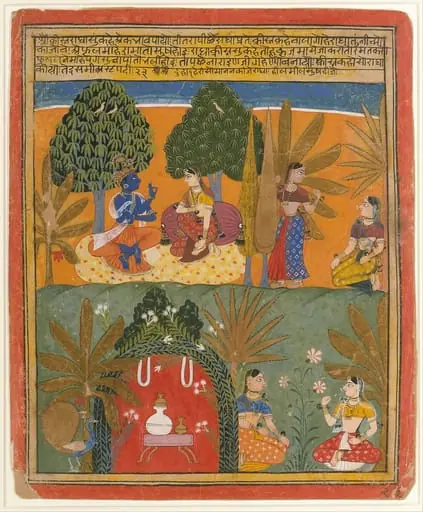
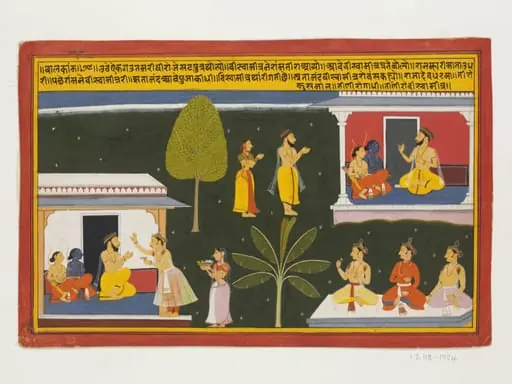
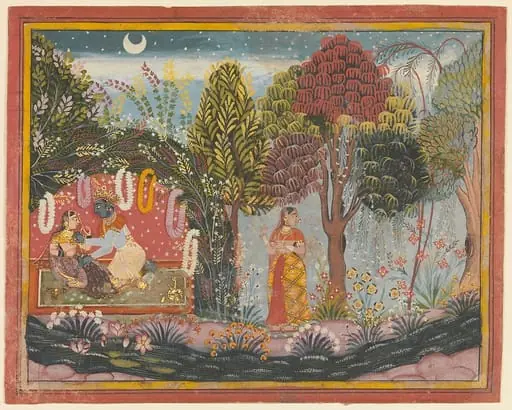
This painting is a folio from a manuscript illustrating the Gita Govinda, a 12th-century Sanskrit poem by Jayadeva. It depicts two scenes from the text: Radha’s attendant speaking with Krishna, and a woman journeying under moonlight to meet her lover. The dual narrative reflects the poem’s structure, which intertwines divine and earthly love through lyrical episodes.
Subject & Meaning
The imagery draws from the devotional poetry of the Gita Govinda, where Radha and Krishna symbolize the soul’s longing for union with the divine. The attendant’s quiet exchange with Krishna hints at intermediaries in spiritual pursuit, while the moonlit traveler embodies the soul’s solitary, determined path toward transcendence. Both scenes merge human emotion with metaphysical yearning.
Technique & Style
Executed in opaque watercolor and gold on paper, the painting employs fine brushwork and flat, decorative planes typical of Pahari miniature traditions. Figures are slender and stylized, with delicate facial features and richly patterned textiles. The moonlit sky is rendered in muted tones, contrasting with the vivid hues of the figures to emphasize emotional atmosphere over spatial realism.
History & Provenance
The folio likely originated in a royal Pahari workshop during the late 18th century, possibly in the Kangra or Guler region. Such manuscripts were commissioned by Hindu elites for devotional use or courtly display. The Detroit Institute of Arts acquired it as part of a broader collection of South Asian manuscripts, preserving its role as a fragment of a once-complete literary volume.
Context
The Gita Govinda was widely illustrated across North India, particularly in Pahari courts where bhakti devotion flourished. Artists adapted its poetic verses into visual sequences, often pairing multiple scenes on a single page. These illustrations served both as aids to meditation and as expressions of courtly patronage, linking spiritual themes with aristocratic identity.
Legacy
This folio exemplifies how devotional literature inspired sustained artistic production in early modern India. Though individual pages were often separated over time, their survival in museum collections allows continued study of how poetry, religion, and visual art intersected in regional traditions. It remains a key reference for understanding the aesthetics of Pahari miniature painting.
Artist & collection

 Domestic Scene
 Giacomo and Cardinal Marco, investing Andrea, Abbot of San Zeno, with his Benefice
 The Nymph of Fontainebleau
 Portrait of a Woman
 Madonna and Child with Saints in the Enclosed Garden
 Venus and Minerva
 Family Group of Four on Sofa
 Wall painting from Room H of the Villa of P. Fannius Synistor at Boscoreale