Artwork
Krishna and Radha in a Palace Scene
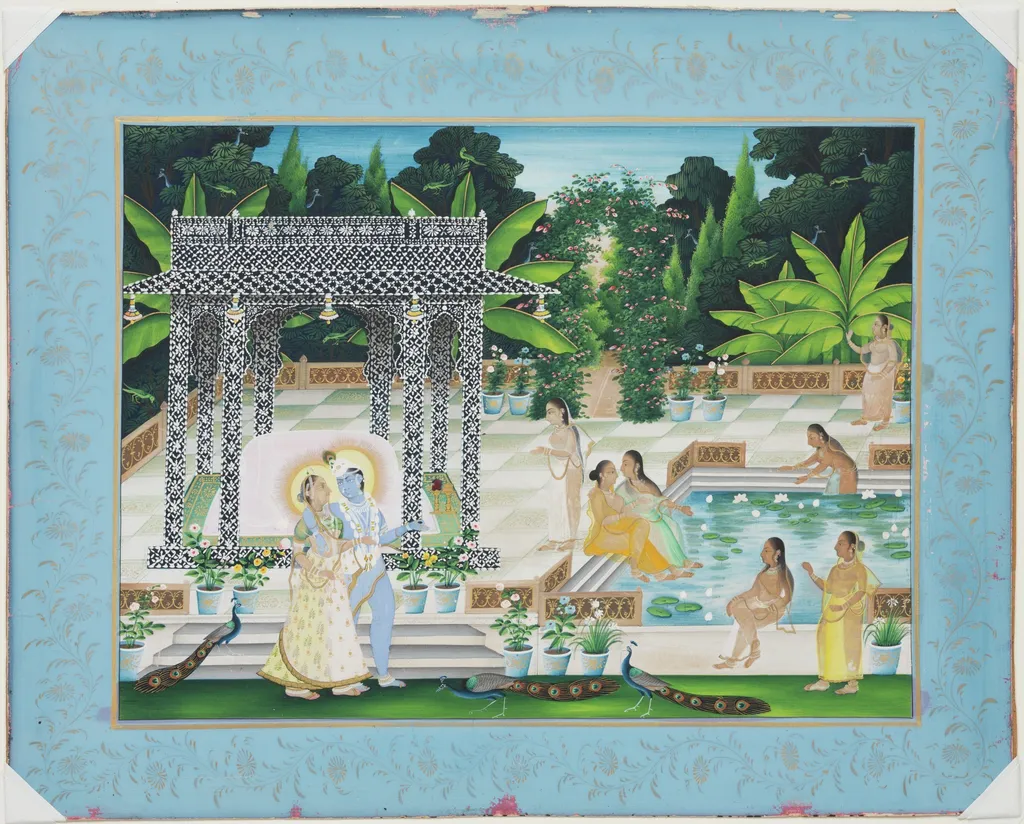
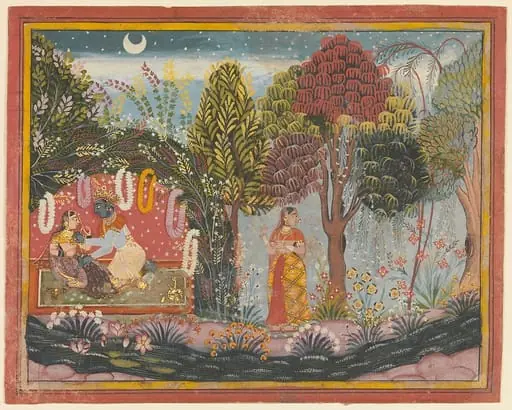
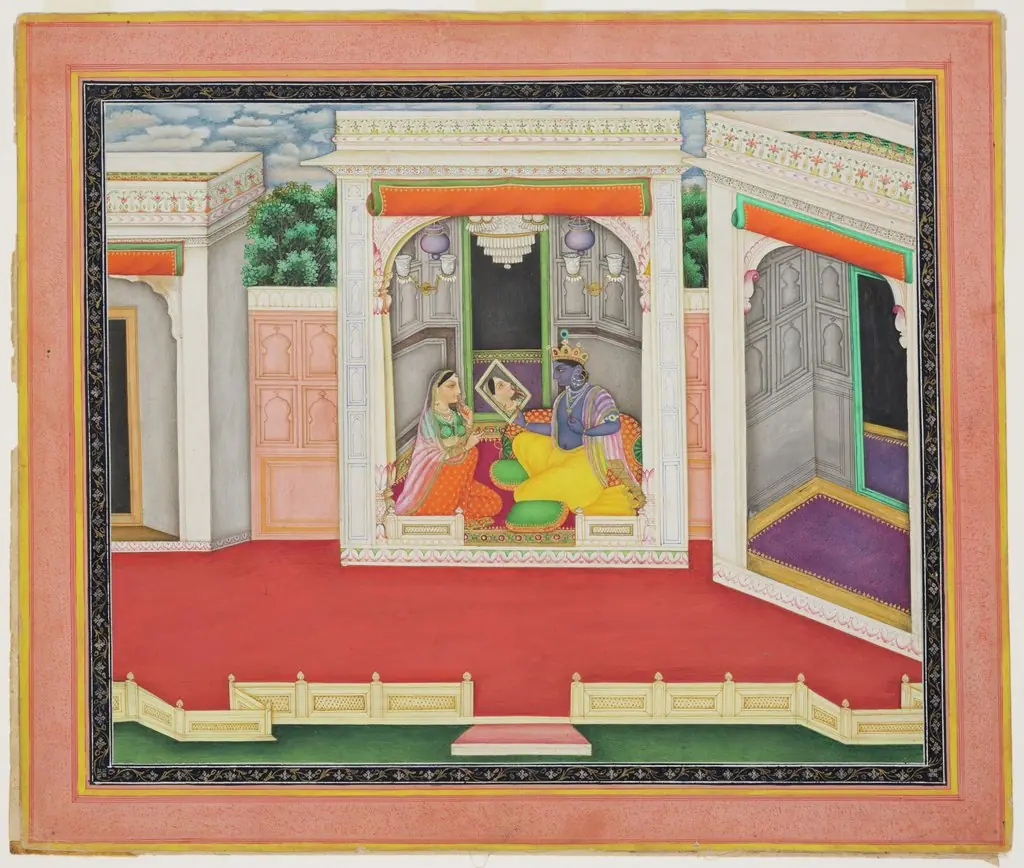
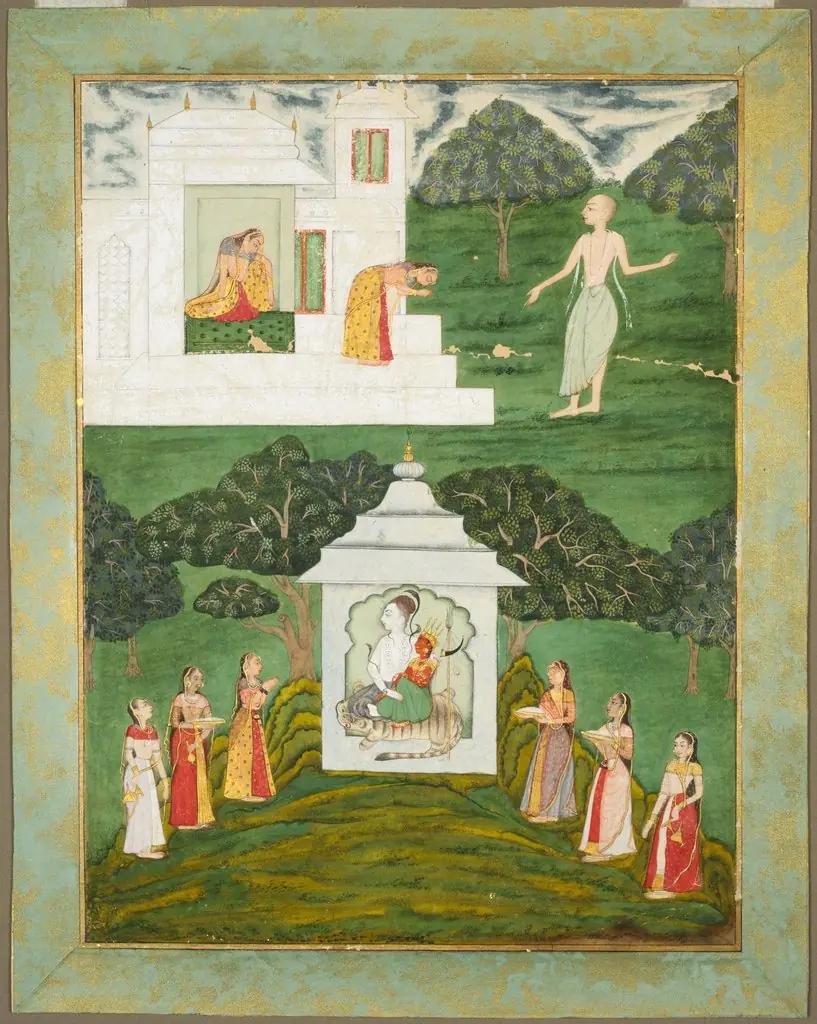
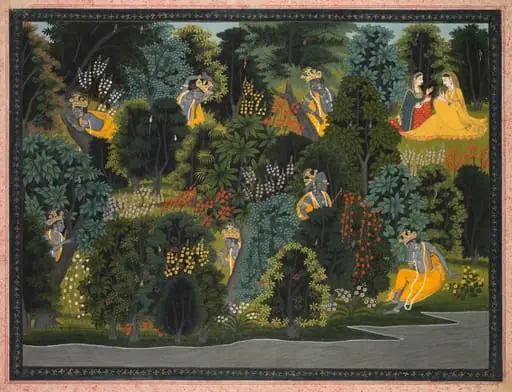
Krishna and Radha in a Palace Scene is an unspecified painting by Unknown. It is held in the collection of the Detroit Institute of Arts. This painting portrays a quiet moment between Krishna and Radha within an ornate palace courtyard.
About this work
Overview
The figures are centrally placed amid natural elements—peacocks, water lilies, and potted flora—that frame their presence without overwhelming it.
This painting portrays a quiet moment between Krishna and Radha within an ornate palace courtyard. The figures are centrally placed amid natural elements—peacocks, water lilies, and potted flora—that frame their presence without overwhelming it. The composition emphasizes stillness and mutual attention, with no dramatic action or narrative tension. Soft colors and balanced forms contribute to an atmosphere of gentle repose.
Subject & Meaning
Krishna and Radha, central figures in Vaishnavite devotion, are depicted not in mythic grandeur but in a private, earthly setting. Their proximity and shared gaze suggest a bond beyond the divine—intimate, tender, and humanized. The surrounding women and tranquil garden imply a domesticated sacredness, where spiritual love unfolds in daily stillness rather than celestial spectacle.
Technique & Style
The work employs fine brushwork and muted, harmonious pigments typical of late Rajasthani or Pahari miniatures. Delicate outlines define forms, while flat planes of color—blue for Krishna, yellow for Radha—create visual harmony. The background is rendered with subtle gradations, and the water lilies are rendered with precise detail, enhancing the sense of calm without illusionistic depth.
History & Provenance
The painting likely originated in a Rajput court during the 18th century, where devotional themes were commonly adapted into intimate courtly scenes. Its preservation suggests it was valued within a royal collection, possibly commissioned for private meditation or as part of a larger series illustrating Krishna’s earthly pastimes. No documented ownership prior to the 20th century is known.
Context
This image reflects a broader trend in Indian miniature painting where divine figures were portrayed in aristocratic settings, blending spiritual ideals with courtly aesthetics. The inclusion of women in conversation and natural elements aligns with literary traditions that celebrated Radha and Krishna’s love as both sacred and sensuous, grounded in the rhythms of palace life.
Legacy
The painting contributes to a visual language that softened the divine into accessible, humanized forms. It influenced later regional styles that favored emotional subtlety over grandeur. While not widely reproduced, its quiet dignity continues to inform contemporary interpretations of Krishna and Radha as symbols of serene, devoted love.
Artist & collection

 Domestic Scene
 Giacomo and Cardinal Marco, investing Andrea, Abbot of San Zeno, with his Benefice
 The Nymph of Fontainebleau
 Portrait of a Woman
 Madonna and Child with Saints in the Enclosed Garden
 Venus and Minerva
 Family Group of Four on Sofa
 Wall painting from Room H of the Villa of P. Fannius Synistor at Boscoreale