Artwork
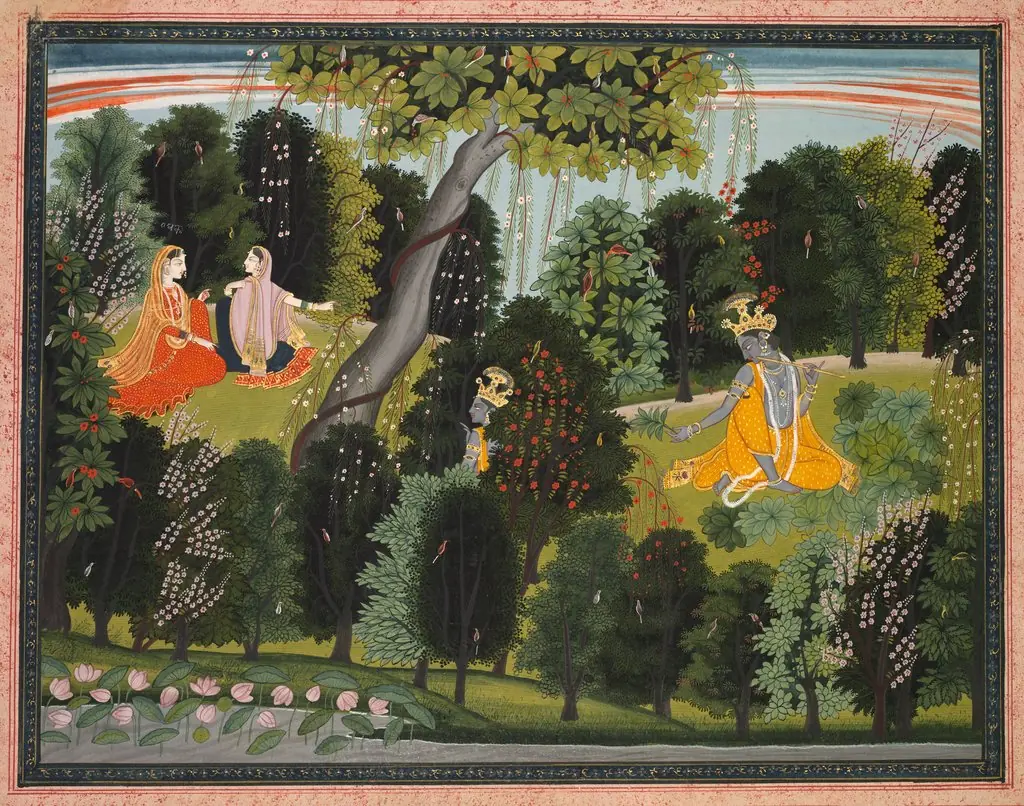
Krishna’s longing for Radha, from a Gita Govinda (Song of the Cowherd) of Jayadeva
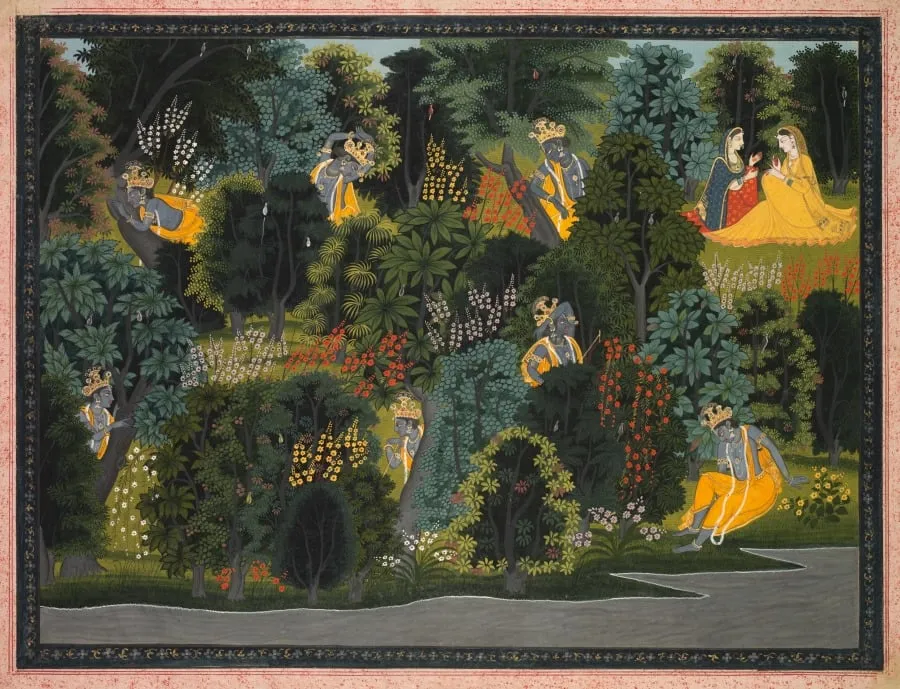
Krishna’s longing for Radha, from a Gita Govinda (Song of the Cowherd) of Jayadeva is an unspecified painting by the Mughal Painting artist Unknown. It dates from 1822 and is held in the collection of the Cleveland Museum of Art. The work portrays a verdant riverside forest along the Yamuna, where multiple figures of the youthful deity Krishna are shown waiting.
About this work
Overview
In the upper right, the consort Radha, dressed in yellow, engages in a quiet conversation with a companion, hesitating before joining the deity.
The work portrays a verdant riverside forest along the Yamuna, where multiple figures of the youthful deity Krishna are shown waiting. Seven blue‑skinned incarnations occupy different stances—leaning, pacing, peering—suggesting a passage of time within a single visual field. In the upper right, the consort Radha, dressed in yellow, engages in a quiet conversation with a companion, hesitating before joining the deity.
Subject & Meaning
Drawing on Jayadeva’s Gita Govinda, the scene dramatizes the divine‑human tension of longing. Krishna’s repeated presence conveys the god’s patient anticipation, while Radha’s deliberation reflects the devotee’s social constraints and inner doubt. The composition functions as an allegory: divine invitation waits eternally, yet mortal conscience hesitates amid worldly obligations.
Technique & Style
Executed in the Pahari miniature tradition, the painting employs delicate brushwork and a luminous palette of blues, greens, and yellows. The artist uses a continuous narrative format, arranging sequential moments without dividing panels, akin to a visual storyboard. Fine detailing of foliage and riverbank enhances the natural setting, while the figures are rendered with graceful, elongated forms characteristic of hill‑court aesthetics.
Context
The image belongs to the artistic output of the small Himalayan courts that flourished between the 17th and 19th centuries, known for illustrating devotional poetry. Themes from the Gita Govinda were especially popular in these regions, where court patronage encouraged the synthesis of lyrical literature and intricate visual storytelling.
Artist & collection

 Domestic Scene
 Giacomo and Cardinal Marco, investing Andrea, Abbot of San Zeno, with his Benefice
 The Nymph of Fontainebleau
 Portrait of a Woman
 Madonna and Child with Saints in the Enclosed Garden
 Venus and Minerva
 Family Group of Four on Sofa
 Wall painting from Room H of the Villa of P. Fannius Synistor at Boscoreale
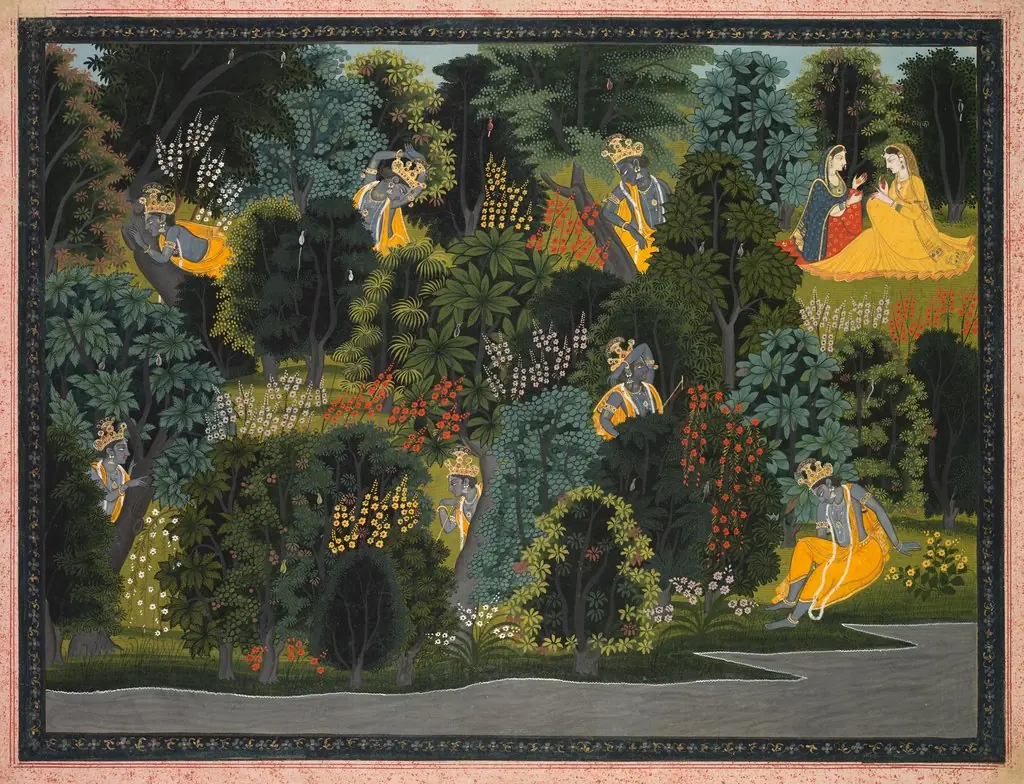 Krishna's Longing for Radha, from the Gita Govinda of Jayadeva
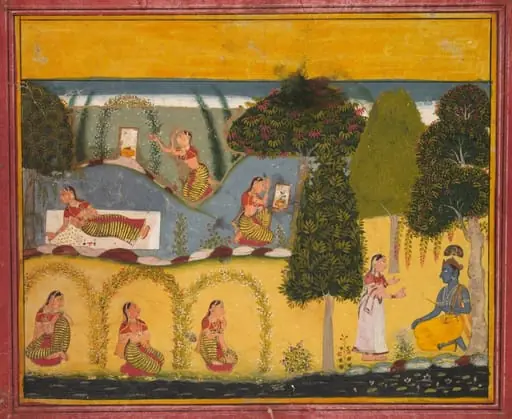 Radha Awaiting Reconciliation with Krishna, from a Gita Govinda of Jayadeva
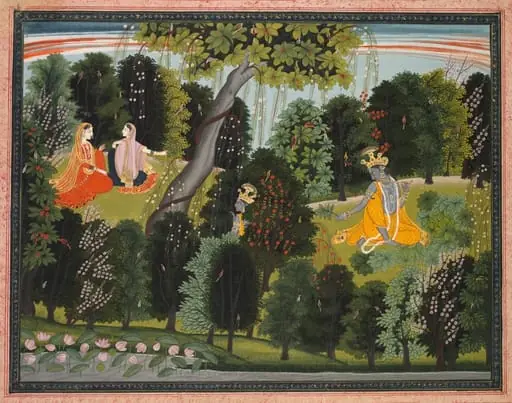 Sakhi persuades Radha to meet Krishna, from a Gita Govinda (Song of the Cowherd) of Jayadeva
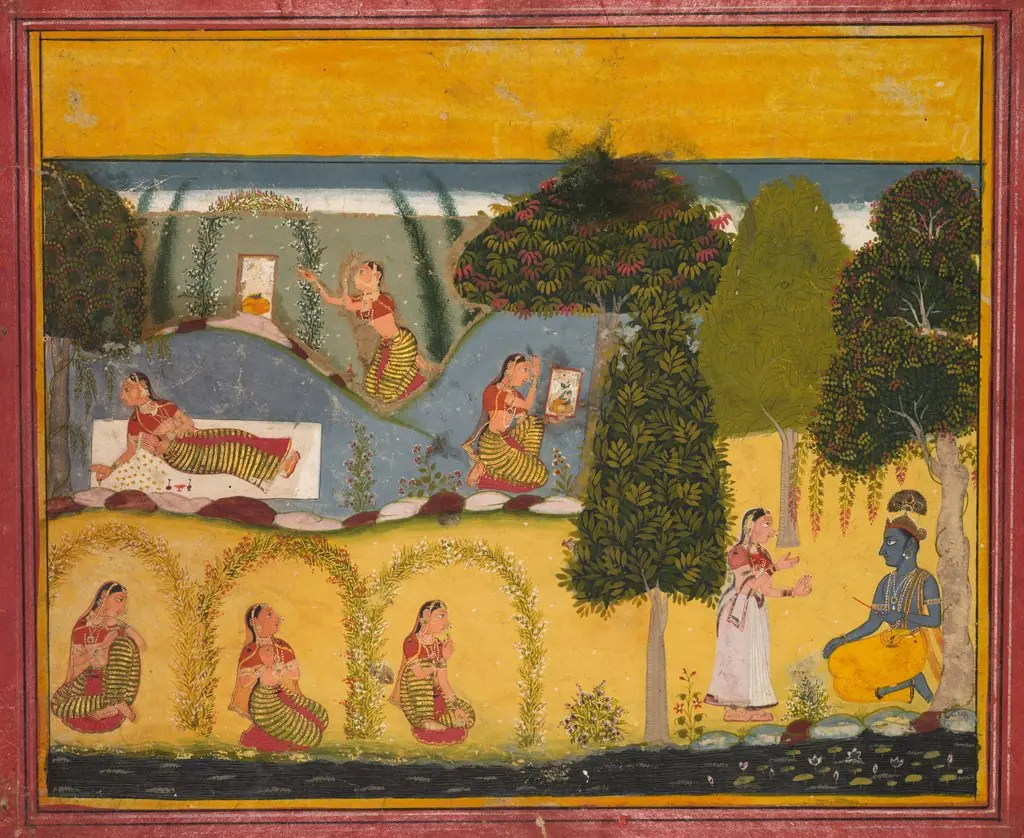 Radha Awaiting Reconciliation with Krishna, from a Gita Govinda of Jayadeva
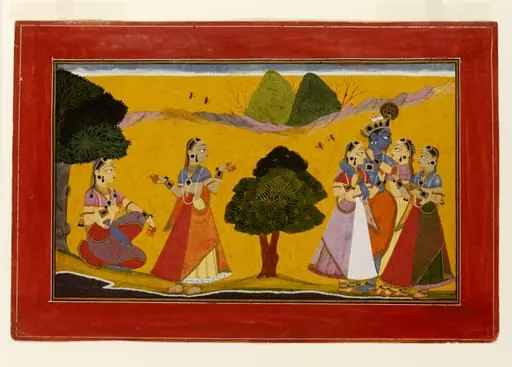 Radha and Krishna
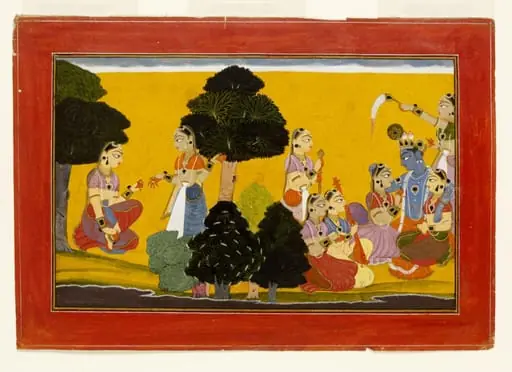 Radha and Krishna
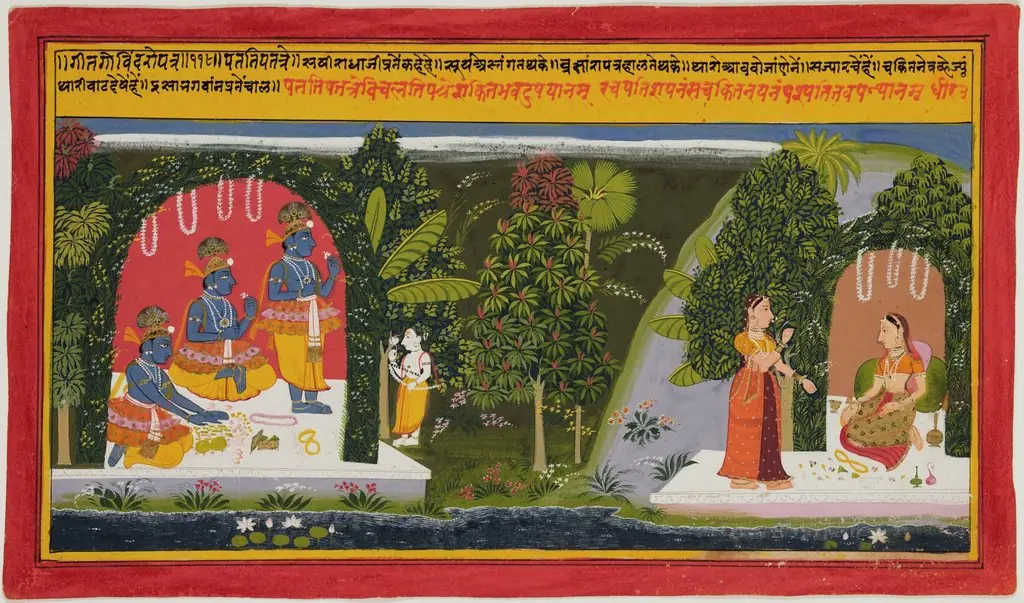 Krishna Prepares for Radha's Visit (page from the Gita Govinda)
 Sakhi Persuades Radha to Meet Krishna, from a Gita Govinda (Song of the Cowherd) of Jayadeva
 Radha and Krishna
 Radha and Krishna