Artwork
Kalpa Sutra
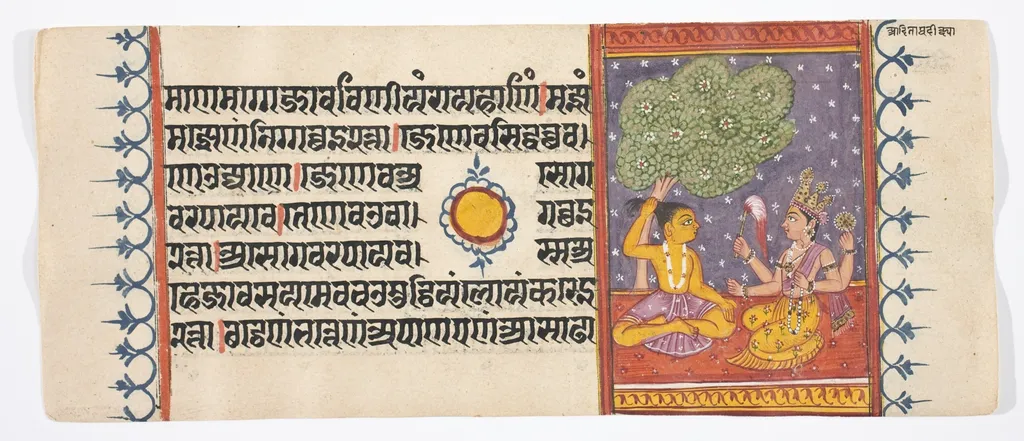
Kalpa Sutra is an unspecified painting by Unknown. It is held in the collection of the Detroit Institute of Arts.
About this work
Overview
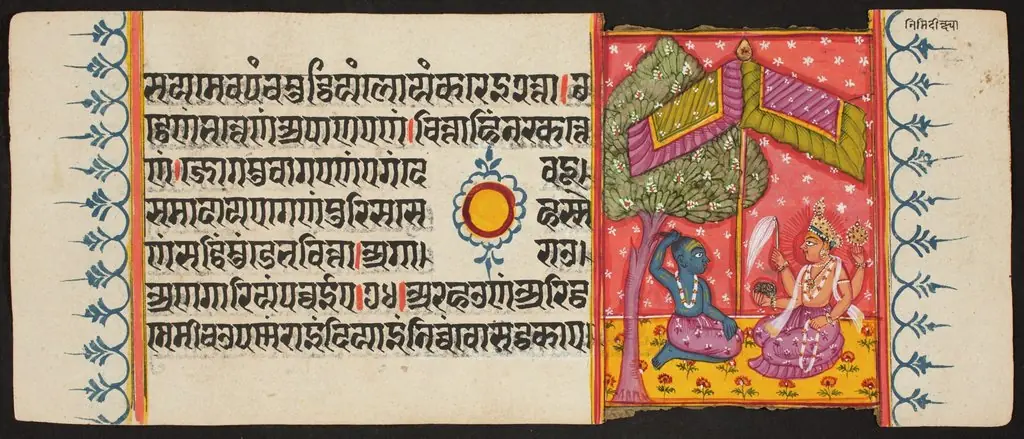
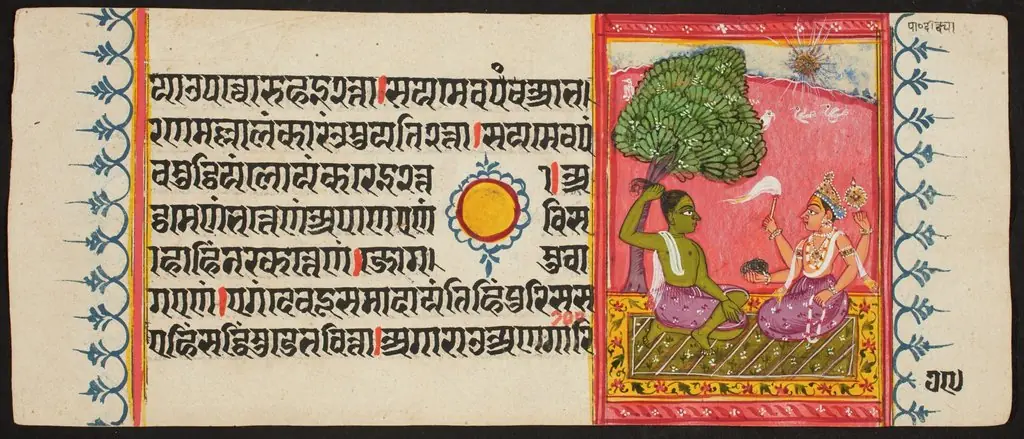
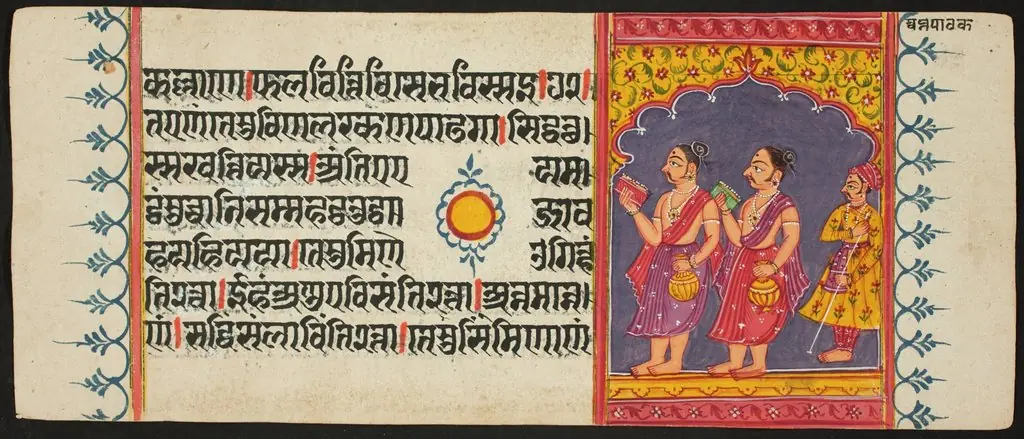
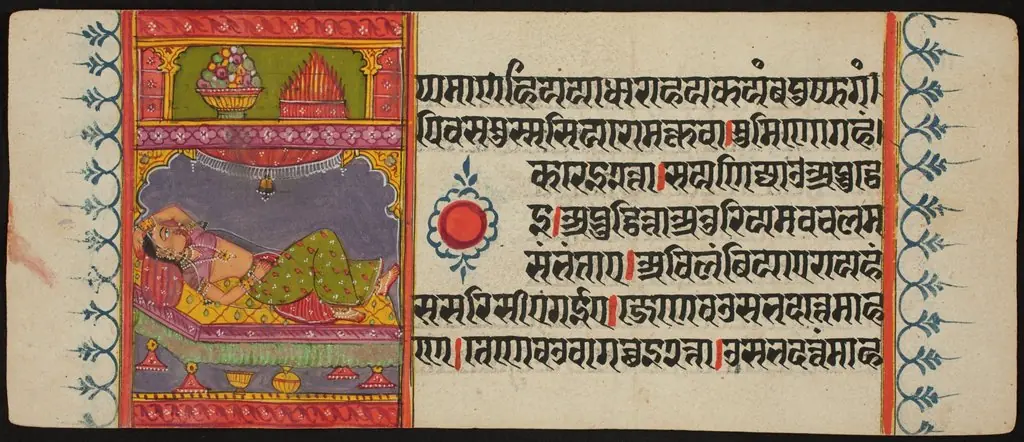
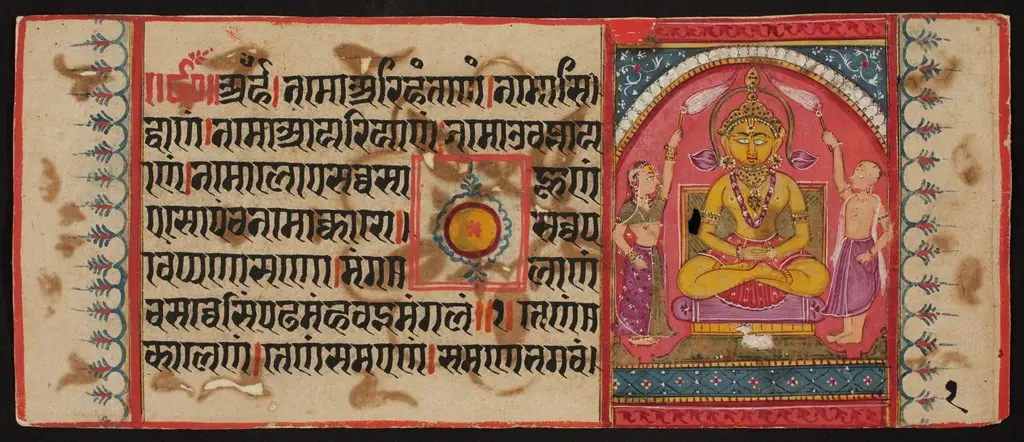
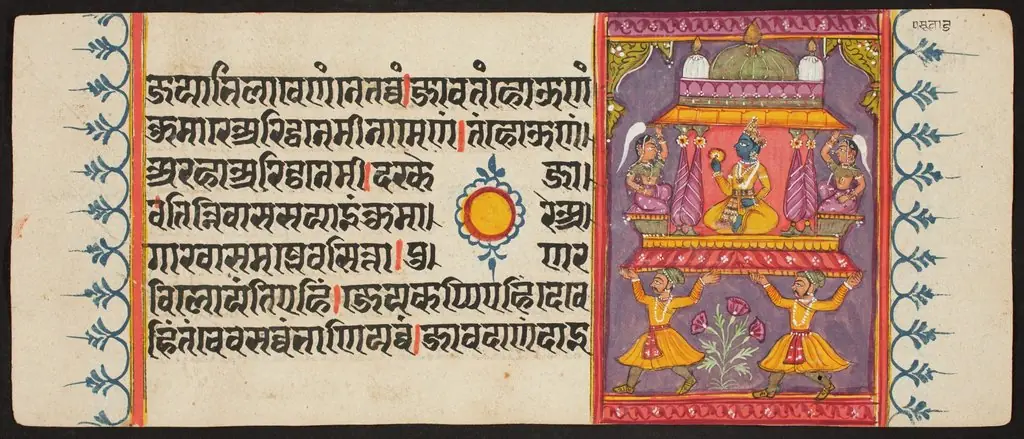
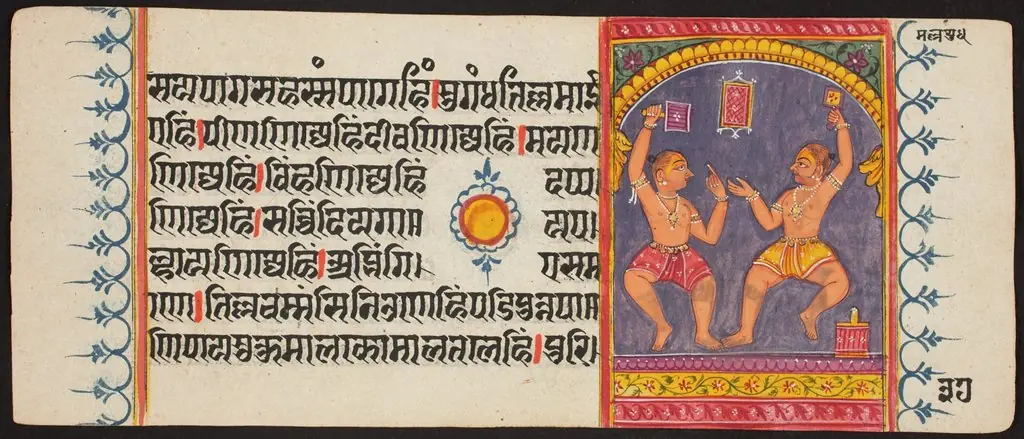
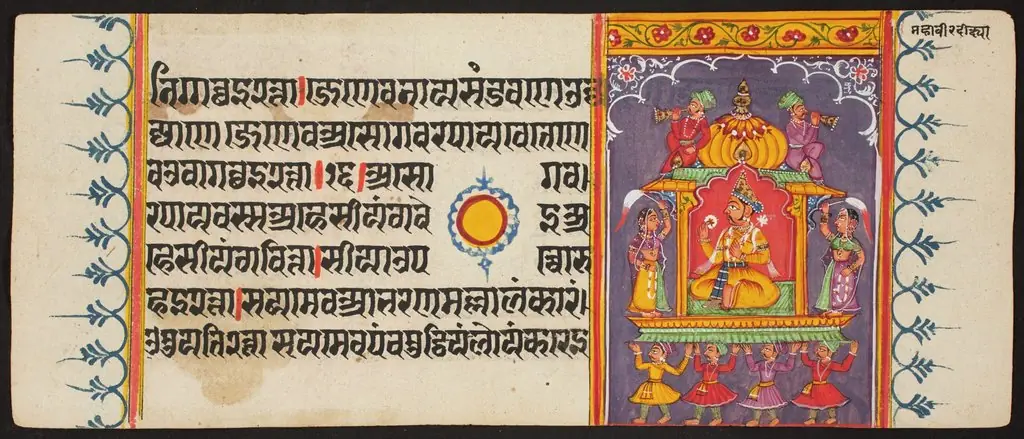
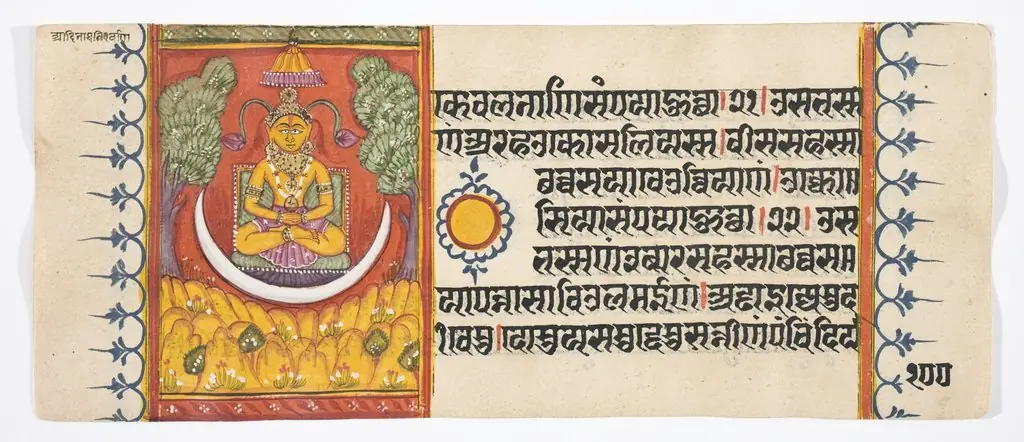
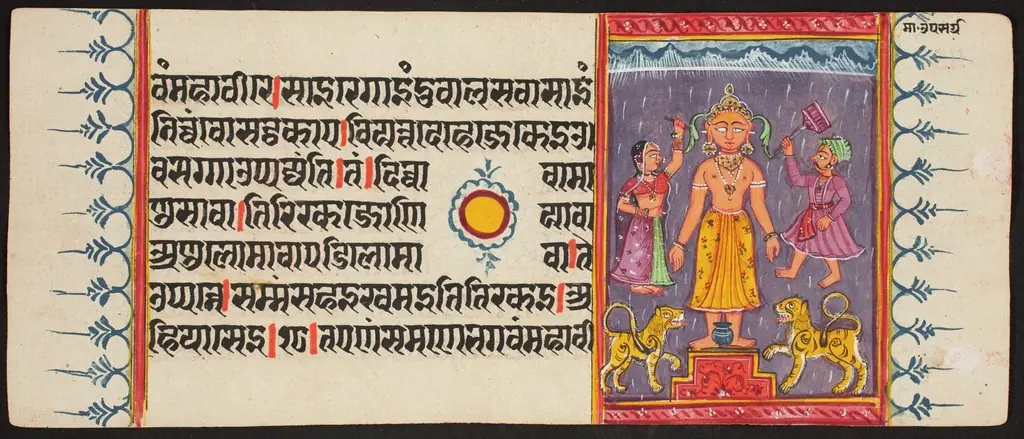
This painting originates from the Kalpa Sutra, a Jain religious manuscript. It depicts a seated man and woman in a quiet, intimate moment, framed by a stylized tree and a celestial purple background dotted with white stars. The composition is contained within a modest format typical of manuscript illustrations, emphasizing spiritual narrative over grandeur.
Subject & Meaning
The figures likely represent a Jain ascetic and a lay devotee, engaged in a moment of spiritual exchange. The man’s raised hand may signify teaching or reassurance, while the woman’s fan suggests both ritual gesture and earthly refinement. Their mutual gaze implies a connection rooted in religious guidance, reflecting the Jain emphasis on ethical interaction between monastic and lay communities.
Technique & Style
Executed in opaque watercolor on paper, the painting employs flat planes of color and fine linear detail. The robes are rendered in saturated hues—yellow and pink—contrasting with the deep purple background. White stars and stylized foliage are delicately outlined, characteristic of western Indian manuscript traditions. Forms are simplified, prioritizing symbolic clarity over naturalistic depth.
History & Provenance
The painting is part of a medieval Jain manuscript tradition, likely produced in Gujarat or Rajasthan between the 14th and 16th centuries. Such manuscripts were commissioned by wealthy patrons for use in ritual recitations. Its survival reflects the enduring value placed on visual aids for transmitting doctrinal teachings within Jain communities over centuries.
Context
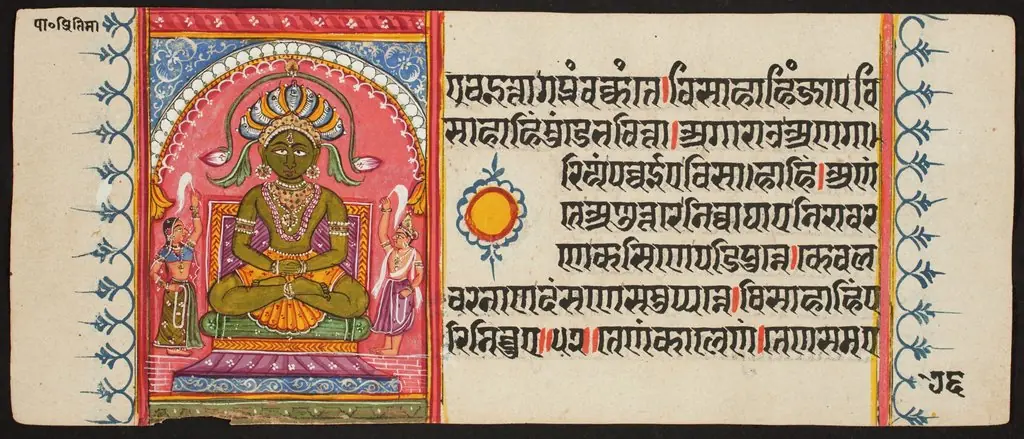
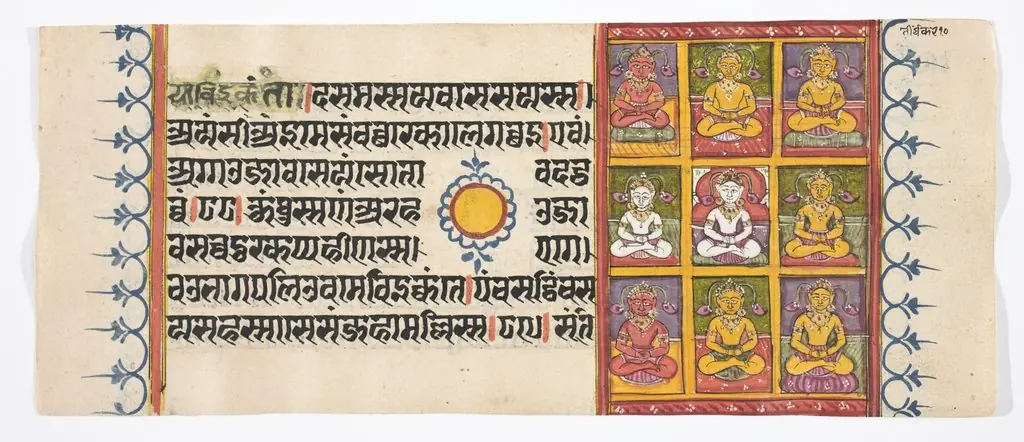
The Kalpa Sutra recounts the lives of Jain Tirthankaras and monastic lineages. Illustrations like this one served as visual anchors during oral recitations, helping devotees internalize moral and spiritual narratives. The celestial background and minimal setting reflect Jain cosmology, where the material world is transient, and spiritual focus is paramount.
Legacy
This painting exemplifies the enduring role of illustrated manuscripts in Jain religious practice. Its stylistic conventions influenced later regional painting traditions and remain studied for their integration of devotion and artistry. Though no longer used in active ritual, such works preserve the visual language of Jain piety from the medieval period.
Artist & collection

 Domestic Scene
 Giacomo and Cardinal Marco, investing Andrea, Abbot of San Zeno, with his Benefice
 The Nymph of Fontainebleau
 Portrait of a Woman
 Madonna and Child with Saints in the Enclosed Garden
 Venus and Minerva
 Family Group of Four on Sofa
 Wall painting from Room H of the Villa of P. Fannius Synistor at Boscoreale