Artwork
Old Lady with a Plaid Shawl
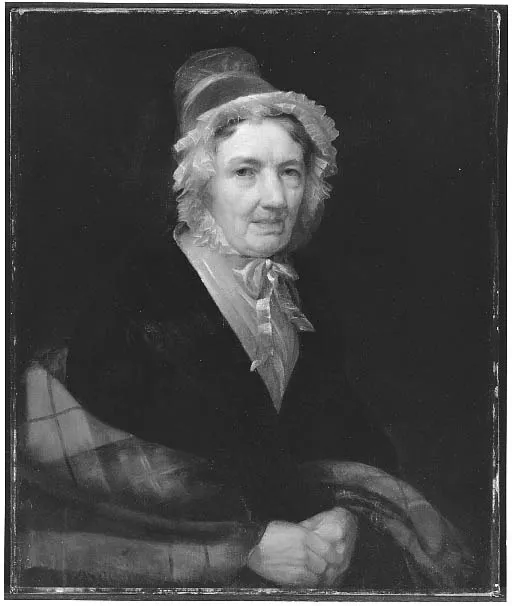
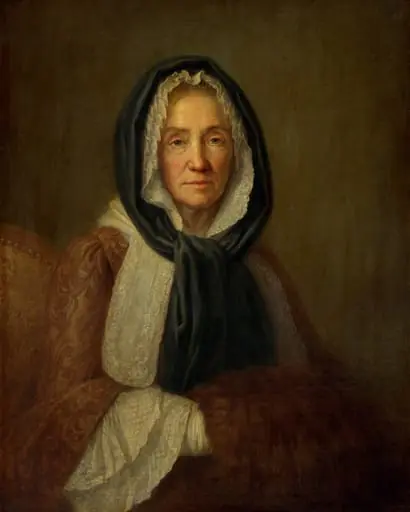
Old Lady with a Plaid Shawl is an oil painting by the Biedermeier artist Unknown. It dates from 1840 and is held in the collection of the Museum of Fine Arts Boston. This oil painting presents a half-length portrait of an elderly woman, rendered with quiet realism.
About this work
She wears a dark jacket and a plaid shawl draped over her arms, with a ruffled bonnet on her head.
This painting is a portrait of an older woman, depicted from the waist up. She wears a dark jacket and a plaid shawl draped over her arms, with a ruffled bonnet on her head. The background is dark, which helps the subject stand out.
The woman's attire and the style of the painting suggest it is from the 19th century. Her expression is neutral, and her gaze is directed slightly to the side.
To learn more about the artist's use of chiaroscuro, a technique that uses strong contrasts between light and dark to give the illusion of volume in modeling three-dimensional objects and figures, look up chiaroscuro.
Overview
This oil painting presents a half-length portrait of an elderly woman, rendered with quiet realism. She is framed against a deep, unmodulated background that isolates her form and draws attention to her clothing and posture. The composition is restrained, emphasizing texture and subtle lighting rather than narrative detail, characteristic of 19th-century portraiture focused on individual presence over dramatic flourish.
Subject & Meaning
The subject is an older woman, dressed in modest, working-class attire: a dark jacket, a plaid shawl draped across her arms, and a ruffled bonnet. Her neutral expression and averted gaze suggest introspection or quiet dignity rather than performative emotion. The painting conveys no explicit symbolism, instead valuing the dignity of ordinary life through unembellished representation.
Technique & Style
The artist employs chiaroscuro to define the volume of the figure, using sharp contrasts between light and shadow to model the folds of fabric and the contours of the face. Brushwork is deliberate but not overly refined, favoring tactile realism over idealization. The dark background enhances the three-dimensionality of the figure, a technique common in European portraiture of the period.
History & Provenance
The painting’s origin and early ownership are undocumented in available records. Its stylistic features align with mid- to late-19th-century regional portraiture, likely created by an artist working outside major urban centers. No exhibition history or collector lineage is publicly established, suggesting it remained in private hands or local circulation.
Context
During the 19th century, portraits of ordinary elderly individuals were uncommon in academic art, which favored aristocratic or idealized subjects. This work reflects a growing interest in depicting everyday people, influenced by realism and regional traditions that valued authenticity over grandeur, particularly in rural or provincial artistic communities.
Legacy
The painting contributes to a quieter strand of 19th-century portraiture that honored the dignity of non-elite subjects. While not widely known or reproduced, it stands as an example of how artists outside major centers captured the textures of daily life with sensitivity and technical restraint, preserving the visual culture of ordinary people.
Artist & collection

 Domestic Scene
 Giacomo and Cardinal Marco, investing Andrea, Abbot of San Zeno, with his Benefice
 The Nymph of Fontainebleau
 Portrait of a Woman
 Madonna and Child with Saints in the Enclosed Garden
 Venus and Minerva
 Family Group of Four on Sofa
 Wall painting from Room H of the Villa of P. Fannius Synistor at Boscoreale
 Portrait of a Woman, Called Héloïse Abélard
 Mrs. George Williams (Lydia Pickering)
 Margaret Thomas, Lammas St, Carmarthen
 Sarah May Holland
 Agnes Gordon Cochran Higginson (Mrs. Stephen Higginson)
 Mrs. Daniel Strobel Jr. (Anna Church)
 Portrait of Anna Kurpiewska née Olszakiewicz
 Catherine Roberts, Gwraig Robert Roberts
 Portrait of Mrs. Brak-Haskenhoff
 Portrait of a woman in a cap
 Portrait of a Lady
 Old Woman with a Muff