Artwork
Page from Tales of a Parrot (Tuti-nama): text page
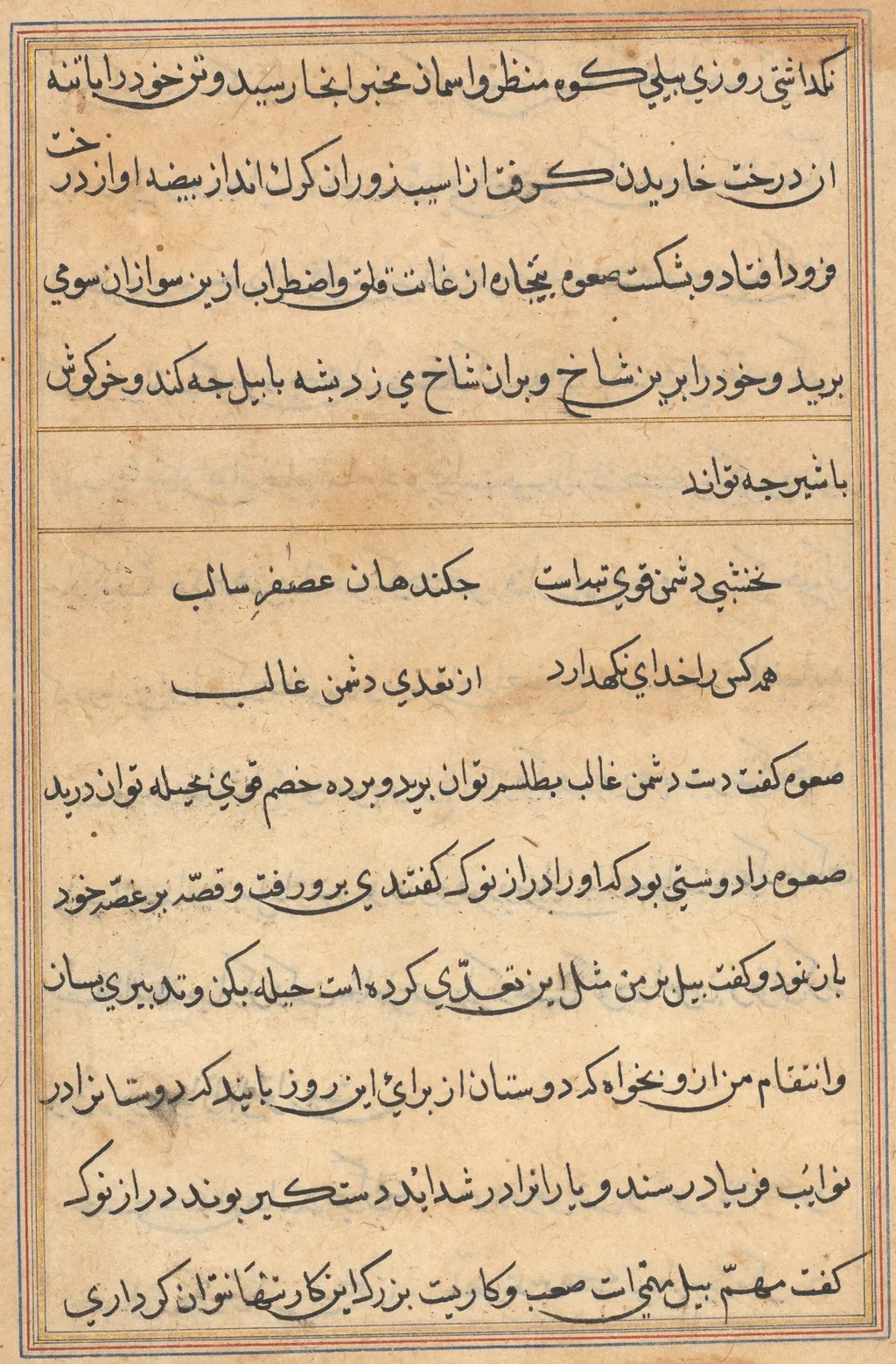
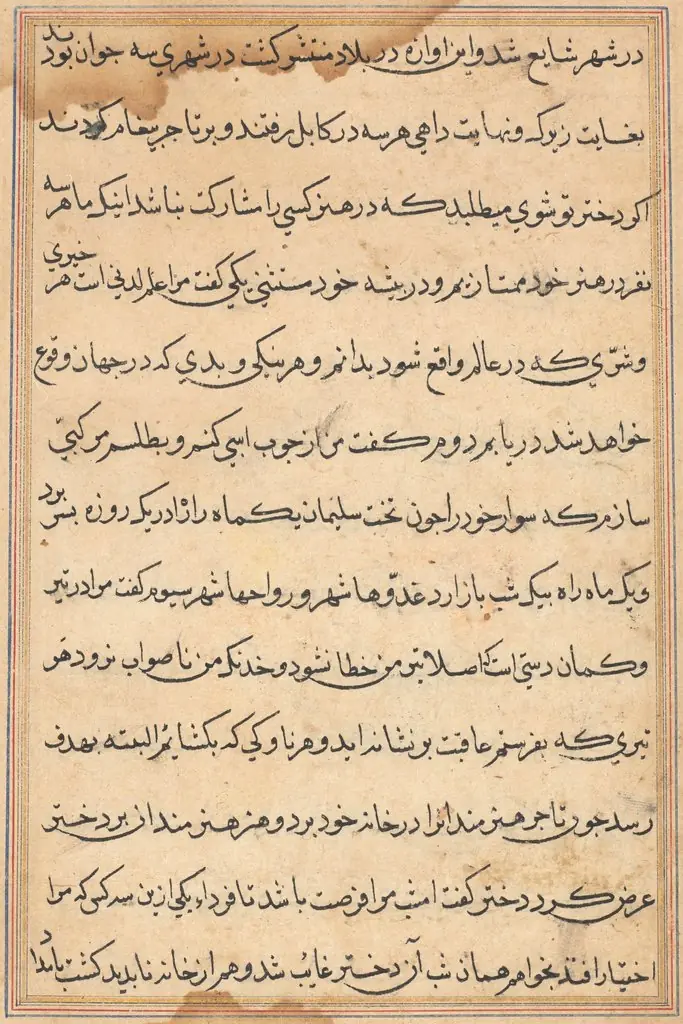
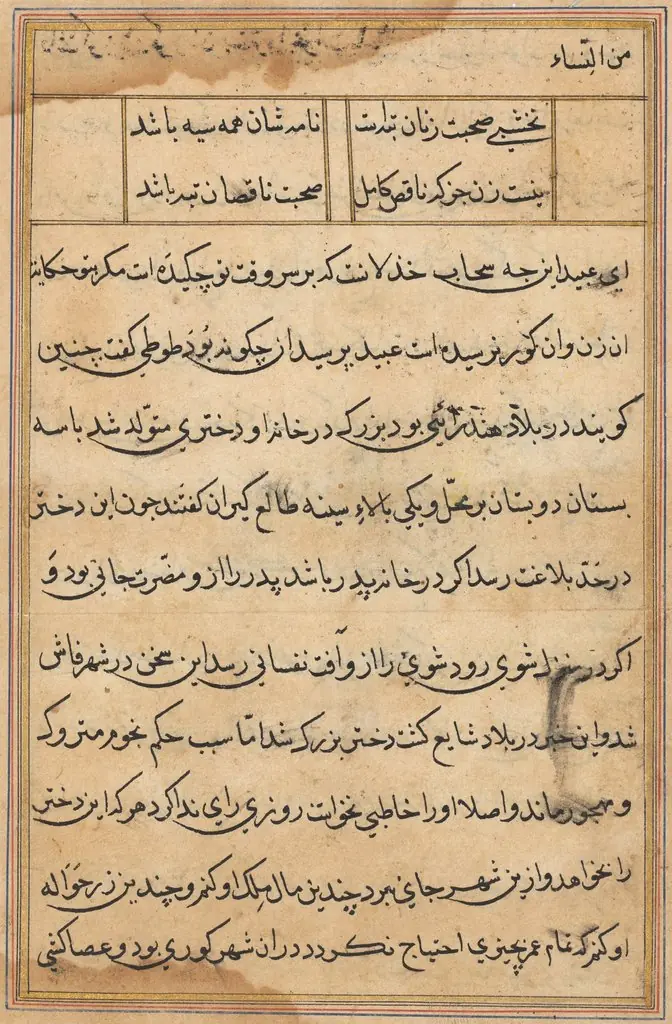
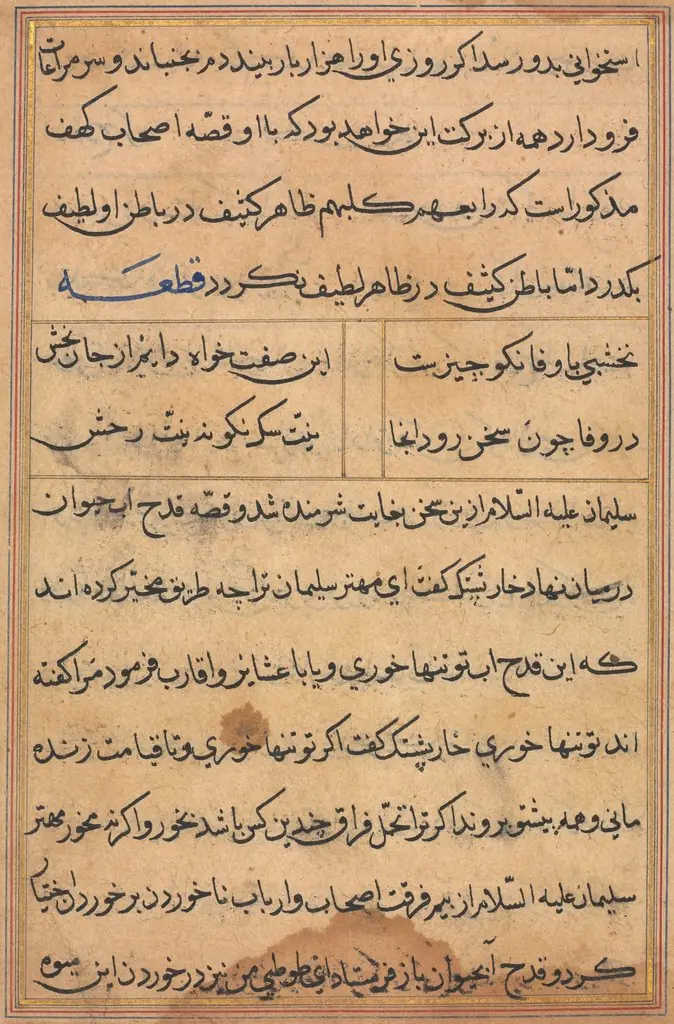
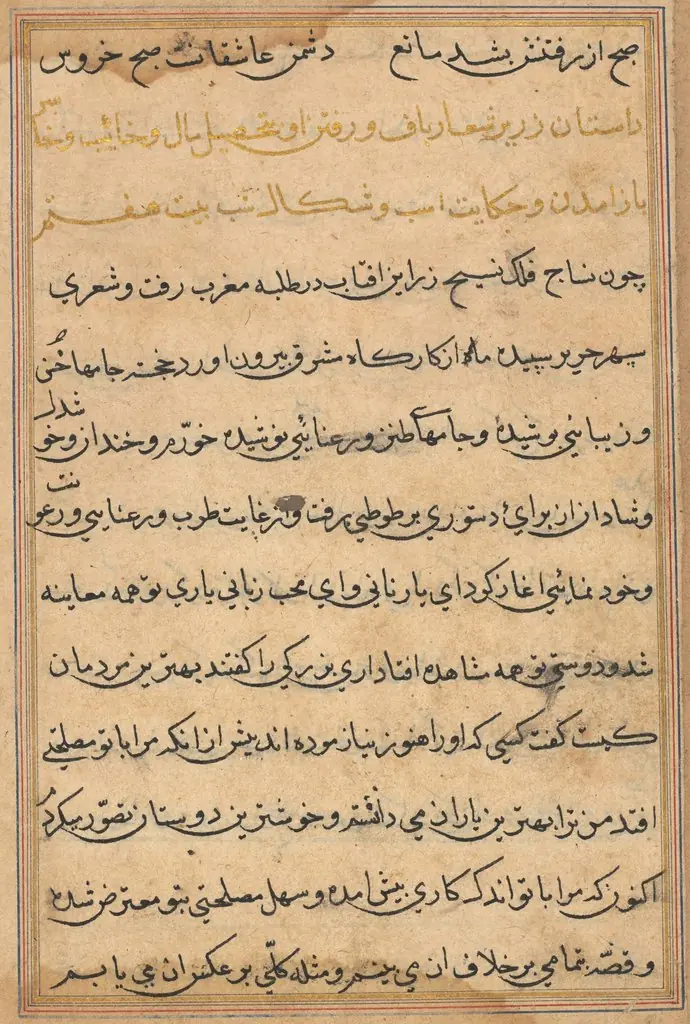
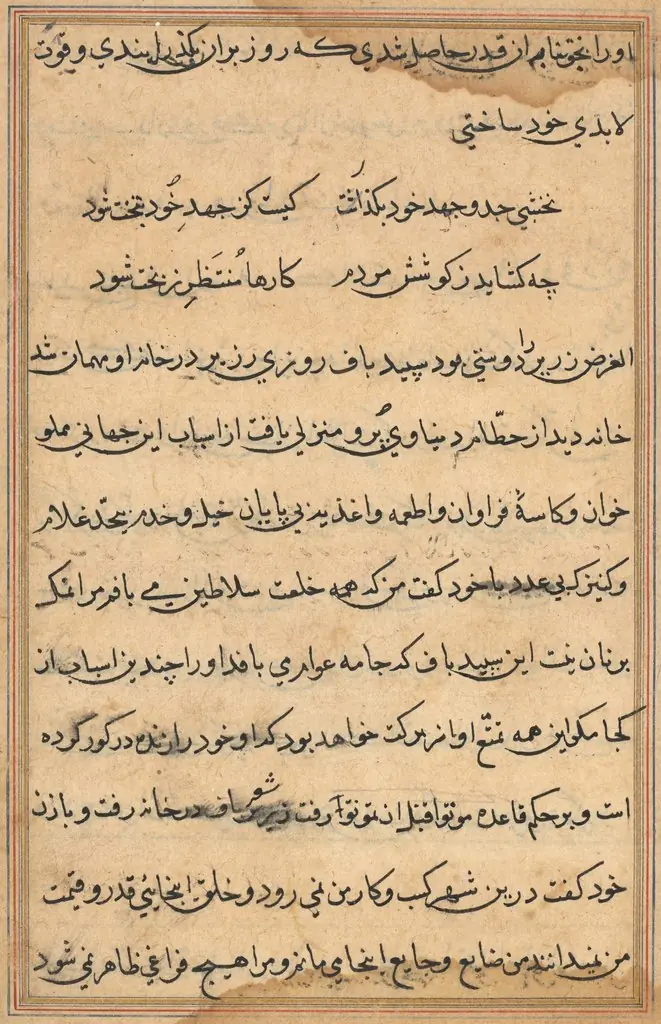
Page from Tales of a Parrot (Tuti-nama): text page is an unspecified painting. It dates from 1560 and is held in the collection of the Cleveland Museum of Art. This object is a painted page from the Persian illustrated manuscript known as *Tales of a Parrot* (Tuti‑nama).
About this work
Overview
This object is a painted page from the Persian illustrated manuscript known as *Tales of a Parrot* (Tuti‑nama). The sheet measures roughly the size of a standard folio and is composed of a warm‑toned paper surface over which black calligraphic text occupies the entire field, framed by a thin red border. The work is held in the collection of the Cleveland Museum of Art.
Subject & Meaning
The dedication to Prince Salim indicates the text was meant for a high‑ranking patron, reflecting the cultural value placed on literary refinement.
The page contains a continuous block of Persian prose, written in an elegant, curved hand. Although the specific narrative is not provided here, the manuscript traditionally recounts moral and didactic stories featuring a talking parrot, a genre intended to entertain and instruct elite audiences. The dedication to Prince Salim indicates the text was meant for a high‑ranking patron, reflecting the cultural value placed on literary refinement.
Technique & Style
The calligraphy is executed in dense, precise black ink, suggesting a meticulous hand and a high level of skill. The surrounding red border is painted with a fine line, providing a visual frame that emphasizes the text. Subtle blue highlights appear scattered among the letters, adding a decorative touch that enhances legibility while maintaining the page’s overall sobriety.
History & Provenance
Created for Prince Salim, a member of the Mughal court, the page exemplifies the patronage system that supported manuscript production in the early modern Persianate world. The folio eventually entered the Western art market and was acquired by the Cleveland Museum of Art, where it now serves as a representative example of Persian literary art.
Context
Manuscript culture in the Mughal era blended literary content with visual refinement, and *Tuti‑nama* was a popular text circulated among aristocratic circles. The use of a red marginal band and occasional blue accents aligns with contemporary aesthetic conventions that balanced textual clarity with ornamental restraint.
Artist & collection

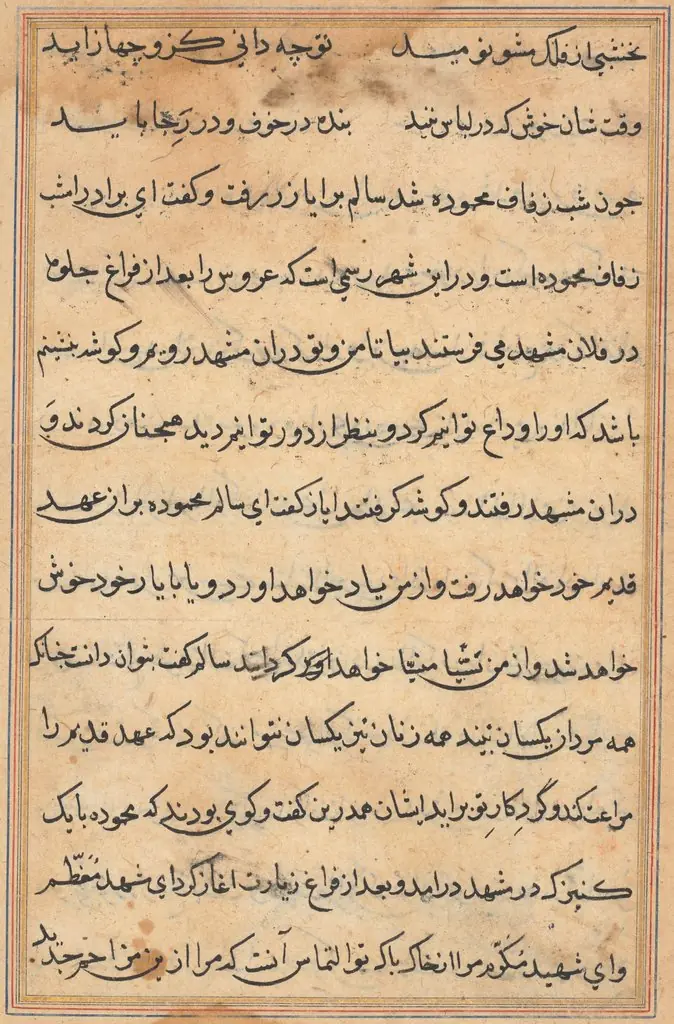 Page from Tales of a Parrot (Tuti-nama): text page
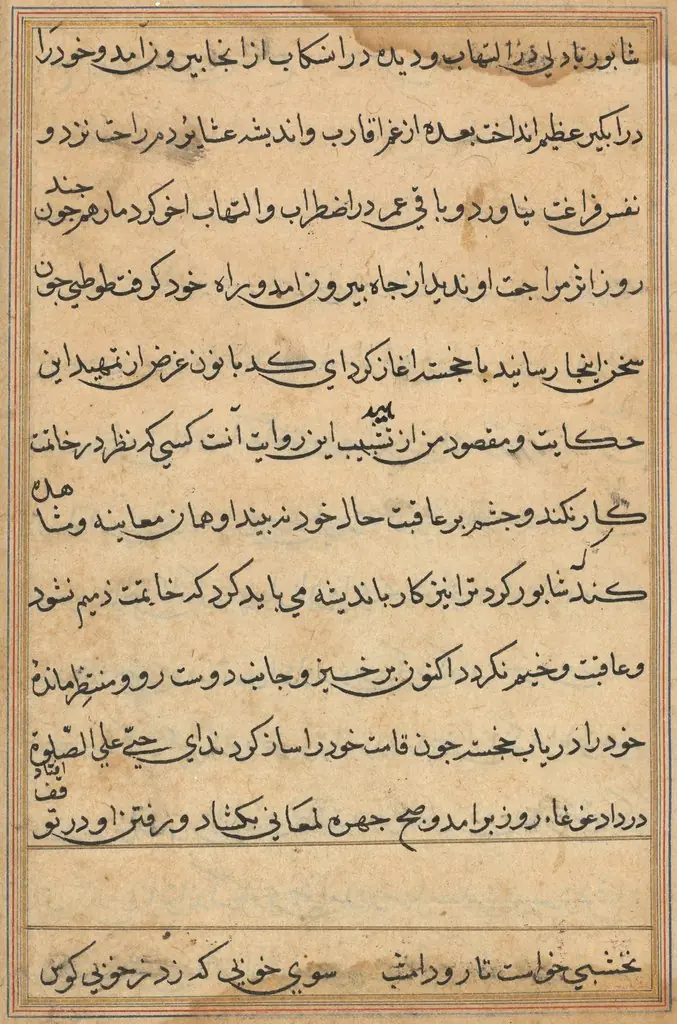 Page from Tales of a Parrot (Tuti-nama): text page
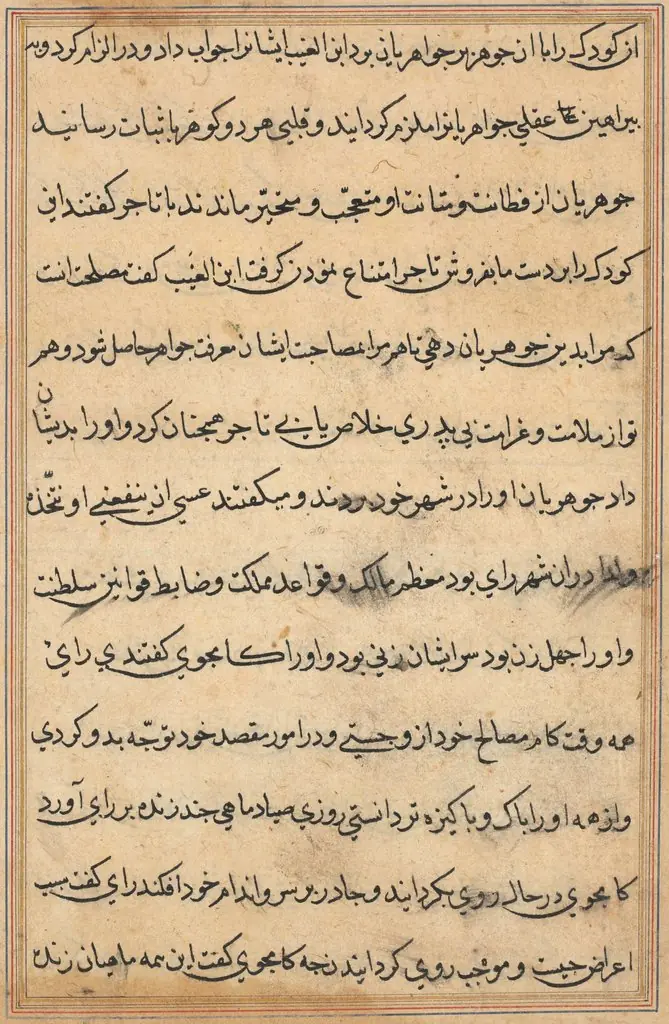 Page from Tales of a Parrot (Tuti-nama): text page
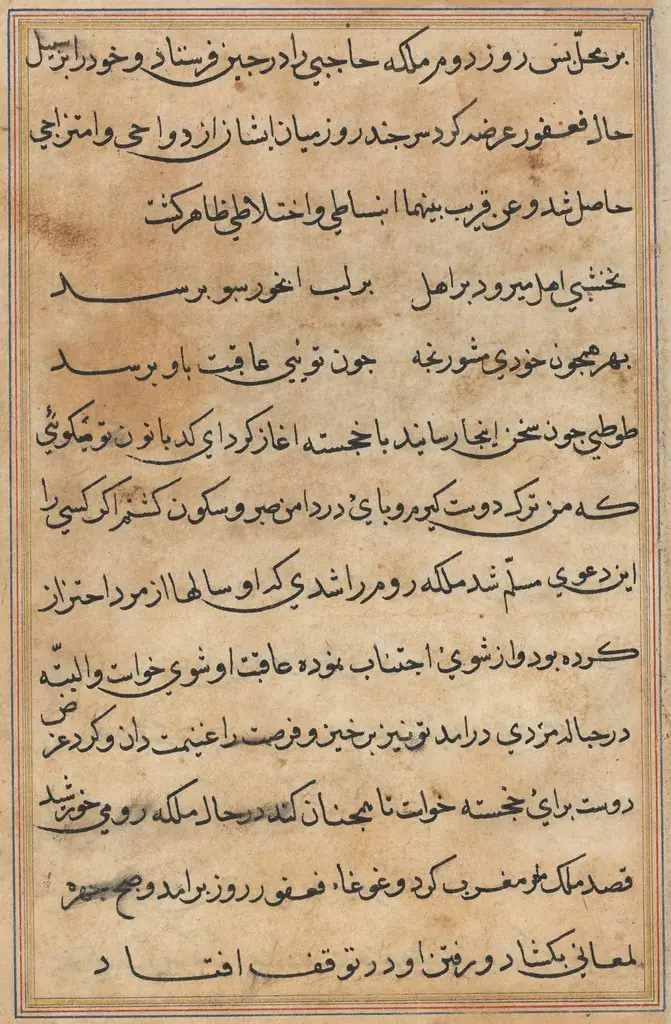 Page from Tales of a Parrot (Tuti-nama): text page
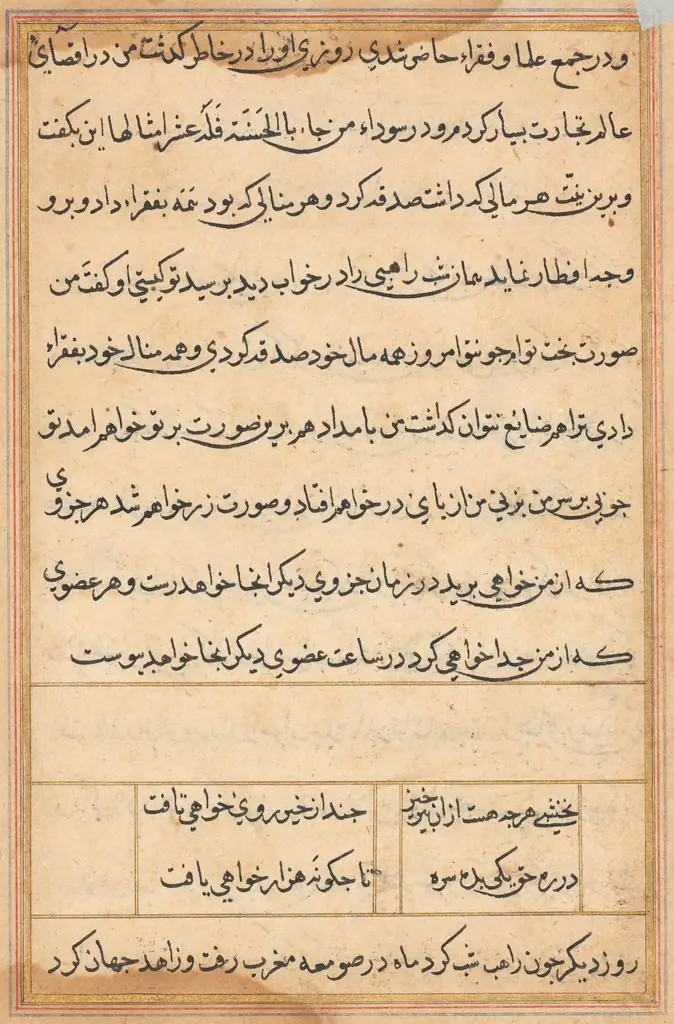 Page from Tales of a Parrot (Tuti-nama): text page
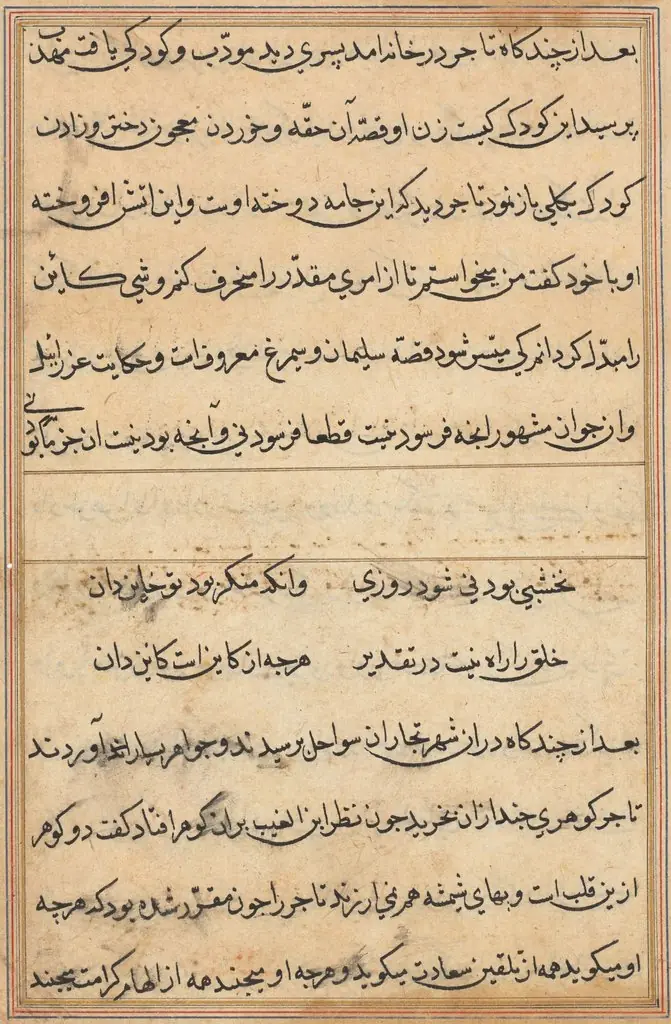 Page from Tales of a Parrot (Tuti-nama): text page
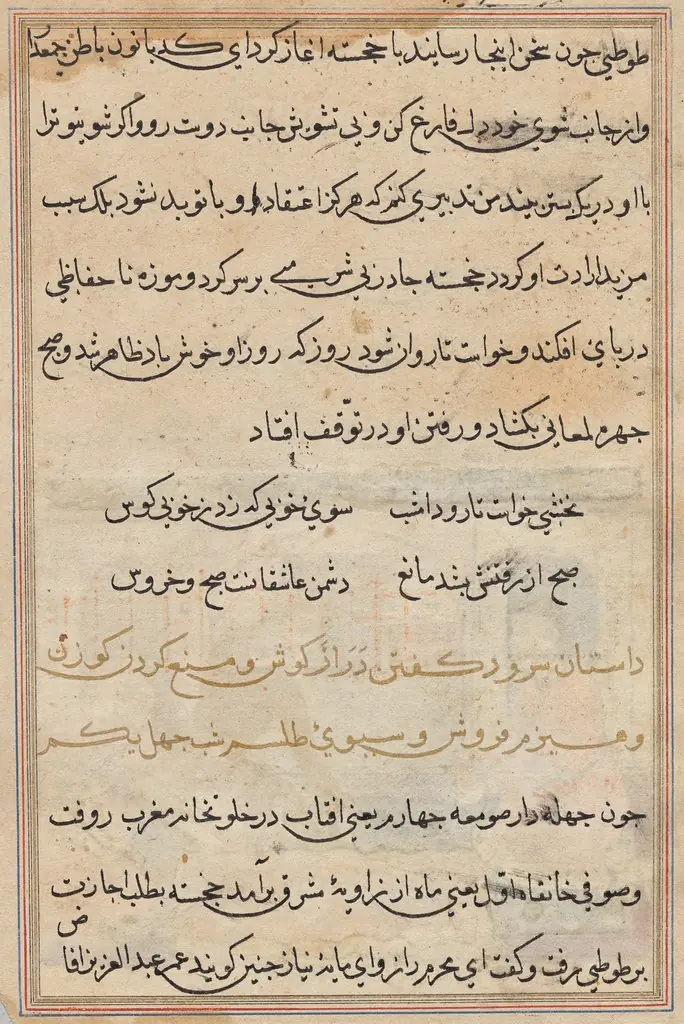 Page from Tales of a Parrot (Tuti-nama): text page
 Page from Tales of a Parrot (Tuti-nama): text page
 Page from Tales of a Parrot (Tuti-nama): text page
 Page from Tales of a Parrot (Tuti-nama): text page
 Page from Tales of a Parrot (Tuti-nama): text page
 Page from Tales of a Parrot (Tuti-nama): text page