Artwork
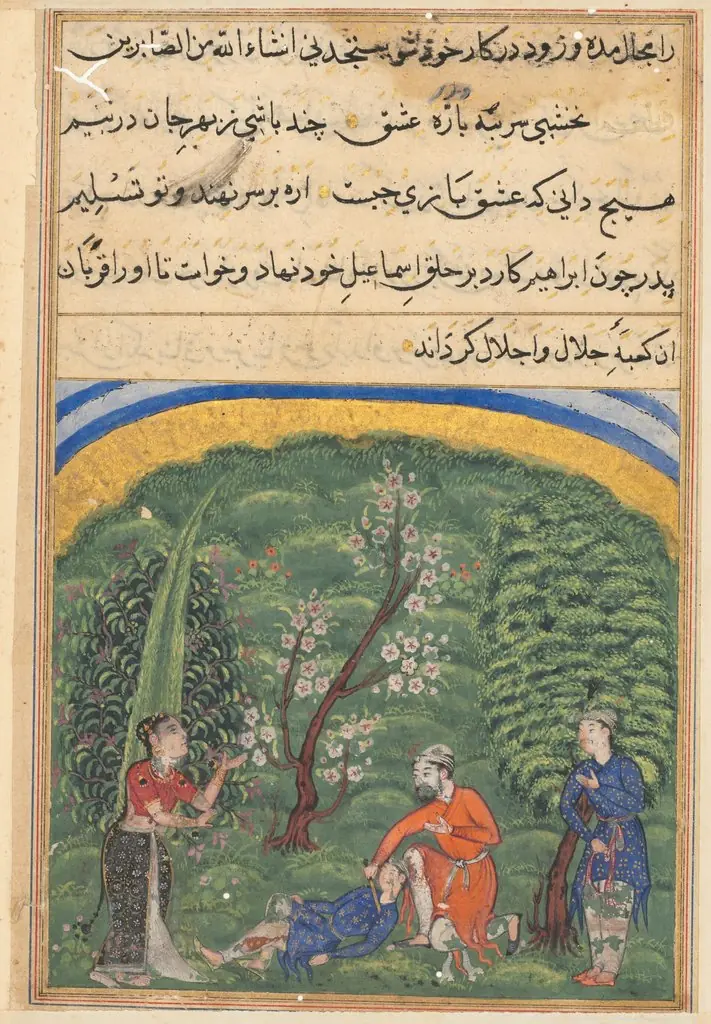
The Raja of Ujjain, who is traveling in the guise of a yogi, meets two brothers who ask him to equitably partition their father’s possession, from a Tuti-nama (Tales of a Parrot): Forty-sixth Night
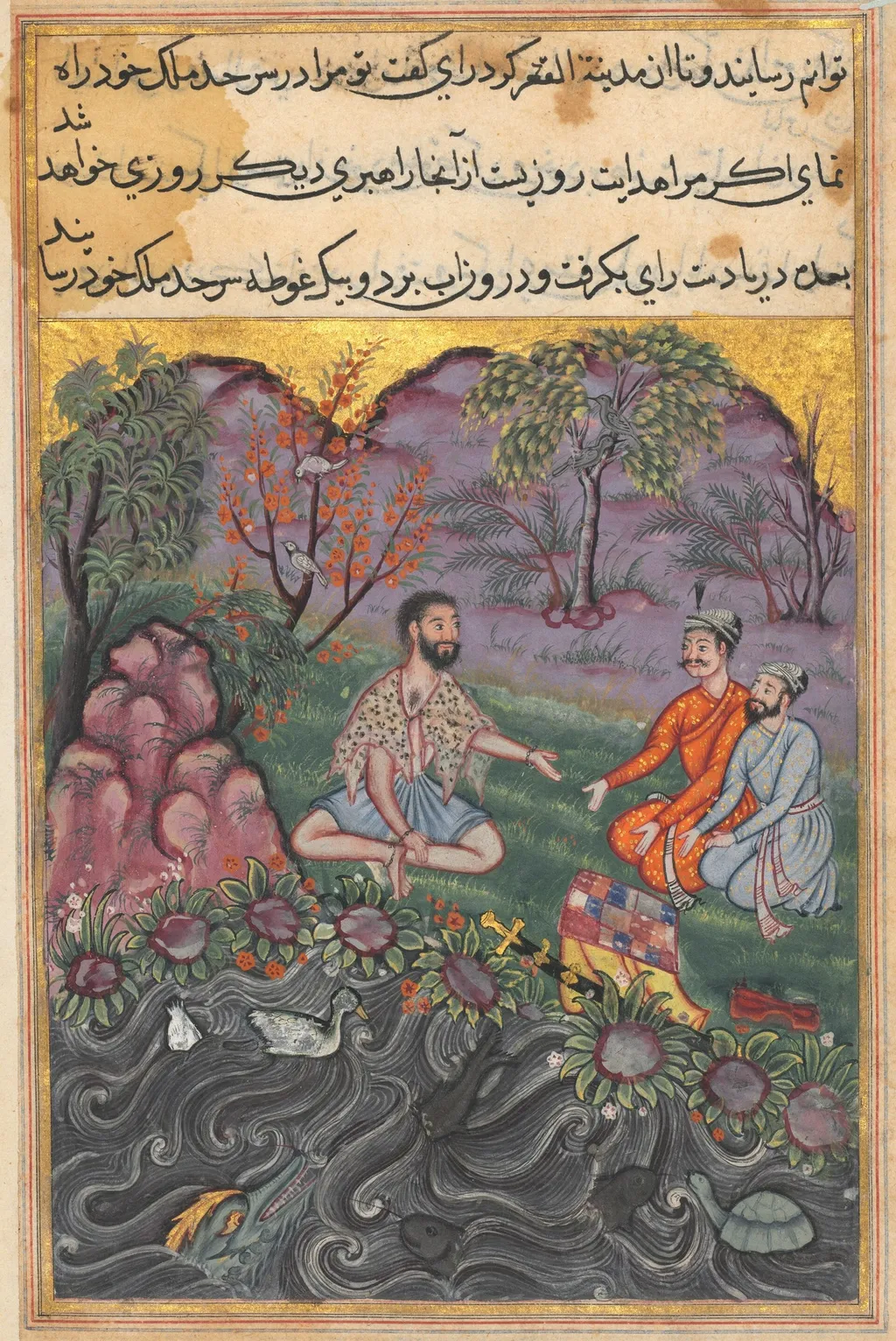
The Raja of Ujjain, who is traveling in the guise of a yogi, meets two brothers who ask him to equitably partition their father’s possession, from a Tuti-nama (Tales of a Parrot): Forty-sixth Night is an unspecified painting. It dates from 1560 and is held in the collection of the Cleveland Museum of Art. The work depicts a narrative episode from the Tuti‑nama, a collection of parrot‑told tales.
About this work
Overview
The work depicts a narrative episode from the Tuti‑nama, a collection of parrot‑told tales. In a lush garden, three figures are seated: a bearded man in simple attire, a second bearded figure gesturing, and a third figure in vivid orange robes. The setting is rendered with stylised foliage, birds, and flowing grass, while an Arabic inscription crowns the composition.
Subject & Meaning
The scene illustrates the moment when a disguised Raja of Ujjain, travelling as a yogi, encounters two brothers who request a fair division of their father’s estate. The central orange‑robed figure represents the royal visitor, whose concealed authority is hinted by his striking garment, while the other two men embody the petitioners seeking equitable justice.
Technique & Style
Executed in a warm palette of greens, reds, and golds, the painting employs flat areas of colour and decorative patterning typical of Persian miniature traditions. The foliage and grass are rendered with sinuous lines that convey movement, and the figures are outlined with fine ink work, integrating text and image in a harmonious composition.
History & Provenance
The piece originates from the illustrated manuscript tradition of the Tuti‑nama, a 15th‑century Persian text. It entered the collection of the Cleveland Museum of Art through a 20th‑century acquisition of South Asian and Islamic manuscripts, where it now serves as a representative example of narrative miniature painting.
Context
Narrative miniatures such as this one were created to accompany literary works, providing visual commentary on moral and legal dilemmas. The story of the Raja’s disguised judgment reflects broader themes of wisdom, authority, and the equitable resolution of familial disputes common in medieval Persian storytelling.
Artist & collection

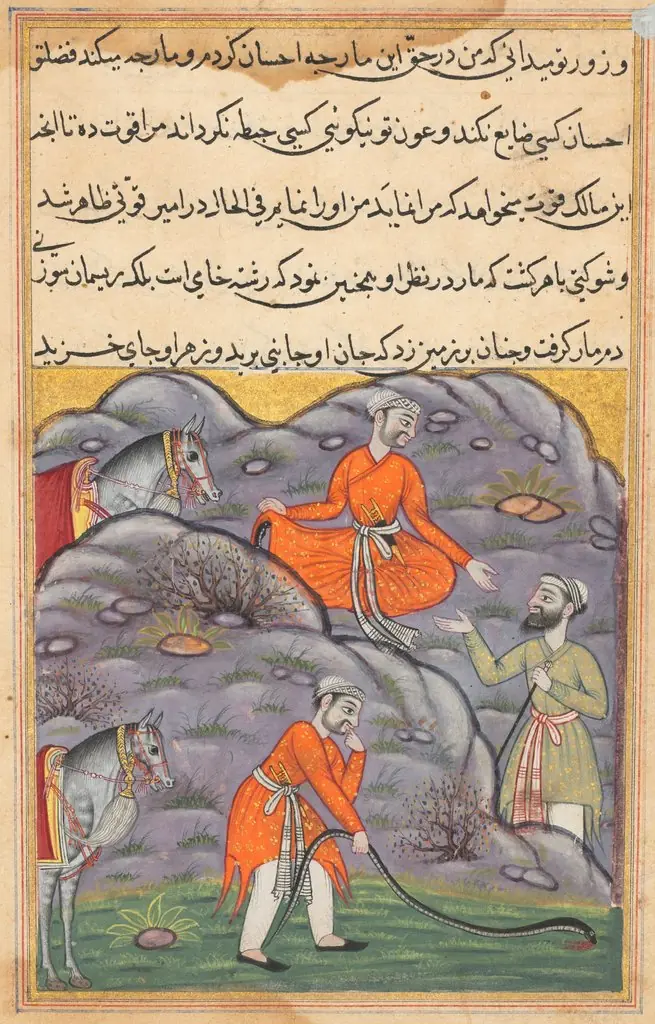 The Emir slays the snake after giving it shelter, from a Tuti-nama (Tales of a Parrot): Forty-fifth Night
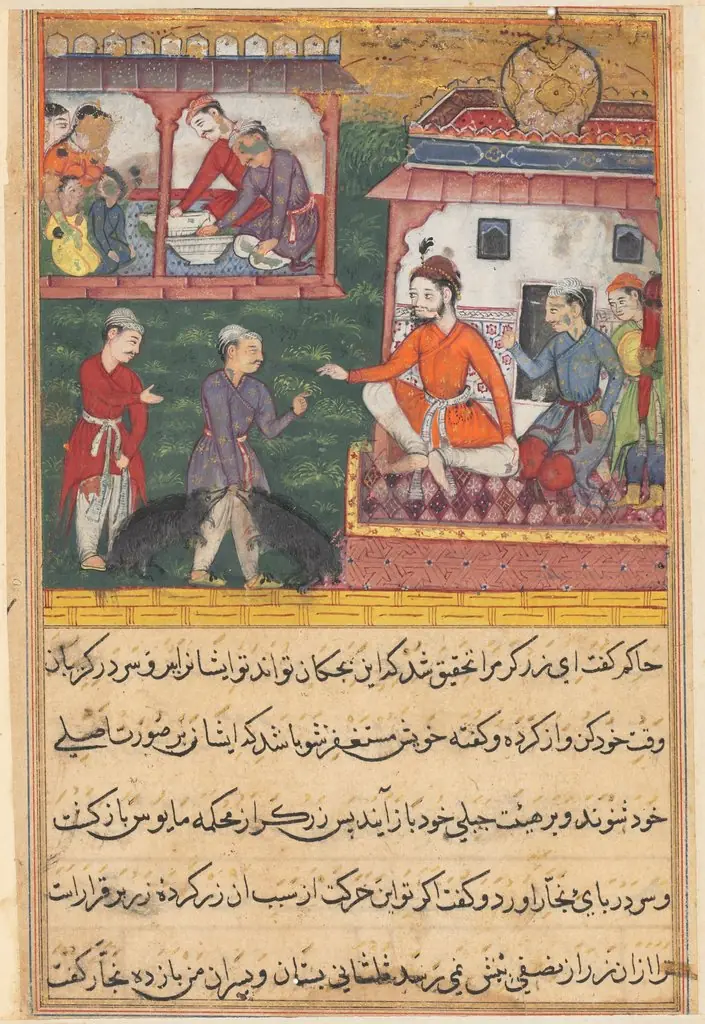 The goldsmith judged; the bear cubs trained by the carpenter as though they were his sons, from a Tuti-nama (Tales of a Parrot): Third Night
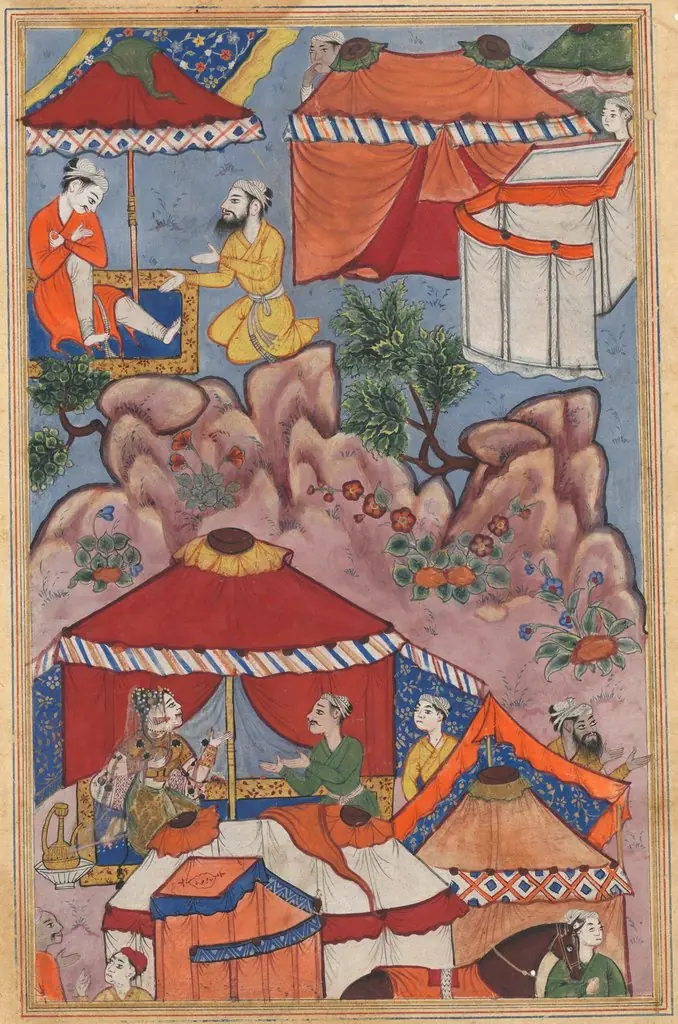 Bashir confides his love for Habbaza to an Arab friend, and sends him to her with a message, from a Tuti-nama (Tales of a Parrot): Twenty-fourth Night
 The sentinel in the employ of the Shah of Tabaristan prepares to sacrifice his son to the ghost of the Shah’s soul, from a Tuti-nama (Tales of a Parrot): Second Night
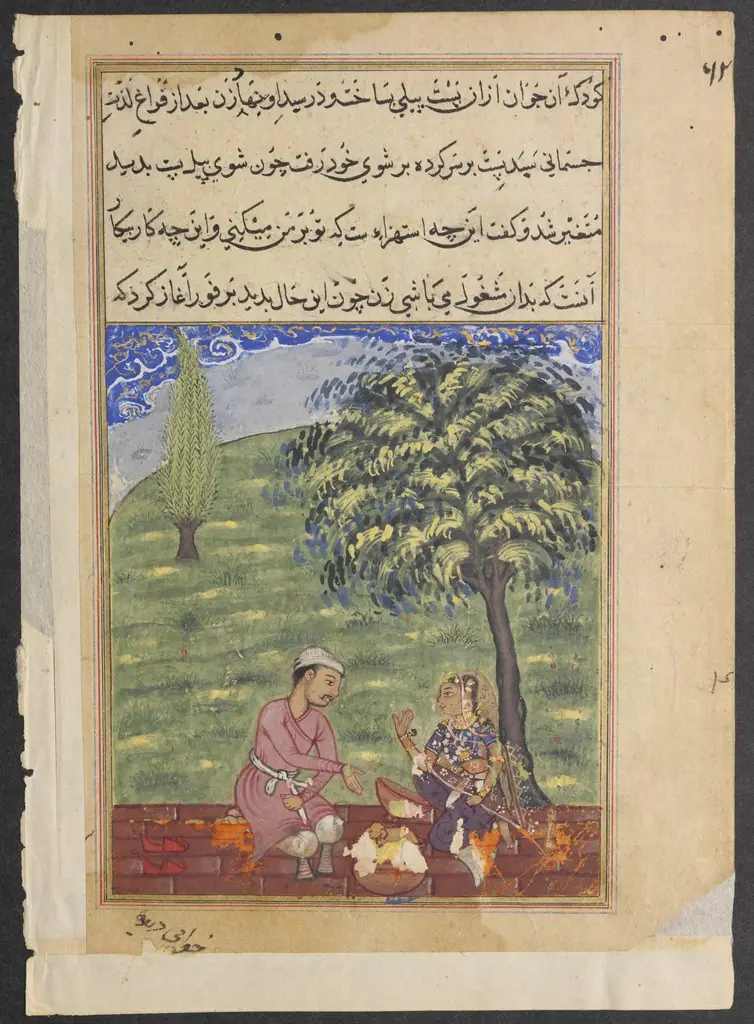 The unfaithful wife explaining away the presence of the dough elephant, from a Tuti-nama (Tales of a Parrot): Eighth Night