Artwork
Bashir confides his love for Habbaza to an Arab friend, and sends him to her with a message, from a Tuti-nama (Tales of a Parrot): Twenty-fourth Night
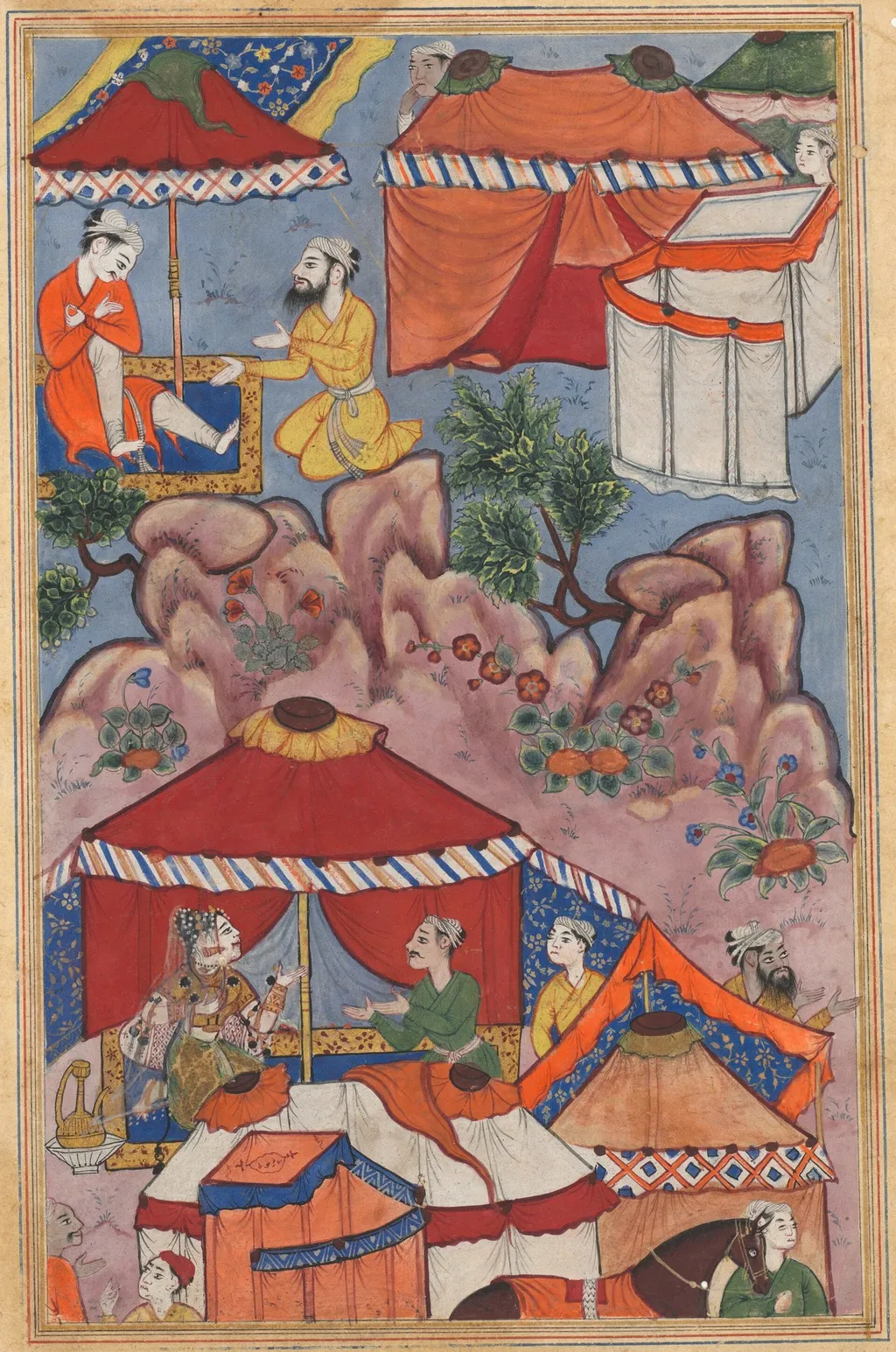
Bashir confides his love for Habbaza to an Arab friend, and sends him to her with a message, from a Tuti-nama (Tales of a Parrot): Twenty-fourth Night is an unspecified painting. It dates from 1560 and is held in the collection of the Cleveland Museum of Art. The work depicts a lively outdoor gathering set beneath a series of colorful tents.
About this work
Overview
The work depicts a lively outdoor gathering set beneath a series of colorful tents.
The work depicts a lively outdoor gathering set beneath a series of colorful tents. Central to the composition is a man dressed in yellow, seated on a raised platform, holding a cup and engaged in conversation with a figure sheltered by a red umbrella. Surrounding them are numerous attendants lounging on cushions, reading, or resting, while a backdrop of gently rolling pink hills, scattered trees and rocky outcrops frames the scene.
Subject & Meaning
The painting illustrates a moment from the Persian narrative collection known as the Tuti‑nama, or "Tales of a Parrot," specifically the episode in which Bashir confides his affection for Habbaza to a friend and entrusts him with a message. The gathering of characters and the intimate dialogue suggest themes of love, trust, and the social rituals surrounding the conveyance of personal sentiments in a courtly setting.
Technique & Style
Executed with a vivid palette, the artist juxtaposes saturated reds, blues and yellows against the softer pastel tones of the hills, creating visual contrast without overcrowding the picture plane. Figures are rendered with simplified outlines and patterned fabrics, while the tents display striped edges and decorative motifs. The composition balances dense figuration with open landscape, achieving a rhythmic flow that guides the eye across the bustling tableau.
Context
The scene is drawn from a literary source popular in Persian miniature tradition, where illustrated manuscripts often visualized episodes from the Tuti‑nama. Such works were typically produced for elite patrons interested in both literary and visual culture, reflecting the cross‑media storytelling practices of the Islamic world during the late medieval period.
Artist & collection

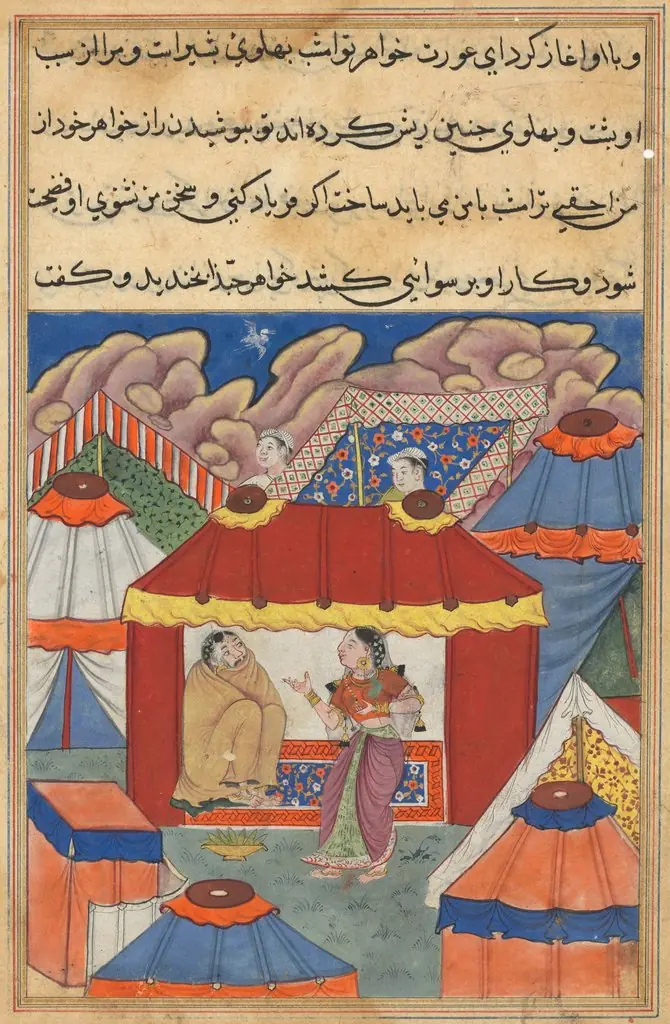 Habbaza’s sister, who is sent to console her, discovers the disguised Arab in her place, from a Tuti-nama (Tales of a Parrot): Twenty-fourth Night
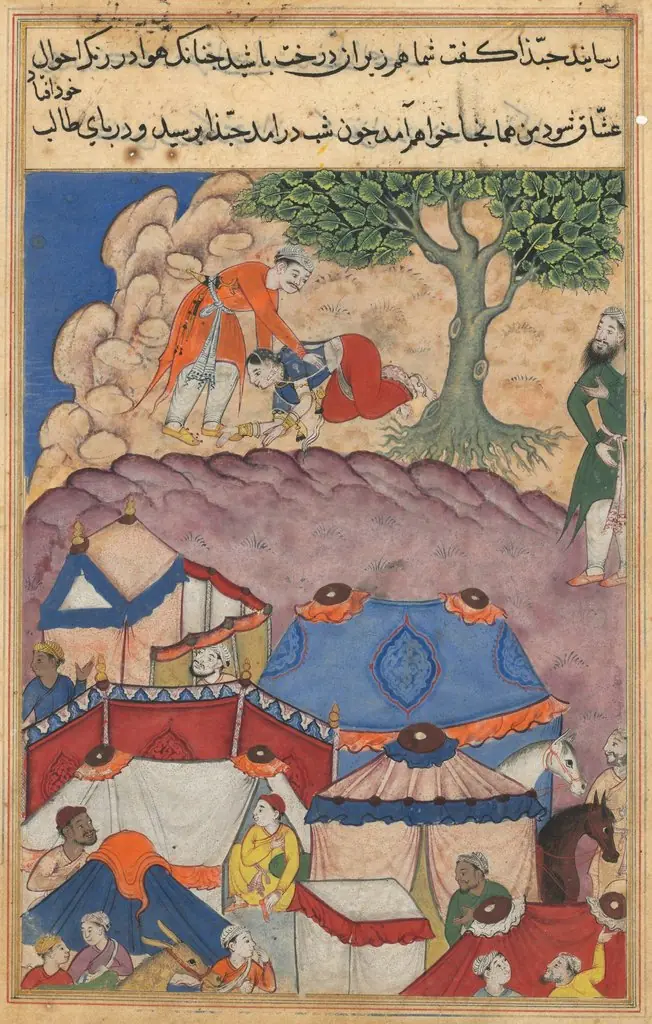 Habbaza meets Bashir under a tree, from a Tuti-nama (Tales of a Parrot): Twenty-fourth Night
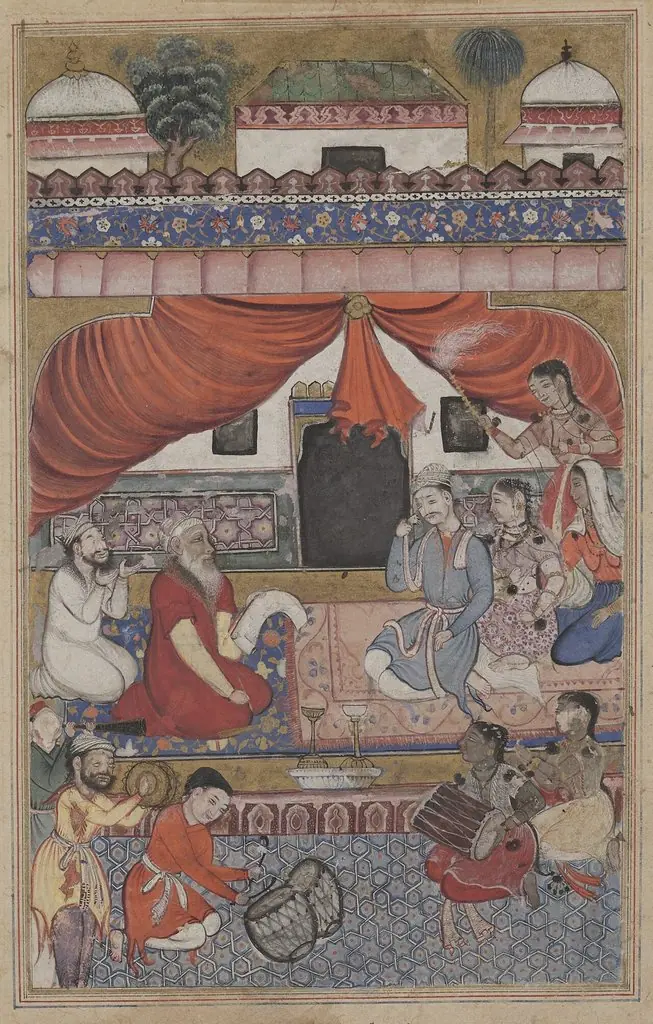 Preparation for the marriage of Mahmuda to the Young Vizier, from a Tuti-nama (Tales of a Parrot): Thirty-third Night
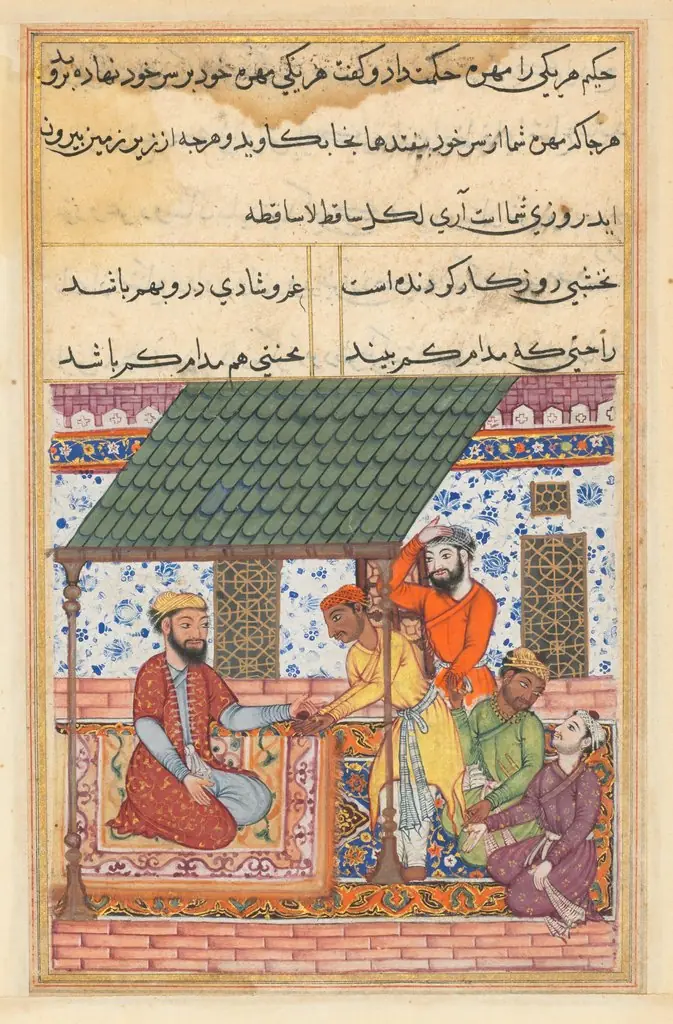 The four destitute friends go to a wise man who gives each one of them a magic shell to be placed on top of the turban, from a Tuti-nama (Tales of a Parrot): Forty-seventh Night
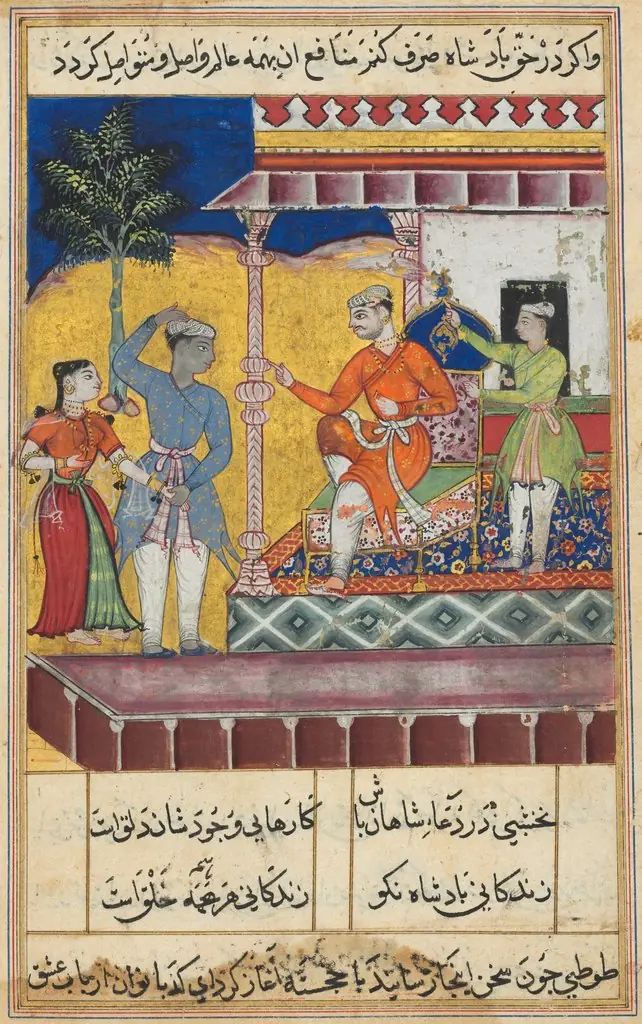 The rejuvenated old man and the daughter of the king of the jinns take leave of the King of Kings, from a Tuti-nama (Tales of a Parrot): Seventh Night
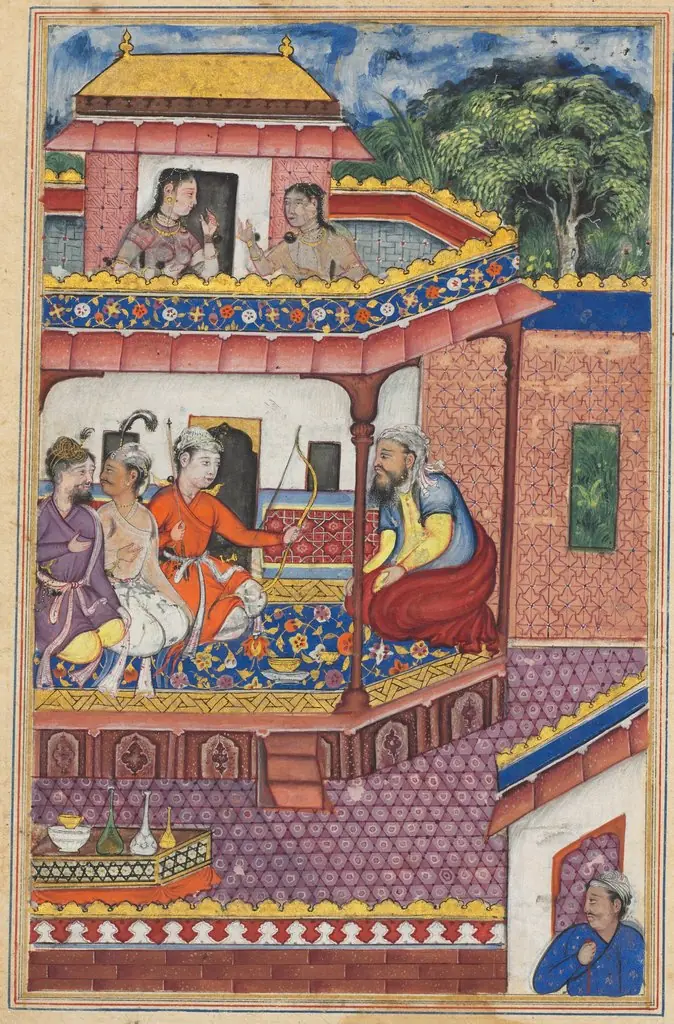 The three young men present themselves as suitors for the hand of Zuhra, the daughter of the merchant of Kabul, from a Tuti-nama (Tales of a Parrot): Thirty-fourth Night
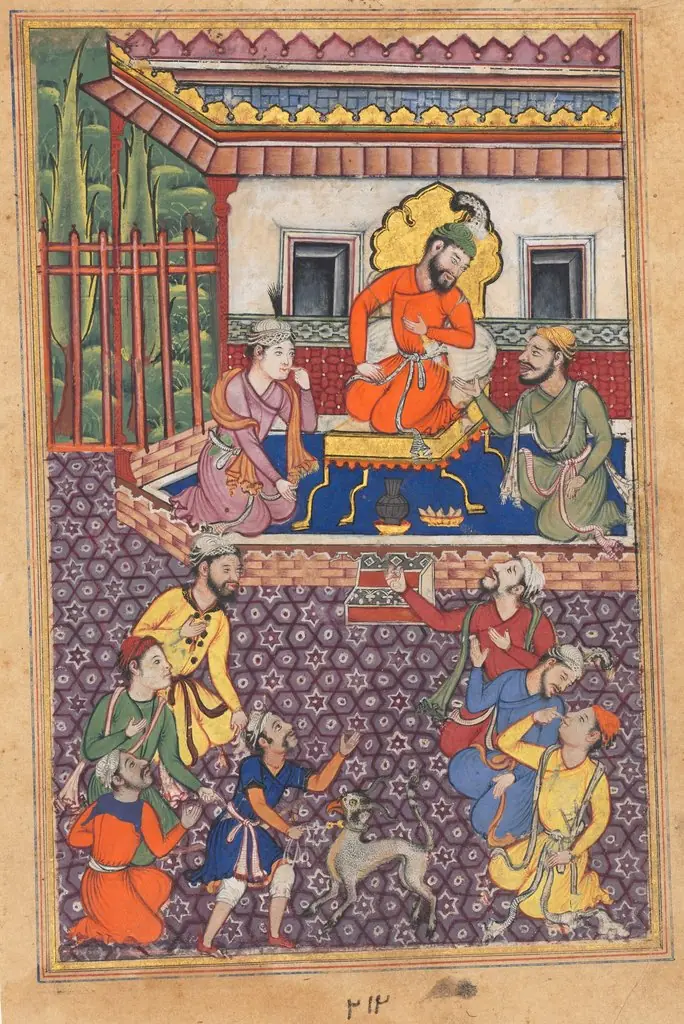 The court of the Raja of Ujjain, from a Tuti-nama (Tales of a Parrot): Forty-sixth Night