Artwork
The Emir slays the snake after giving it shelter, from a Tuti-nama (Tales of a Parrot): Forty-fifth Night
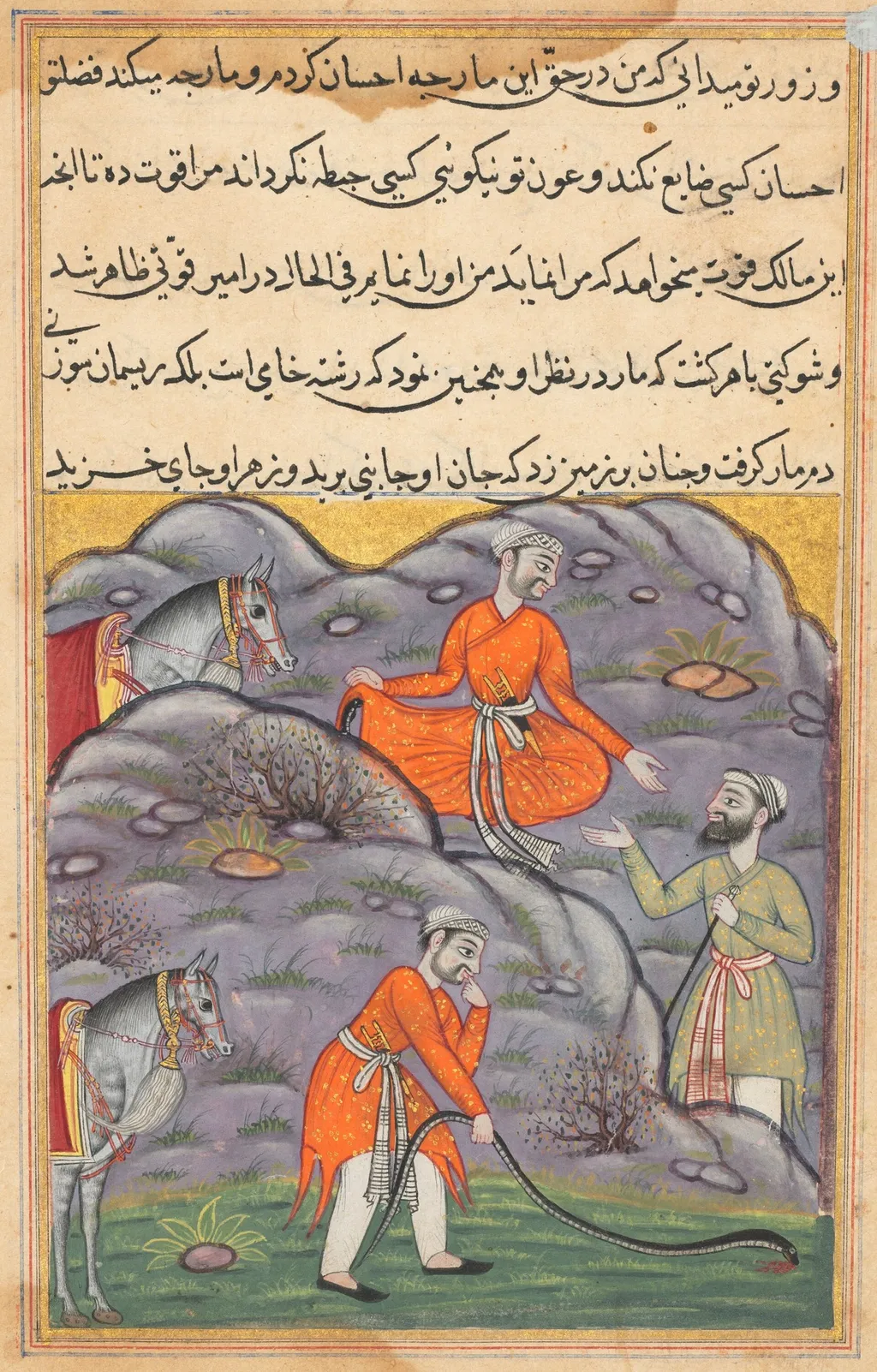
The Emir slays the snake after giving it shelter, from a Tuti-nama (Tales of a Parrot): Forty-fifth Night is an unspecified painting. It dates from 1560 and is held in the collection of the Cleveland Museum of Art. The work depicts three figures in bright orange garments within a stylised landscape of grass and rock.
About this work
Overview
A yellow border frames the scene, topped with Persian calligraphy, and the palette relies on flat, vivid greens, blues and golds.
The work depicts three figures in bright orange garments within a stylised landscape of grass and rock. One figure is captured in the act of striking a coiled serpent that resembles a dragon, while a second figure points toward the action and a third holds a horse nearby. A yellow border frames the scene, topped with Persian calligraphy, and the palette relies on flat, vivid greens, blues and golds.
Subject & Meaning
The composition illustrates a narrative episode from the Tuti‑nama, a collection of moral tales featuring a parrot. In this particular story, an emir, having offered refuge to a snake, is forced to kill it, symbolising the tension between hospitality and the danger of unguarded generosity.
Technique & Style
Executed with broad, uniform washes of colour, the painting employs a decorative approach typical of Persian manuscript illustration. Figures are rendered with minimal modelling, and patterns on the robes are reduced to simple motifs. The background features stylised foliage and a lightly clouded sky, emphasizing narrative clarity over naturalistic depth.
History & Provenance
The piece originates from a manuscript of the Tuti‑nama, likely produced in the Persianate world during the late medieval period. It entered the collection of the Cleveland Museum of Art through acquisition in the early twentieth century, where it now contributes to the museum’s holdings of Islamic art.
Context
The scene reflects the broader tradition of illustrated moral literature in Persian culture, where stories of kings, emirs and fantastical creatures served both didactic and entertainment purposes. The use of vivid, flat colour and ornamental borders aligns with contemporary manuscript aesthetics, linking the work to other illustrated tales of the era.
Artist & collection

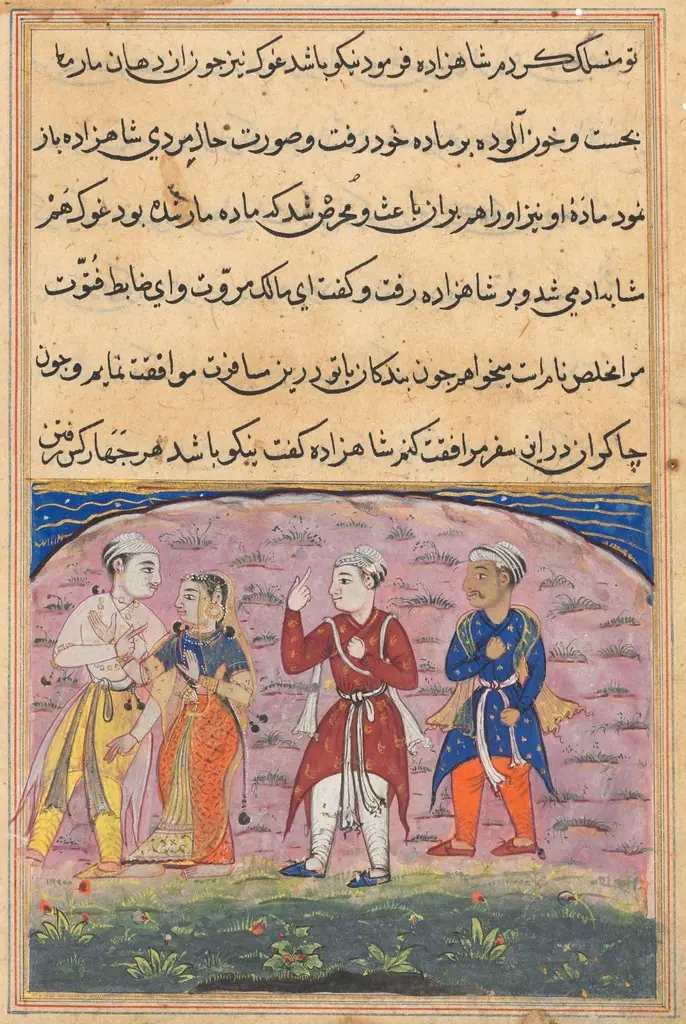 The prince and Nikfal are joined by Khalis and the Mukhlis who are the grateful snake and frog in human form, from a Tuti-nama (Tales of a Parrot): Eighteenth Night
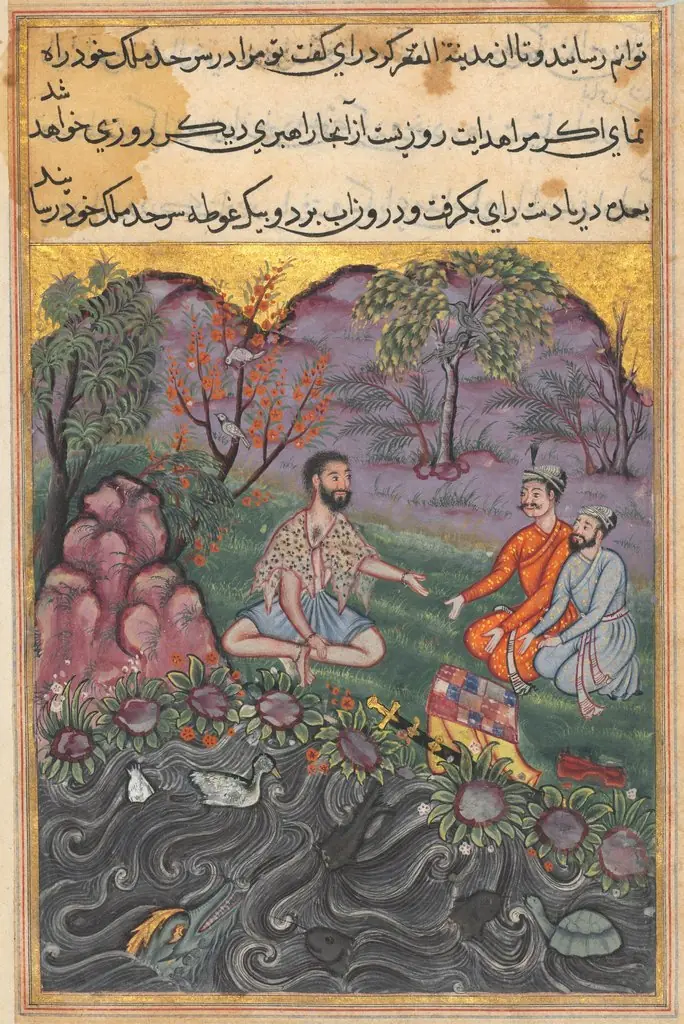 The Raja of Ujjain, who is traveling in the guise of a yogi, meets two brothers who ask him to equitably partition their father’s possession, from a Tuti-nama (Tales of a Parrot): Forty-sixth Night
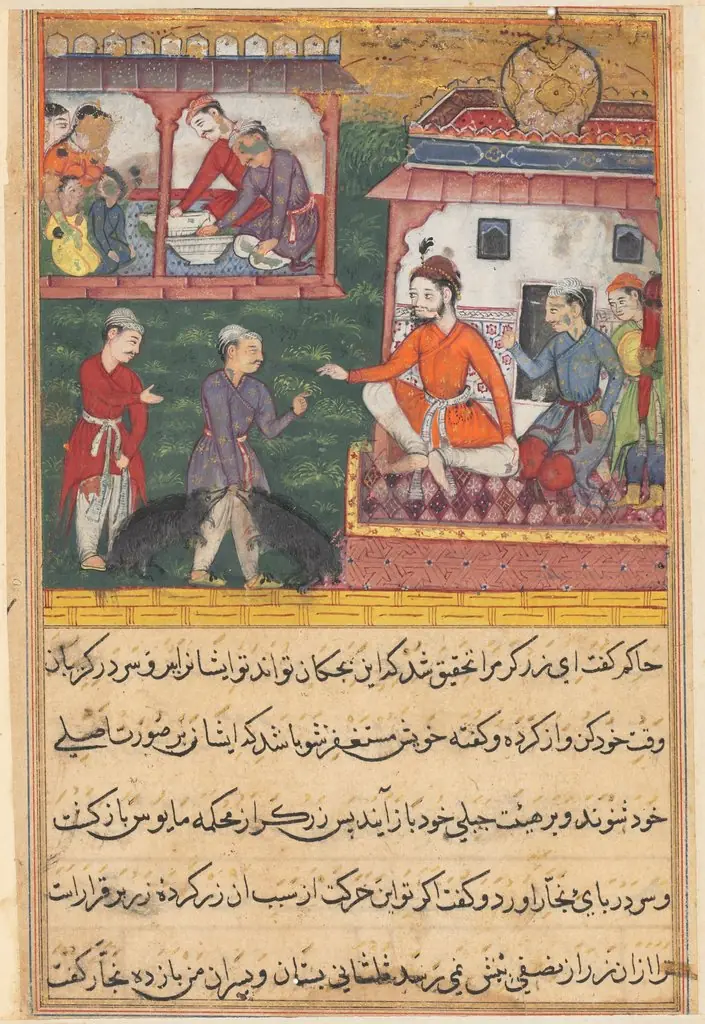 The goldsmith judged; the bear cubs trained by the carpenter as though they were his sons, from a Tuti-nama (Tales of a Parrot): Third Night
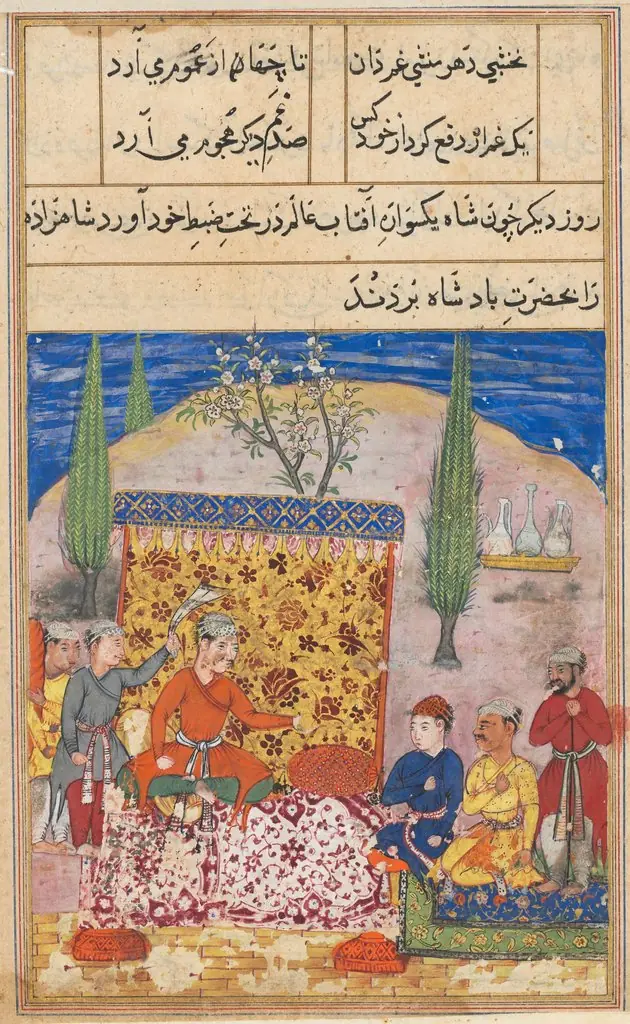 The young prince is presented to the king, his father, by his teacher, but refuses to speak, from a Tuti-nama (Tales of a Parrot): Eighth Night
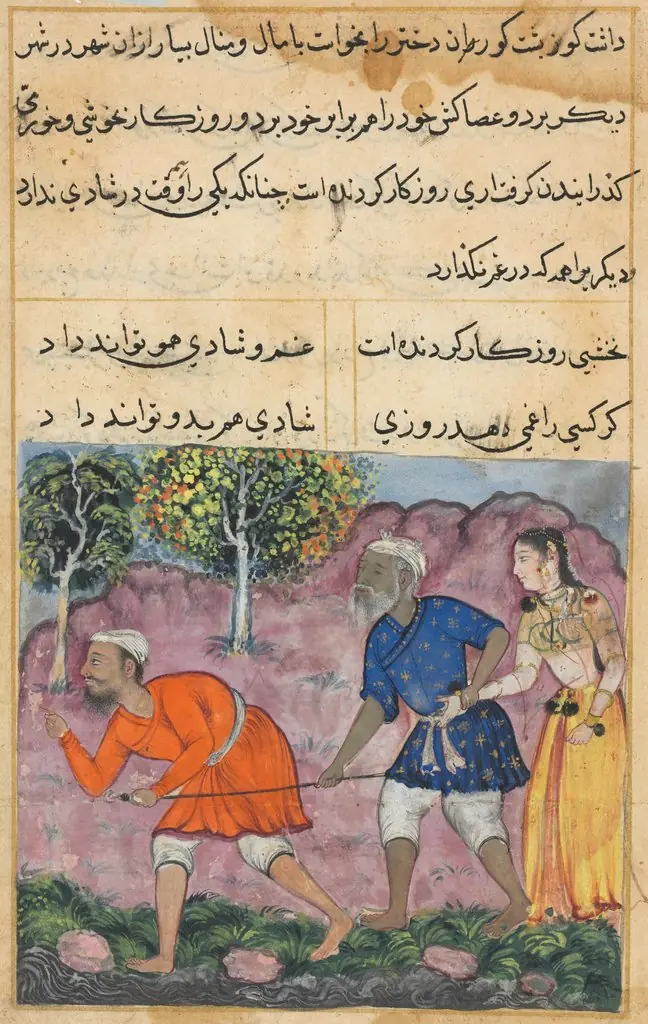 The Raja’s daughter, born with three breasts, accompanies her blind husband and his hunchback guide on a journey, from a Tuti-nama (Tales of a Parrot): Forty-second Night
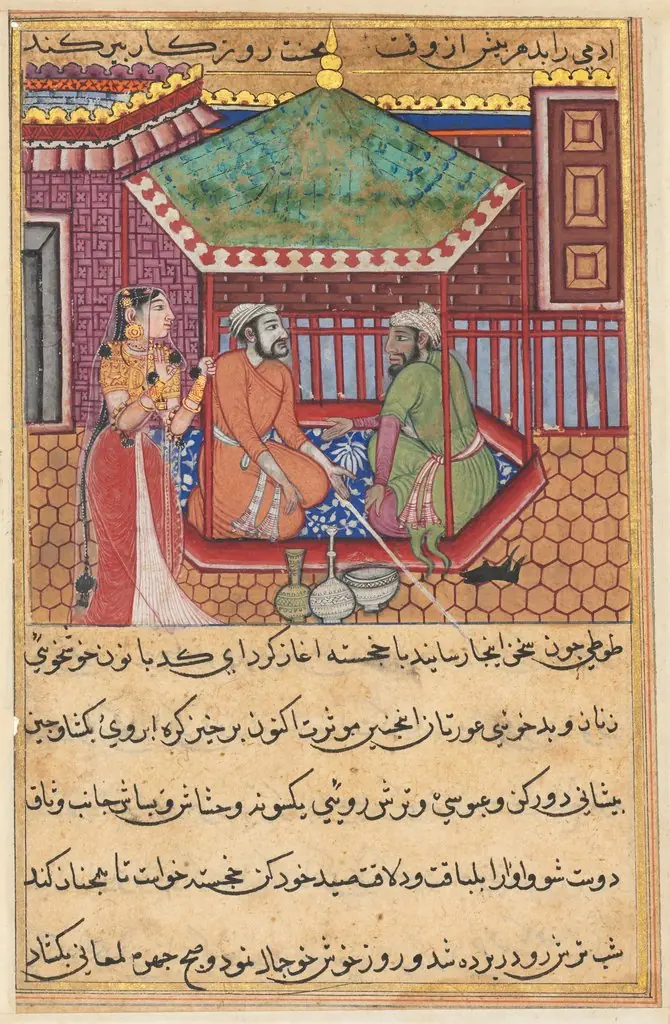 The eldest brother explains the reason for his youthful appearance, from a Tuti-nama (Tales of a Parrot): Forty-ninth Night
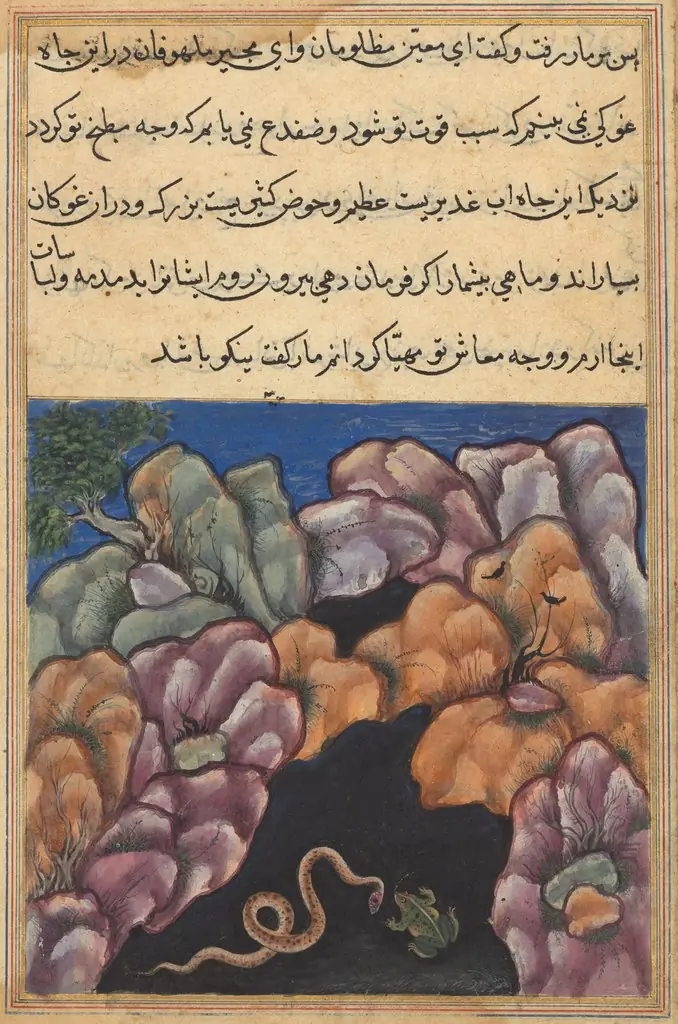 The snake enters into an argument with the frog, from a Tuti-nama (Tales of a Parrot): Twenty-sixth Night
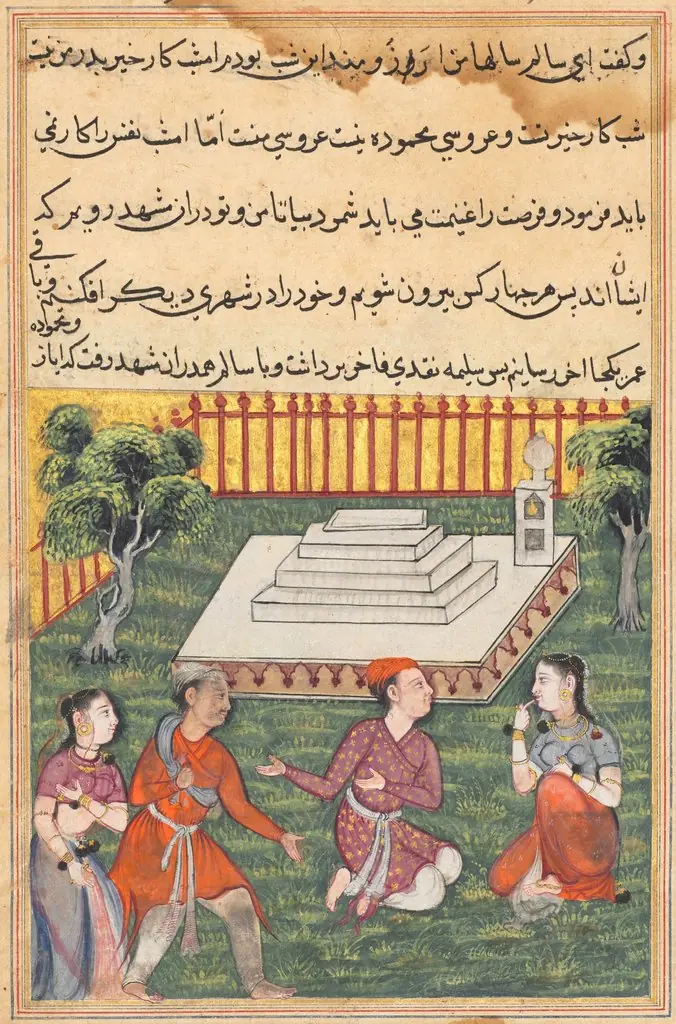 Salim and Salima return to Ayaz and Mahmuda in the sanctuary, from a Tuti-nama (Tales of a Parrot): Thirty-third Night
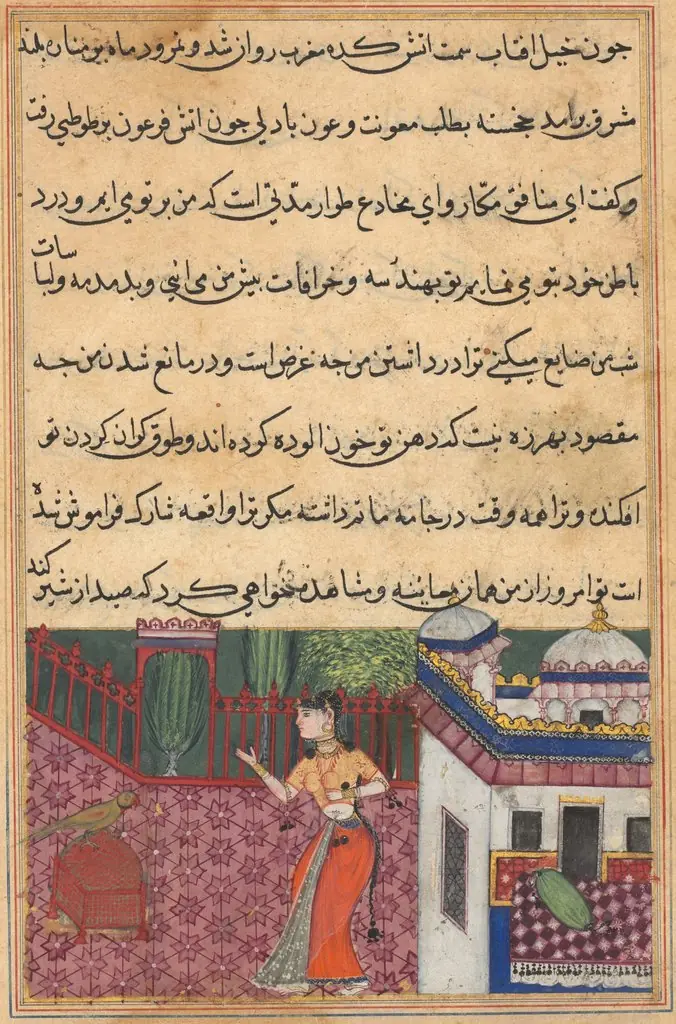 The parrot addresses Khujasta at the beginning of the thirty-third night, from a Tuti-nama (Tales of a Parrot)