Artwork
Martyrdom of St. Lawrence
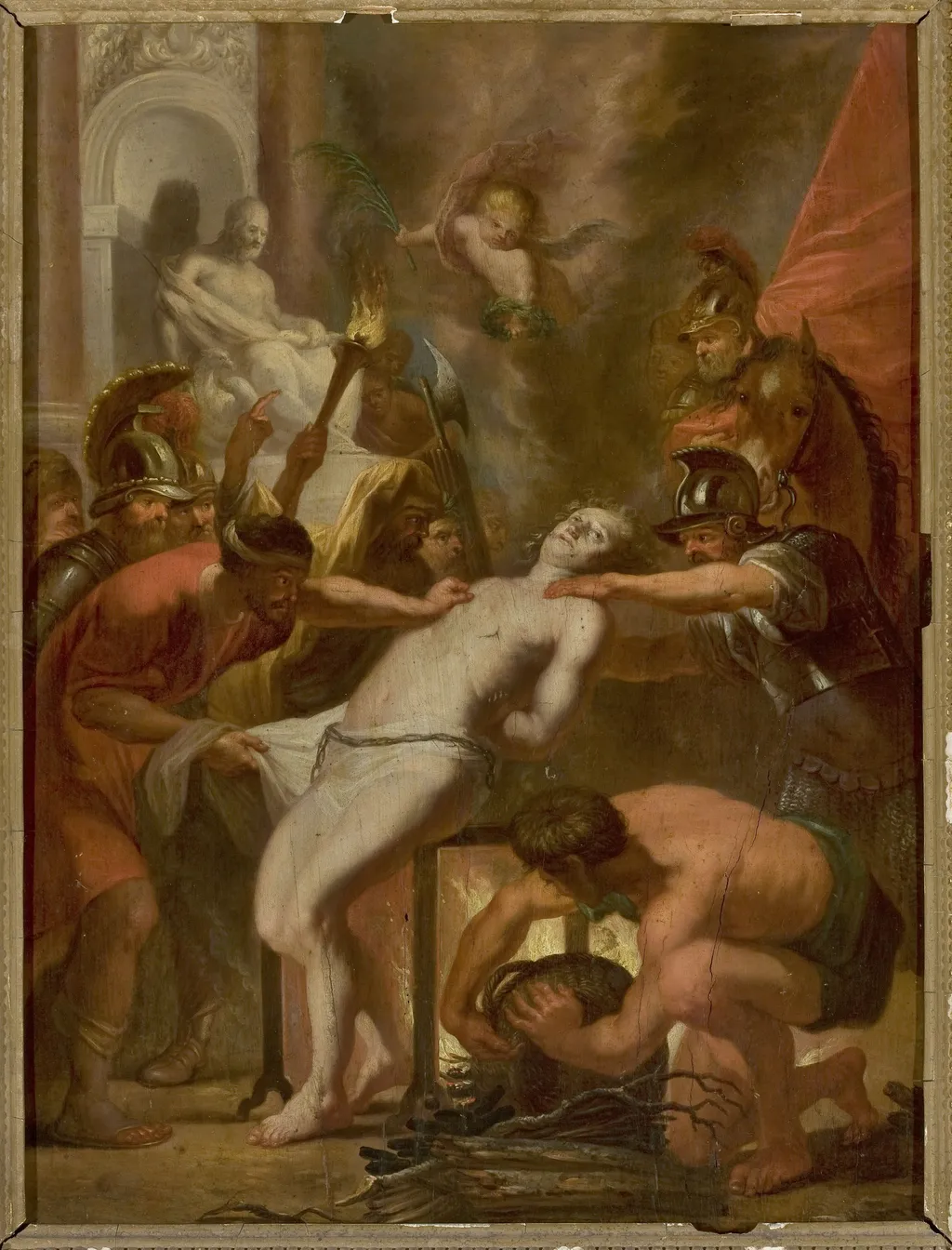
Martyrdom of St. Lawrence is an oil painting by Unknown. It is held in the collection of the National Museum in Warsaw. This oil painting portrays the execution of St.
About this work
Overview
Dramatic lighting and architectural elements frame the moment, emphasizing both physical torment and spiritual resolve.
This oil painting portrays the execution of St. Lawrence, an early Christian deacon martyred in the 3rd century. The scene centers on his suffering atop a gridiron, surrounded by onlookers and Roman soldiers. Dramatic lighting and architectural elements frame the moment, emphasizing both physical torment and spiritual resolve. The composition directs attention to the martyr’s contorted form, reinforcing the gravity of his death.
Subject & Meaning
St. Lawrence is depicted enduring his execution by fire, a punishment ordered by the Roman authorities for refusing to surrender church treasures. The palm frond held by a figure in the foreground signifies victory through martyrdom in Christian tradition. The surrounding crowd, including soldiers and civilians, reflects the public nature of his death and the tension between faith and imperial power.
Technique & Style
The artist employs chiaroscuro to heighten emotional intensity, using stark contrasts between light and shadow to model the martyr’s body and define spatial depth. The classical architecture in the background lends a sense of historical gravitas. Brushwork is controlled yet expressive, capturing the texture of flesh, metal, and fabric with precision to amplify the scene’s visceral impact.
History & Provenance
The painting likely dates to the late 16th or early 17th century, a period when Counter-Reformation themes inspired numerous depictions of saintly suffering. Its early ownership is unrecorded, but it entered a major collection by the 19th century. No documented alterations or restorations are known, preserving its original composition and tonal balance.
Context
During the Counter-Reformation, Catholic institutions promoted images of martyrdom to reinforce devotion and resilience against Protestant critiques. St. Lawrence’s story—his defiance and endurance—made him a favored subject. This painting aligns with broader trends in Baroque religious art, where emotional immediacy and theatrical lighting served doctrinal and devotional aims.
Legacy
The work contributes to a long visual tradition of martyrdom scenes in Western art, reflecting enduring religious narratives and artistic conventions. While not widely reproduced, it remains a representative example of how faith-based suffering was rendered with psychological and physical realism during the early modern period.
Artist & collection

 Domestic Scene
 Giacomo and Cardinal Marco, investing Andrea, Abbot of San Zeno, with his Benefice
 The Nymph of Fontainebleau
 Portrait of a Woman
 Madonna and Child with Saints in the Enclosed Garden
 Venus and Minerva
 Family Group of Four on Sofa
 Wall painting from Room H of the Villa of P. Fannius Synistor at Boscoreale
 The beheading of Saint George
 Conversion of St. Paul (Acts 9:3-6)
 The Execution of Saint John the Baptist
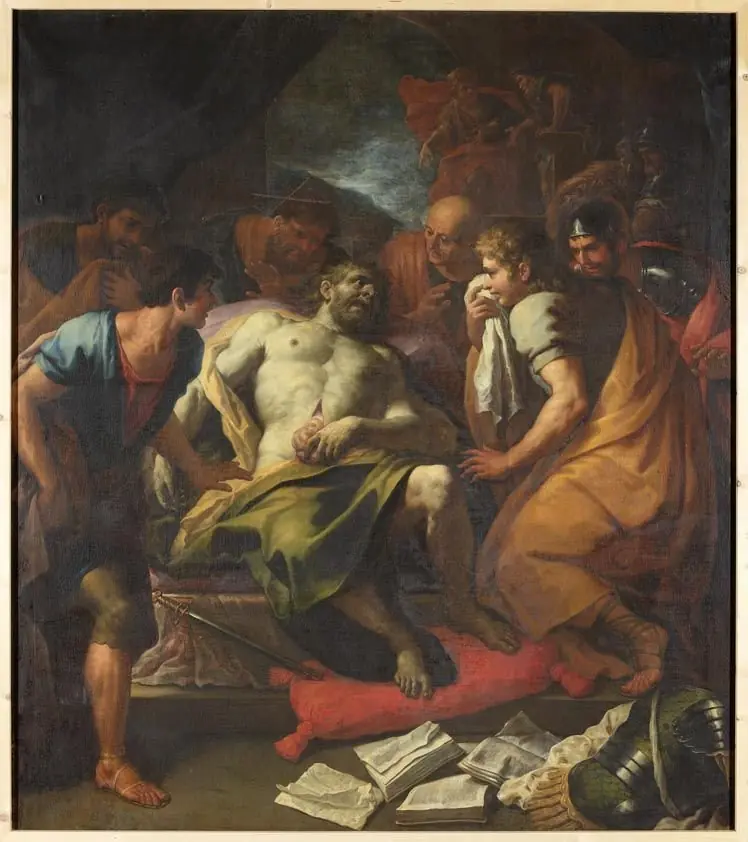 Tod des Cato von Uttica
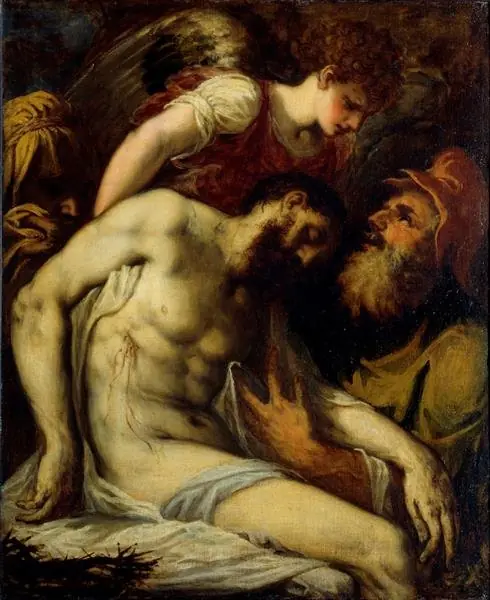 Dead Christ supported by Angels
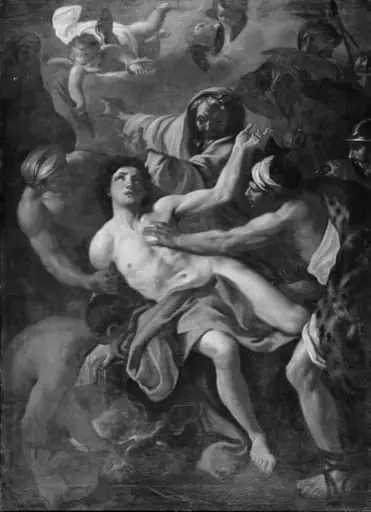 Saint Lawrence
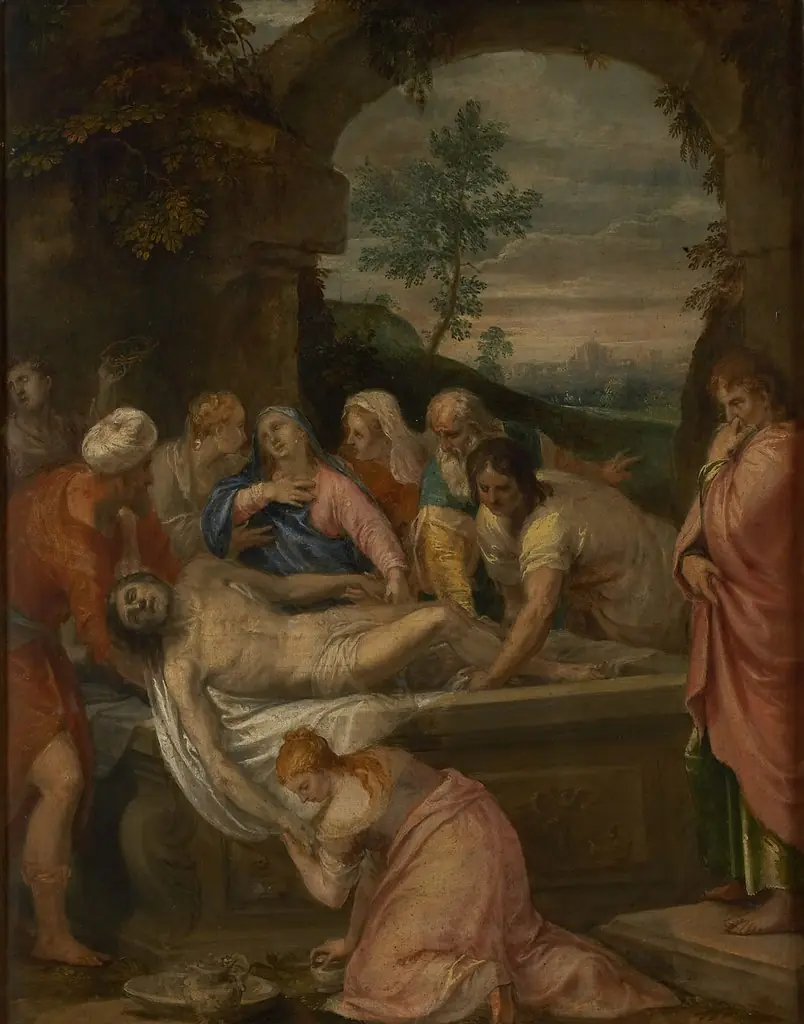 Entombment of Christ
 The Crucifixion of Saint Peter
 The Greeks and the Trojans Fighting over the Body of Patroclus
 The Good Samaritan