Artwork
Tod des Cato von Uttica
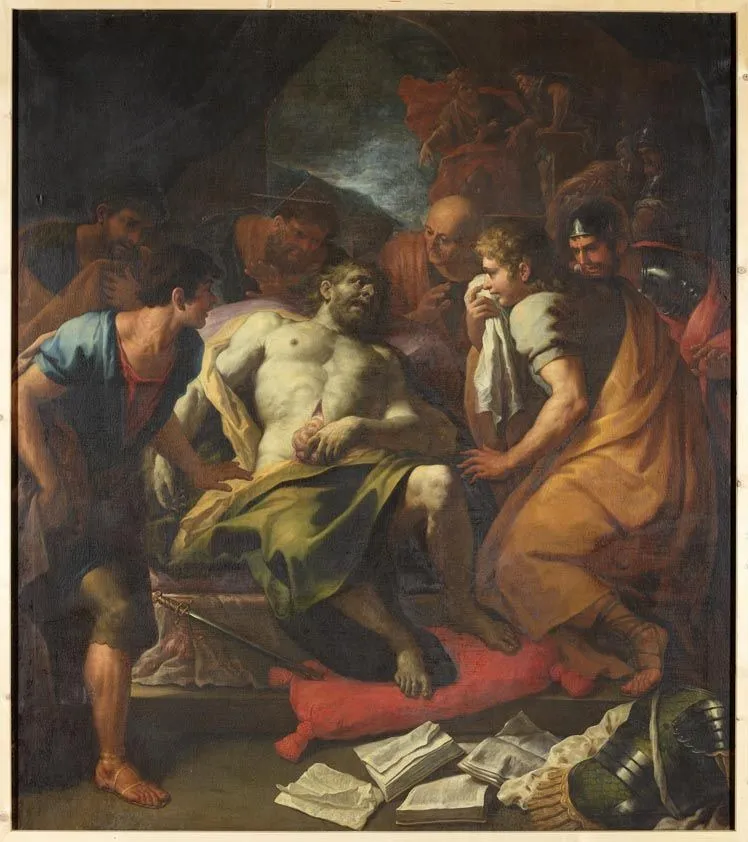
Tod des Cato von Uttica is an unspecified painting by the Barbizon school artist Paolo de Matteis. It dates from 1698 and is held in the collection of the Bavarian State Painting Collections.
About this work
Overview
Paolo de Matteis’s 1698 oil painting, titled *Tod des Cato von Uttica*, is part of the collection of Munich’s Alte Pinakothek. The work presents a compact, theatrical tableau that captures a moment of intense narrative drama, rendered in the Baroque style typical of the late seventeenth century.
Subject & Meaning
The central figure, a shirtless man clad only in a green skirt, reclines on a bed while a group of men gathers around him. One of the onlookers brandishes a sword, and scattered papers lie on the floor, suggesting a scene of legal or political consequence, likely the execution of the Roman statesman Cato the Younger.
Technique & Style
De Matteis employs chiaroscuro to model the figures, allowing the illuminated bodies to emerge from a darker surrounding space. The composition is tightly arranged, with the foreground figures rendered in fine detail, while the background recedes into a vague crowd, enhancing the sense of immediacy and tension.
History & Provenance
Created in 1698, the painting entered the Alte Pinakothek’s holdings at an unspecified later date, where it remains on display. Its provenance prior to acquisition by the museum is not extensively documented, but the work reflects de Matteis’s mature period after his Roman training.
Context
The subject draws on a classical theme popular in Baroque art, portraying the moral resolve of Cato’s suicide in the face of tyranny. Such narratives were favored for their didactic potential, aligning with contemporary interests in virtue, civic duty, and the tragic consequences of political conflict.
Artist & collection


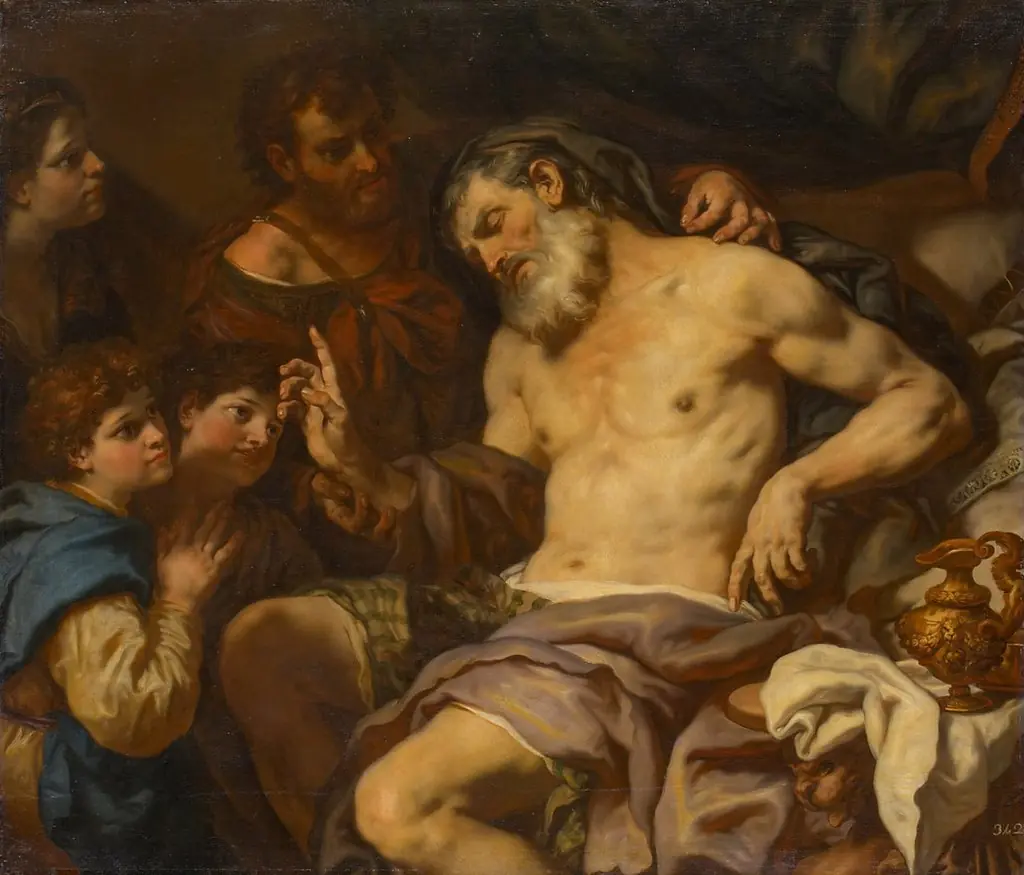 Jacob Blesses Ephraim and Manasseh
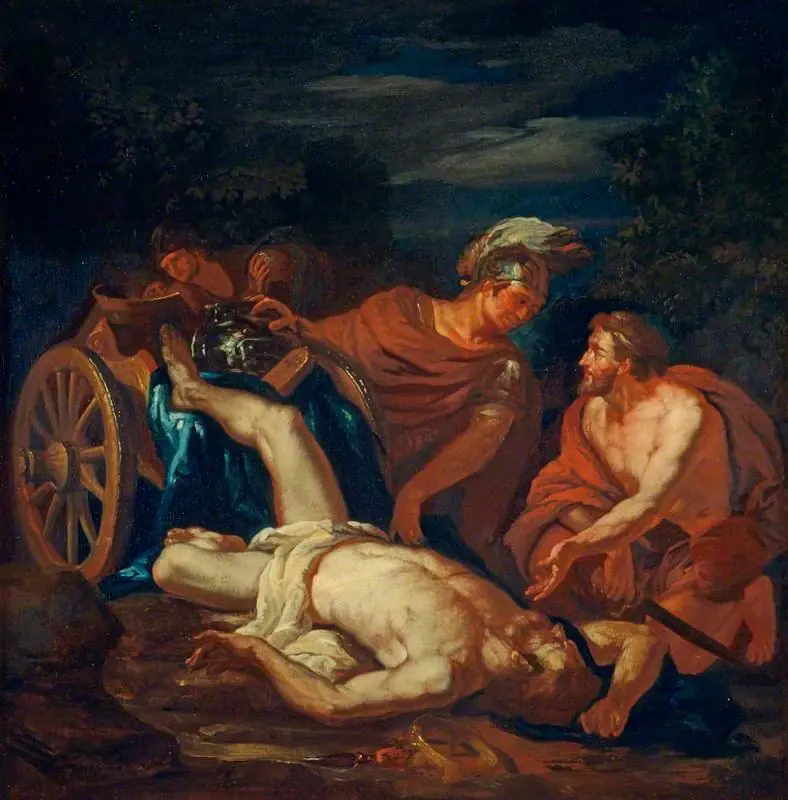 The Death of King Laius
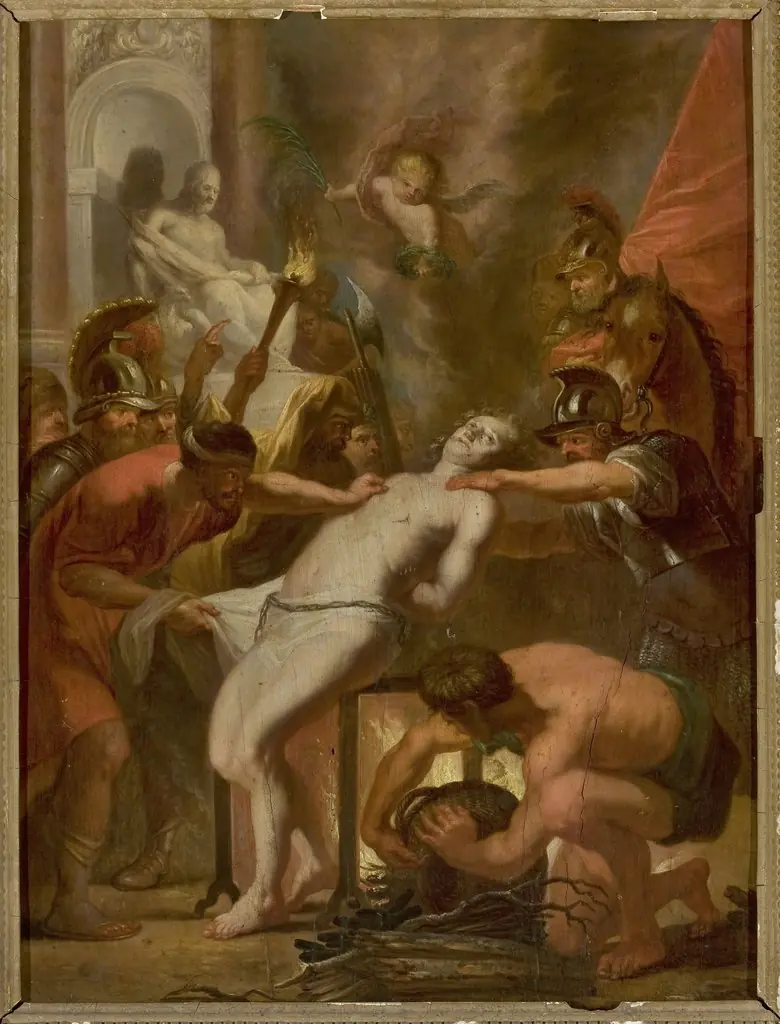 Martyrdom of St. Lawrence
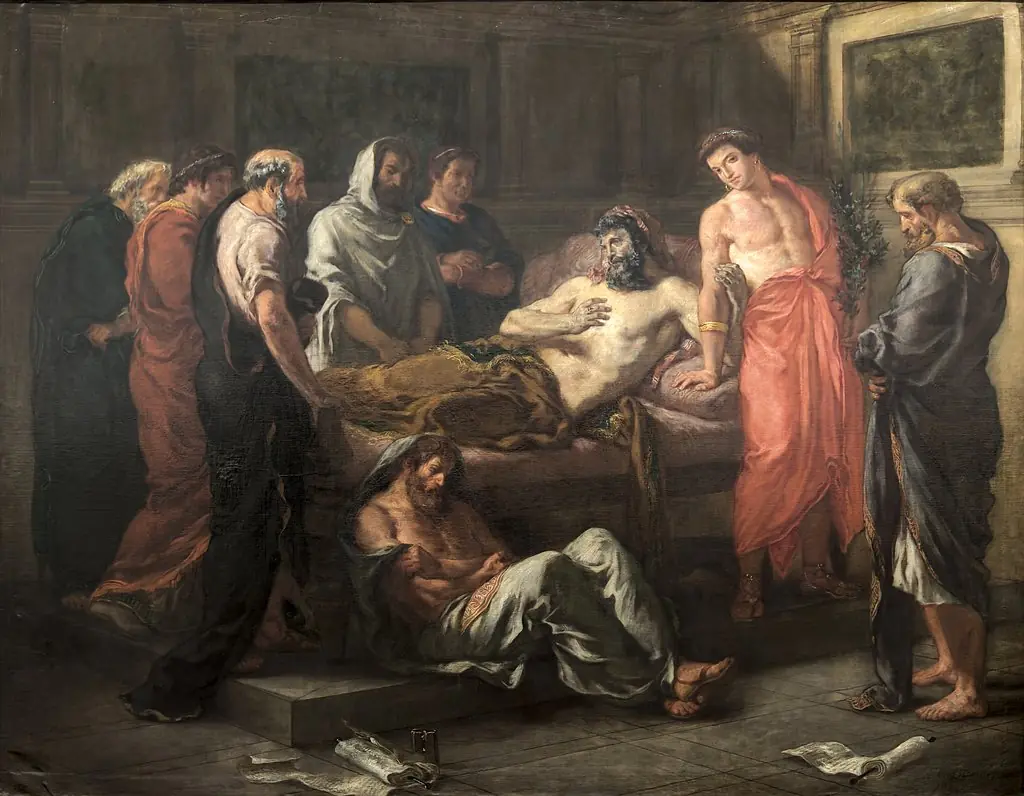 Last Words of the Emperor Marcus Aurelius
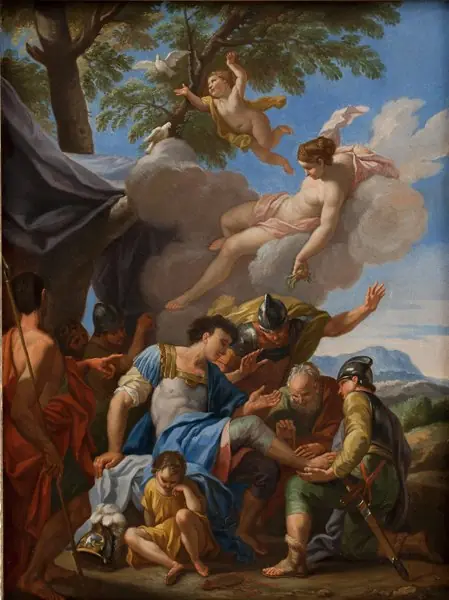 Venus Bringing Simples for the Wounded Aeneas
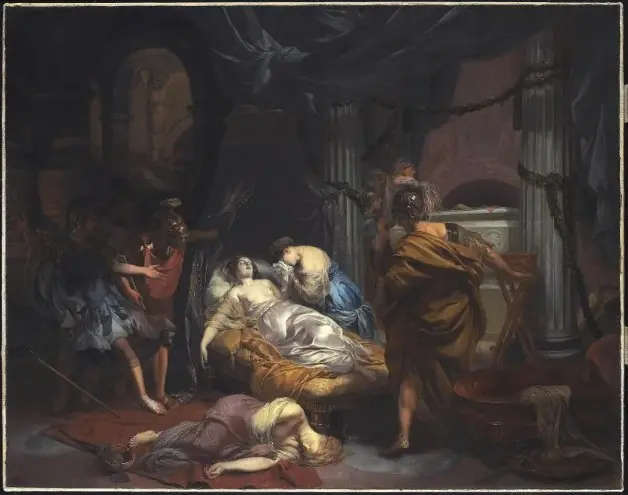 The Death of Cleopatra
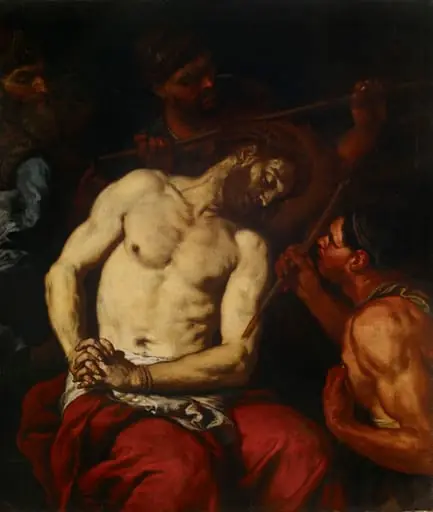 Orjantappurakruunaus
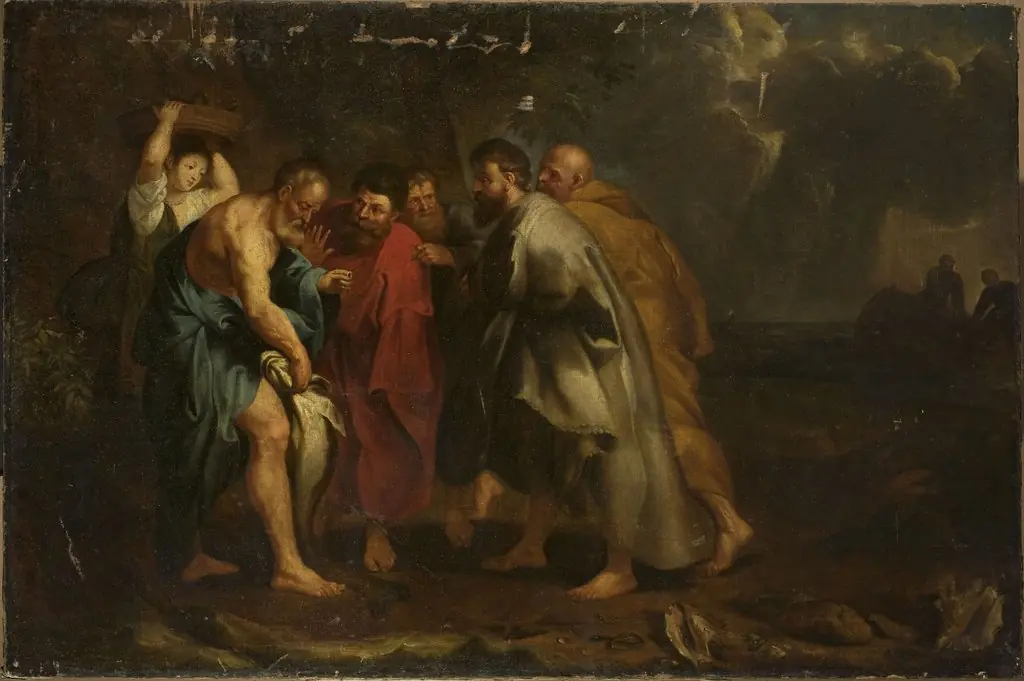 Apostles finding a coin inside a fish (Matthew 17:27)
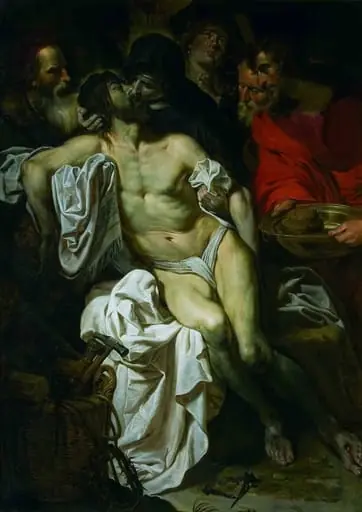 Coborârea de pe cruce
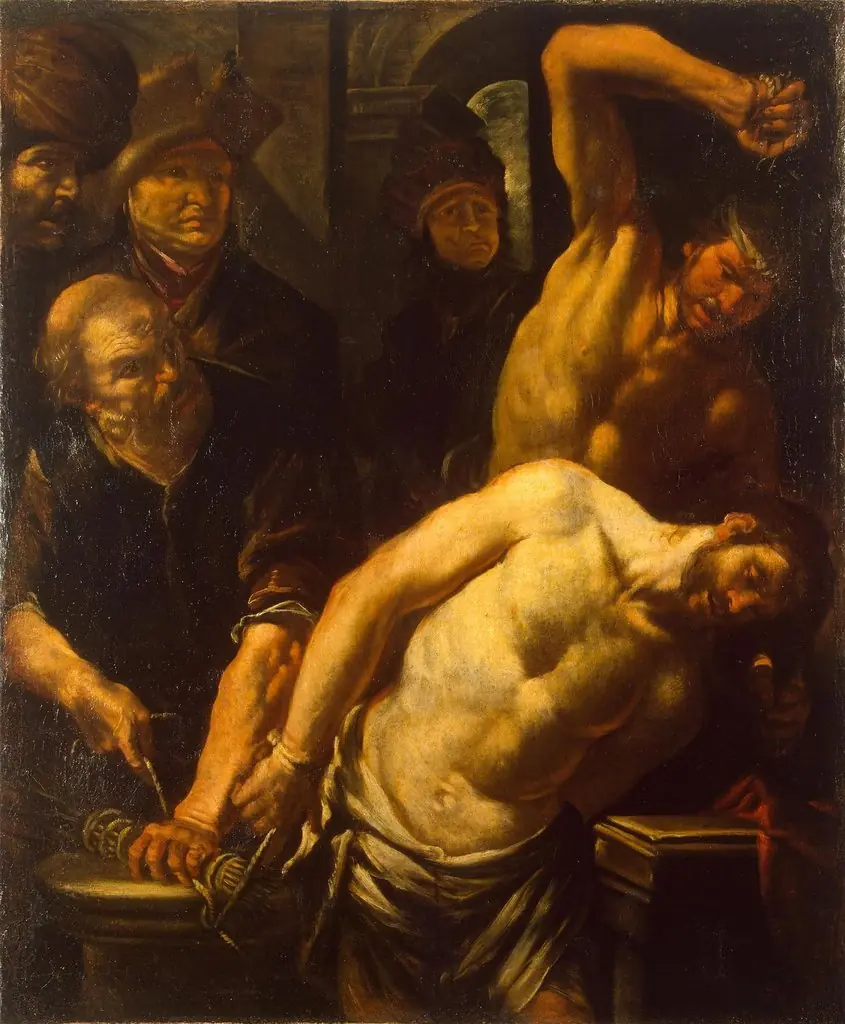 Mocking of Christ
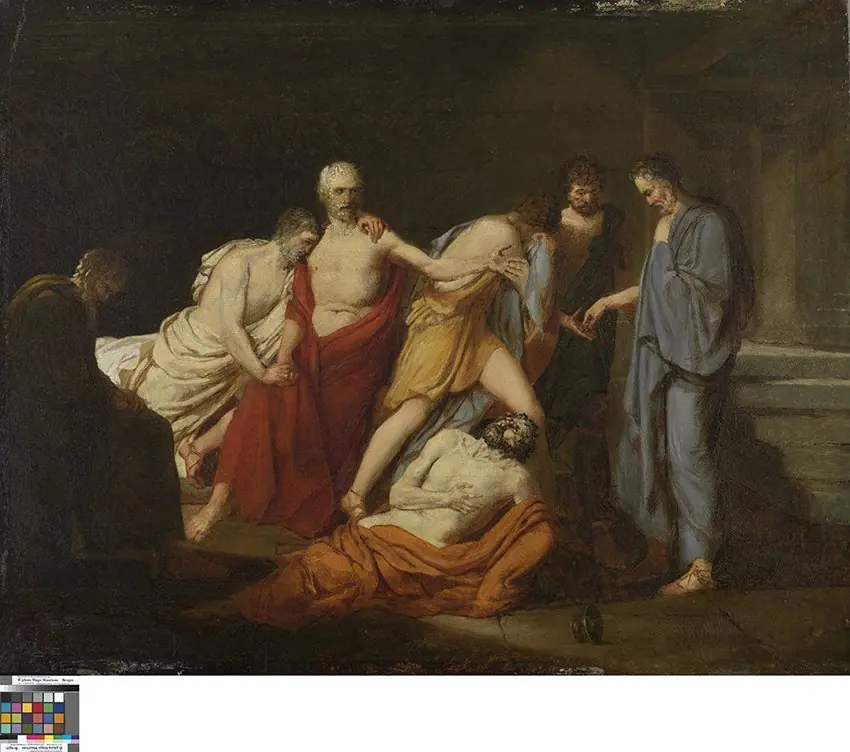 De dood van Phocio
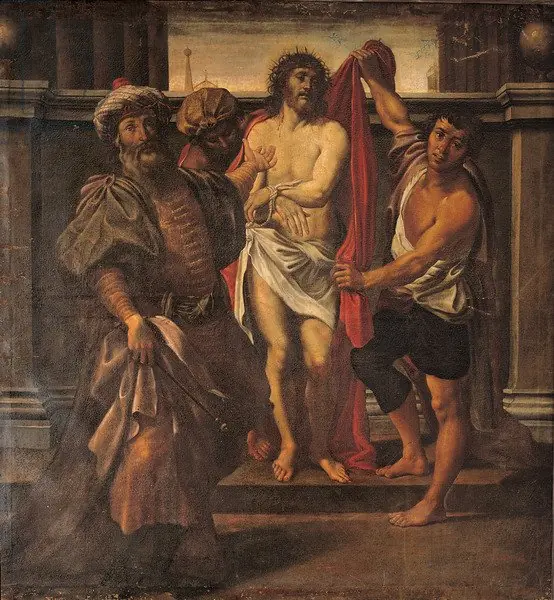 Ecce Homo