Artwork
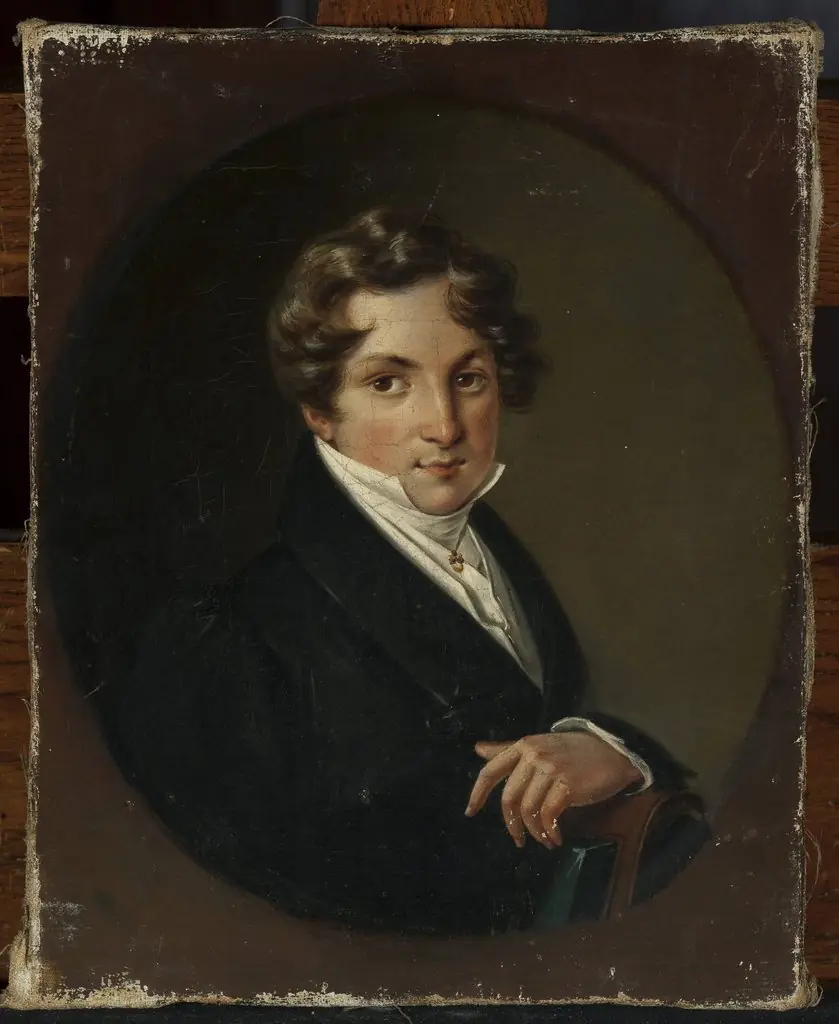
Portrait of Władysław Branicki, seated with a letter in his hand
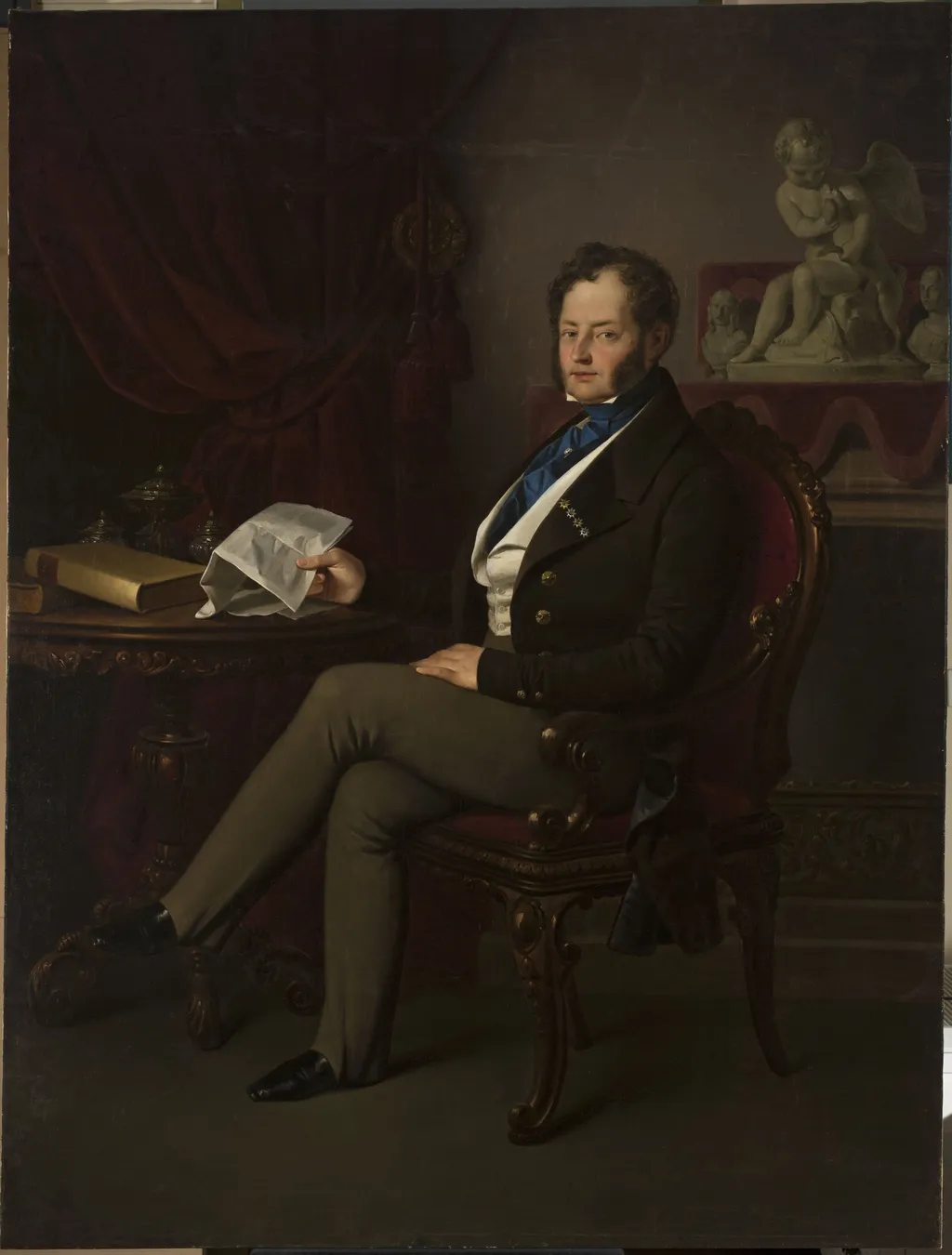
Portrait of Władysław Branicki, seated with a letter in his hand is an oil painting by the Realist artist Unknown. It dates from 1835 and is held in the collection of the National Museum in Warsaw. The oil painting portrays Władysław Branicki seated in a richly upholstered red chair, his hand holding a letter.
About this work
The use of chiaroscuro, a technique that uses strong contrasts between light and dark, adds depth and drama to the painting.
The painting depicts a man seated in a chair, holding a letter in his hand. He is dressed in a black jacket with gold buttons, a white shirt, and a blue cravat. The man's dark hair is neatly styled, and he has a well-groomed beard. He sits in a red velvet chair with intricate carvings on the wooden frame. The background of the painting is dark, with a few objects on a table behind the man, including a book and a small statue. The man's attire and the style of the painting suggest that it was created in the 19th century. The use of chiaroscuro, a technique that uses strong contrasts between light and dark, adds depth and drama to the painting.
Overview
The oil painting portrays Władysław Branicki seated in a richly upholstered red chair, his hand holding a letter. He is dressed in a black jacket trimmed with gold buttons, a white shirt, and a blue cravat, his dark hair neatly arranged and his beard well groomed. The composition is set against a dark interior backdrop, punctuated by a table bearing a book and a small statue.
Subject & Meaning
Branicki is presented as a figure of contemplation, the letter suggesting personal correspondence or official business. The inclusion of scholarly objects—a book and a statuette—implies intellectual interests or status, while his poised posture conveys confidence and dignity.
Technique & Style
The work employs chiaroscuro, contrasting illuminated areas on the sitter and chair with deep shadows in the surrounding space, creating a three‑dimensional effect. Fine brushwork renders the textures of velvet, metal buttons, and fabric, while the subdued palette reflects nineteenth‑century portrait conventions.
History & Provenance
The painting dates from the nineteenth century, consistent with its fashion and stylistic traits. It has been identified as a portrait of Władysław Branicki, a member of the Polish aristocracy, though details of its commission and subsequent ownership remain undocumented in the available record.
Context
Portraiture of the era often emphasized the sitter’s social rank through luxurious attire and interior settings. The use of a letter as an attribute aligns with contemporary conventions that linked personal identity to literacy and civic engagement.
Artist & collection

 Domestic Scene
 Giacomo and Cardinal Marco, investing Andrea, Abbot of San Zeno, with his Benefice
 The Nymph of Fontainebleau
 Portrait of a Woman
 Madonna and Child with Saints in the Enclosed Garden
 Venus and Minerva
 Family Group of Four on Sofa
 Wall painting from Room H of the Villa of P. Fannius Synistor at Boscoreale
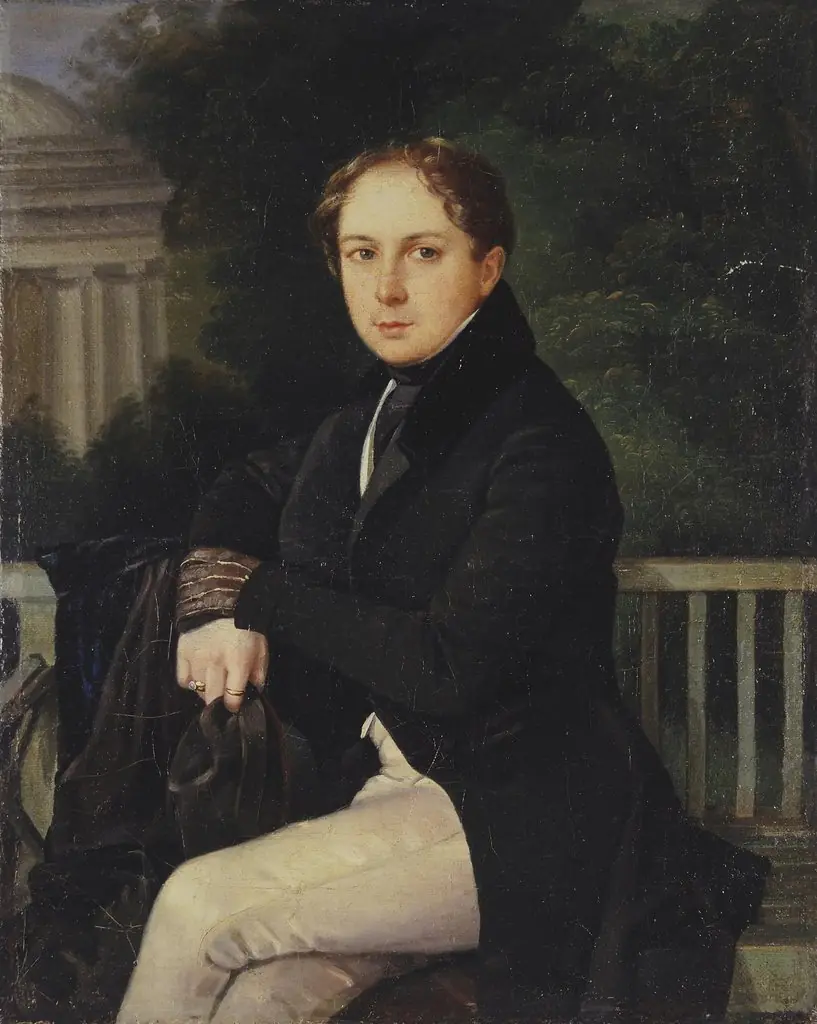 Portrait of an Unknown Man, a Stroganov Family Descendant
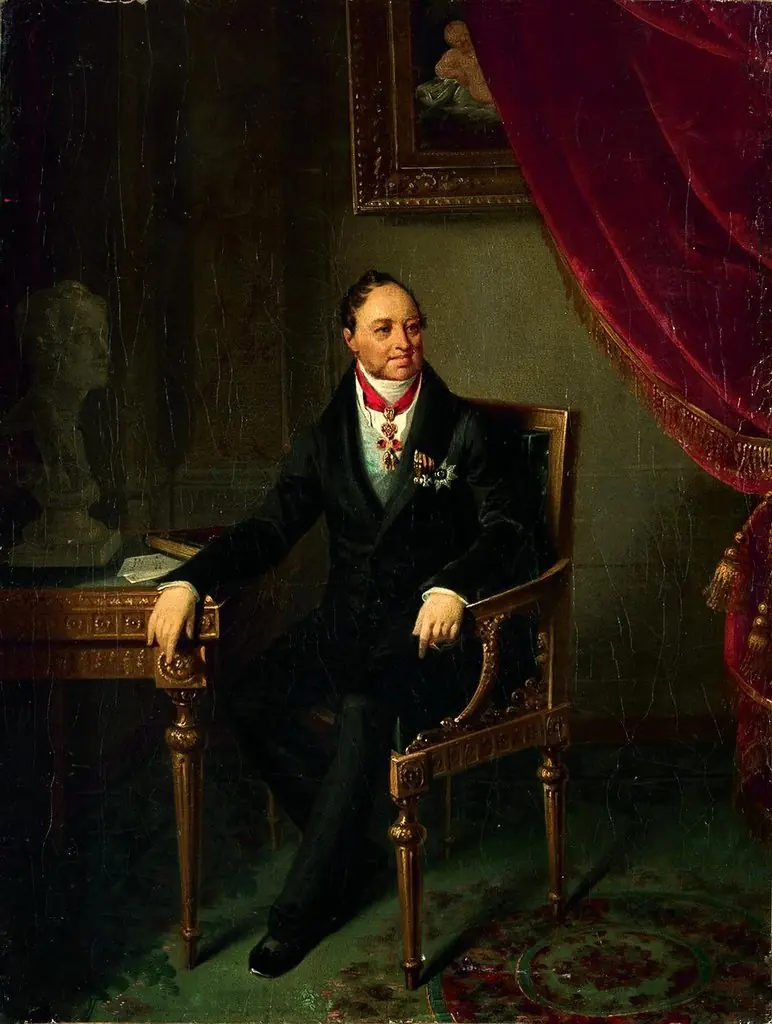 Portrait of D.P.Tatischev
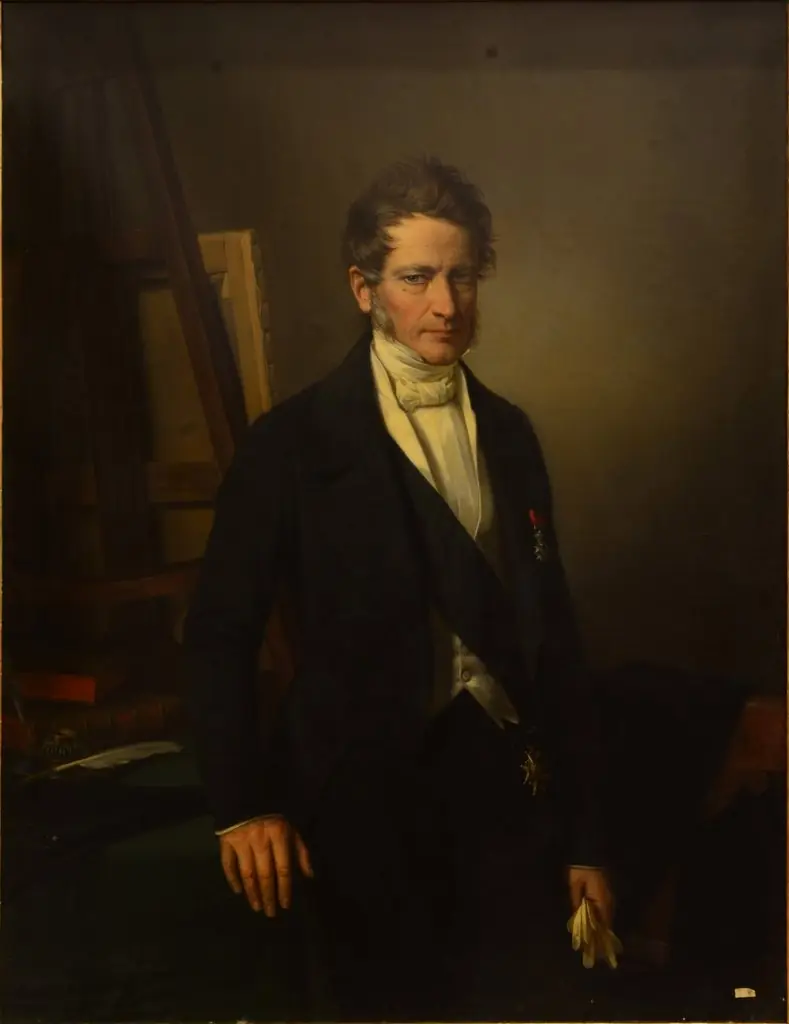 Fleury Richard
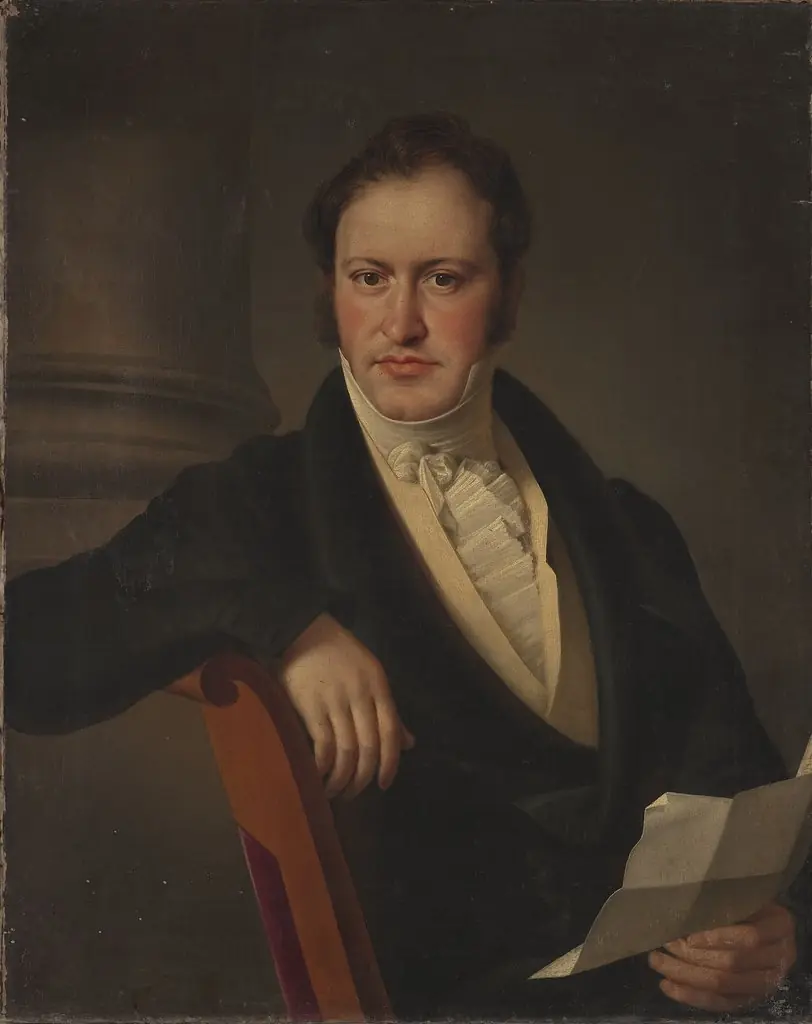 Portrait of Benedykt Pawłowski
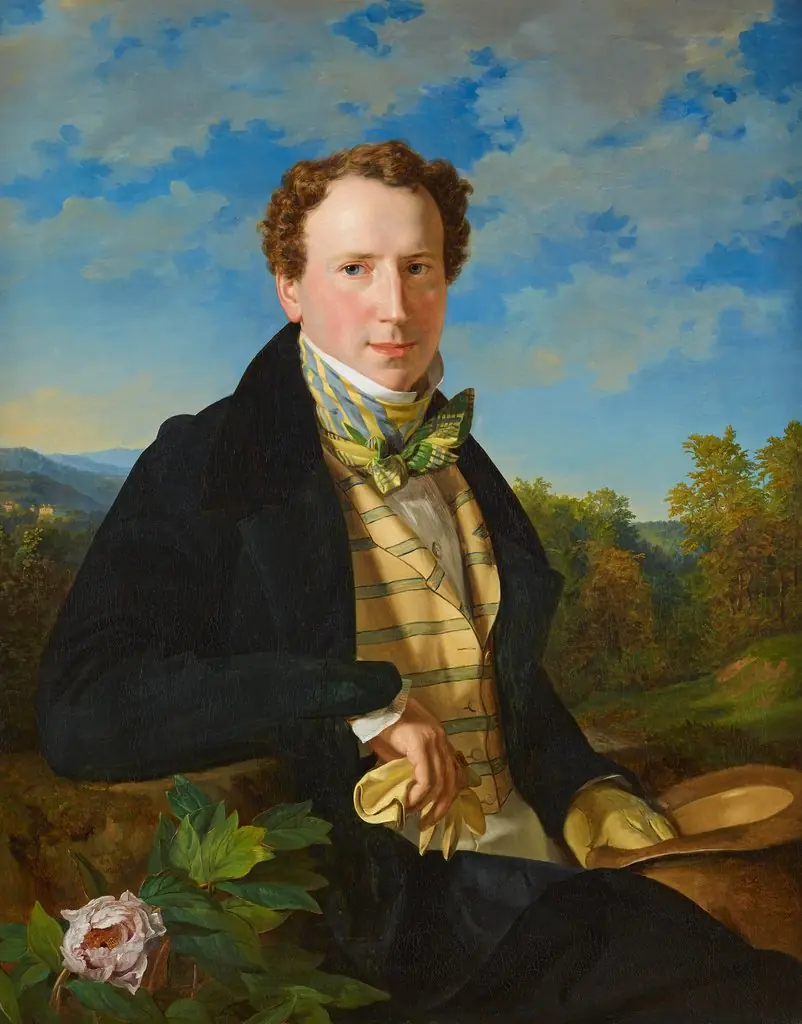 Self-portrait
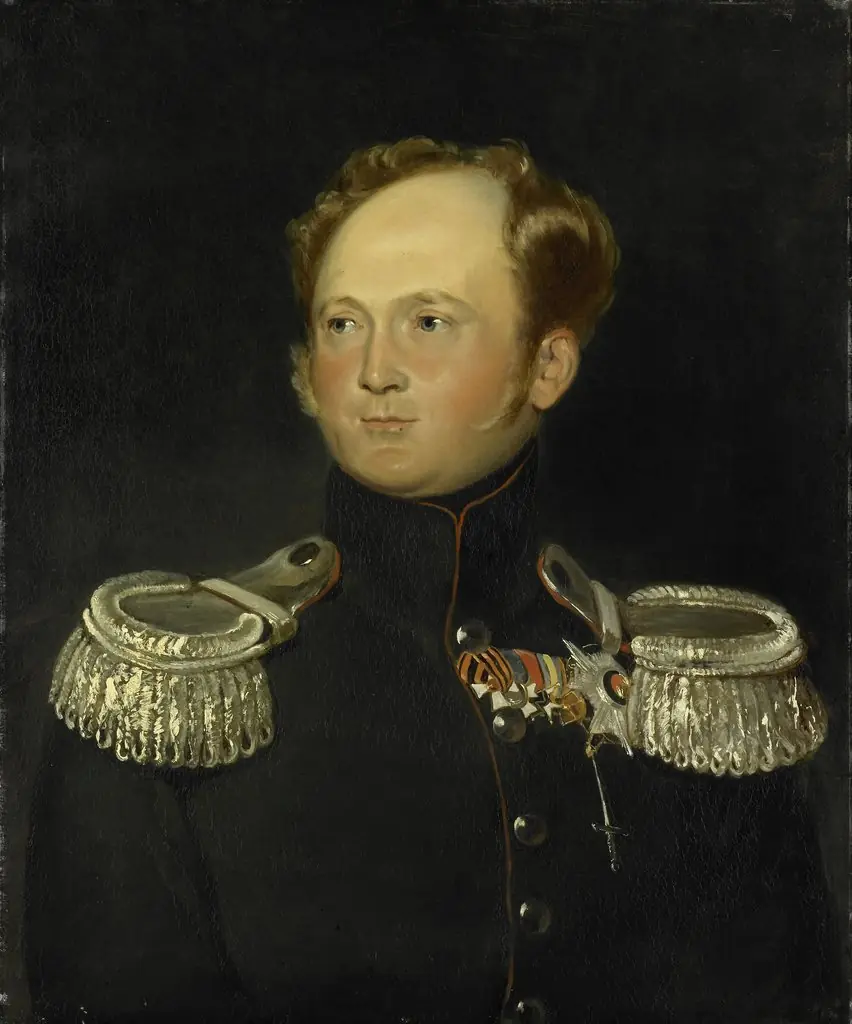 Portrait of Alexander I, Emperor of Russia
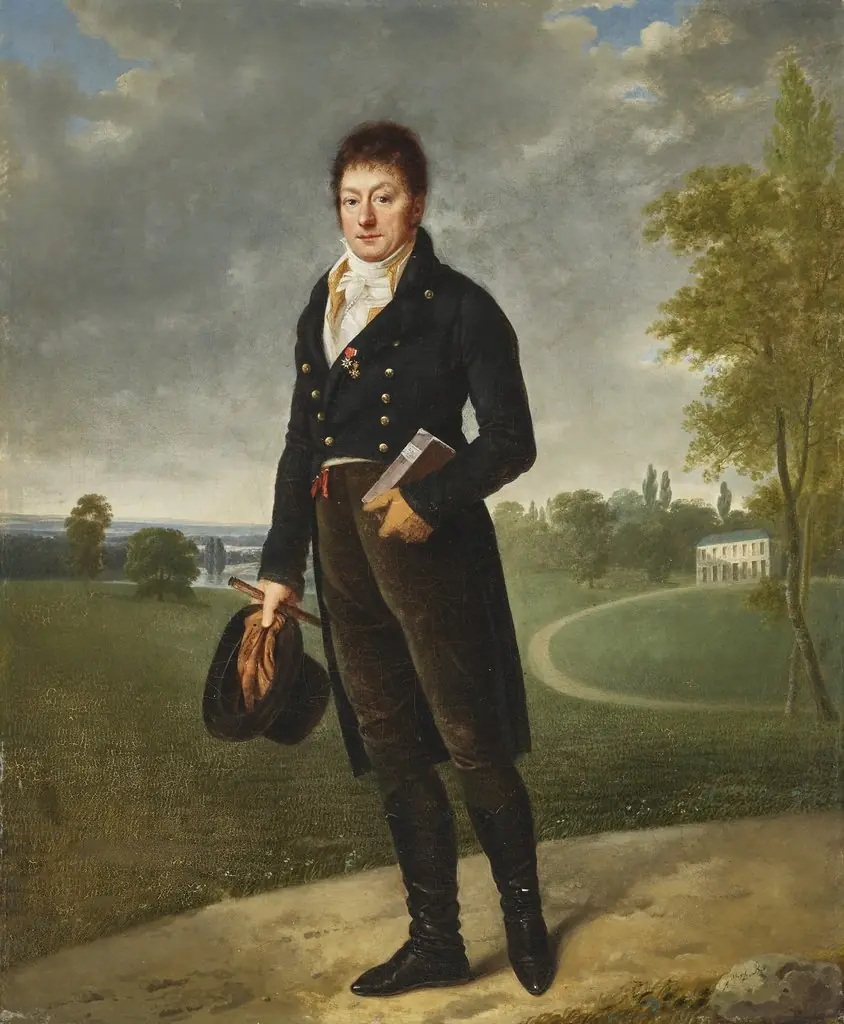 Portrait of a gentleman, full-length, standing in a landscape
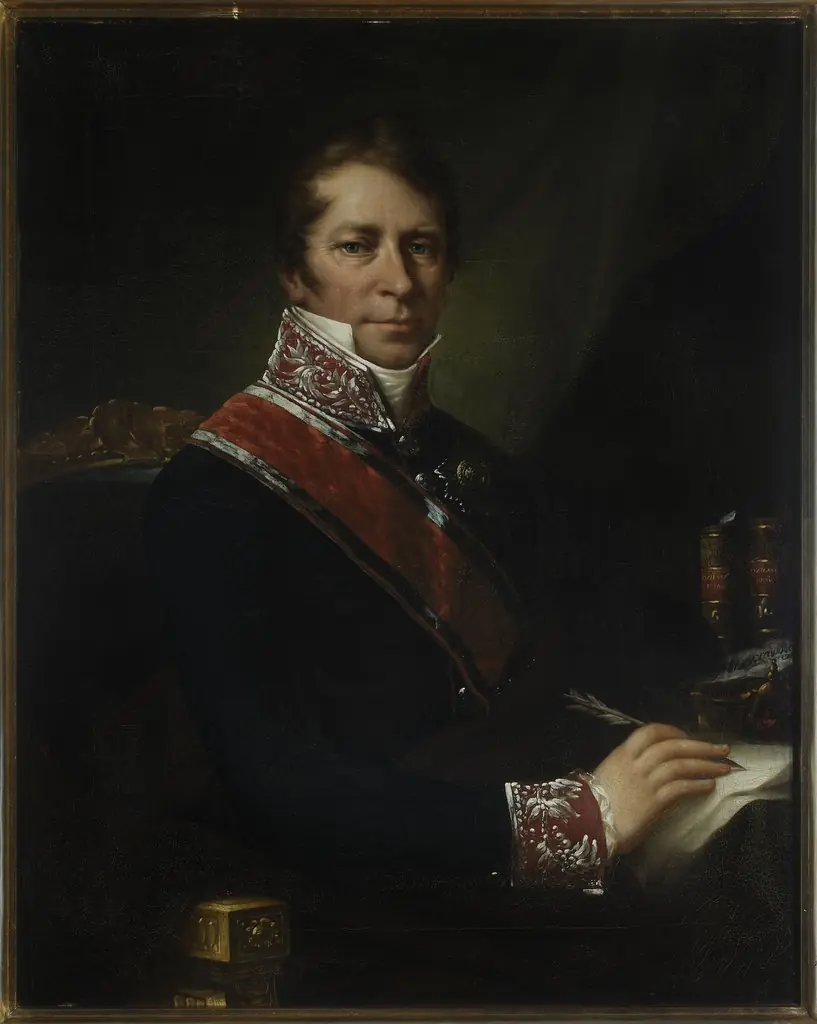 Portrait of Ksawery Potocki
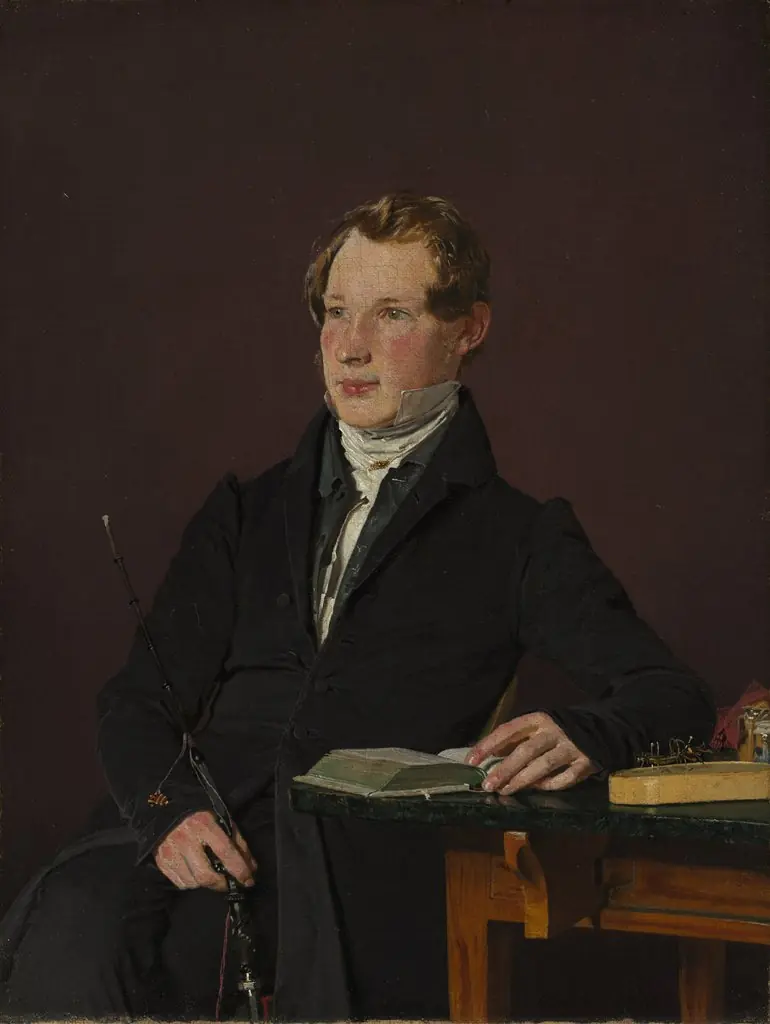 Dr. Johann Henning Kjetil Hjardemaal
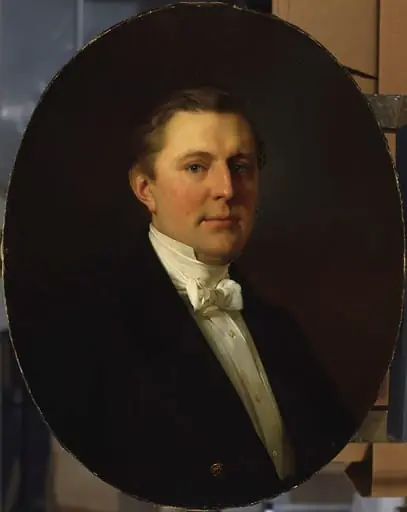 Salaneuvos Carl F. G. von Haartman
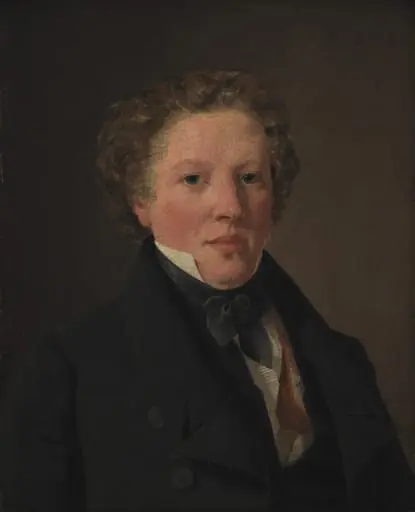 The Actor Christoffer Hvid
 Portrait of Władysław Brunwej