Artwork
The Infanta Maria Teresa (1638–1683)
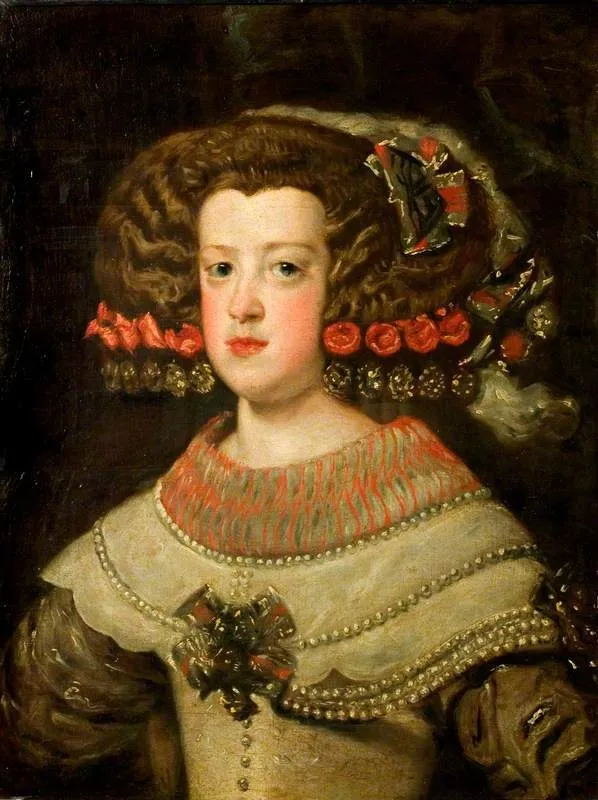
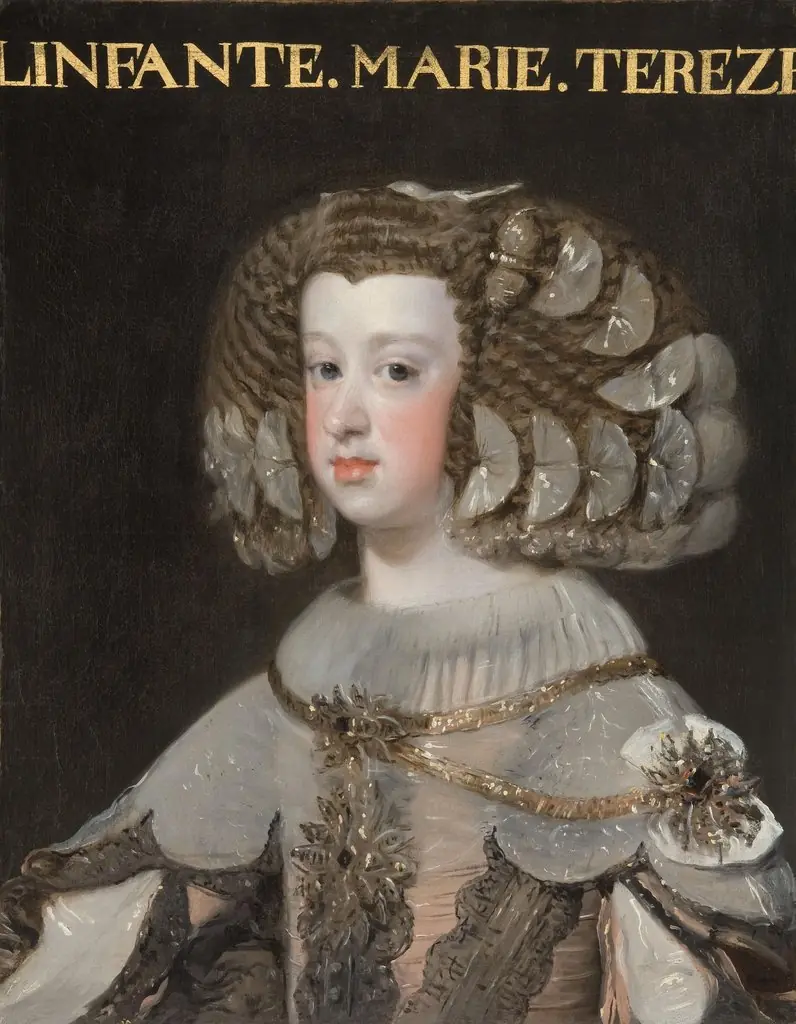
The Infanta Maria Teresa (1638–1683) is an oil painting by the Rococo painting artist Unknown. It dates from 1750 and is held in the collection of the Victoria and Albert Museum. This portrait, executed in oil paint, captures the likeness of Infanta Maria Teresa, a member of the Spanish royal family, during her youth.
About this work
The use of chiaroscuro creates a sense of depth and dimensionality, drawing the viewer's eye to the subject's face.
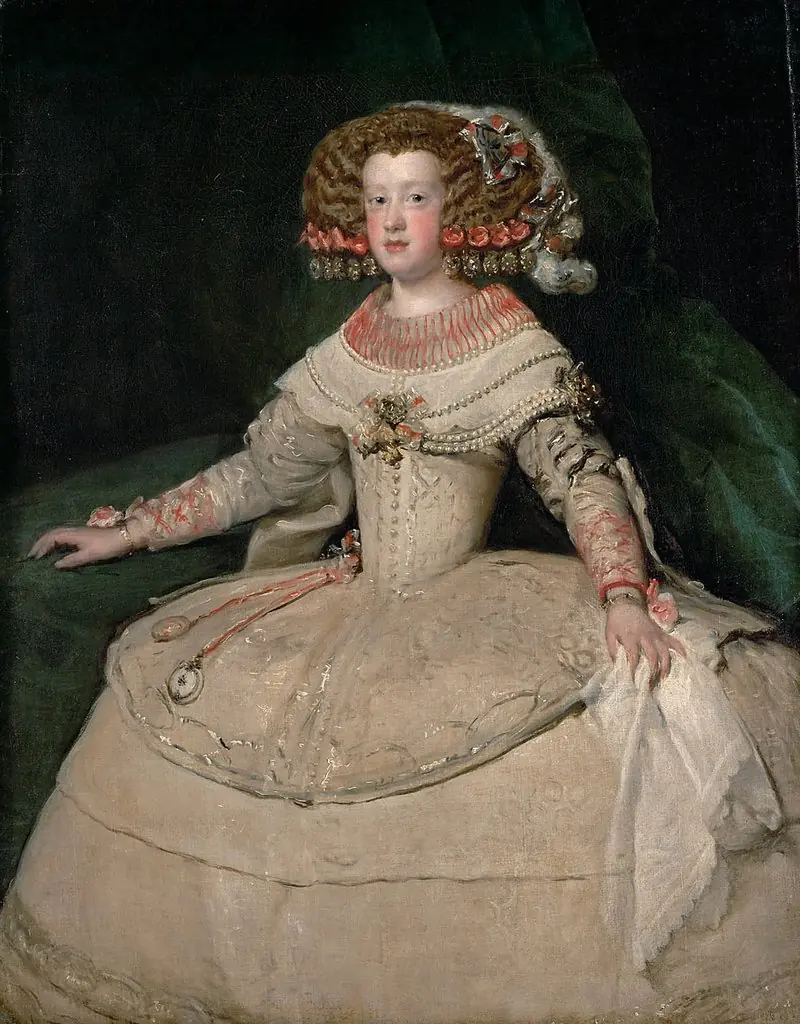
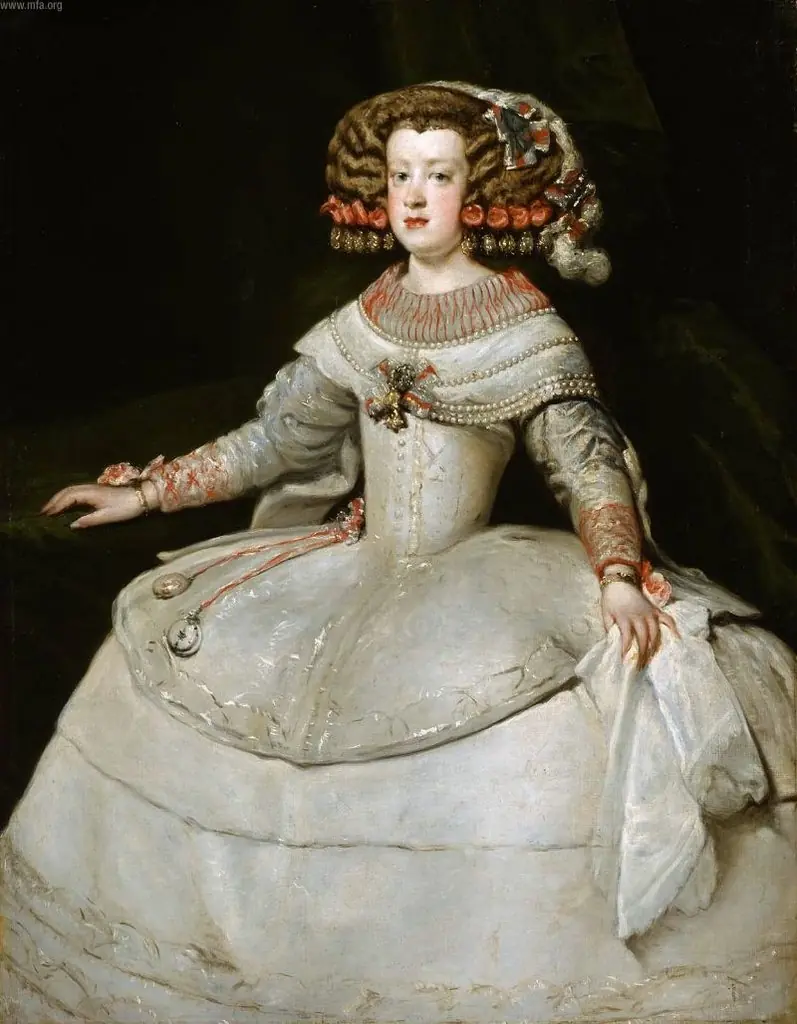
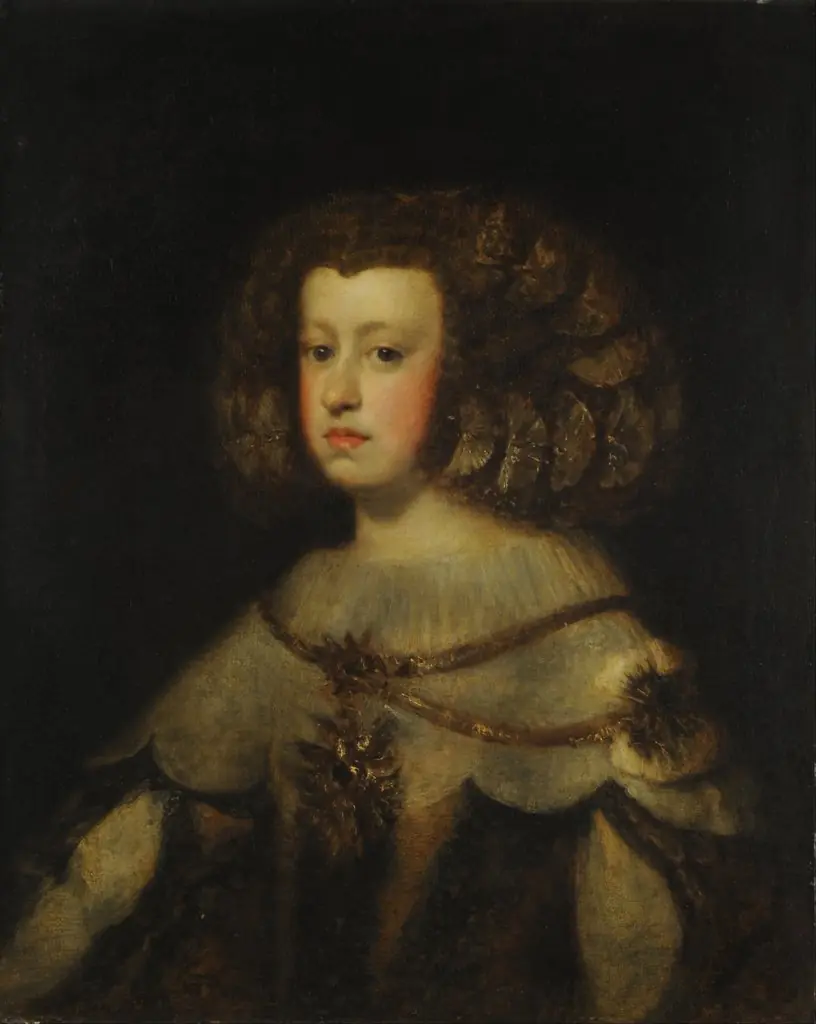
This portrait depicts a young girl with curly brown hair, adorned with a large bow and flowers. She wears a white dress with a red and green striped collar and a large bow on her chest. The background is dark, which makes the subject stand out. The painting is rendered in oil paint, with visible brushstrokes that give it a textured look. The use of chiaroscuro creates a sense of depth and dimensionality, drawing the viewer's eye to the subject's face. The Infanta Maria Teresa (1638–1683) is a beautiful example of 18th-century portraiture.
Overview
This portrait, executed in oil paint, captures the likeness of Infanta Maria Teresa, a member of the Spanish royal family, during her youth. Characterized by visible brushstrokes and a textured appearance, the work employs chiaroscuro to create depth, emphasizing the subject's face against a dark background.
Subject & Meaning
The subject, Infanta Maria Teresa (1638–1683), is portrayed as a young girl with distinctive attire: curly brown hair adorned with a large bow and flowers, a white dress, and a prominently colored striped collar. The formal, ceremonial dress suggests an official or ceremonial context, highlighting her royal status.
Technique & Style
The painting showcases a textured, expressive use of oil paint with noticeable brushstrokes. The artist's application of chiaroscuro effectively draws the viewer's attention to the Infanta's face, creating a sense of three-dimensionality against the somber backdrop.
History & Provenance
Unfortunately, specific details regarding the painting's creation date, artist, and early ownership history are not provided in the given facts. However, it is attributed to the 18th century, a period of continued evolution in European portraiture.
Context
Created in the 18th century, this portrait reflects the ongoing tradition of royal portraiture, where subjects were often depicted in formal attire to emphasize their status. The use of chiaroscuro and textured brushwork aligns with artistic techniques prevalent during this period.
Legacy
While the painting is noted as a 'beautiful example of 18th-century portraiture,' without further context, its broader influence, exhibition history, or impact on the development of portraiture beyond its representative qualities cannot be detailed from the provided information.
Artist & collection

 Domestic Scene
 Giacomo and Cardinal Marco, investing Andrea, Abbot of San Zeno, with his Benefice
 The Nymph of Fontainebleau
 Portrait of a Woman
 Madonna and Child with Saints in the Enclosed Garden
 Venus and Minerva
 Family Group of Four on Sofa
 Wall painting from Room H of the Villa of P. Fannius Synistor at Boscoreale