Artwork
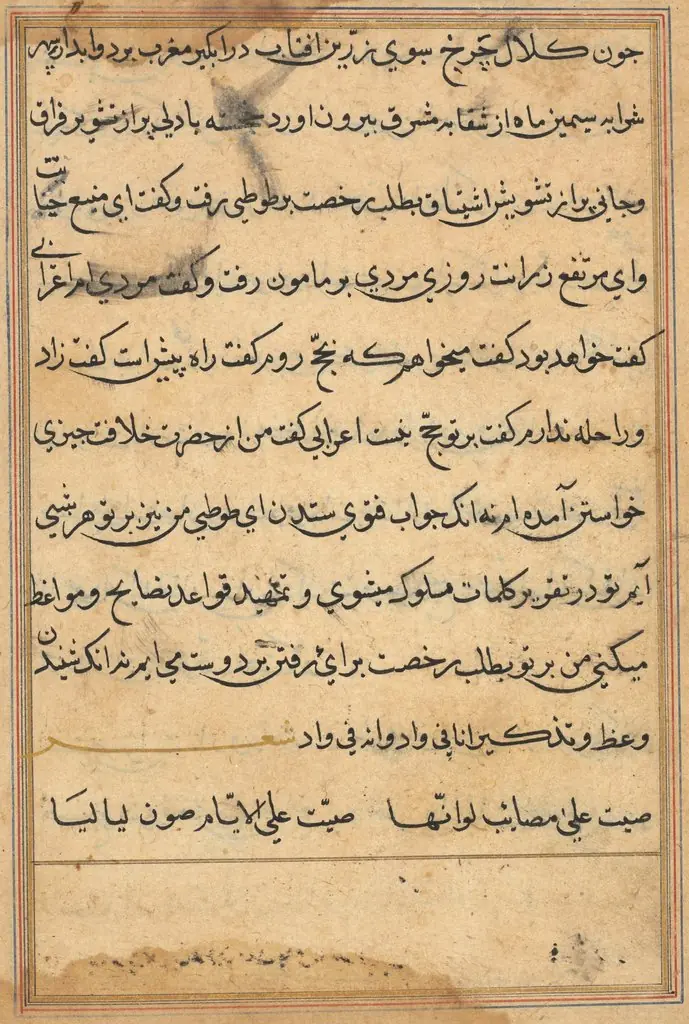
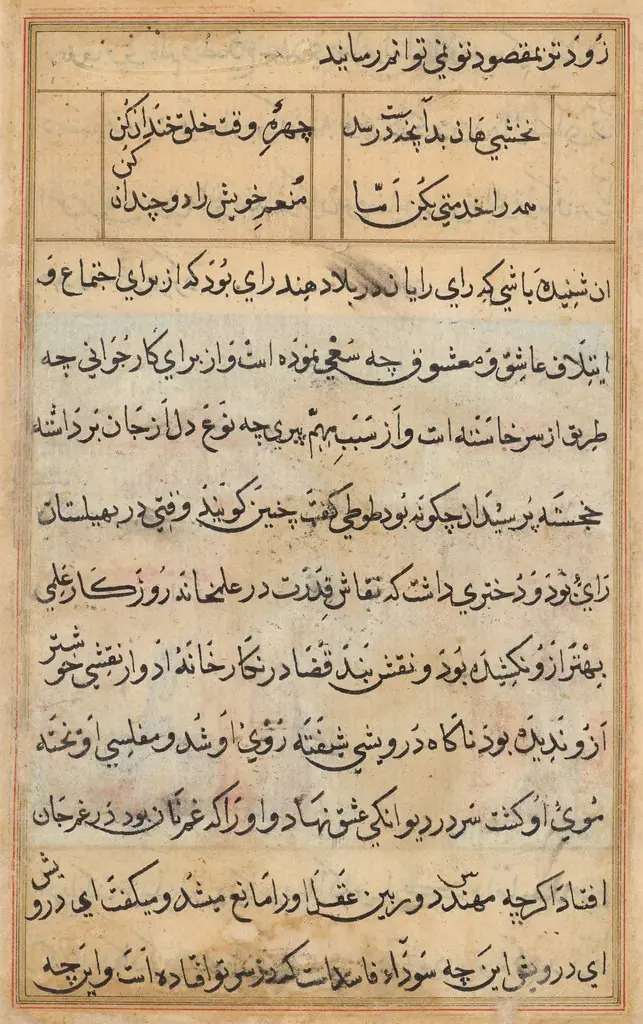
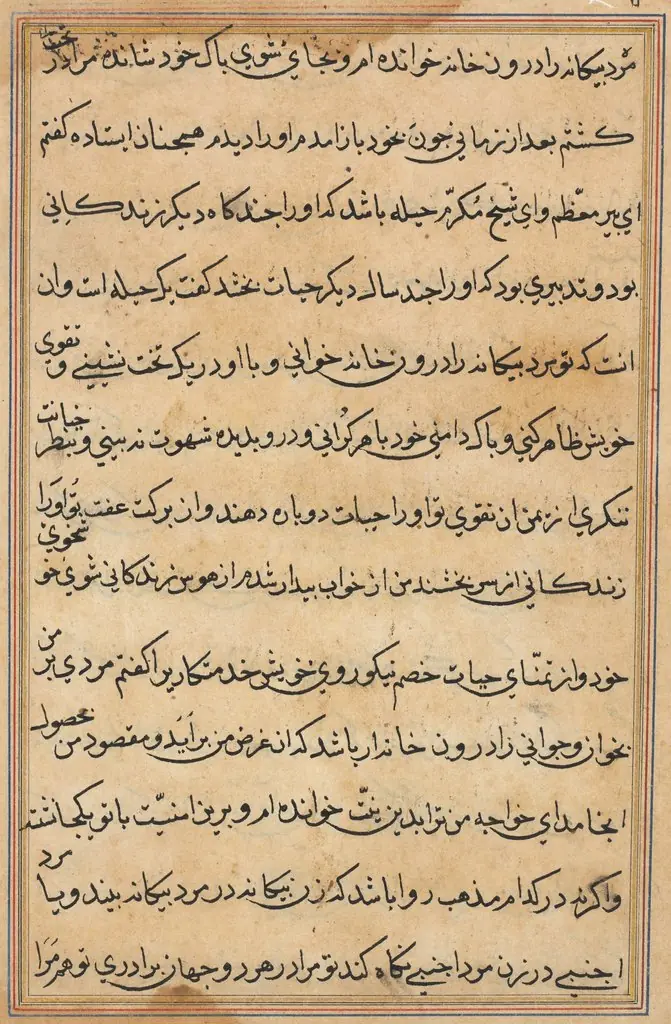
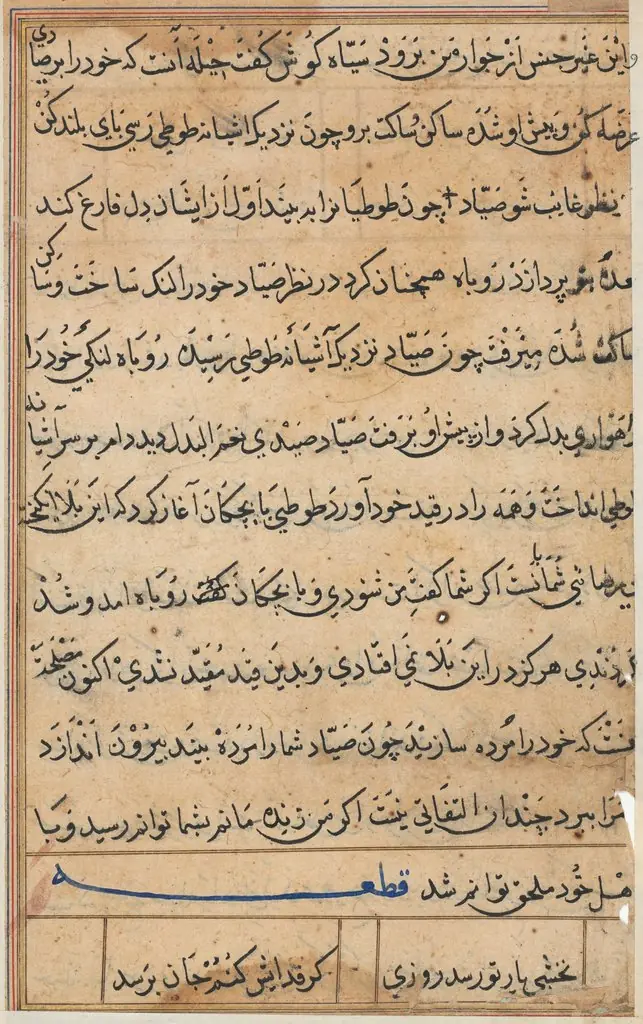
Page from Tales of a Parrot (Tuti-nama): text page
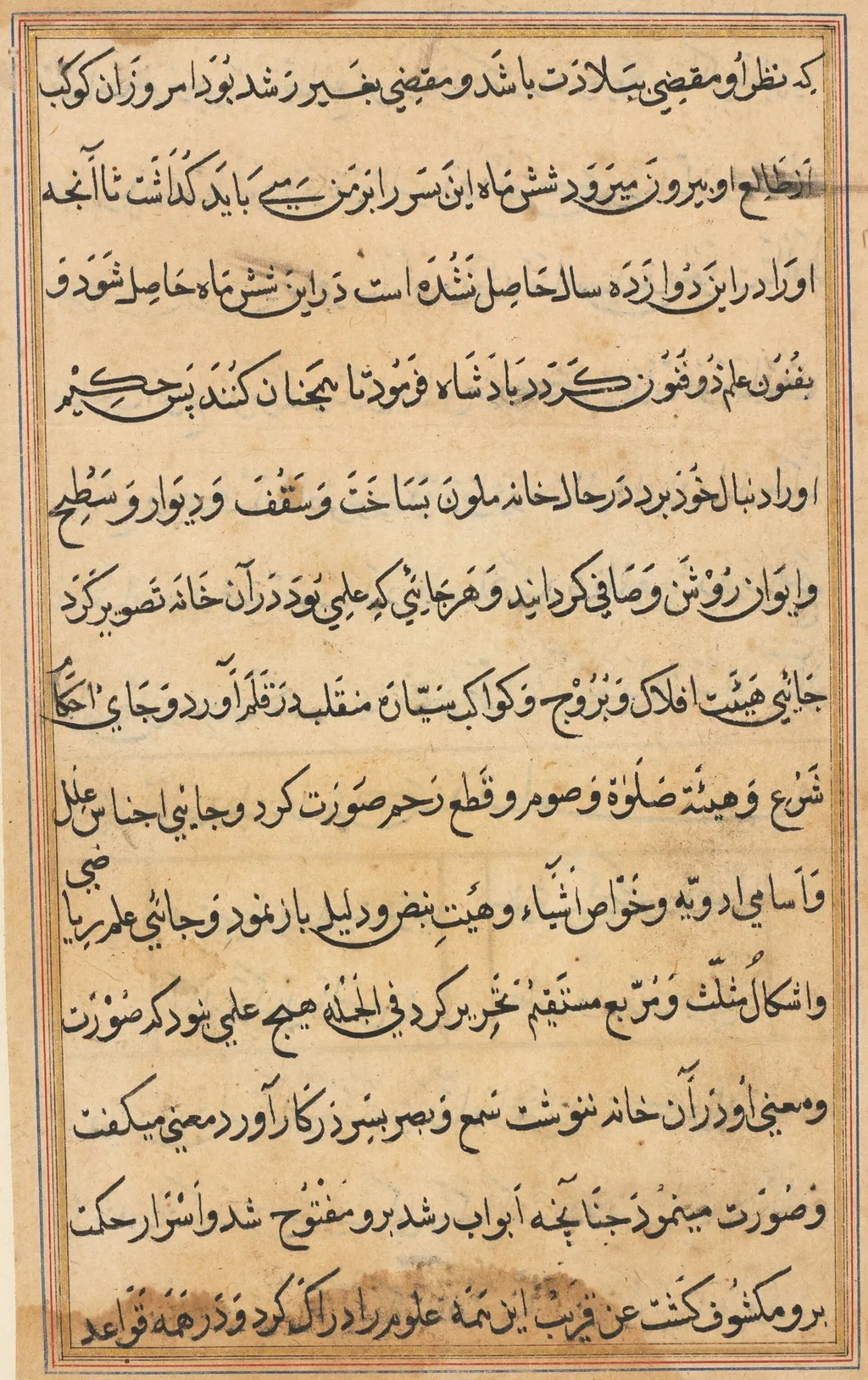
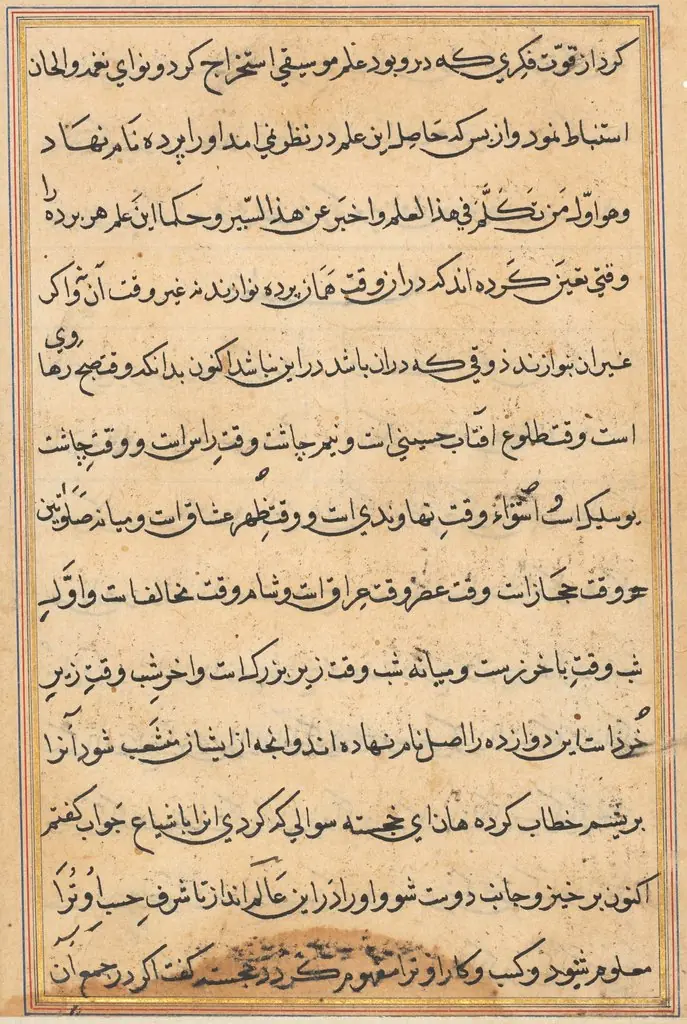
Page from Tales of a Parrot (Tuti-nama): text page is an unspecified painting. It dates from 1560 and is held in the collection of the Cleveland Museum of Art. This object is a painted page from the Persian manuscript known as the *Tuti‑nama* (Tales of a Parrot).
About this work
The paper looks old and slightly yellowed, with a few faint brown stains near the bottom.
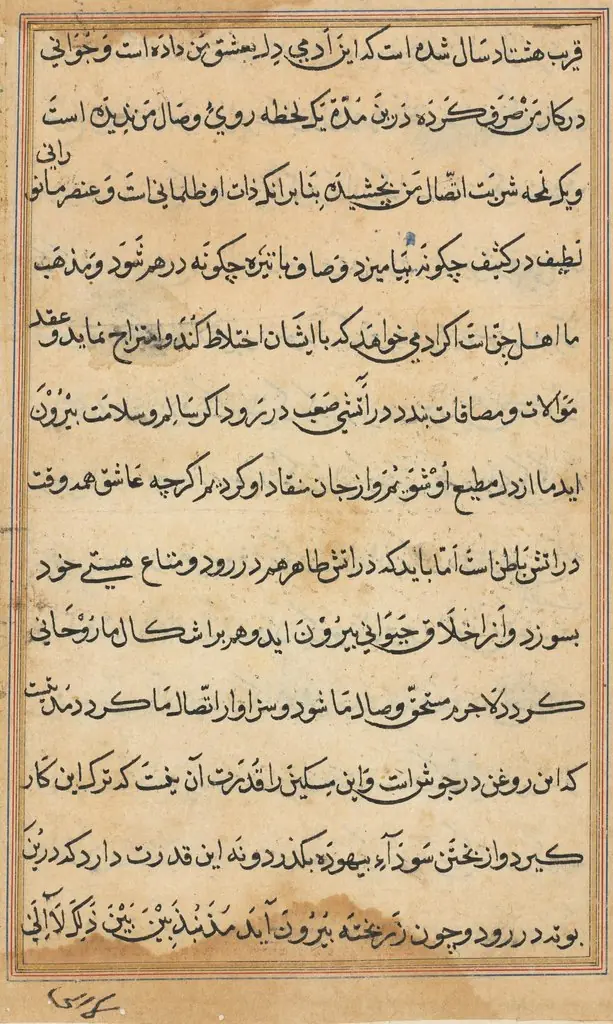
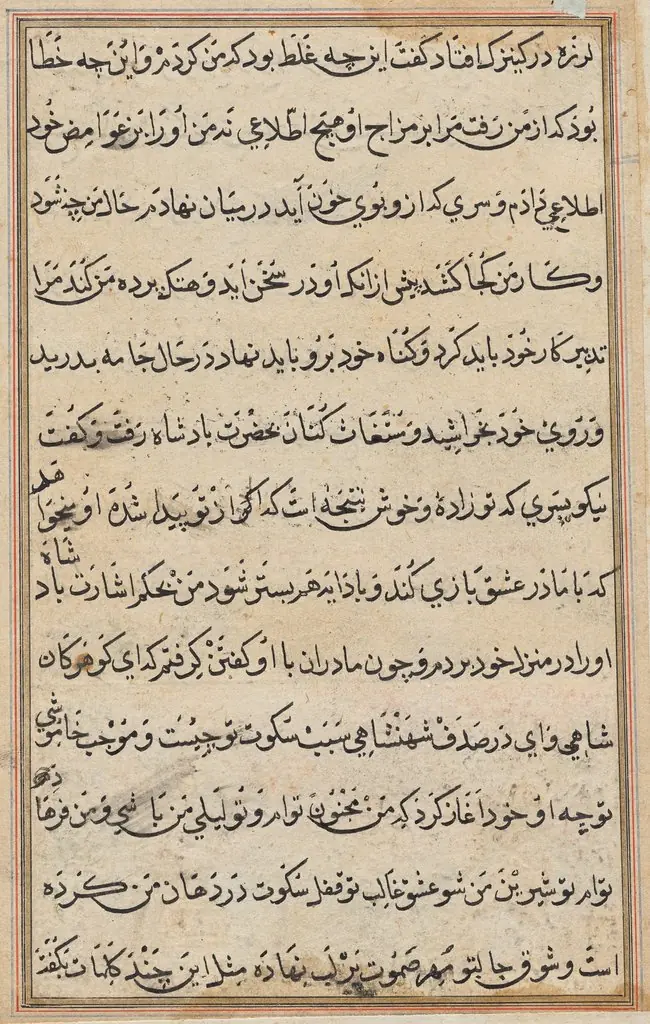
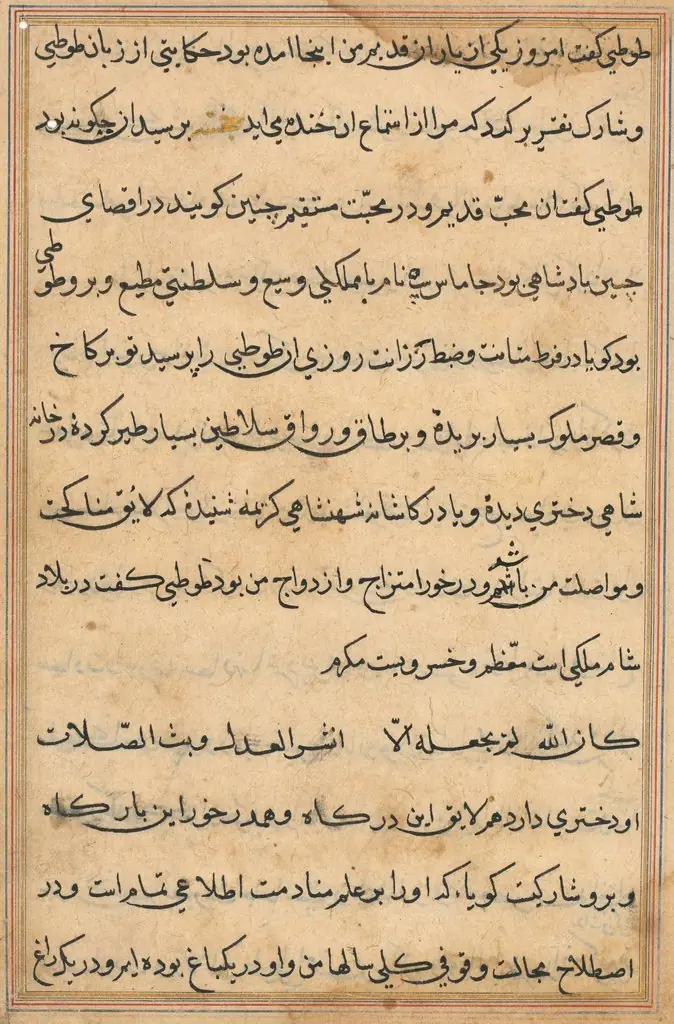
This page is covered in neat, black Arabic script arranged in even lines. The edges are framed by a thin, reddish-brown border. The paper looks old and slightly yellowed, with a few faint brown stains near the bottom.
The text is likely from a storybook, given its orderly style. It was made for someone important—Prince Salim—around 1560.
Look up The Cleveland Museum of Art to see more pages like this.
Overview
This object is a painted page from the Persian manuscript known as the *Tuti‑nama* (Tales of a Parrot). Executed in the mid‑sixteenth century, it consists of a single sheet of paper bearing dense black Arabic calligraphy set within a narrow reddish‑brown margin. The surface shows the patina of age, with a yellowed tone and faint brown stains toward the lower edge.
Subject & Meaning
The page contains a continuous block of Arabic text, suggesting it is part of a narrative or didactic story. The *Tuti‑nama* is a collection of moral tales traditionally illustrated for courtly audiences, indicating the script likely conveys a moral lesson or anecdote intended for an educated reader.
Technique & Style
The calligraphic work is rendered in a uniform, black ink applied with a fine brush, creating even, legible lines characteristic of Persian manuscript writing of the period. The thin reddish‑brown border frames the text, a decorative element that both protects the script and adds visual balance to the page.
History & Provenance
Commissioned for Prince Salim, a prominent figure in the Safavid court, the page dates to approximately 1560. It later entered the collection of the Cleveland Museum of Art, where it is displayed alongside other pages from the same codex, illustrating the manuscript’s original composition and its subsequent preservation.
Context
During the Safavid era, illustrated manuscripts such as the *Tuti‑nama* were produced for elite patrons, combining literary content with refined calligraphy and occasional illumination. The work reflects the cultural emphasis on moral instruction and the aesthetic standards of courtly book production in 16th‑century Persia.
Artist & collection

 Page from Tales of a Parrot (Tuti-nama): text page
 Page from Tales of a Parrot (Tuti-nama): text page
 Page from Tales of a Parrot (Tuti-nama): text page
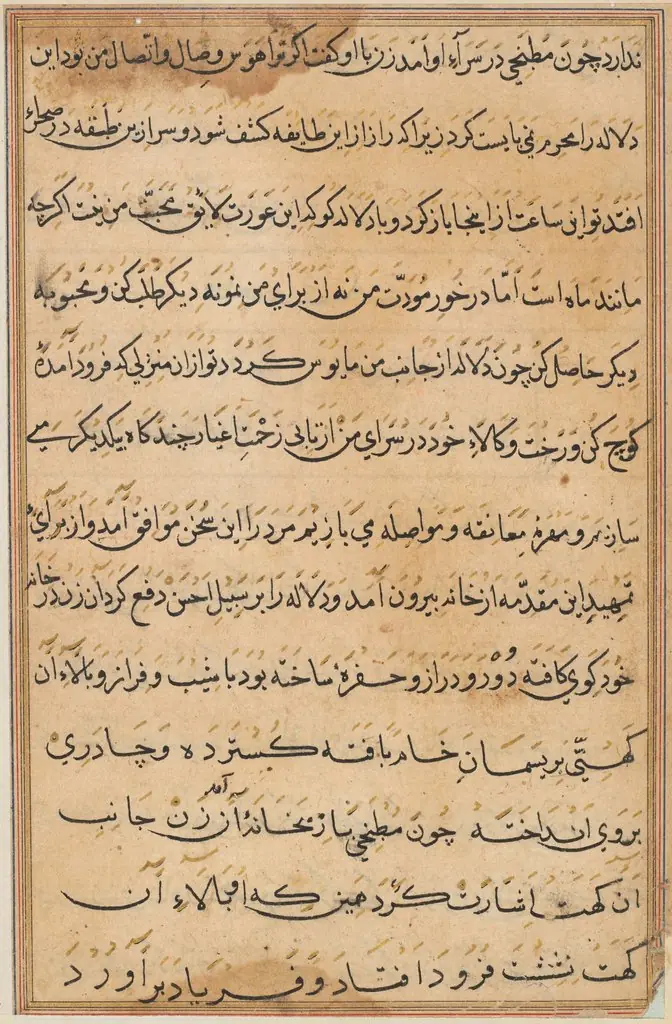 Page from Tales of a Parrot (Tuti-nama): text page
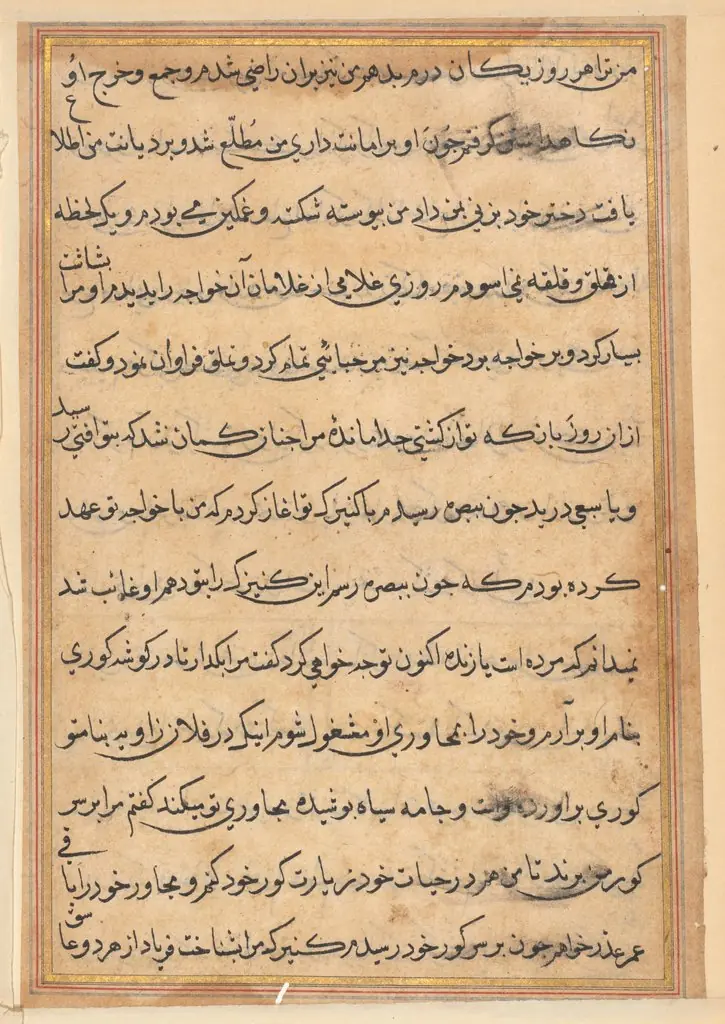 Page from Tales of a Parrot (Tuti-nama): text page
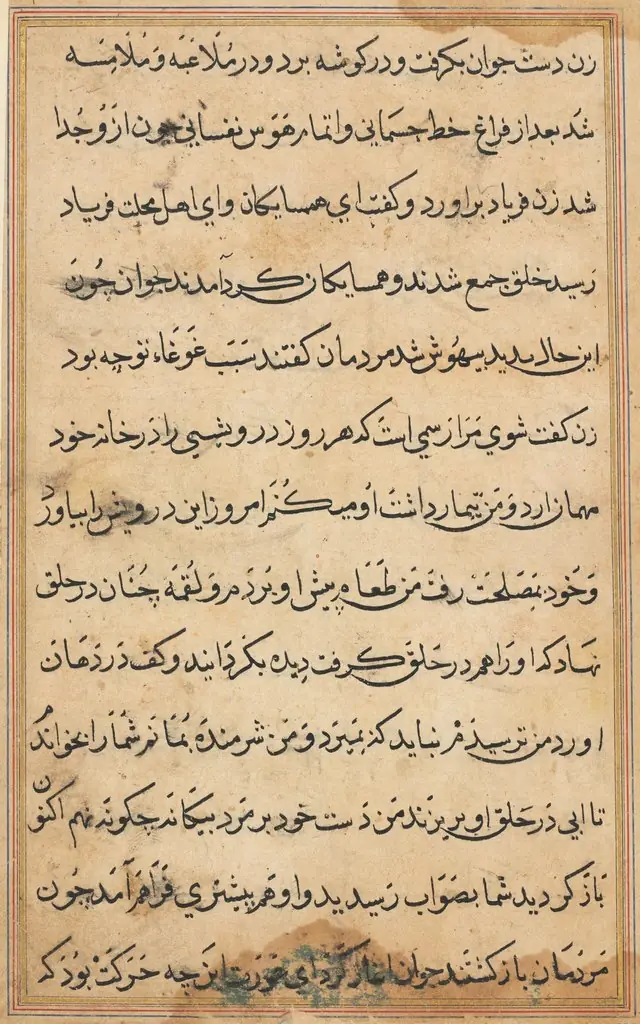 Page from Tales of a Parrot (Tuti-nama): text page
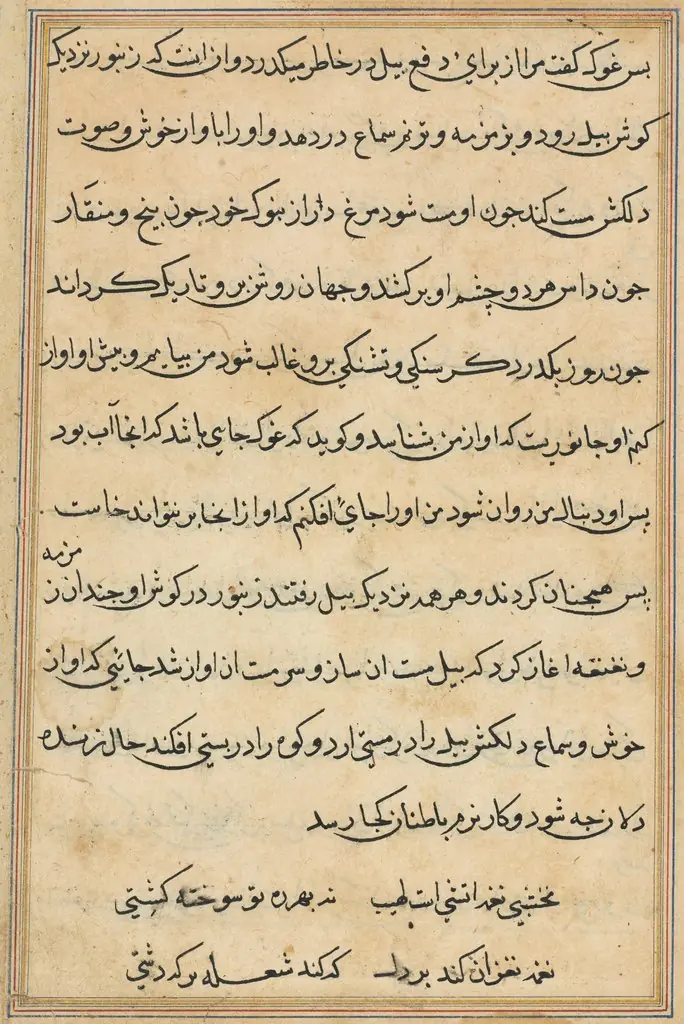 Page from Tales of a Parrot (Tuti-nama): text page
 Page from Tales of a Parrot (Tuti-nama): text page
 Page from Tales of a Parrot (Tuti-nama): text page
 Page from Tales of a Parrot (Tuti-nama): text page
 Page from Tales of a Parrot (Tuti-nama): text page
 Page from Tales of a Parrot (Tuti-nama): text page