Artwork
Page from Tales of a Parrot (Tuti-nama): text page
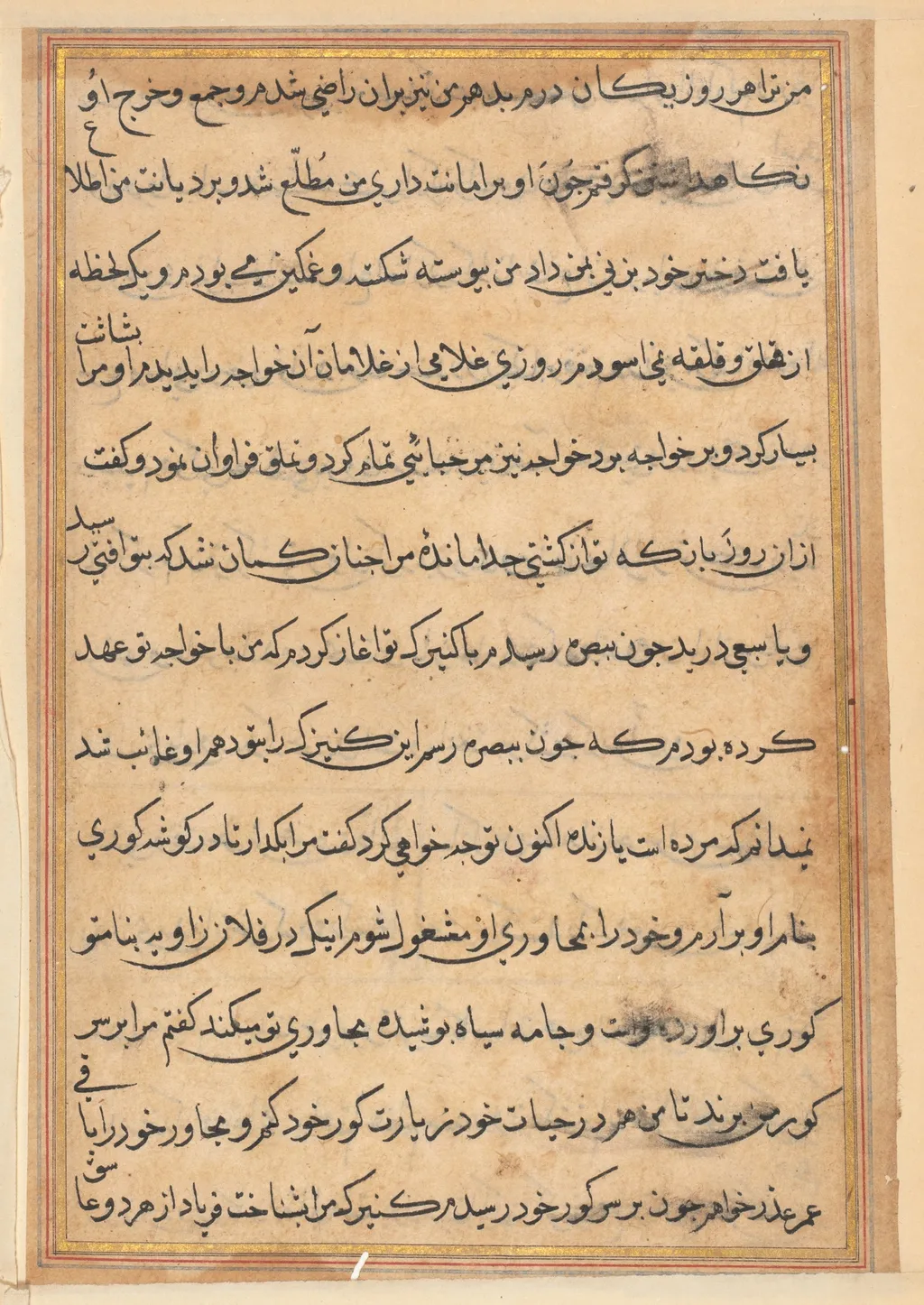
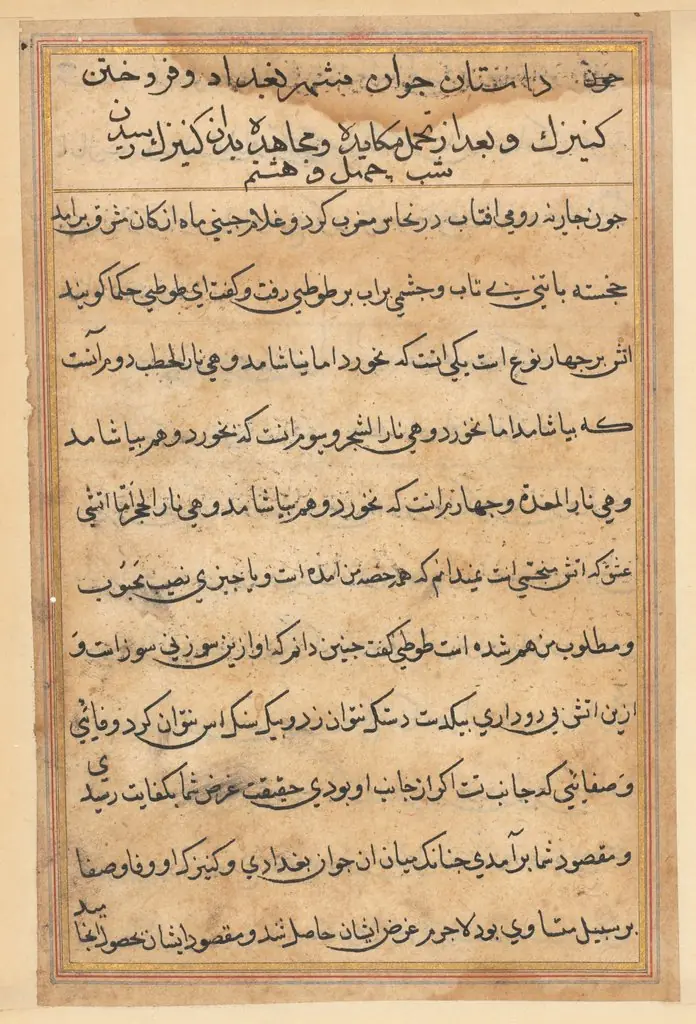
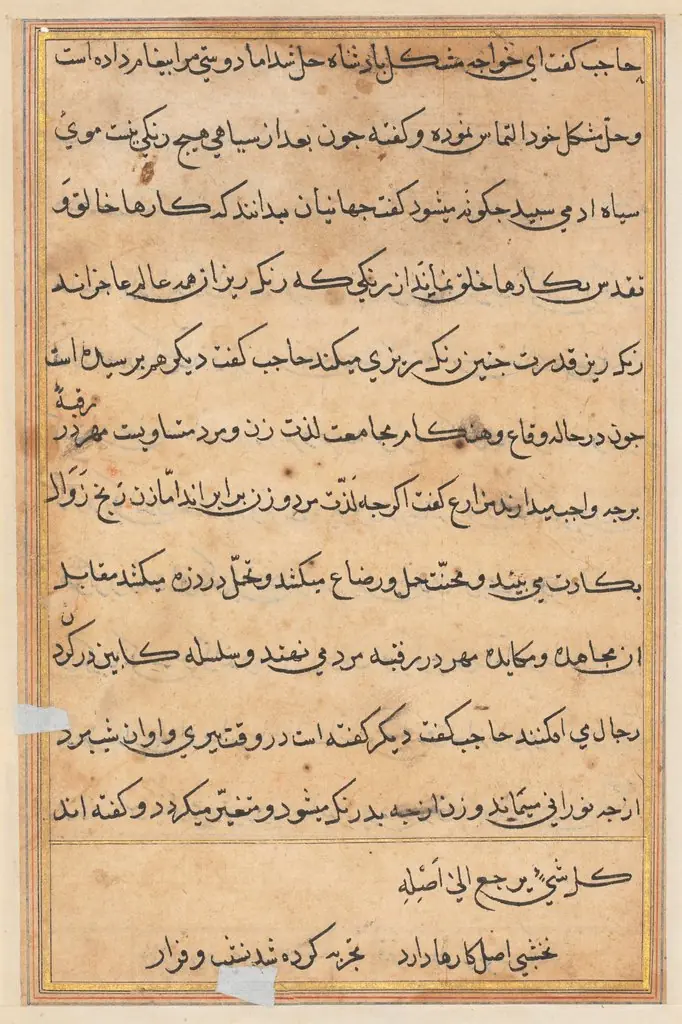
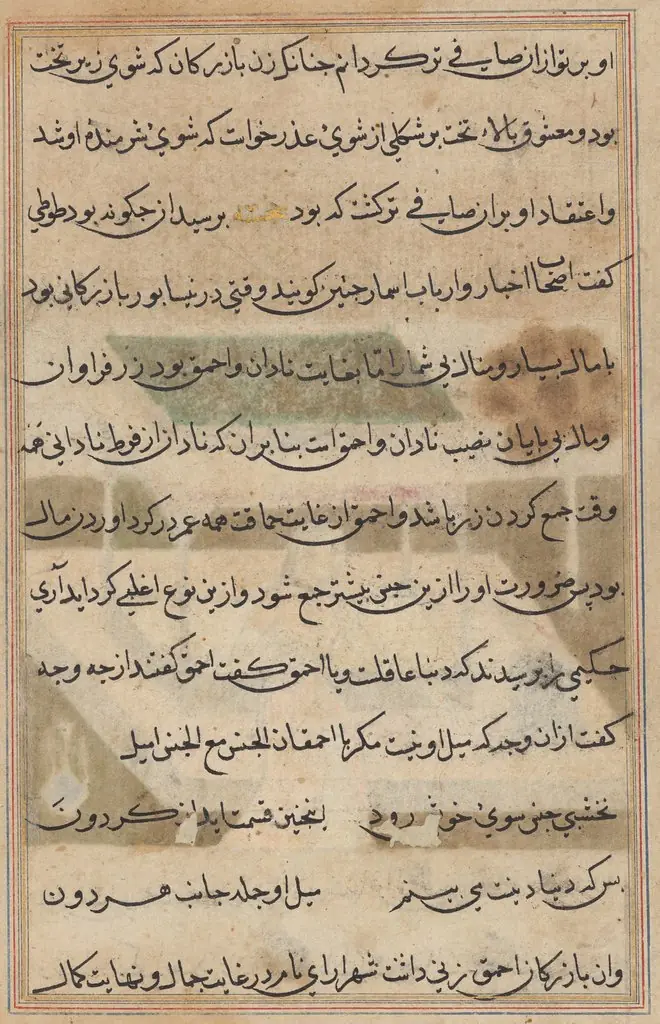
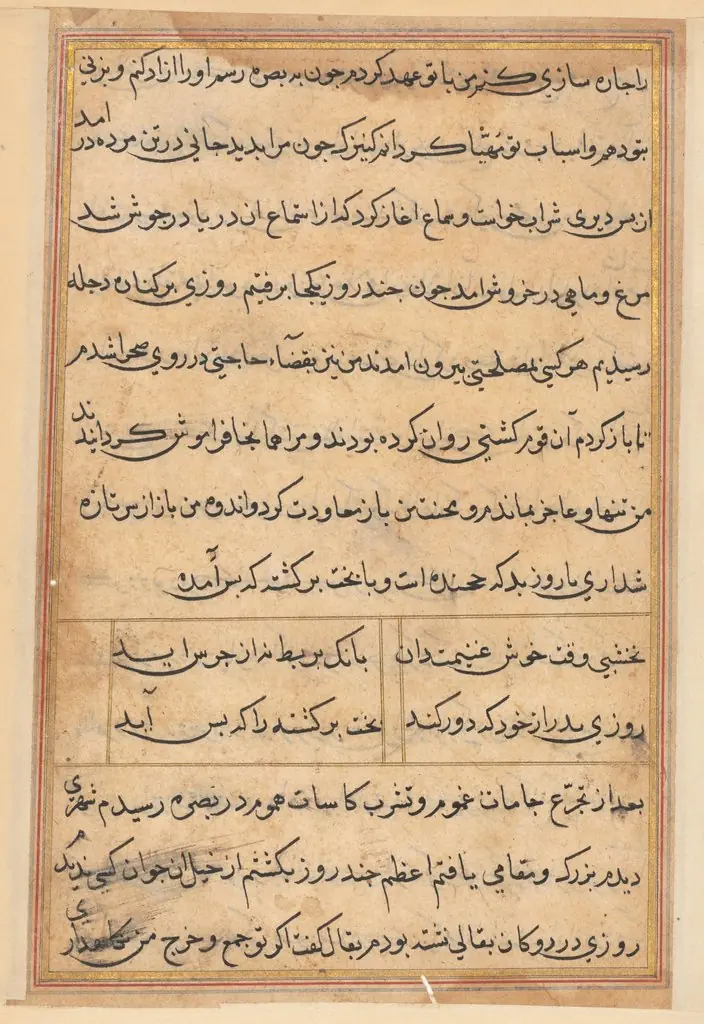
Page from Tales of a Parrot (Tuti-nama): text page is an unspecified painting. It dates from 1560 and is held in the collection of the Cleveland Museum of Art.
About this work
Overview
The piece is catalogued as a painting in museum records, reflecting its status as a visual object despite its textual function.
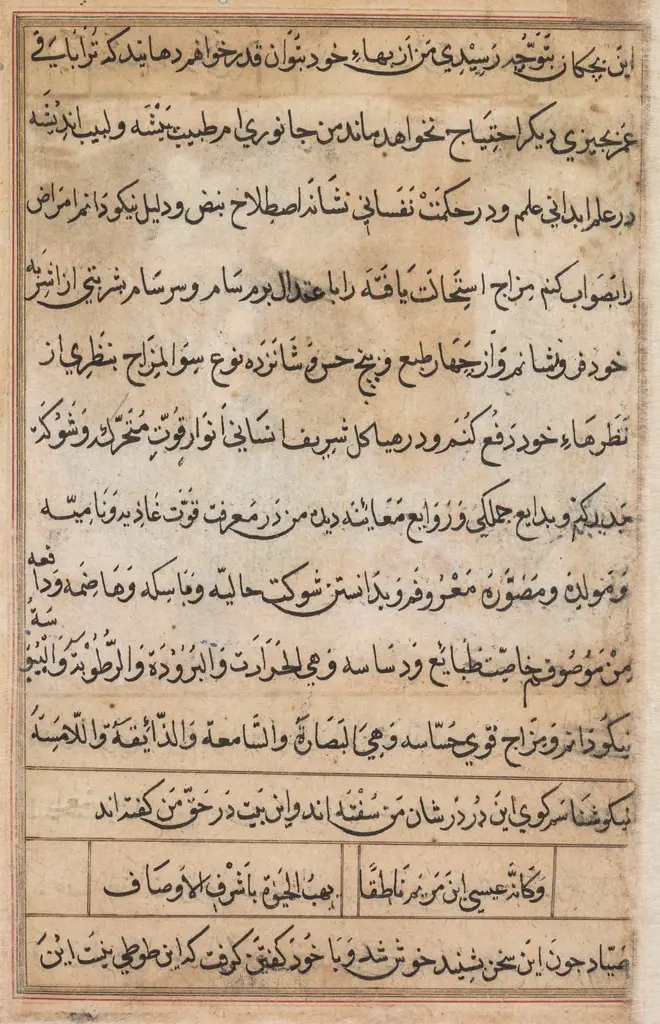
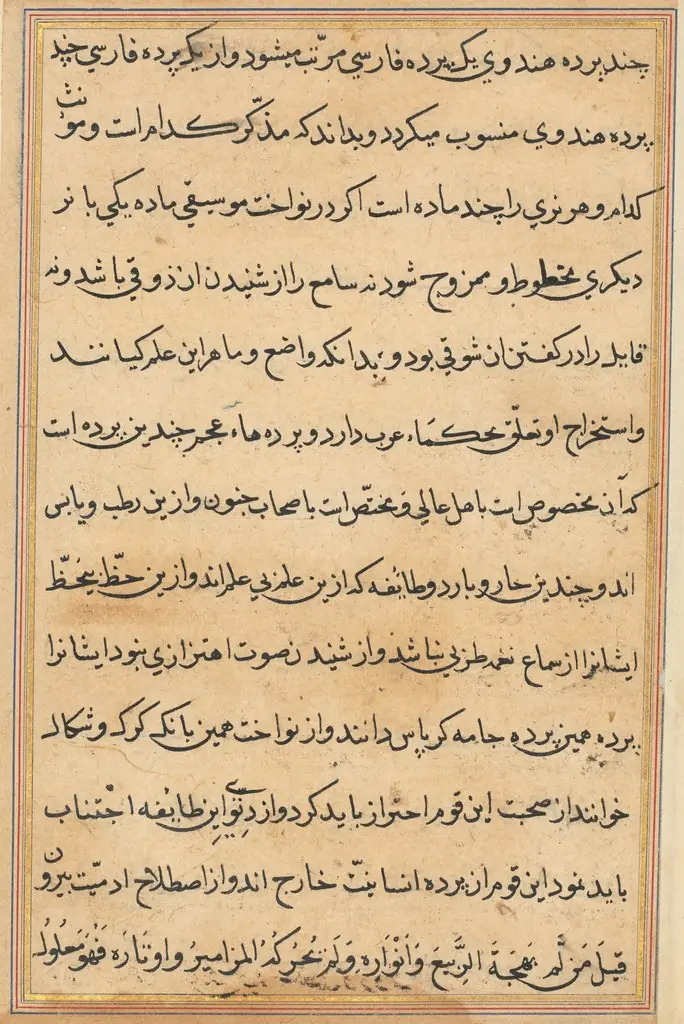
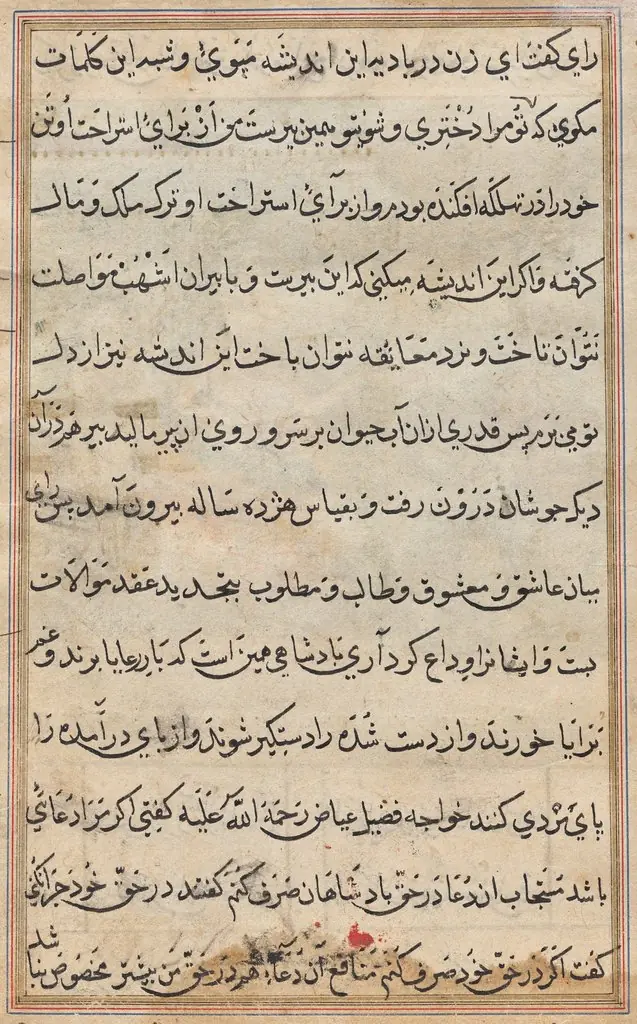
This manuscript leaf, part of the illustrated work *Tales of a Parrot* (Tuti‑nama), presents a dense block of black calligraphic script arranged in compact, orderly rows. A narrow red band outlines the page, while the paper itself shows a warm, slightly yellowed tone, indicating age. The piece is catalogued as a painting in museum records, reflecting its status as a visual object despite its textual function.
Subject & Meaning
The text on the page forms a segment of the *Tales of a Parrot*, a narrative composed for Prince Salim. The story, conveyed through the elegant script, was intended as a literary gift, combining moral instruction with entertainment. The presence of the parrot motif in the title suggests themes of speech, wisdom, and courtly intrigue, typical of Persian storytelling traditions.
Technique & Style
The calligraphy is executed in a precise black ink, each letter adorned with minute decorative dots and strokes that enhance legibility and aesthetic appeal. The lines flow in a sinuous, vine‑like manner, filling the surface from margin to margin. A thin red border, applied with a contrasting pigment, frames the composition and emphasizes the page’s formal structure.
History & Provenance
The manuscript was created for Prince Salim, a royal patron, likely in the early modern period of Persian court culture. Over time the leaf entered the collection of the Cleveland Museum of Art, where it is conserved and displayed. Its provenance traces a trajectory from a private royal commission to a public institutional setting.
Context
*Tales of a Parrot* belongs to a broader genre of Persian narrative literature that employed elaborate calligraphic presentation to enhance storytelling. Such works were often produced in workshops attached to royal courts, where scribes and illuminators collaborated. The page’s visual density and decorative border reflect contemporary aesthetic preferences for richly detailed manuscript production.
Artist & collection

 Page from Tales of a Parrot (Tuti-nama): text page
 Page from Tales of a Parrot (Tuti-nama): text page
 Page from Tales of a Parrot (Tuti-nama): text page
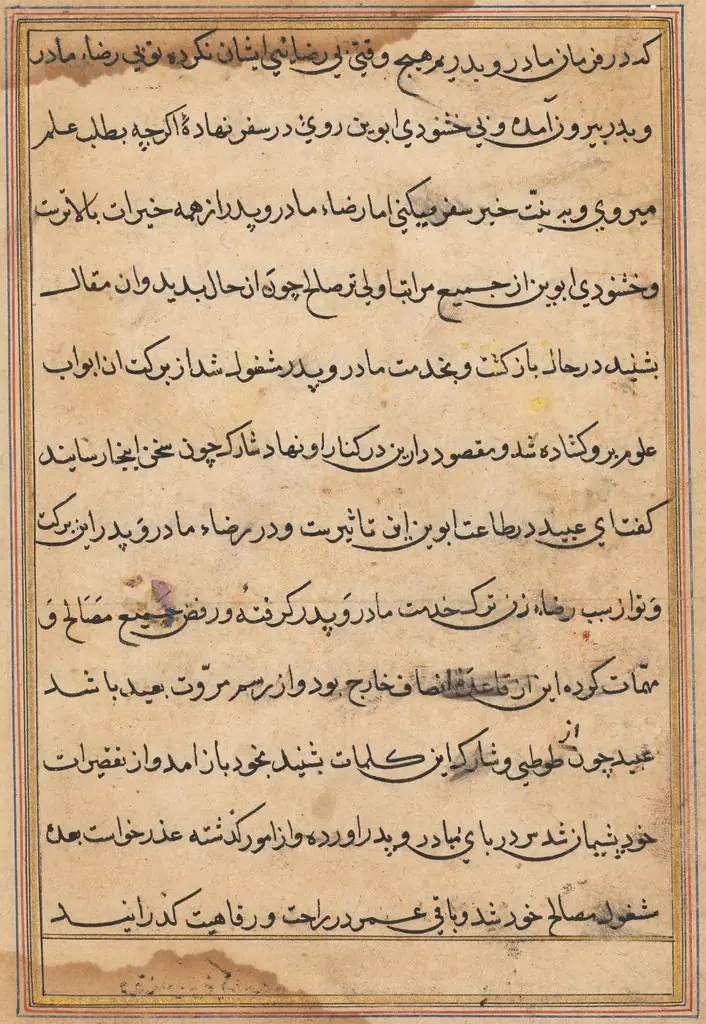 Page from Tales of a Parrot (Tuti-nama): text page
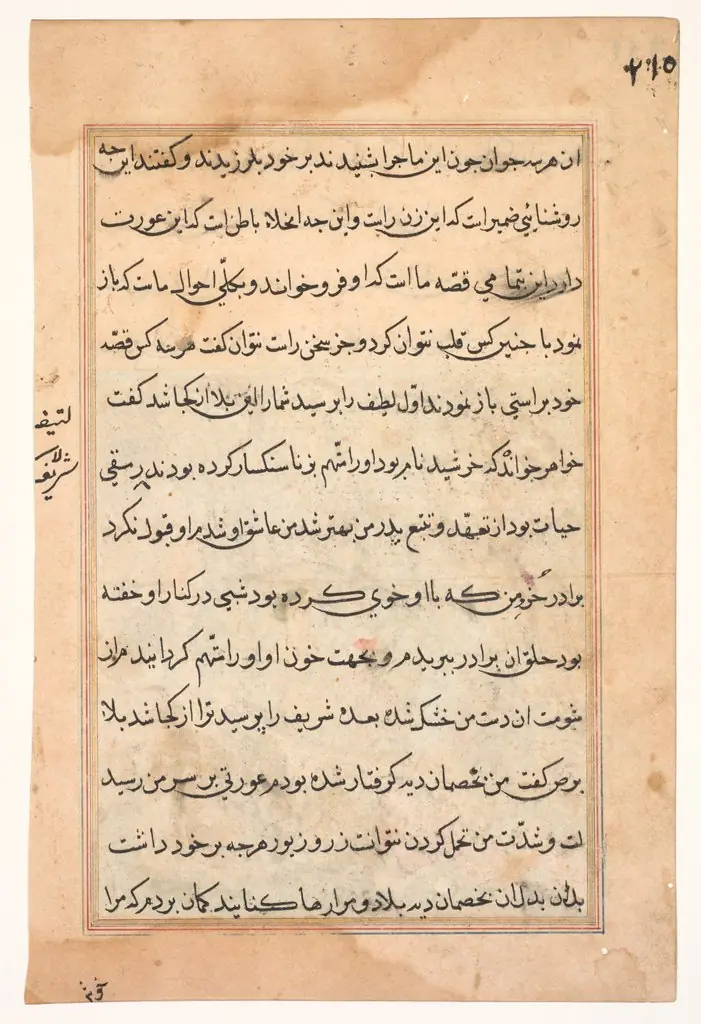 Page from Tales of a Parrot (Tuti-nama): text page
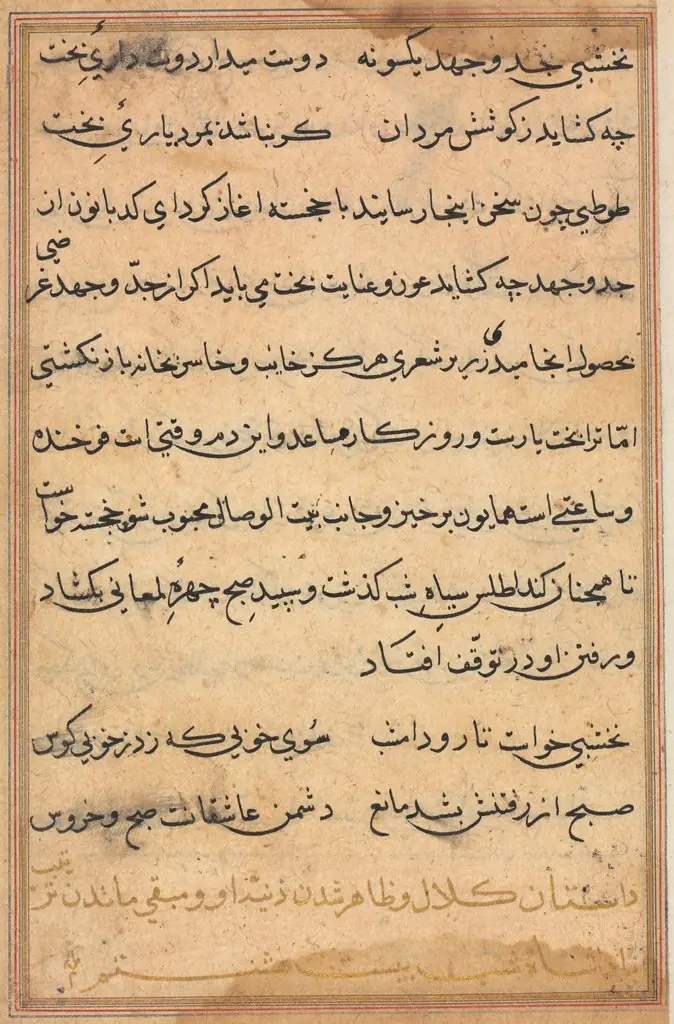 Page from Tales of a Parrot (Tuti-nama): text page
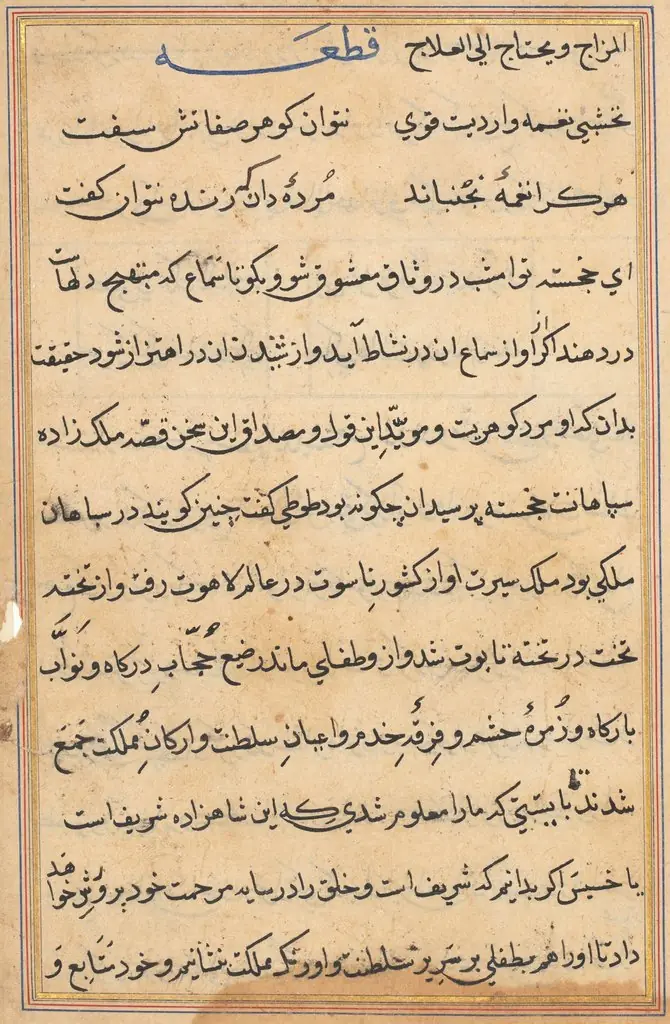 Page from Tales of a Parrot (Tuti-nama): text page
 Page from Tales of a Parrot (Tuti-nama): text page
 Page from Tales of a Parrot (Tuti-nama): text page
 Page from Tales of a Parrot (Tuti-nama): text page
 Page from Tales of a Parrot (Tuti-nama): text page