Artwork
Coffered ceiling panel with palm leaf and birds
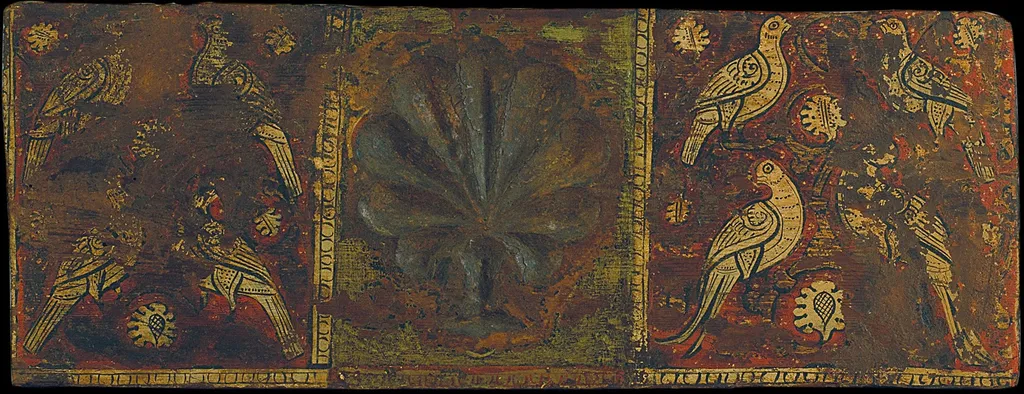
Coffered ceiling panel with palm leaf and birds is an unspecified painting by the Byzantine icon painting artist Unknown. It dates from 1300 and is held in the collection of the Museu Nacional d'Art de Catalunya. This painted panel replicates the appearance of a coffered ceiling, mimicking architectural detail on a flat surface.
About this work
Overview
Surface texture suggests wear and age, reinforcing its function as a decorative architectural element rather than a standalone work.
This painted panel replicates the appearance of a coffered ceiling, mimicking architectural detail on a flat surface. Central to the composition is a stylized palm leaf, surrounded by birds with elongated tails. The palette is subdued, dominated by dark brown with subtle red and gold highlights, enhancing the sense of antiquity. Surface texture suggests wear and age, reinforcing its function as a decorative architectural element rather than a standalone work.
Subject & Meaning
The palm leaf, a symbol of victory and endurance in many ancient cultures, anchors the design, while the birds—rendered in white with black outlines—may represent spiritual messengers or natural harmony. Their placement around the central motif suggests balance and rhythm. The absence of narrative or human figures implies a focus on nature and ornamentation, likely intended to convey serenity and refinement within a sacred or elite space.
Technique & Style
The panel employs layered pigments to achieve a muted, weathered appearance, with fine brushwork defining the birds’ contours and the palm leaf’s veins. Gold and red accents are applied sparingly, possibly through gilding or glazing, to suggest luminosity without overt brilliance. The textured surface mimics aged plaster or wood, indicating a deliberate emulation of architectural patina rather than a fresh painting.
History & Provenance
Though exact origins are unrecorded, the style aligns with decorative traditions in South or Southeast Asia, where coffered ceilings were common in religious or royal architecture. The panel likely originated as part of a larger ceiling system, later removed and preserved as a fragment. Its survival suggests it was valued for its craftsmanship, possibly collected in the 19th or early 20th century by foreign travelers or institutions.
Context
This panel reflects a broader tradition in which architectural surfaces were adorned with symbolic flora and fauna to elevate spatial experience. Similar motifs appear in temple interiors and palace ceilings across regions like Java, Cambodia, and southern India, where nature-inspired ornamentation conveyed cosmic order and divine presence. Its muted tones and textured finish distinguish it from more vibrant courtly art, pointing to a more restrained, possibly monastic or aristocratic setting.
Legacy
As a surviving fragment of a once-extensive ceiling, it offers insight into how decorative arts were integrated into sacred and elite architecture. Its preservation highlights a shift in collecting practices, where architectural elements were valued for their aesthetic and historical resonance beyond their original context. It remains a quiet testament to the craftsmanship of anonymous artisans who shaped spaces through subtle, enduring detail.
Artist & collection

 Domestic Scene
 Giacomo and Cardinal Marco, investing Andrea, Abbot of San Zeno, with his Benefice
 The Nymph of Fontainebleau
 Portrait of a Woman
 Madonna and Child with Saints in the Enclosed Garden
 Venus and Minerva
 Family Group of Four on Sofa
 Wall painting from Room H of the Villa of P. Fannius Synistor at Boscoreale
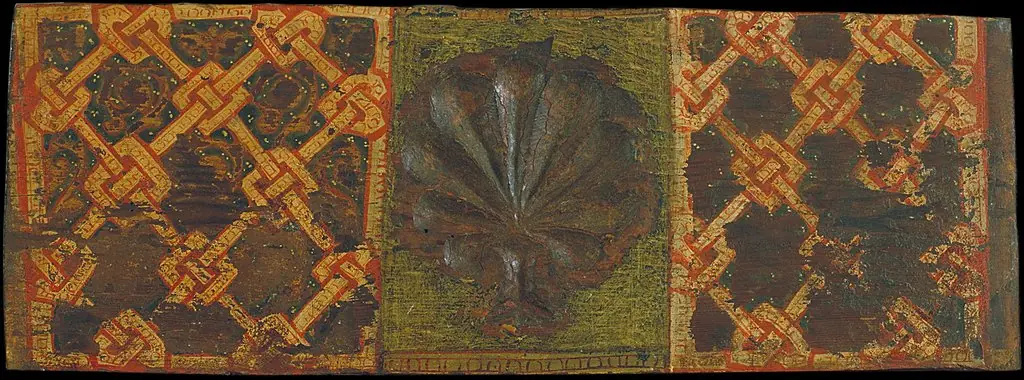 Coffered ceiling panel with palm leaf and interlacing motifs
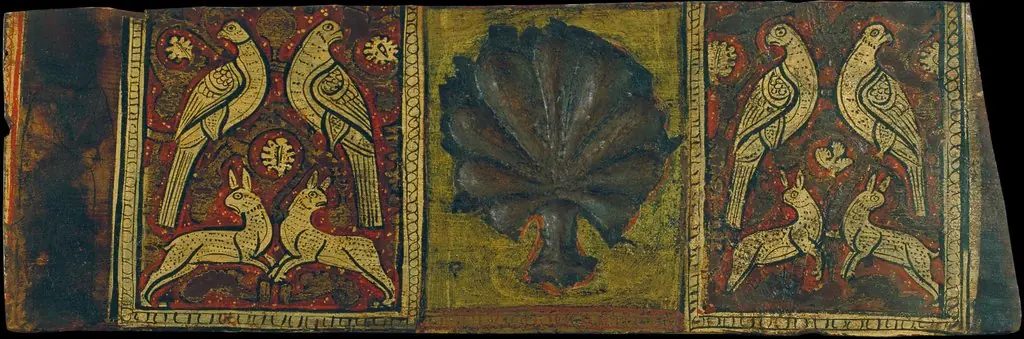 Ceiling panel with palm leaf, birds and four-legged animals
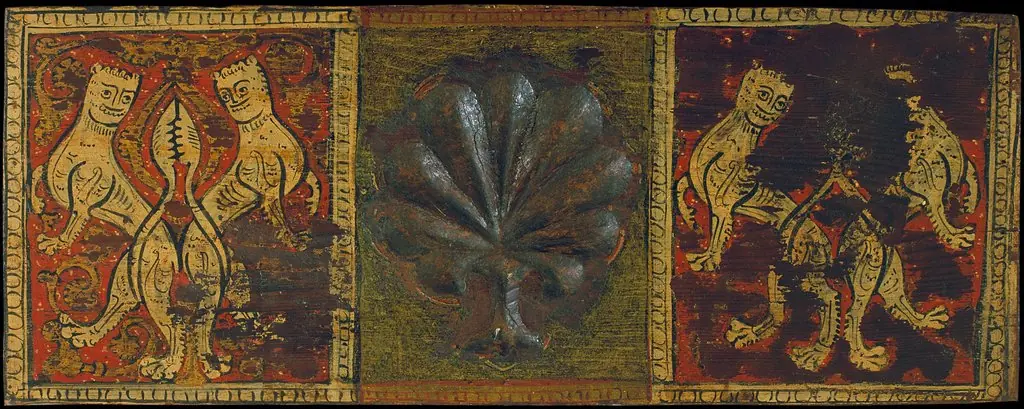 Coffered ceiling panel with palm leaf and fantastic animals
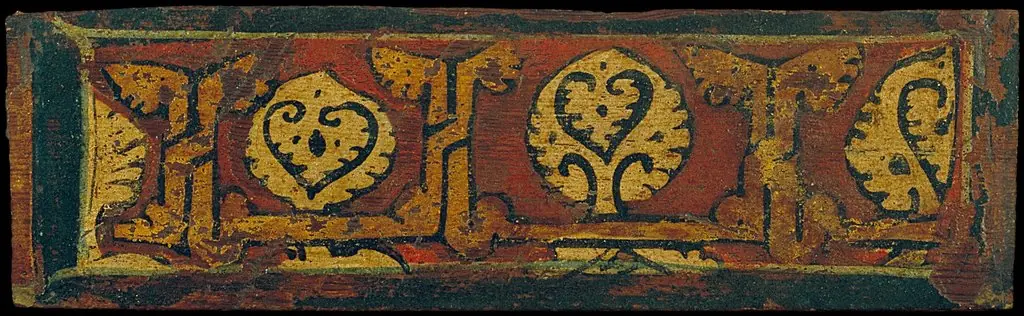 Small coffered ceiling panel with plant motifs
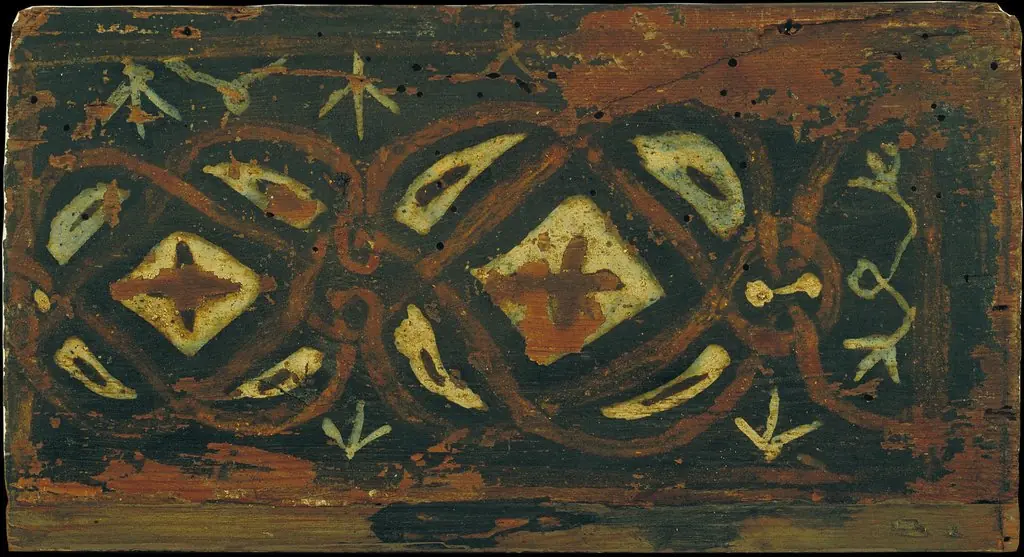 Small coffered ceiling panel with geometric motifs
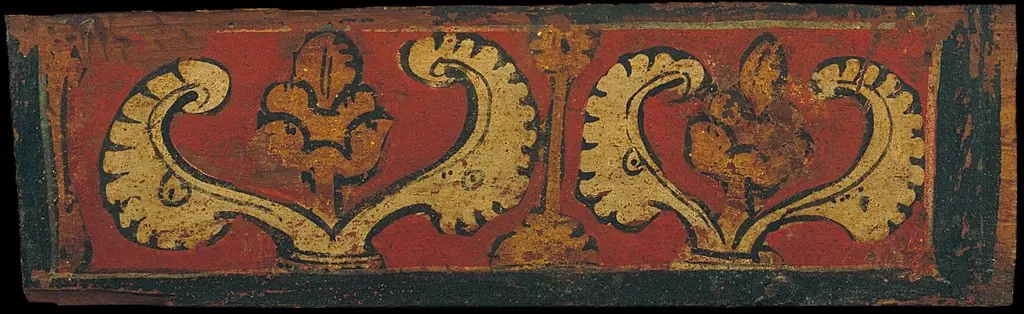 Small coffered ceiling panel with plant motifs
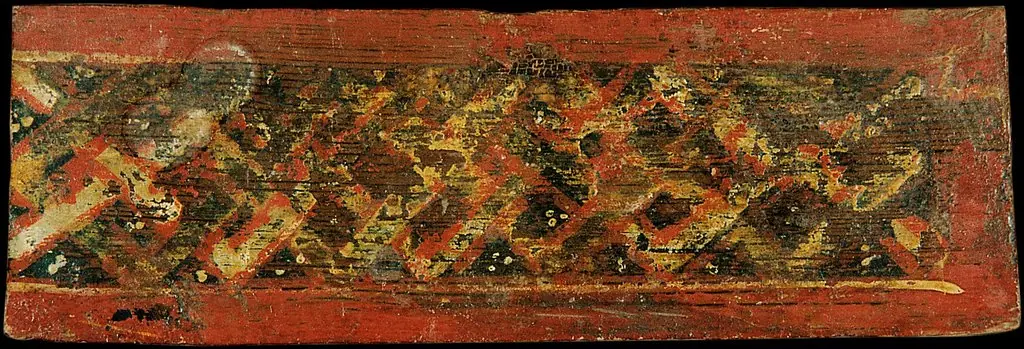 Coffered ceiling panel
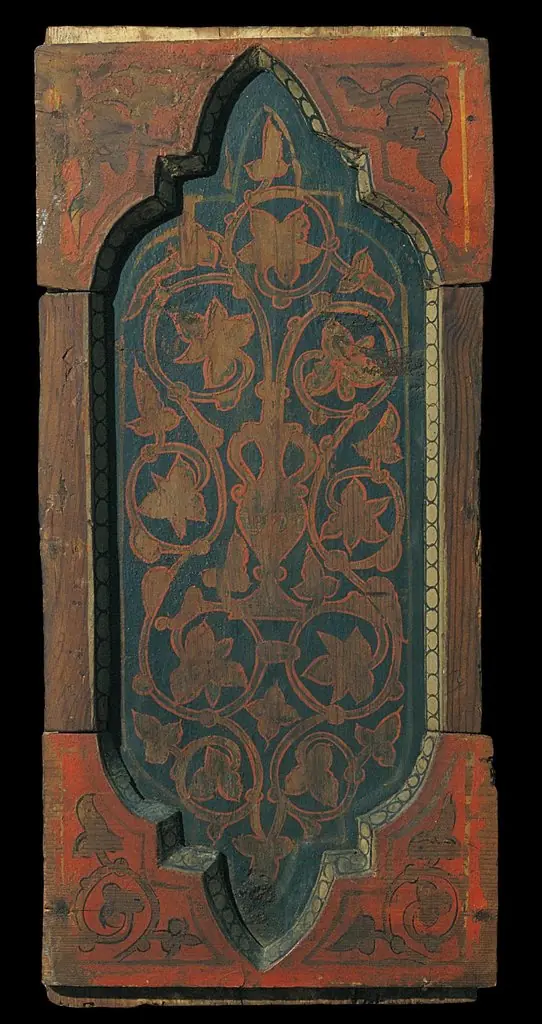 Coffered ceiling panel with plant motifs
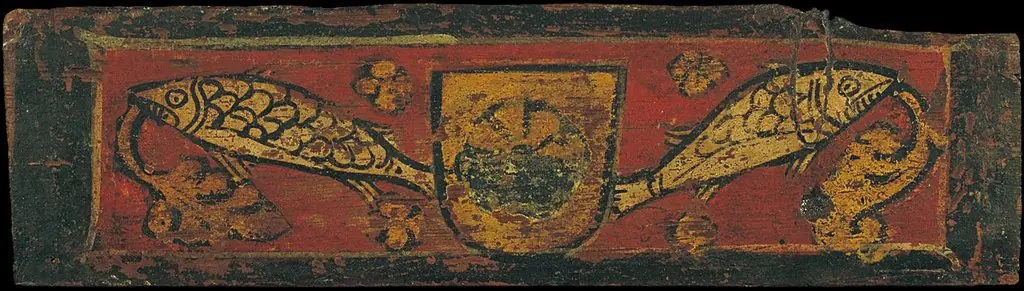 Small coffered ceiling panel with coat of arms and fishes devouring plant motifs
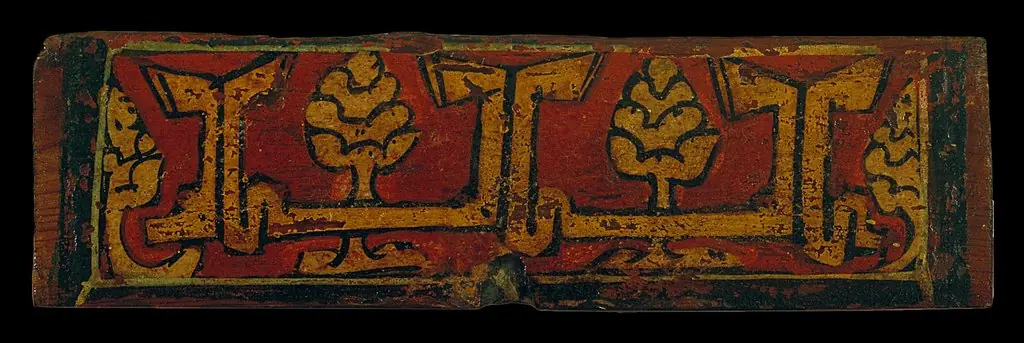 Small coffered ceiling panel with plant motifs
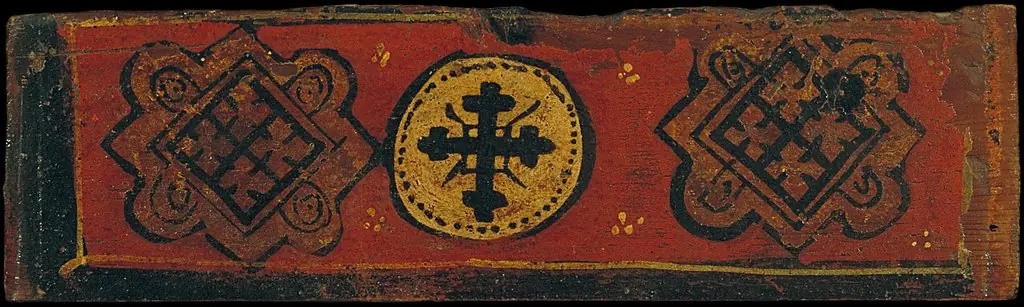 Small coffered ceiling panel with a cross and coats of arms in lozenge form
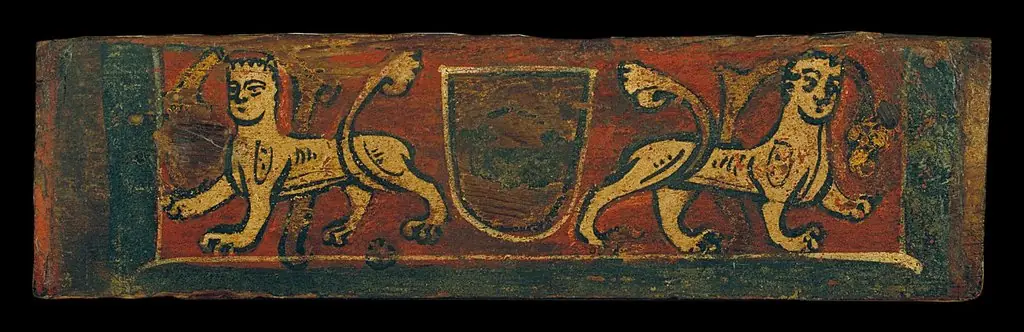 Small coffered ceiling panel with coat of arms and manticores