Artwork
Small coffered ceiling panel with plant motifs
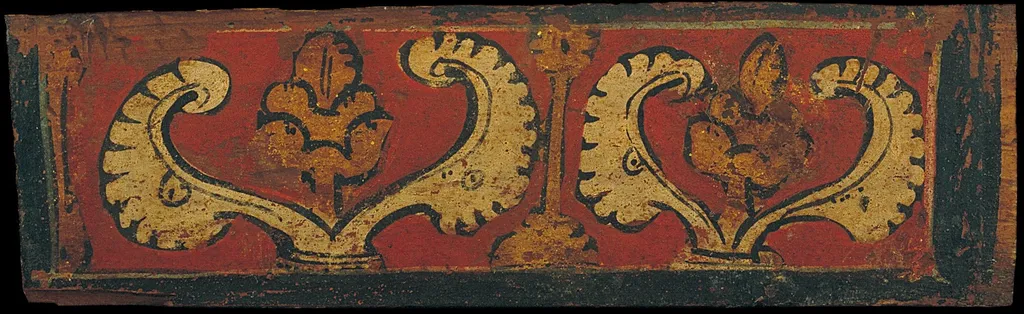
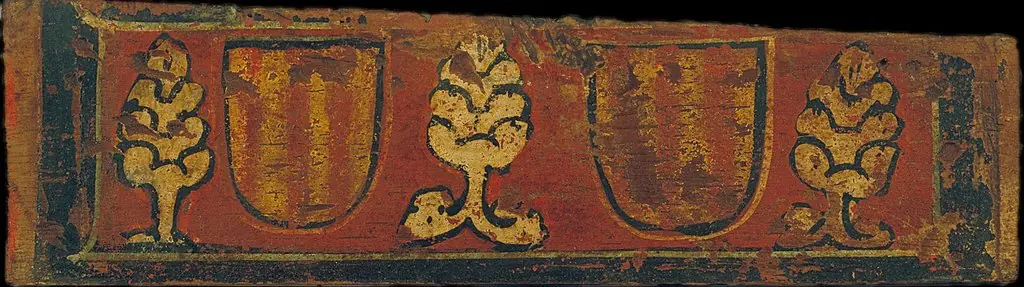
Small coffered ceiling panel with plant motifs is an unspecified painting by Unknown. It is held in the collection of the Museu Nacional d'Art de Catalunya. A small rectangular wooden panel, framed by a gold border, displays a centralized plant design on a red ground.
About this work
Overview
The surface of the gold elements is built up with thick application, creating a subtle relief that distinguishes it from flat painting.
A small rectangular wooden panel, framed by a gold border, displays a centralized plant design on a red ground. The decoration is confined to a single, symmetrical motif rendered in gold and black pigment. The surface of the gold elements is built up with thick application, creating a subtle relief that distinguishes it from flat painting. Its scale and craftsmanship suggest use in interior architectural embellishment rather than standalone display.
Subject & Meaning
The motif depicts a stylized, bilateral plant form, likely inspired by natural vegetation but abstracted into rhythmic curves. The symmetry and repetition imply a deliberate order, possibly reflecting ideals of harmony or cosmic balance. No identifiable species is rendered; instead, the design functions as a decorative symbol, common in contexts where botanical imagery conveys growth, renewal, or cultivated beauty without literal representation.
Technique & Style
Gold pigment is applied in a raised, textured manner, suggesting the use of gesso or similar modeling material beneath the leaf and stem forms. Black outlines define the contours, enhancing the contrast against the red background. The style is non-naturalistic, favoring rhythmic repetition and formal balance over botanical accuracy. The technique prioritizes visual impact and tactile presence, aligning with decorative traditions that value surface richness over illusionistic depth.
History & Provenance
The panel’s origin remains undocumented, with no known maker, date, or location of creation. Its materials and method resemble decorative elements found in medieval or early Renaissance interiors across southern Europe. It may have once adorned a coffered ceiling, chest, or religious object. Its survival in near-complete condition suggests it was preserved as a valued object, though its original context has been lost to time.
Context
This panel belongs to a broader tradition of ornamental art in which plant forms were adapted for architectural and object decoration. Similar motifs appear in manuscript illumination, metalwork, and ceiling panels from the 12th to 15th centuries, particularly in regions where Islamic, Byzantine, and Western European styles intersected. Its simplicity and symmetry reflect a preference for pattern over narrative, suited to repetitive spatial applications.
Legacy
Though anonymous and unattributed, the panel exemplifies how decorative arts conveyed aesthetic values through repetition and material richness. It contributes to understanding how non-narrative imagery functioned in pre-modern interiors, where ornament served both visual and symbolic roles. Its preservation allows study of craftsmanship and design sensibilities that often went unrecorded in historical texts.
Artist & collection

 Domestic Scene
 Giacomo and Cardinal Marco, investing Andrea, Abbot of San Zeno, with his Benefice
 The Nymph of Fontainebleau
 Portrait of a Woman
 Madonna and Child with Saints in the Enclosed Garden
 Venus and Minerva
 Family Group of Four on Sofa
 Wall painting from Room H of the Villa of P. Fannius Synistor at Boscoreale
 Small coffered ceiling panel with plant motifs
 Small coffered ceiling panel with plant motifs
 Small coffered ceiling panel with geometric motifs
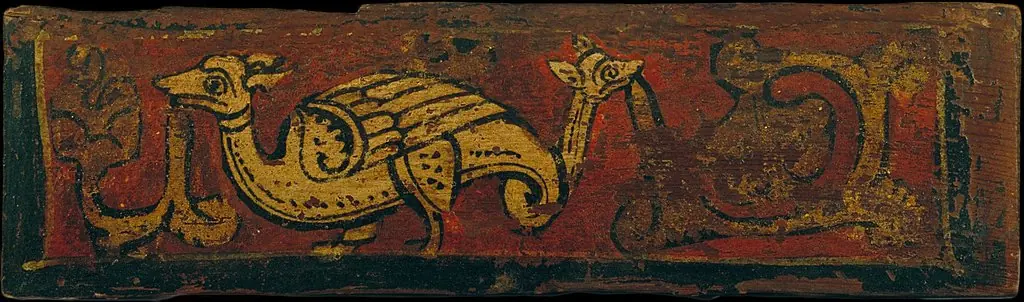 Small coffered ceiling panel with fantastic animal devouring plant motifs
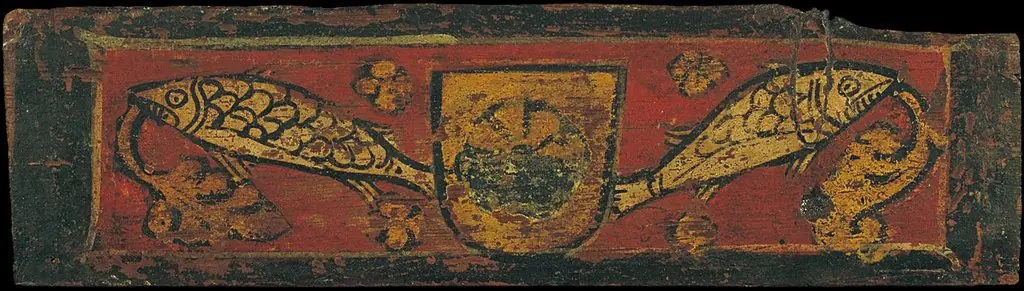 Small coffered ceiling panel with coat of arms and fishes devouring plant motifs
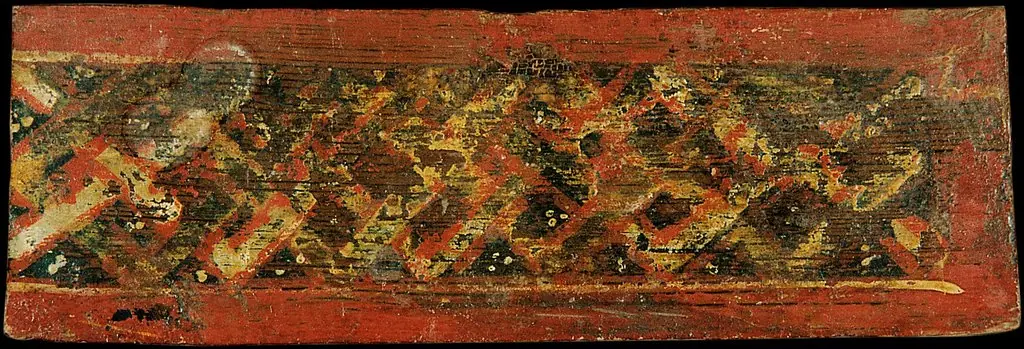 Coffered ceiling panel
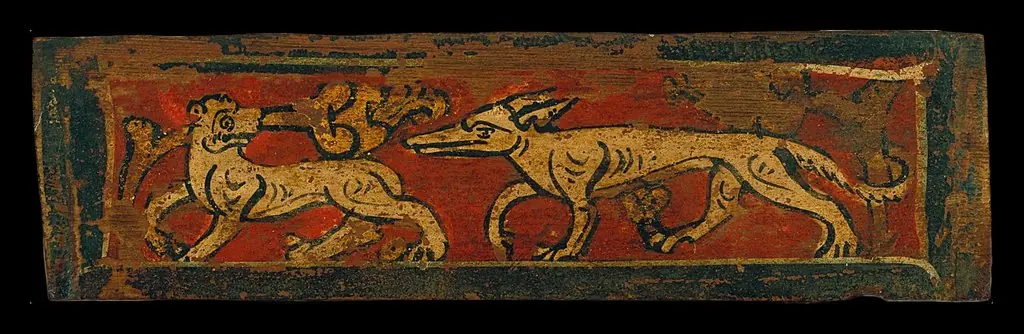 Small coffered ceiling panel with four-legged animals and plant motifs
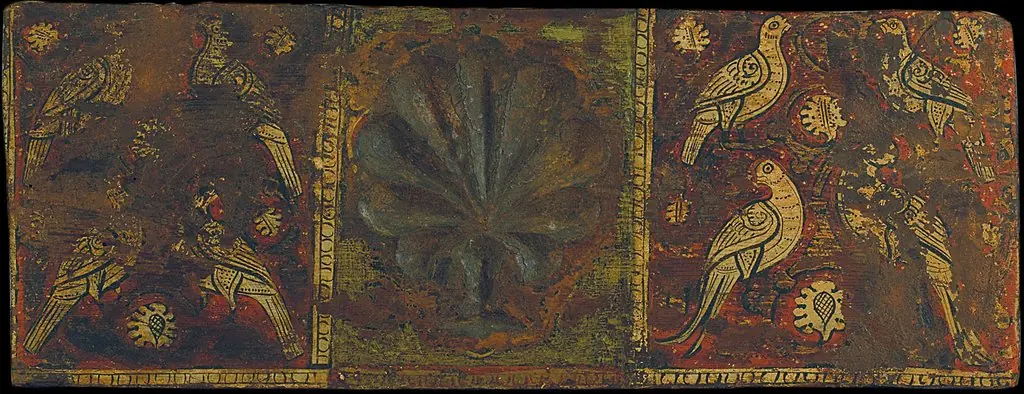 Coffered ceiling panel with palm leaf and birds
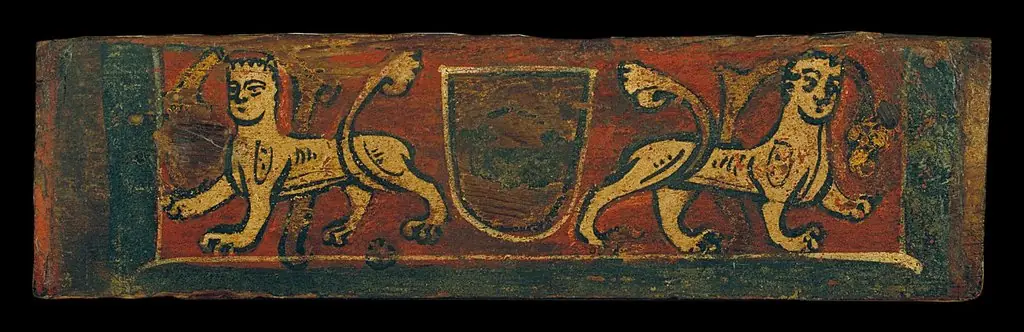 Small coffered ceiling panel with coat of arms and manticores
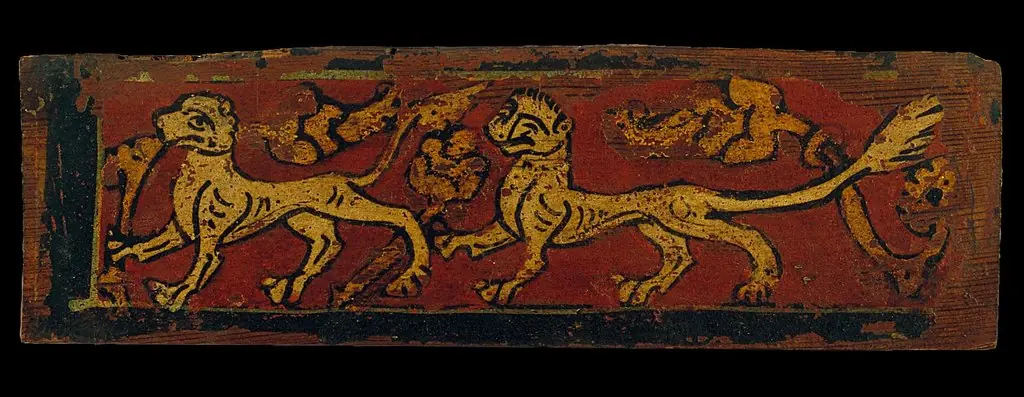 Small coffered ceiling panel with fantastic animals
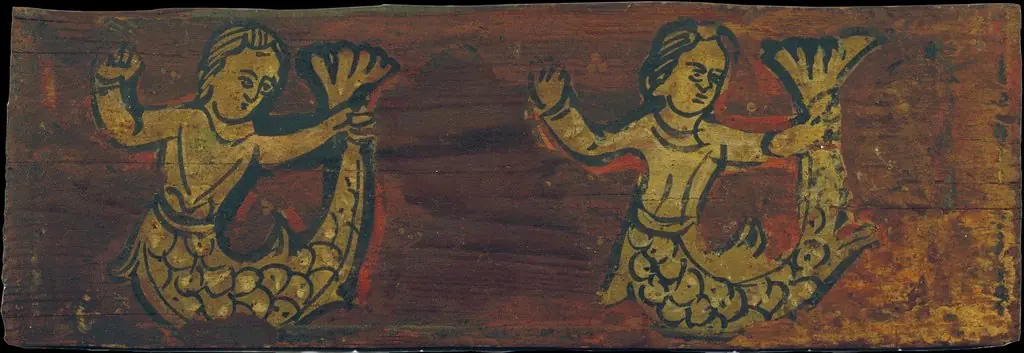 Small coffered ceiling panel with mermaids
 Small coffered ceiling panel with striped coats of arms of the House of Barcelona and plant motifs