Artwork
The dead Christ raised by four angels with a donor figure
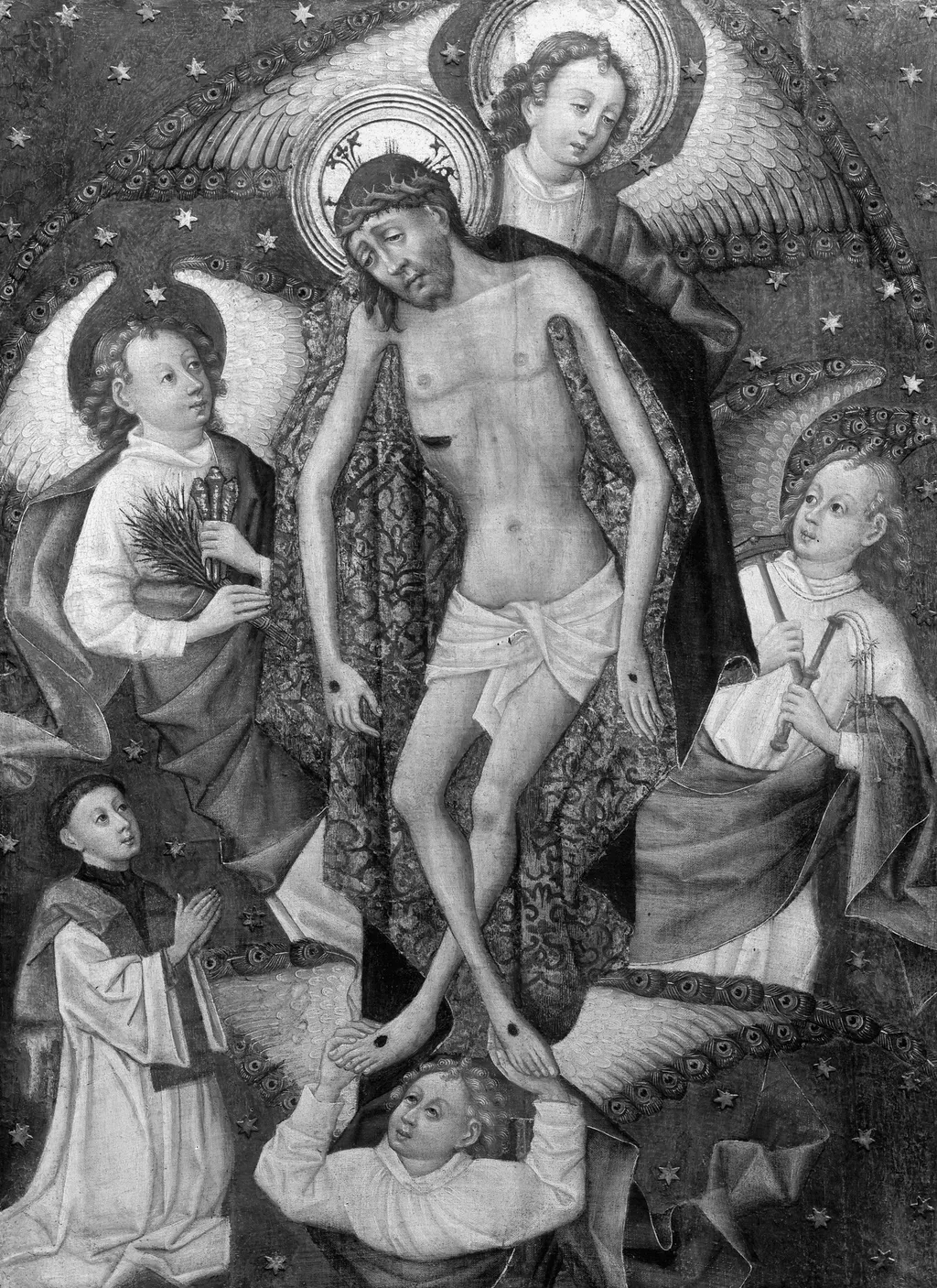
The dead Christ raised by four angels with a donor figure is a paint painting by the Early Renaissance artist Unknown. It dates from 1450 and is held in the collection of the Gemäldegalerie Berlin. This devotional painting portrays the resurrection of Christ, depicted as lifeless yet lifted by four angels.
About this work
Overview
The composition is anchored by a dark, undefined background that isolates the figures, emphasizing their spiritual gravity.
This devotional painting portrays the resurrection of Christ, depicted as lifeless yet lifted by four angels. A kneeling donor figure, dressed in a long robe, prays in the foreground, his gaze fixed upward. The composition is anchored by a dark, undefined background that isolates the figures, emphasizing their spiritual gravity. Subtle modeling and restrained color create a quiet, meditative atmosphere.
Subject & Meaning
The scene illustrates Christ’s transition from death to resurrection, a moment of divine intervention. The angels, each in distinct poses, serve as celestial agents of salvation. One holds a palm frond, symbolizing martyrdom; another grips a spear, evoking the Passion. The donor’s presence signifies personal devotion, suggesting the painting served as an intercessory image, linking earthly piety with heavenly grace.
Technique & Style
The artist employs chiaroscuro to model the figures with quiet realism, giving volume to flesh and fabric without dramatic contrast. Muted pigments—ochres, grays, and deep browns—enhance the solemn tone. The angels’ drapery is rendered with soft folds, while the donor’s robe is more rigid, distinguishing earthly from celestial realms. The lack of landscape or architectural detail focuses attention entirely on the sacred encounter.
History & Provenance
The painting likely originated in a private chapel or devotional setting, commissioned by the donor depicted. Its survival suggests it remained in religious or aristocratic hands for centuries. No definitive record of its origin or early ownership exists, but its style aligns with late medieval or early Renaissance devotional panels from Northern Europe, where such intimate religious imagery was common.
Context
In the late Middle Ages, images of Christ’s resurrection with donor figures were used to reinforce personal salvation and the efficacy of prayer. This work reflects a devotional culture in which the faithful sought spiritual connection through visual mediation. The absence of narrative detail and the emphasis on stillness reflect a contemplative tradition, prioritizing inner devotion over dramatic storytelling.
Legacy
Though not widely known today, the painting exemplifies a genre of intimate religious art that shaped private worship in pre-Reformation Europe. Its restrained aesthetic influenced later devotional works that favored emotional restraint over spectacle. As a surviving example of lay piety, it offers insight into how individuals engaged with sacred imagery beyond public liturgy.
Artist & collection

 Domestic Scene
 Giacomo and Cardinal Marco, investing Andrea, Abbot of San Zeno, with his Benefice
 The Nymph of Fontainebleau
 Portrait of a Woman
 Madonna and Child with Saints in the Enclosed Garden
 Venus and Minerva
 Family Group of Four on Sofa
 Wall painting from Room H of the Villa of P. Fannius Synistor at Boscoreale
 God Father with the dead Christ (mercy seat) and two donors
 Christus als Schmerzensmann
 The Flagellation of Christ
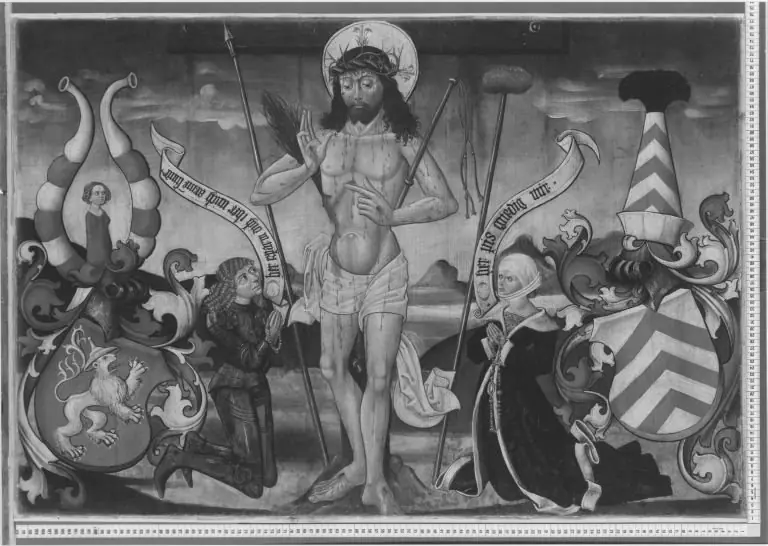 Epitaphe of Blasius von Laimberg (?-?) and his wife Sophie von Röhlingen (?-?)
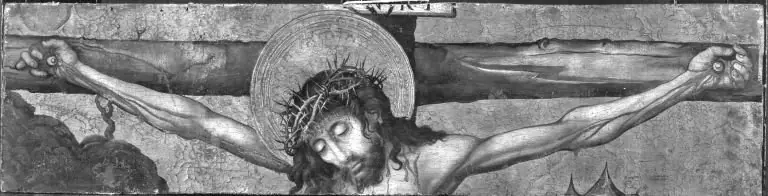 Fragment einer Kreuzigung Christi
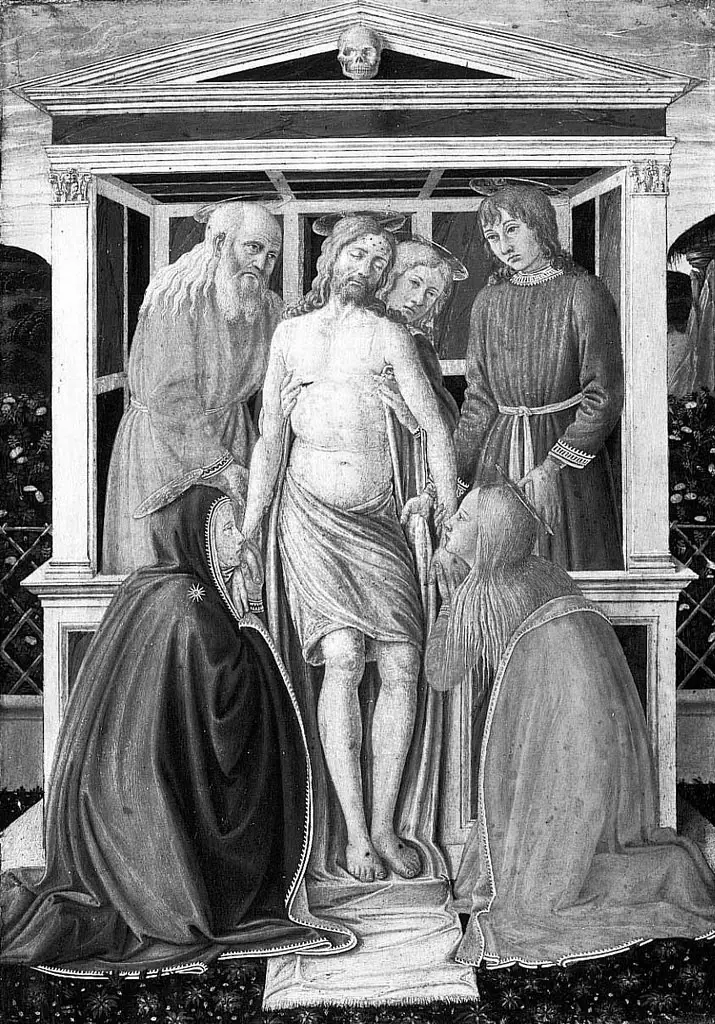 The Domination of Christ
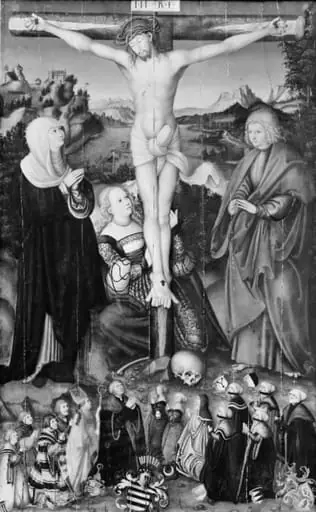 The Crucifixion
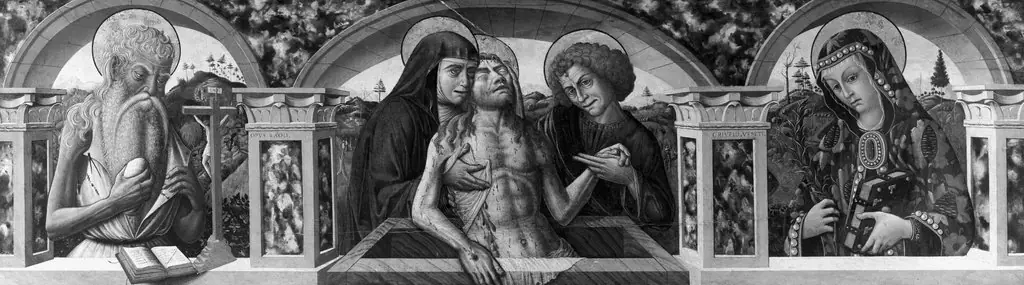 Christ in the grave with saints
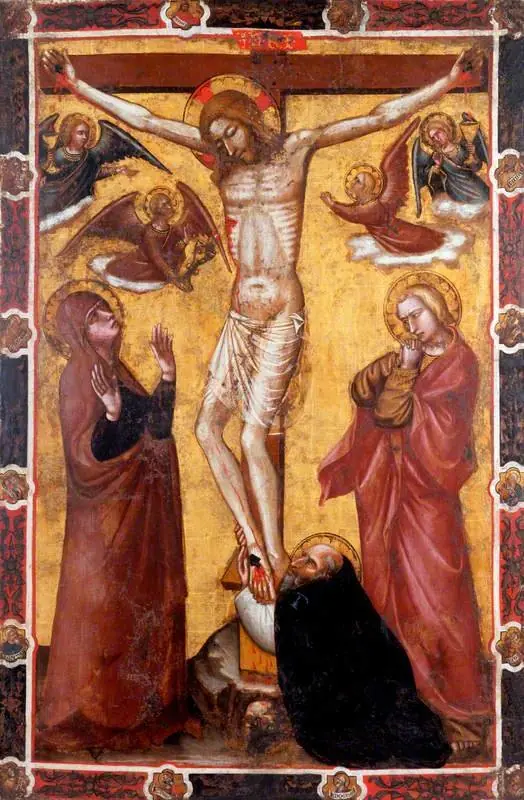 The Crucifixion with the Virgin and Saint John; Saint Anthony Abbot at the Foot of the Cross (one side of a processional banner) (formerly attributed to Barnaba da Modena)