Artwork
Epitaphe of Blasius von Laimberg (?-?) and his wife Sophie von Röhlingen (?-?)
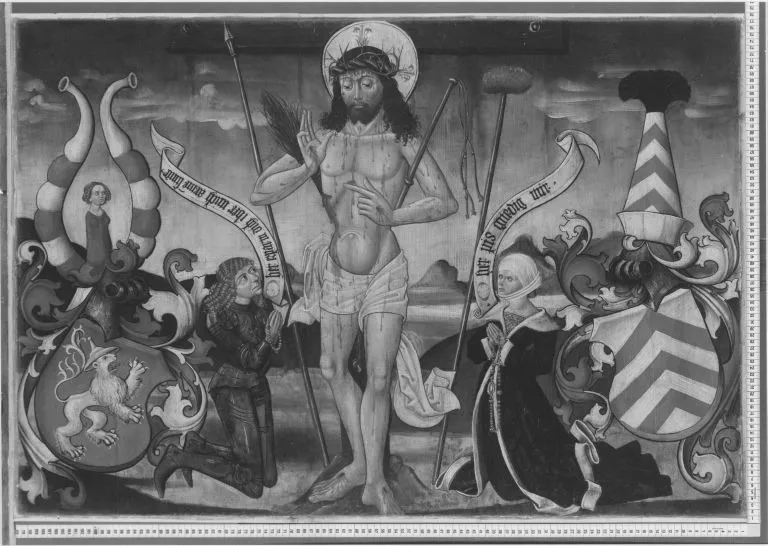
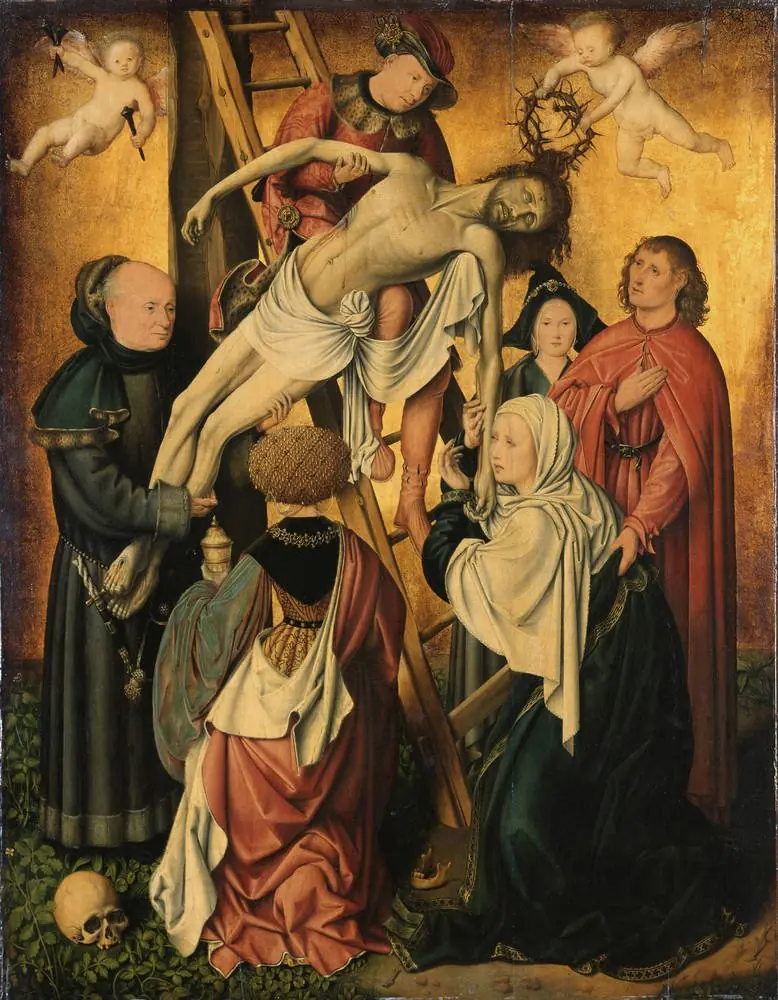
Epitaphe of Blasius von Laimberg (?-?) and his wife Sophie von Röhlingen (?-?) is an oil painting by the Northern Renaissance artist Unknown. It dates from 1501 and is held in the collection of the Bavarian State Painting Collections.
About this work
Overview
Flanking him are two kneeling figures in elaborate armor and robes, each bearing a shield with distinct heraldic devices.
The work titled *Epitaphe of Blasius von Laimberg and his wife Sophie von Röhlingen* is an oil painting that portrays a central figure, half‑clothed and crowned with thorns, grasping a tall cross. Flanking him are two kneeling figures in elaborate armor and robes, each bearing a shield with distinct heraldic devices. The composition is set against a turbulent sky populated by small, ethereal forms.
Subject & Meaning
The central, bound figure evokes the suffering of Christ, suggested by the crown of thorns and the cross he holds. The two attendants, likely representing the deceased noble couple, are positioned as mourners or protectors, their shields—one displaying a lion, the other striped patterns with a sword—signifying familial heraldry and status. The overall scene functions as a funerary tribute, combining religious iconography with personal commemoration.
Technique & Style
Executed in oil on canvas, the painting employs strong contrasts of light and dark, a chiaroscuro effect that heightens the dramatic tension between the illuminated central figure and the shadowed surroundings. The rendering of the stormy sky and the delicate, floating figures in the background demonstrates a careful handling of atmospheric perspective, while the detailed armor and textiles reflect a meticulous approach to material texture.
History & Provenance
The work is identified as an epitaph for Blasius von Laimberg and his wife Sophie von Röhlingen, though exact dates of creation and the artist remain undocumented. Its provenance traces to the family’s memorial context, likely commissioned for a burial site or chapel associated with the von Laimberg lineage, and it has since entered a museum collection dedicated to early modern funerary art.
Artist & collection

 Domestic Scene
 Giacomo and Cardinal Marco, investing Andrea, Abbot of San Zeno, with his Benefice
 The Nymph of Fontainebleau
 Portrait of a Woman
 Madonna and Child with Saints in the Enclosed Garden
 Venus and Minerva
 Family Group of Four on Sofa
 Wall painting from Room H of the Villa of P. Fannius Synistor at Boscoreale
 The Crucifixion
 Teile eines Altares: Martyrium des hl. Sebastian
 Christ on the cross
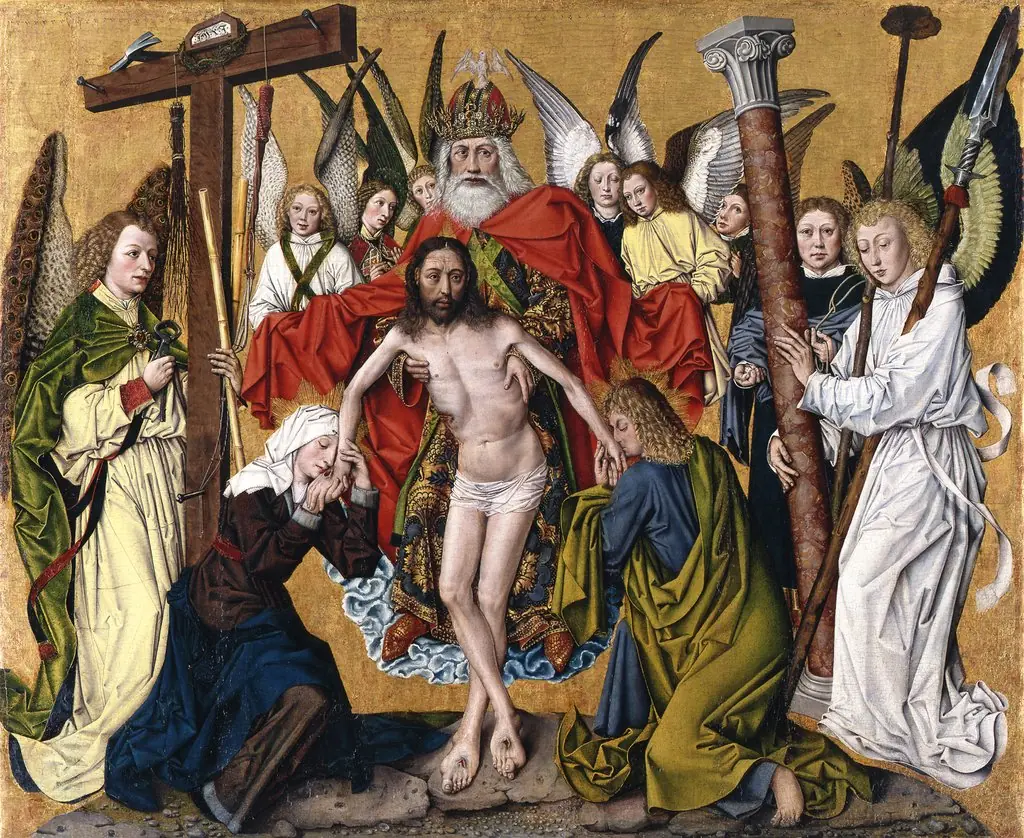 The Throne of Mercy with the Virgin, St. John, and Angels with the Arma Christi
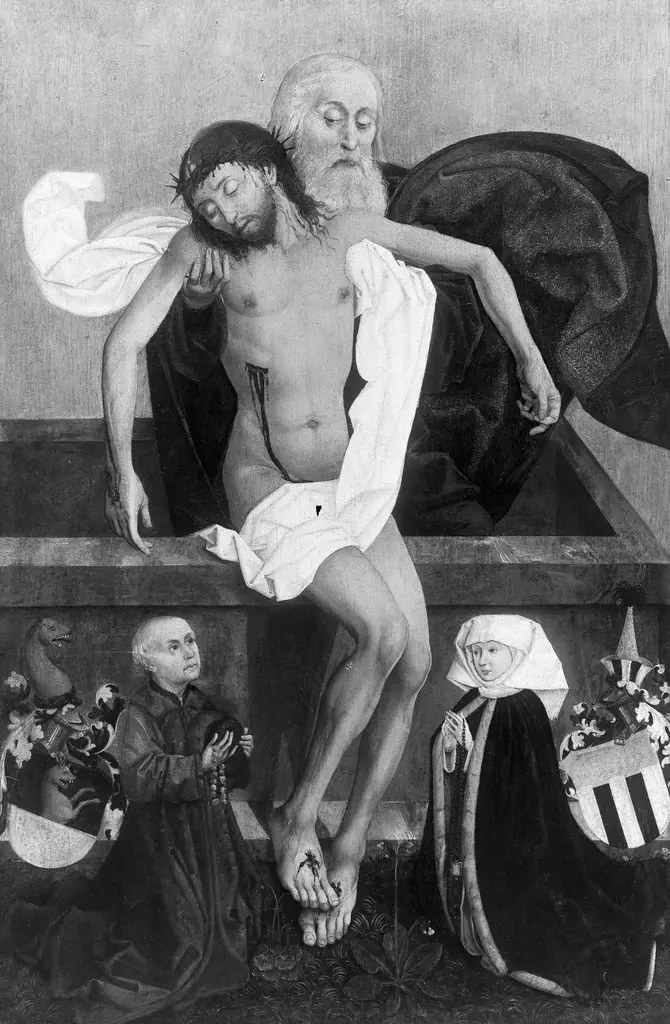 God Father with the dead Christ (mercy seat) and two donors
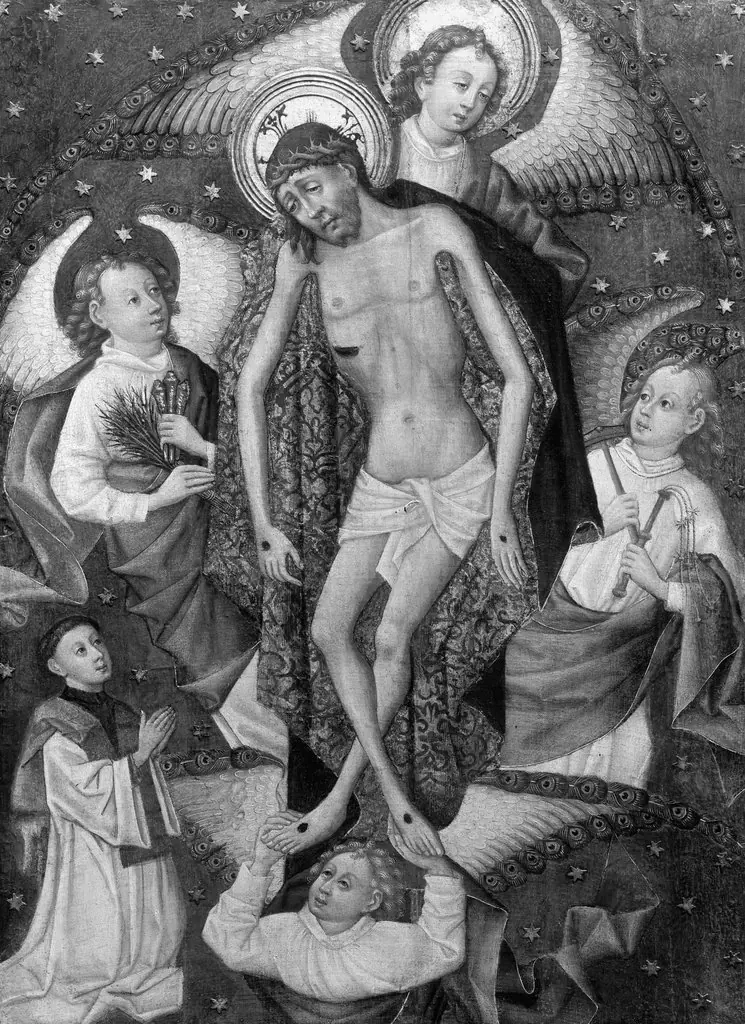 The dead Christ raised by four angels with a donor figure
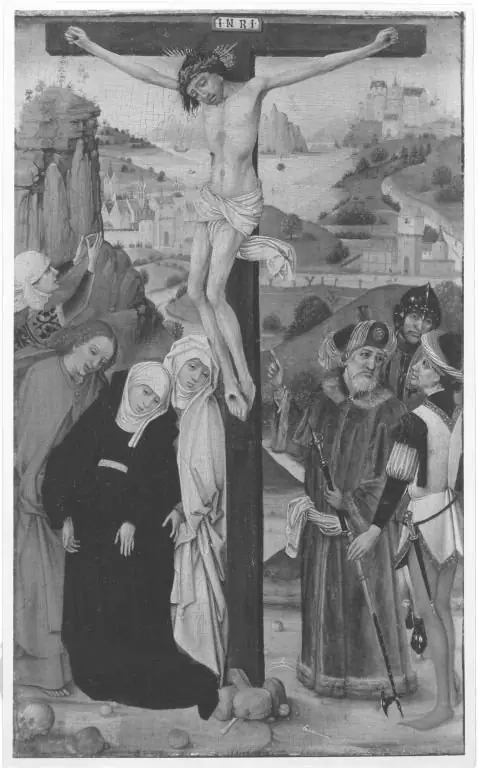 Christ on the cross
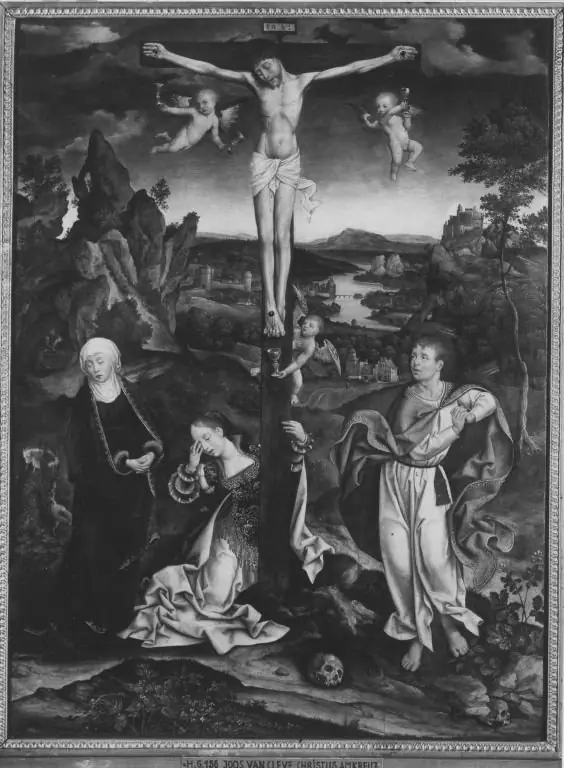 Christ on the Cross
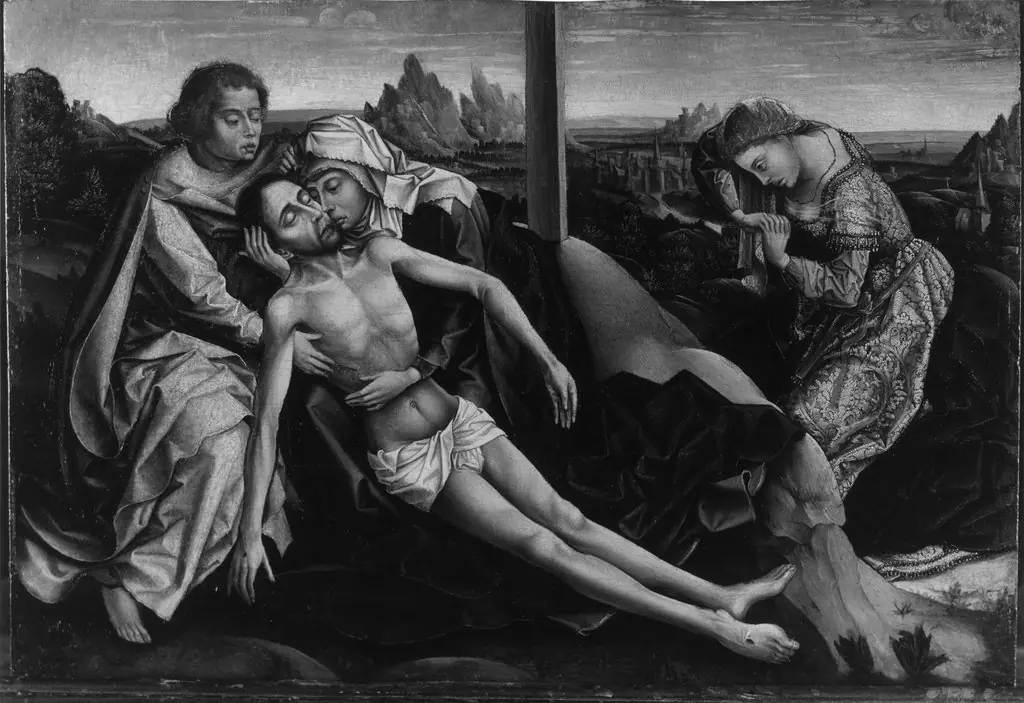 Pietà
Pietà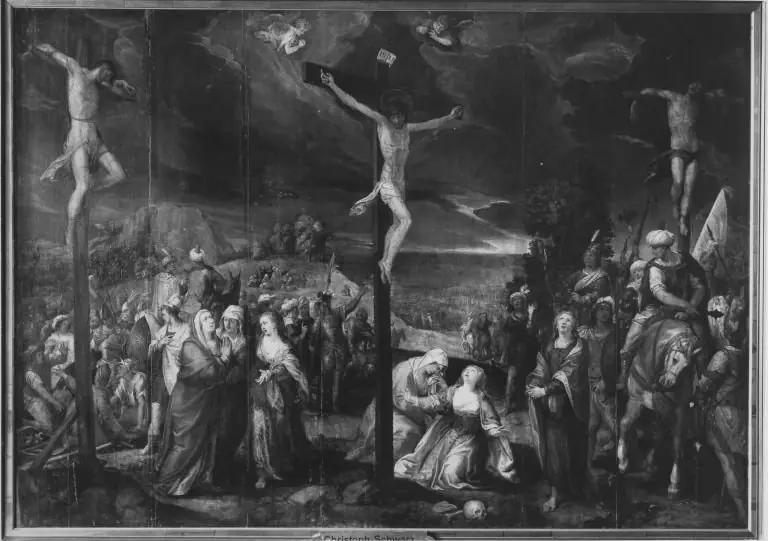 Christus am Kreuz
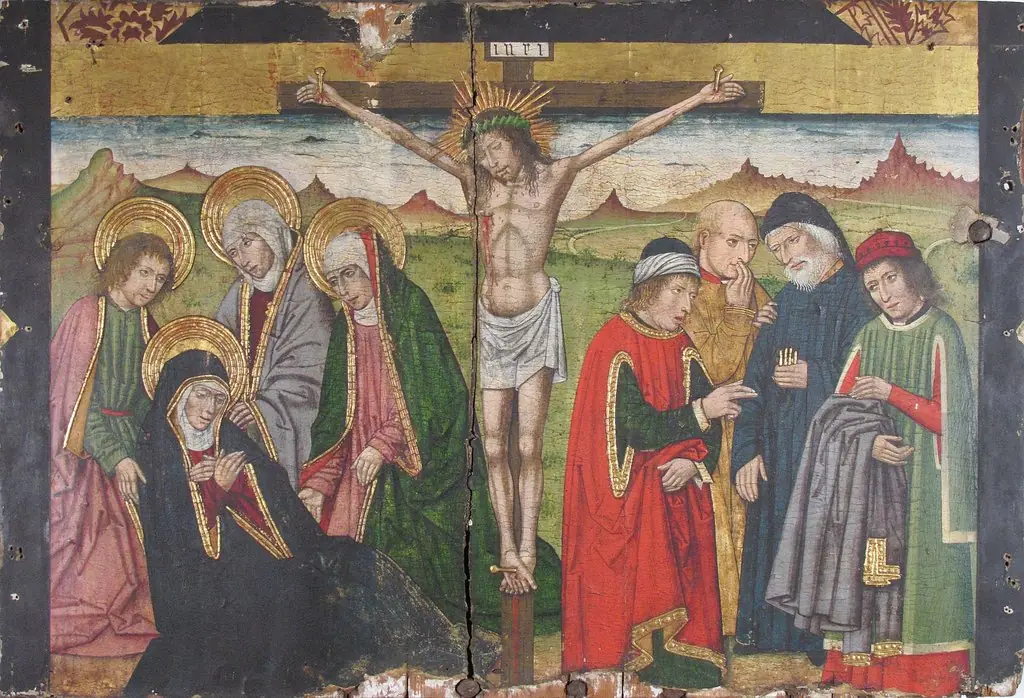 Panel with The Crucifixion from Retable
 Kreuzabnahme