Artwork
Ceiling panel with an eagle between coats of arms of the Caldes family and plant motifs
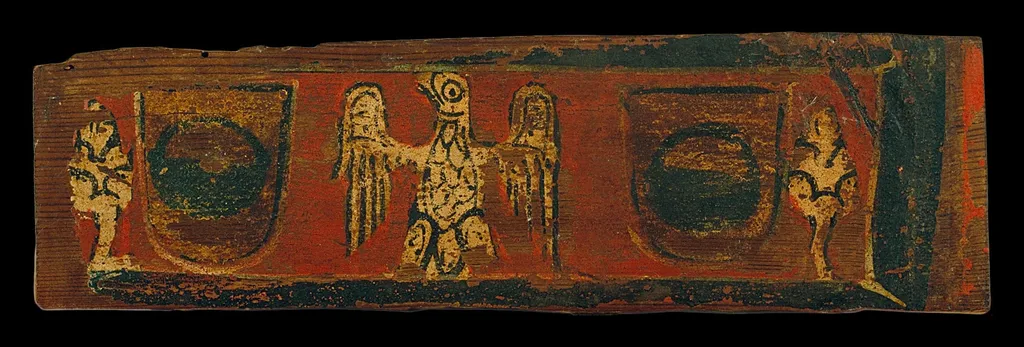
Ceiling panel with an eagle between coats of arms of the Caldes family and plant motifs is an unspecified painting by Unknown. It is held in the collection of the Museu Nacional d'Art de Catalunya. This ceiling panel is a decorative painting centered on a soaring eagle, flanked by two heraldic shields belonging to the Caldes family.
About this work
Overview
This ceiling panel is a decorative painting centered on a soaring eagle, flanked by two heraldic shields belonging to the Caldes family.
This ceiling panel is a decorative painting centered on a soaring eagle, flanked by two heraldic shields belonging to the Caldes family. The background is a rich, uniform red, enhancing the contrast of the eagle’s form and the detailed emblems. Plant-like ornaments frame the composition, integrating natural elements with noble symbolism. The work was designed for architectural integration, likely in a domestic or civic space where lineage and power were visually asserted.
Subject & Meaning
The eagle, a traditional emblem of authority and vigilance, dominates the center, symbolizing the family’s status and reach. The two coats of arms on either side represent familial lineage and territorial claims, while the surrounding plant motifs—likely stylized vines or leaves—suggest growth, continuity, and harmony with nature. Together, the imagery conveys a message of enduring legacy, blending heraldic tradition with ornamental elegance.
Technique & Style
The panel employs flat, bold color fields with minimal shading, typical of decorative ceiling art meant to be viewed from below. The eagle’s wings are rendered with sharp, angular lines, emphasizing movement, while the coats of arms feature fine linear detailing to distinguish heraldic elements. The deep red ground unifies the composition, allowing the gold and white heraldic symbols to stand out with clarity and dignity.
History & Provenance
Created for the Caldes family, likely during the late medieval or early Renaissance period, the panel was originally installed in a residence or public building associated with the family. Its survival suggests it was preserved through generations, possibly removed from its original setting during renovations or political changes. No documented records of its early ownership or location are widely available.
Context
Ceiling panels with heraldic imagery were common in elite European interiors of the period, serving both aesthetic and political functions. The integration of flora with coats of arms reflects a broader trend of blending natural ornamentation with noble symbolism. This piece aligns with regional decorative practices in areas where family identity was prominently displayed through architectural art.
Legacy
Though not widely known outside specialized collections, the panel remains a tangible example of how noble families used interior decoration to communicate power and heritage. Its preservation offers insight into the visual language of lineage in pre-modern domestic spaces, contributing to the study of regional decorative arts and heraldic iconography.
Artist & collection

 Domestic Scene
 Giacomo and Cardinal Marco, investing Andrea, Abbot of San Zeno, with his Benefice
 The Nymph of Fontainebleau
 Portrait of a Woman
 Madonna and Child with Saints in the Enclosed Garden
 Venus and Minerva
 Family Group of Four on Sofa
 Wall painting from Room H of the Villa of P. Fannius Synistor at Boscoreale
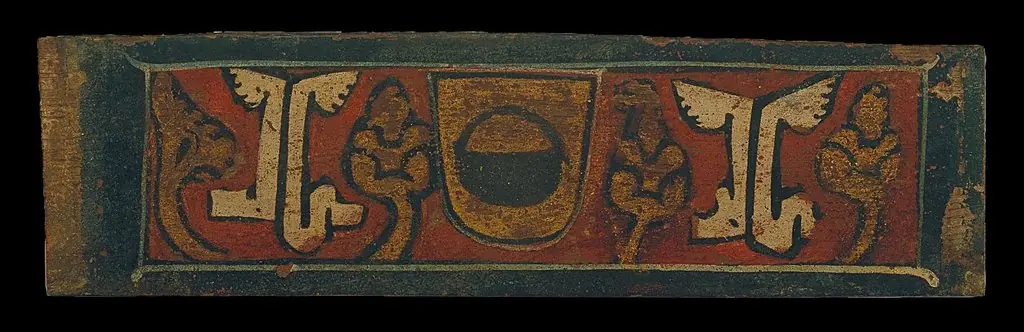 Small coffered ceiling panel with the coat of arms of the Caldes family
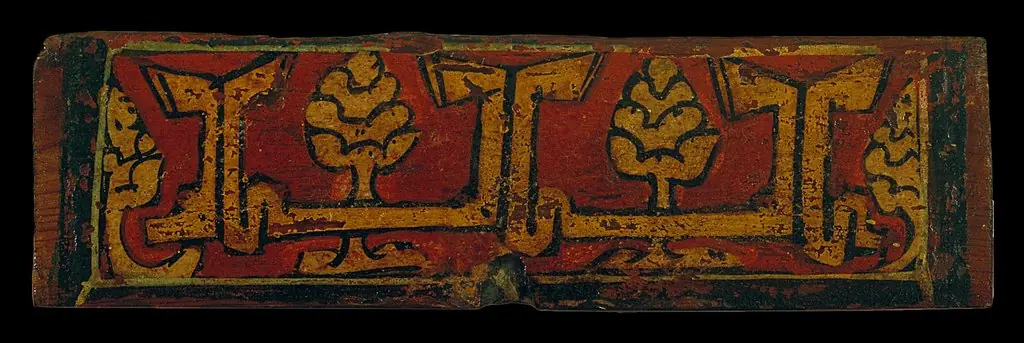 Small coffered ceiling panel with plant motifs
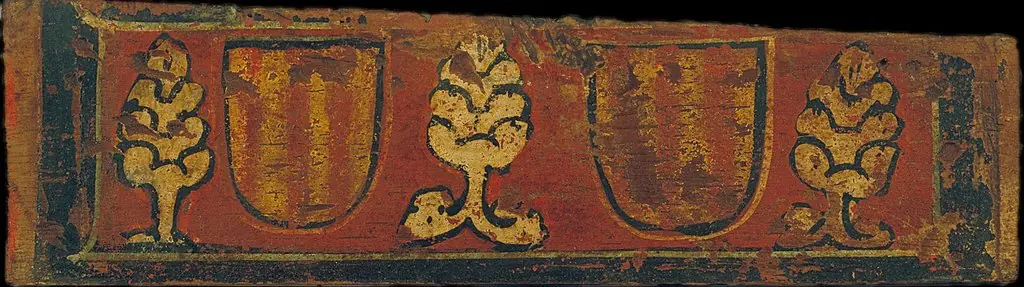 Small coffered ceiling panel with striped coats of arms of the House of Barcelona and plant motifs
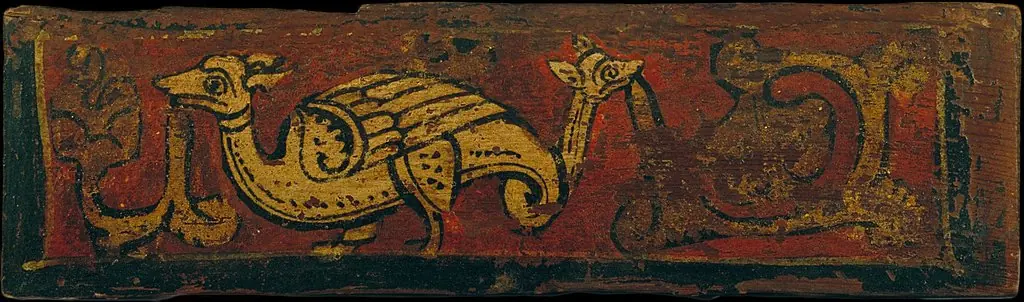 Small coffered ceiling panel with fantastic animal devouring plant motifs
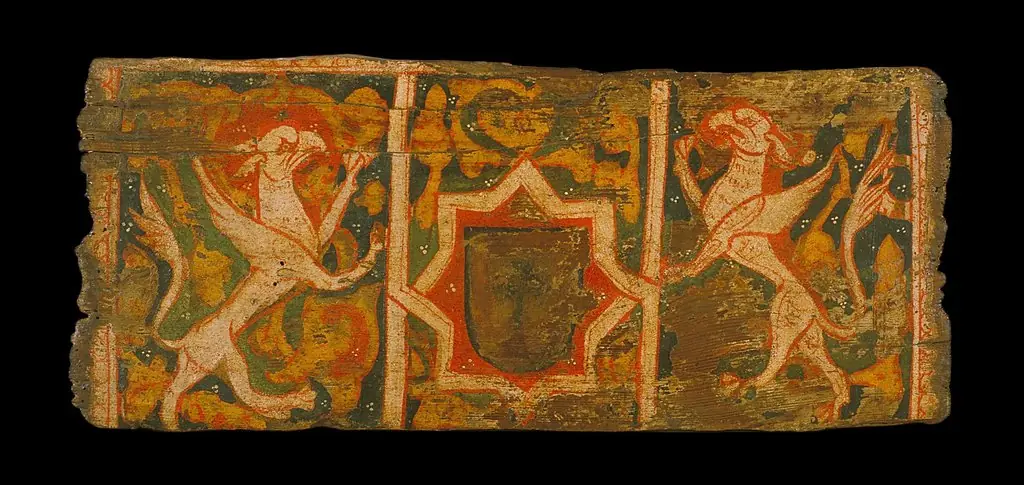 Coffered ceiling panel with coat of arms and griffins rampant
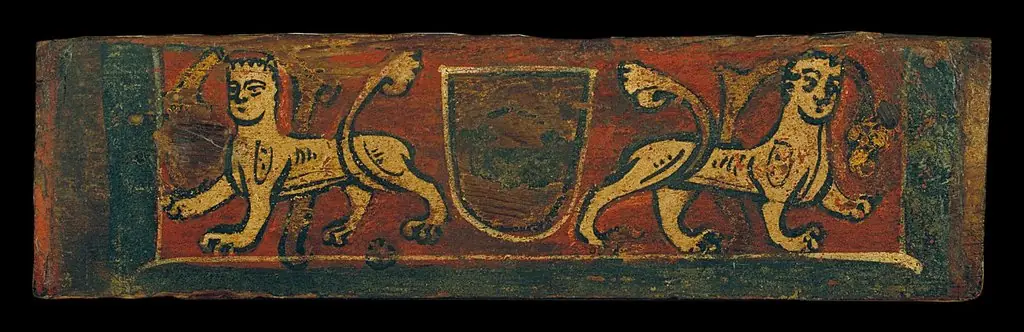 Small coffered ceiling panel with coat of arms and manticores
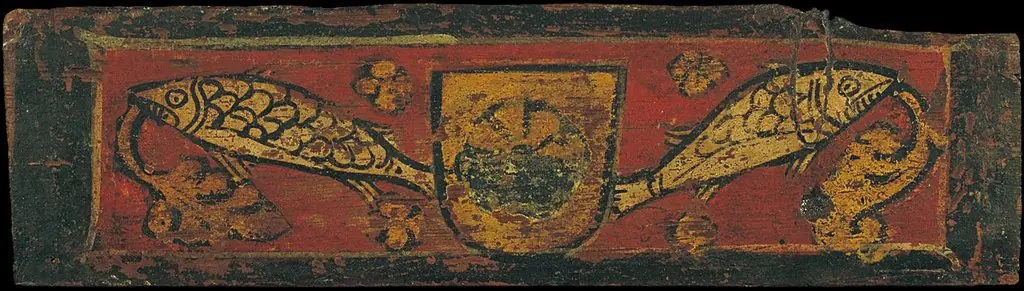 Small coffered ceiling panel with coat of arms and fishes devouring plant motifs
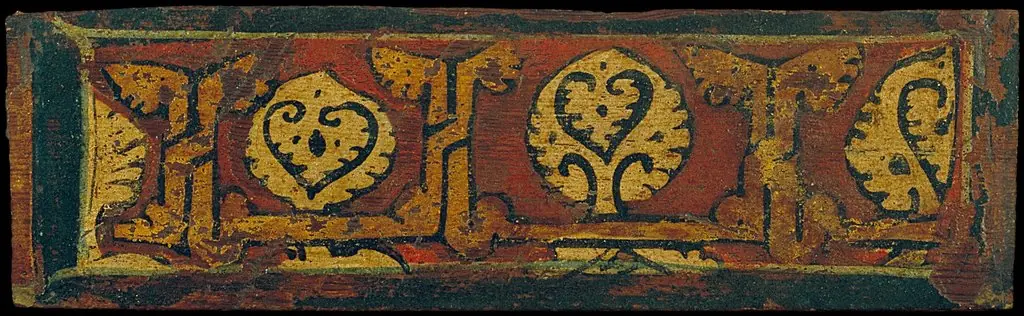 Small coffered ceiling panel with plant motifs
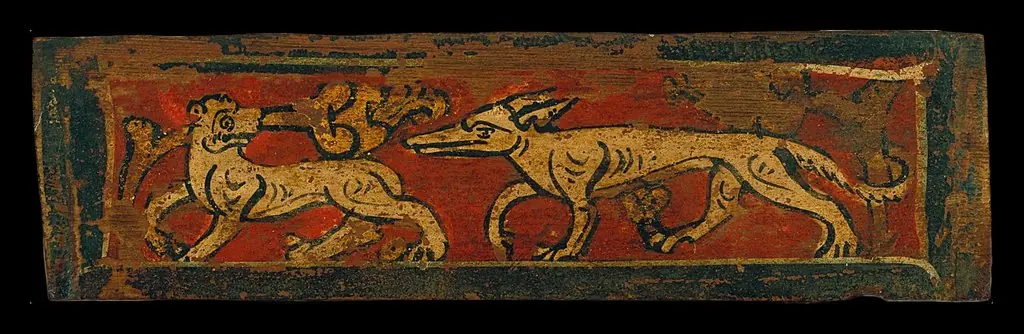 Small coffered ceiling panel with four-legged animals and plant motifs
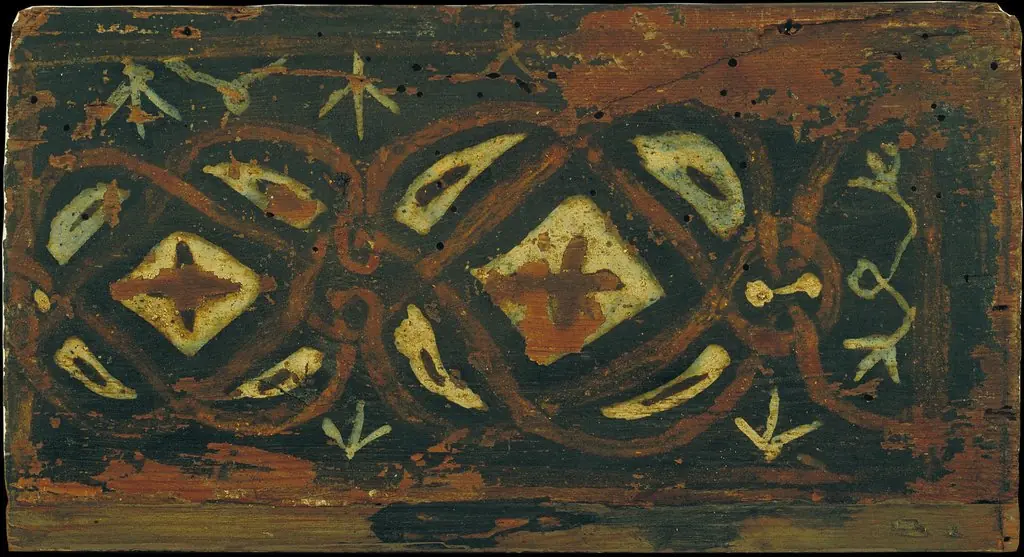 Small coffered ceiling panel with geometric motifs
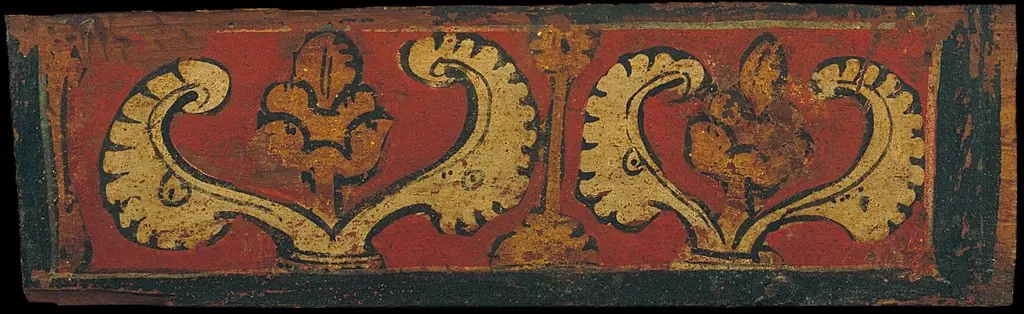 Small coffered ceiling panel with plant motifs
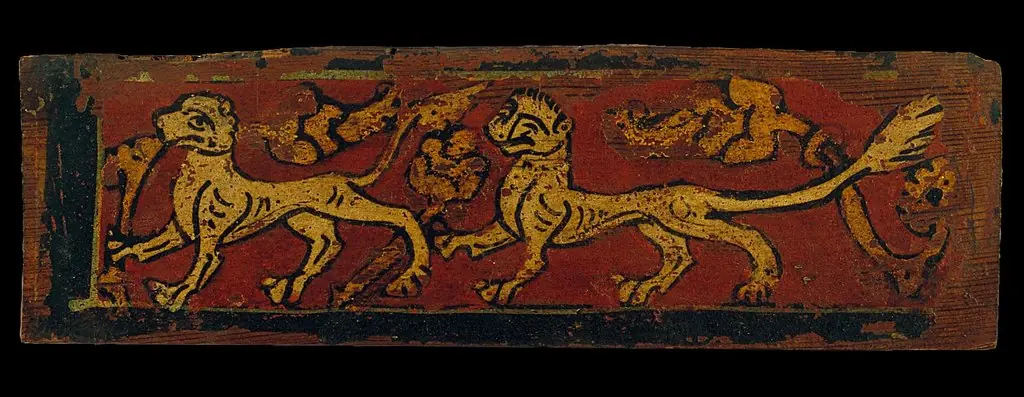 Small coffered ceiling panel with fantastic animals