Artwork
The burning of the English fleet off Chatham, 20 June 1667
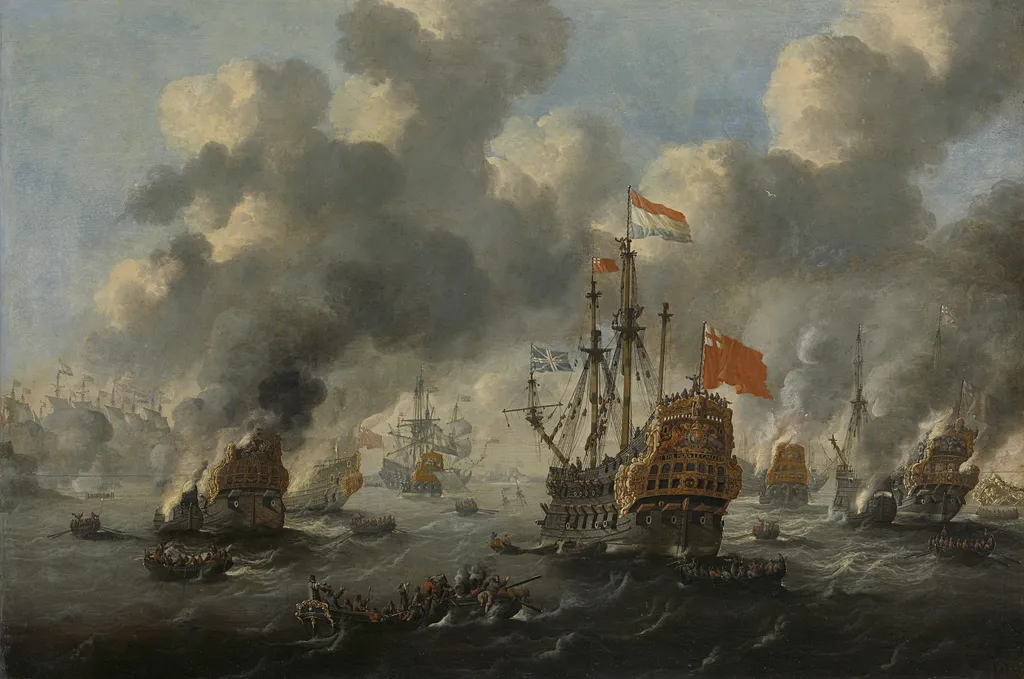
The burning of the English fleet off Chatham, 20 June 1667 is an oil painting by the Dutch Golden Age artist Unknown. It dates from 1670 and is held in the collection of the Rijksmuseum.
About this work
Overview
This oil painting depicts a dramatic maritime disaster: the 1667 burning of the English fleet off Chatham, with multiple ships engulfed in flames and smoke, set against a contrasting backdrop of dark shadows and fiery hues.
Subject & Meaning
The central ship, identifiable by its crown and flags, dominates the scene, surrounded by smaller, also burning, vessels. A small boat in the foreground shows people fleeing, emphasizing the human scale of the catastrophe.
Technique & Style
The artist employs chiaroscuro to create depth and heighten drama, juxtaposing dark shadows with the vibrant, fiery colors of the burning fleet, showcasing a high level of artistic skill and craftsmanship.
History & Provenance
The painting documents a historical event: the Dutch raid on the Medway during the Second Anglo-Dutch War, specifically the burning of the English fleet on June 20, 1667. Provenance details are not provided.
Context
Created in the aftermath of a significant naval defeat for England, the painting may serve as a record of the event, potentially commissioned to commemorate the Dutch victory or as a reflection on the English naval disaster.
Legacy
The painting's legacy is not explicitly outlined in the provided information, though its detailed depiction of a pivotal historical event suggests it may be valued for its historical and artistic significance within maritime or Dutch/English conflict art collections.
Artist & collection

 Domestic Scene
 Giacomo and Cardinal Marco, investing Andrea, Abbot of San Zeno, with his Benefice
 The Nymph of Fontainebleau
 Portrait of a Woman
 Madonna and Child with Saints in the Enclosed Garden
 Venus and Minerva
 Family Group of Four on Sofa
 Wall painting from Room H of the Villa of P. Fannius Synistor at Boscoreale
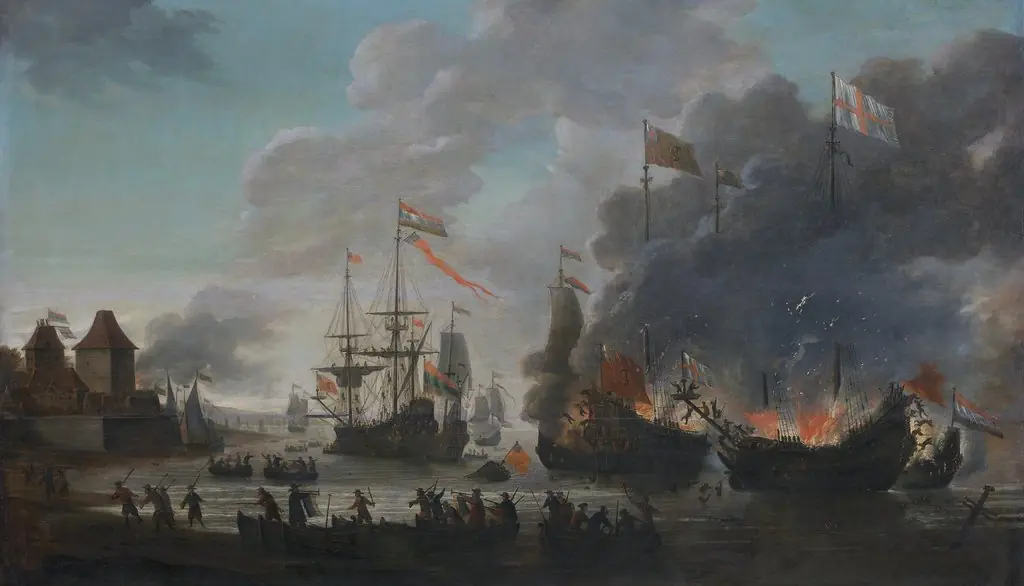 The Dutch Burn English Ships during the Expedition to Chatham, 20 June 1667 (Raid on the Medway)
 Untitled
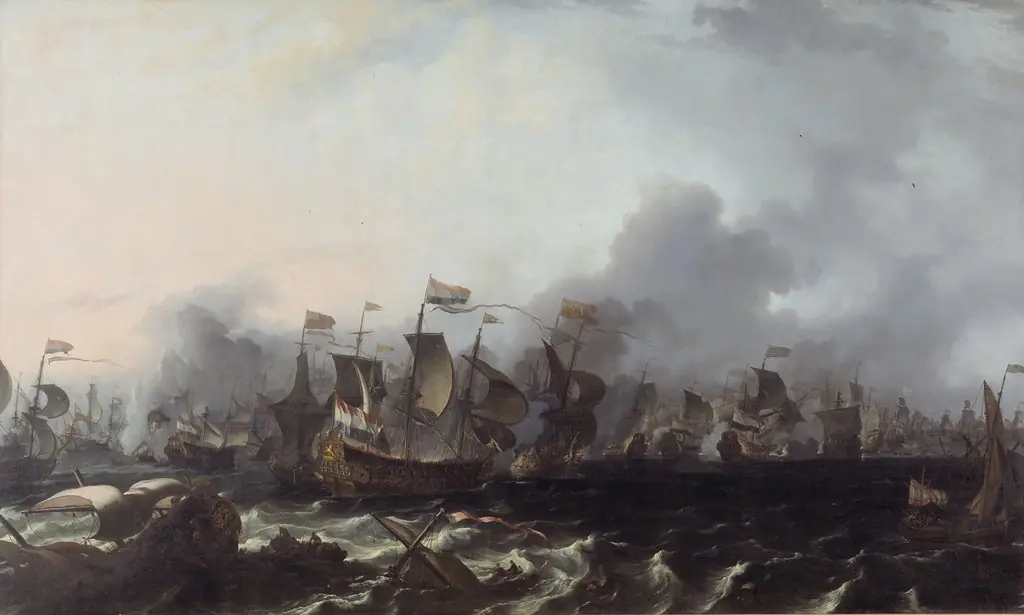 The Four Day's Battle, 11-14 June 1666
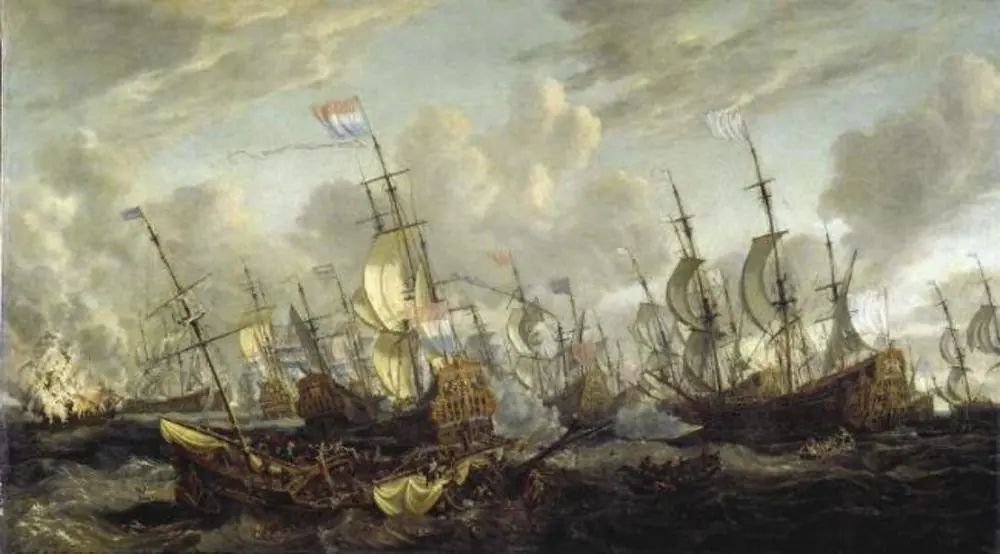 The Four Days' Battle, 1-4 June 1666
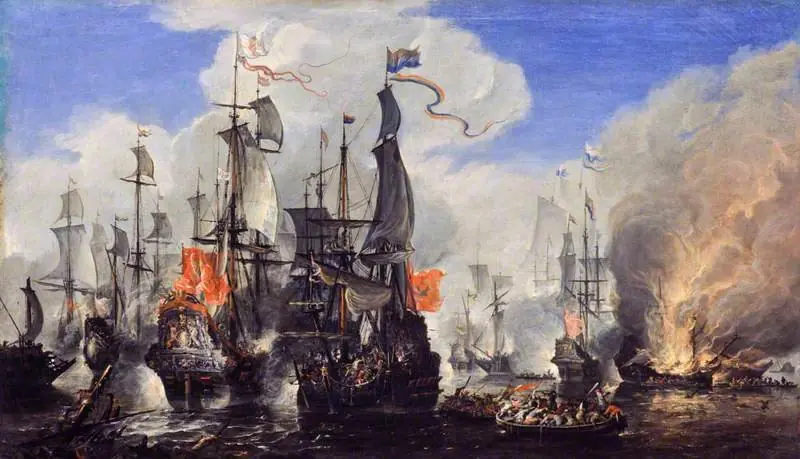 An Engagement between the English and the Dutch Fleets
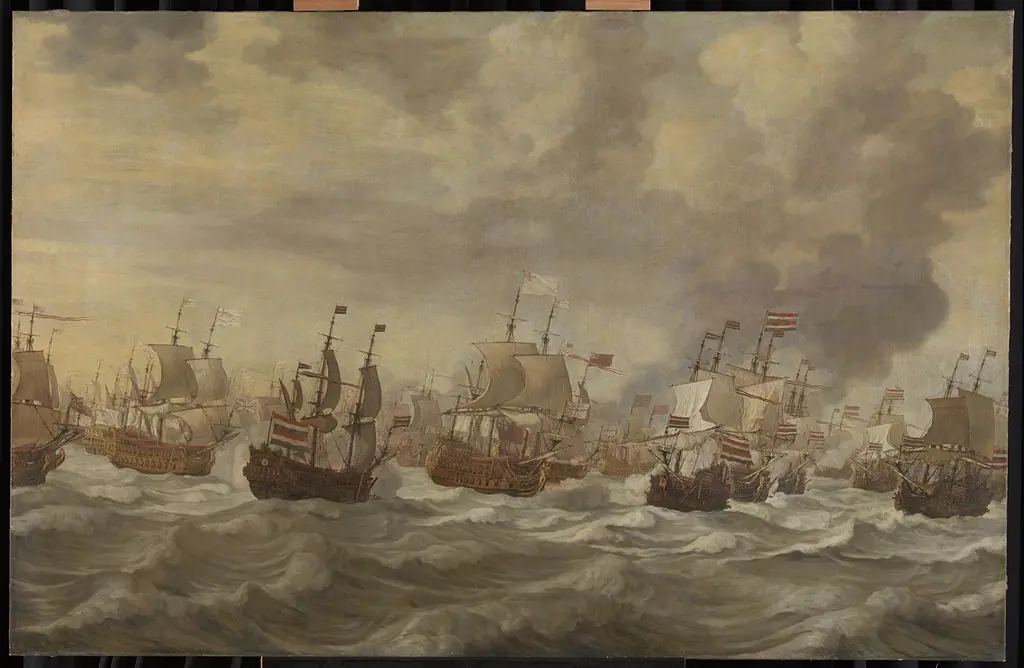 Episode from the Four Day Battle at Sea, 11-14 June 1666, in the second Anglo-Dutch War (1665-67)
 The Four Day's Battle, 11-14 June 1666
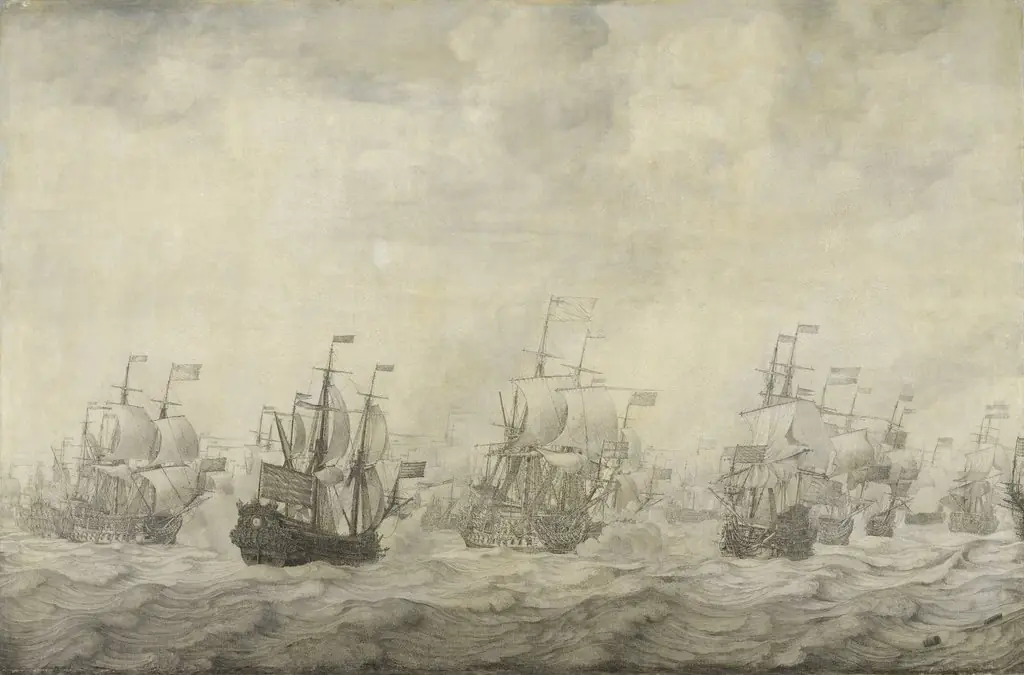 Episode from the Four Days Battle at Sea, 11-14 June 1666, in the Second Anglo-Dutch War (1665-67)
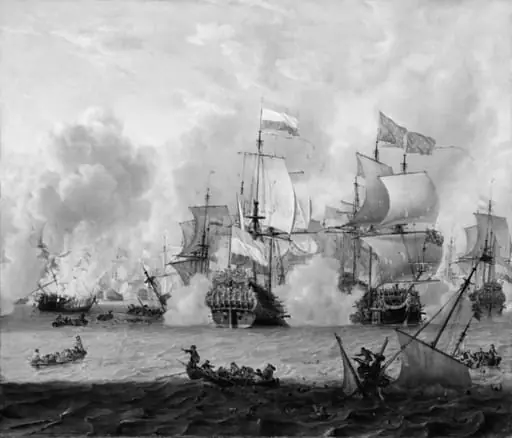 Encounter between the English and the Dutch Fleets at La Hogue 29th May 1692
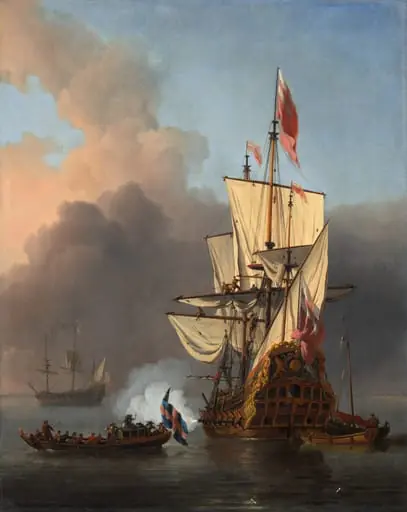 An English Warship Firing a Salute
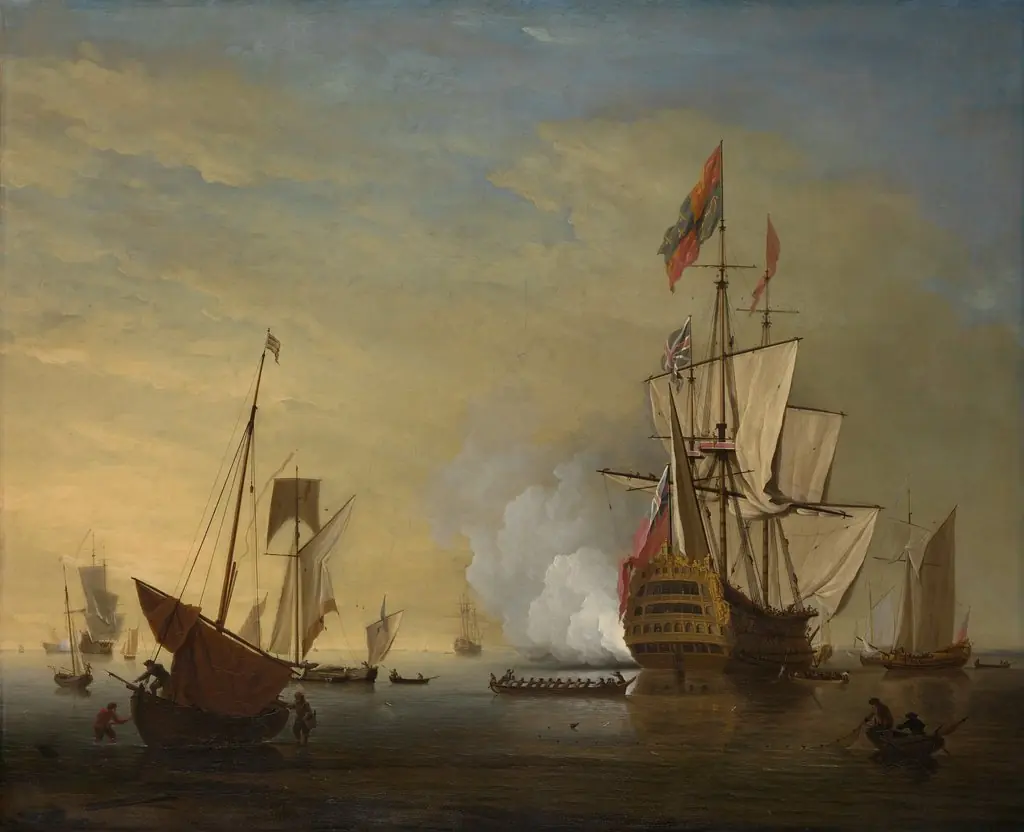 Harbor Scene: An English Ship with Sails Loosened Firing a Gun