Artwork
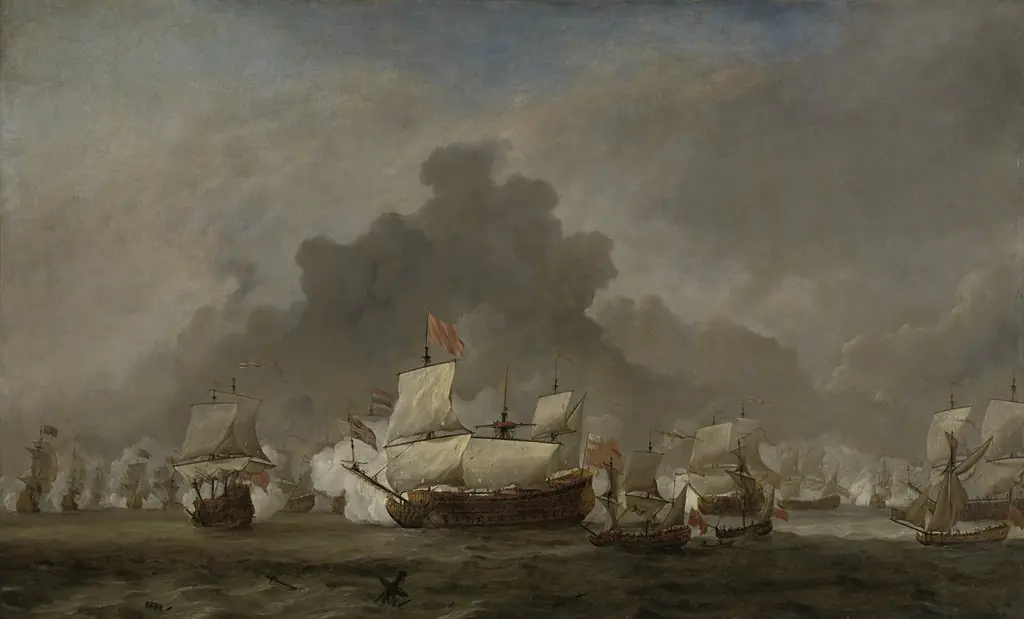
Episode from the Four Day Battle at Sea, 11-14 June 1666, in the second Anglo-Dutch War (1665-67)
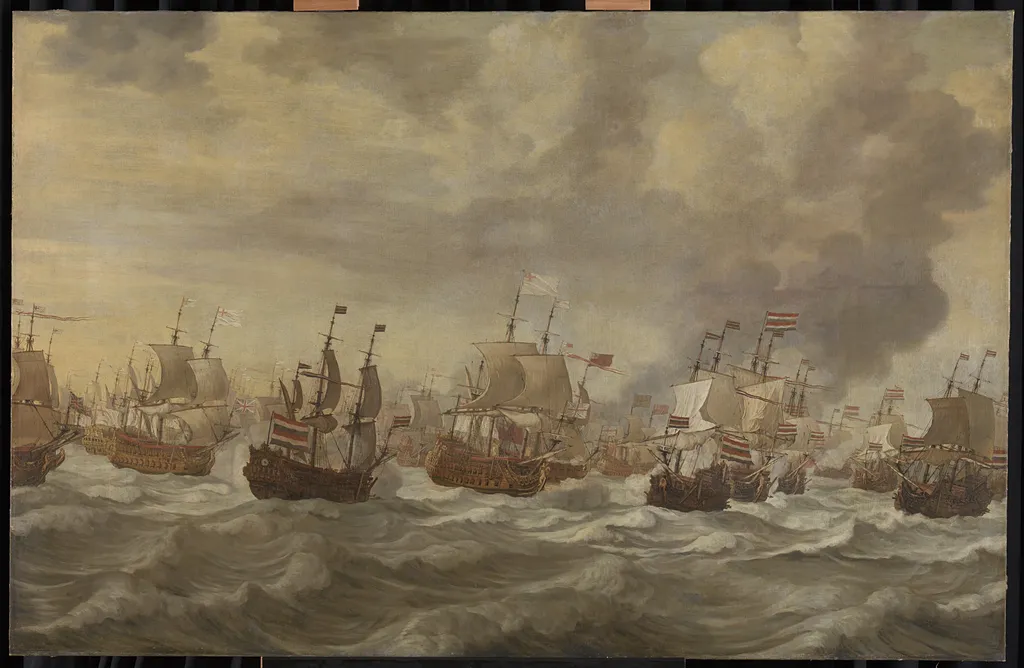
Episode from the Four Day Battle at Sea, 11-14 June 1666, in the second Anglo-Dutch War (1665-67) is an oil painting by the Dutch Golden Age artist Willem van de Velde the elder. It dates from 1690 and is held in the collection of the Rijksmuseum.
About this work
Overview
Willem van de Velde the Elder painted this oil work in 1690, depicting a segment of the Four Days’ Battle (11–14 June 1666) of the Second Anglo‑Dutch War. The canvas captures a tumultuous naval clash on the open sea, with a dense array of vessels caught in combat, smoke, and fire. It belongs to the Dutch Golden Age of seascape painting and is presently housed in the Rijksmuseum.
Subject & Meaning
The scene illustrates the chaotic intensity of 17th‑century naval warfare, showing ships of both sides locked in close‑quarter combat.
The scene illustrates the chaotic intensity of 17th‑century naval warfare, showing ships of both sides locked in close‑quarter combat. Vessels appear damaged, some ablaze, others taking on water, conveying the peril and disorder of the four‑day engagement. The composition emphasizes the vulnerability of ships against the elements and enemy fire, reflecting contemporary concerns about maritime power and national survival.
Technique & Style
Van de Velde employs meticulous draftsmanship to render rigging, hulls, and cannon placements with striking accuracy. The turbulent sea is conveyed through vigorous brushwork and a palette of muted blues and grays, while thick, overcast clouds mirror the battle’s violence. Light is used sparingly, highlighting flames and smoke, creating a dramatic contrast that enhances the sense of immediacy.
History & Provenance
Executed after the war’s conclusion, the painting served as a visual record of a pivotal Dutch victory. It entered the Rijksmuseum’s collection as part of the museum’s effort to preserve Dutch maritime heritage, joining other works by van de Velde and his contemporaries that document 17th‑century naval history.
Context
The Four Days’ Battle was one of the longest and bloodiest sea engagements of the Second Anglo‑Dutch War, involving hundreds of ships from both fleets. Van de Velde, whose father was a shipwright, specialized in accurate depictions of naval vessels, making his works valuable both as art and as historical documentation for naval architects and strategists of the era.
Artist & collection
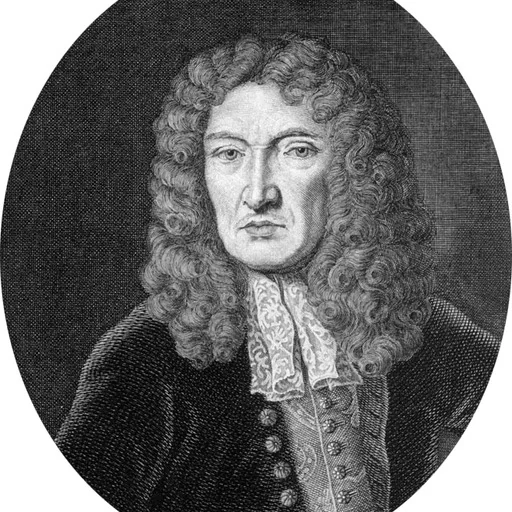
Artist
Willem van de Velde the Elder (1610/11 – 13 December 1693) was a Dutch Golden Age seascape painter, who produced many precise drawings of ships and ink paintings of fleets, but later learned to use oil paints like his son.

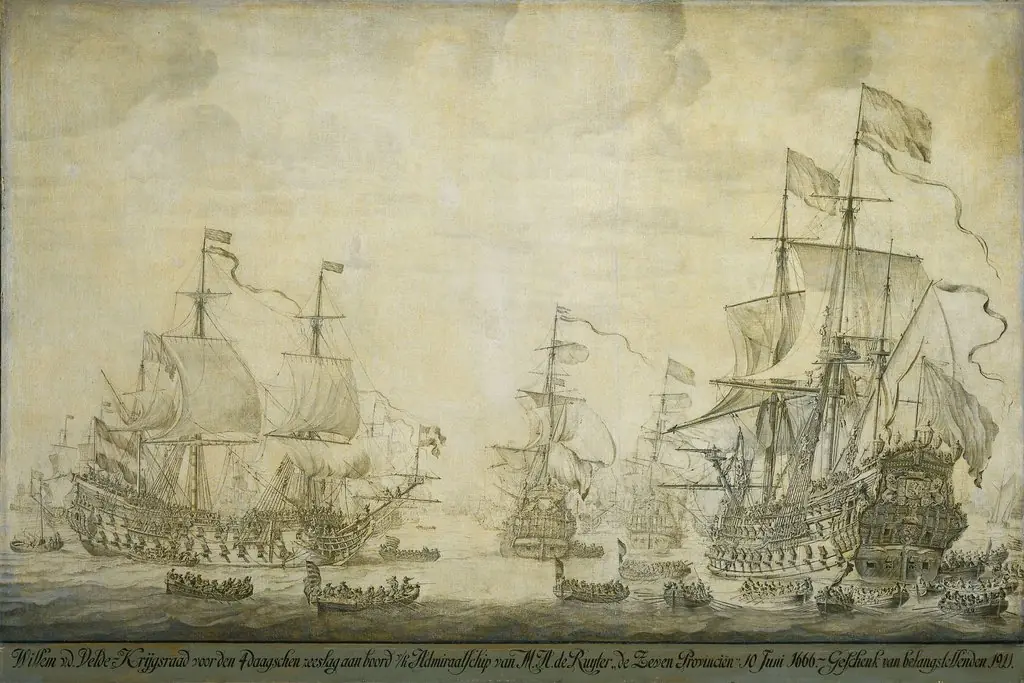 "Council of War aboard 'The Seven Provinces' the Flagship of Michiel Adriaensz de Ruyter, 10 June 1666, preceding the Four Days' Battle
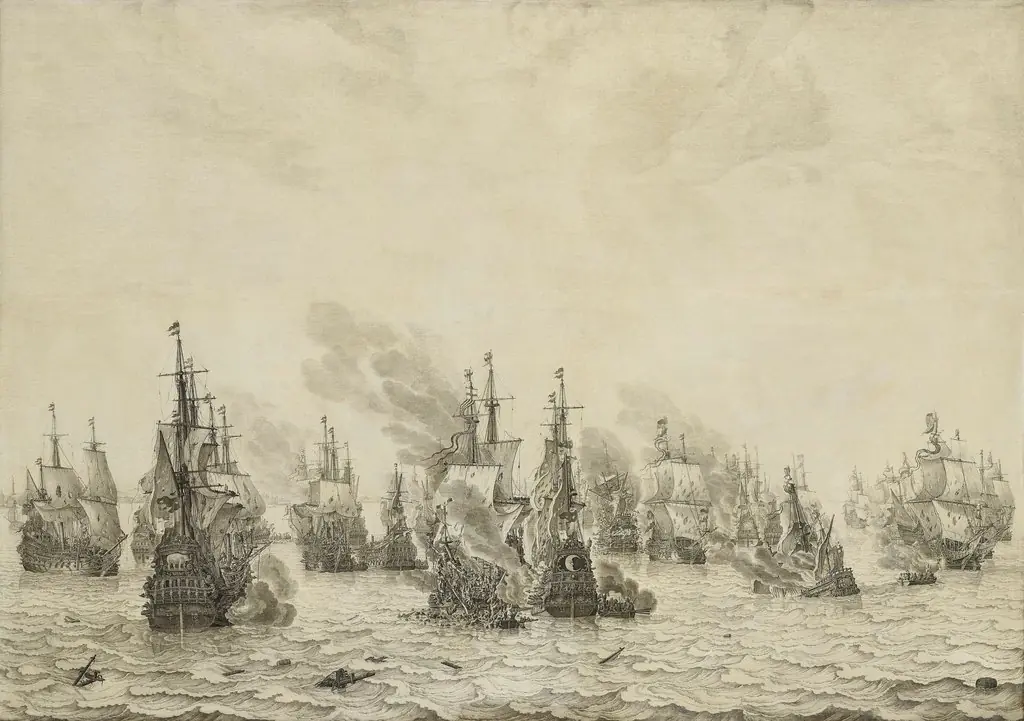 The Batlle of Livorno, 14 March 1653: episode from the First Anglo-Dutch War (1652-54)
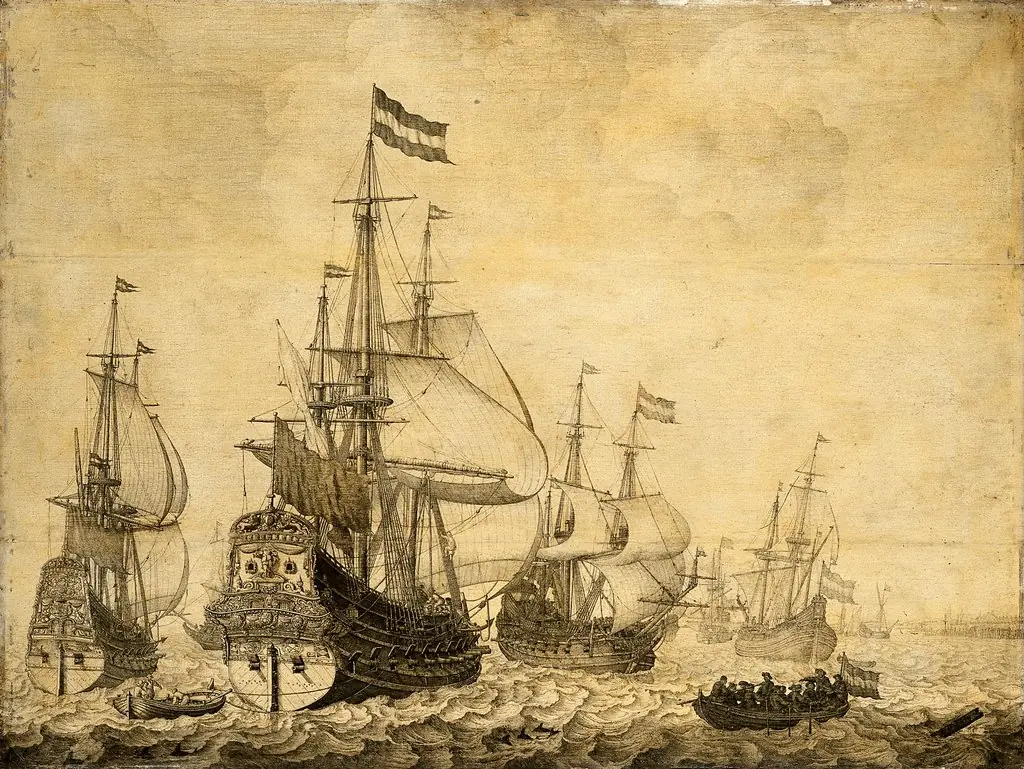 Seascape with Dutch men-of-war
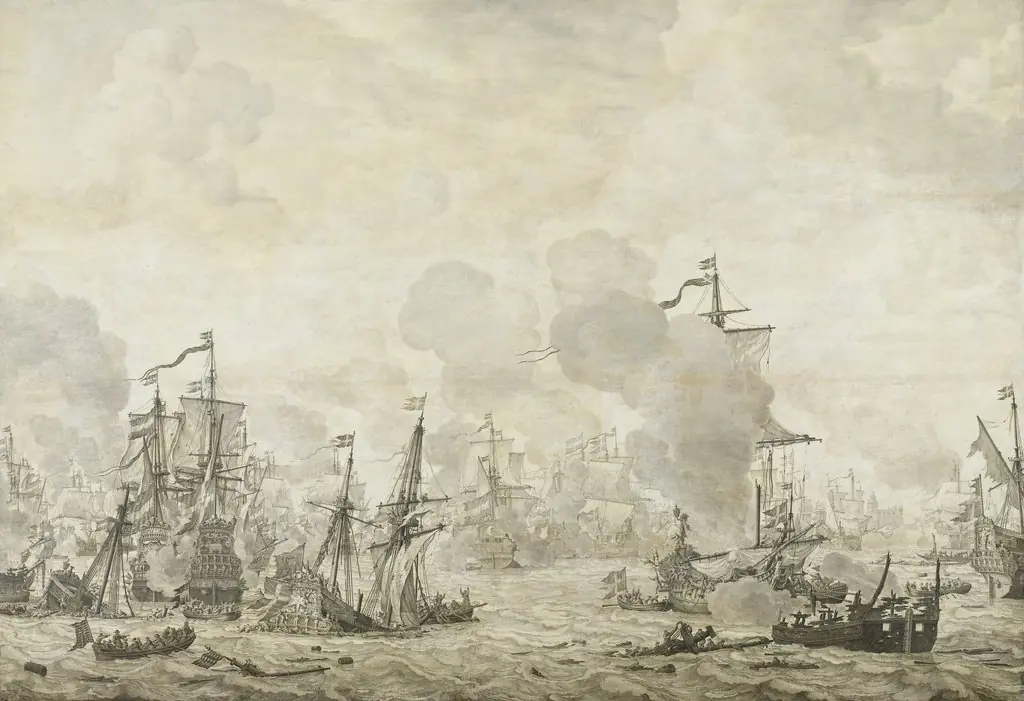 Episode from the Battle of the Sound between the Dutch and Swedish fleets, 8 November 1658
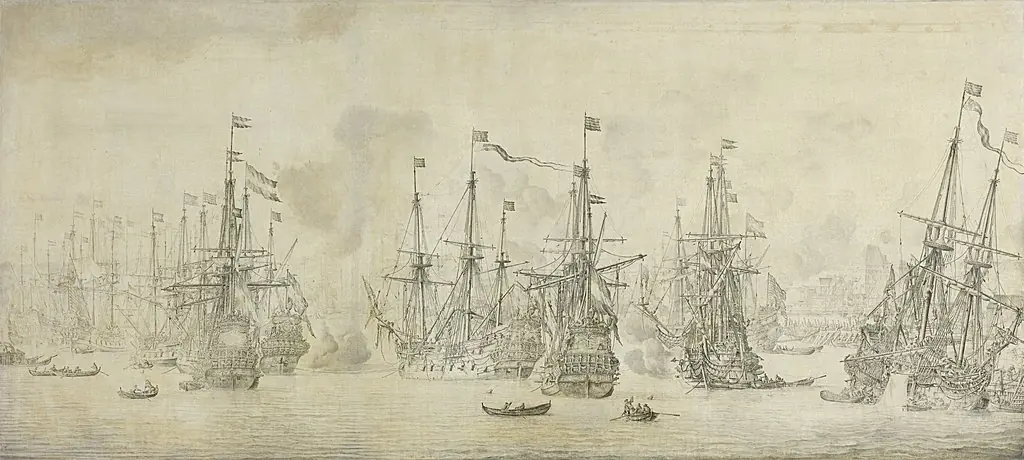 The unsuccessful English attack against the returning Dutch fleet in the harbor of Bergen, Norway, 12 August 1665: episode from the Second Anglo-Dutch War (1665-67)
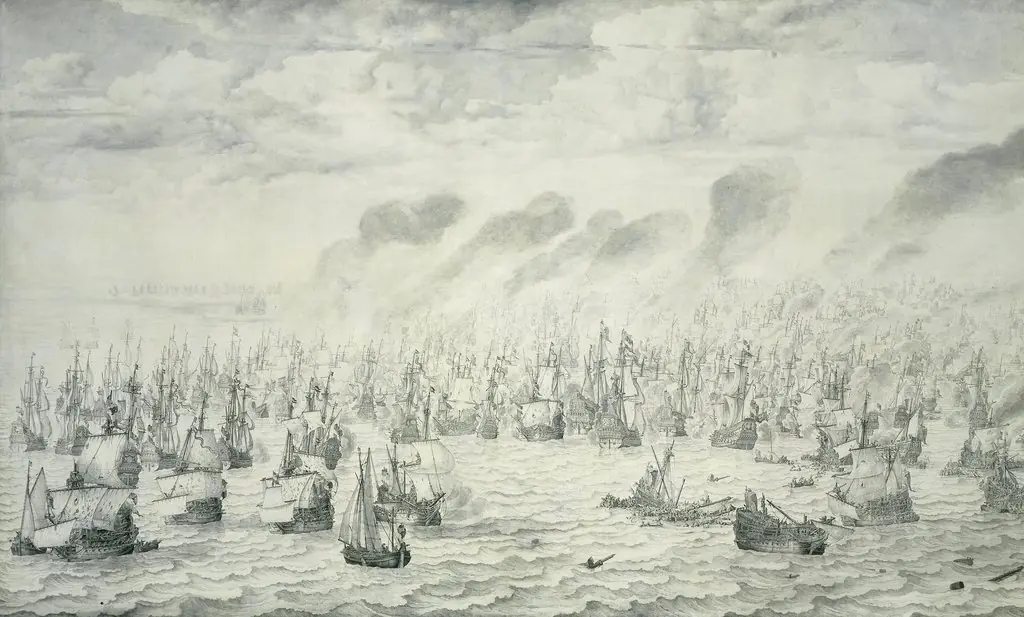 The Battle of Terheide
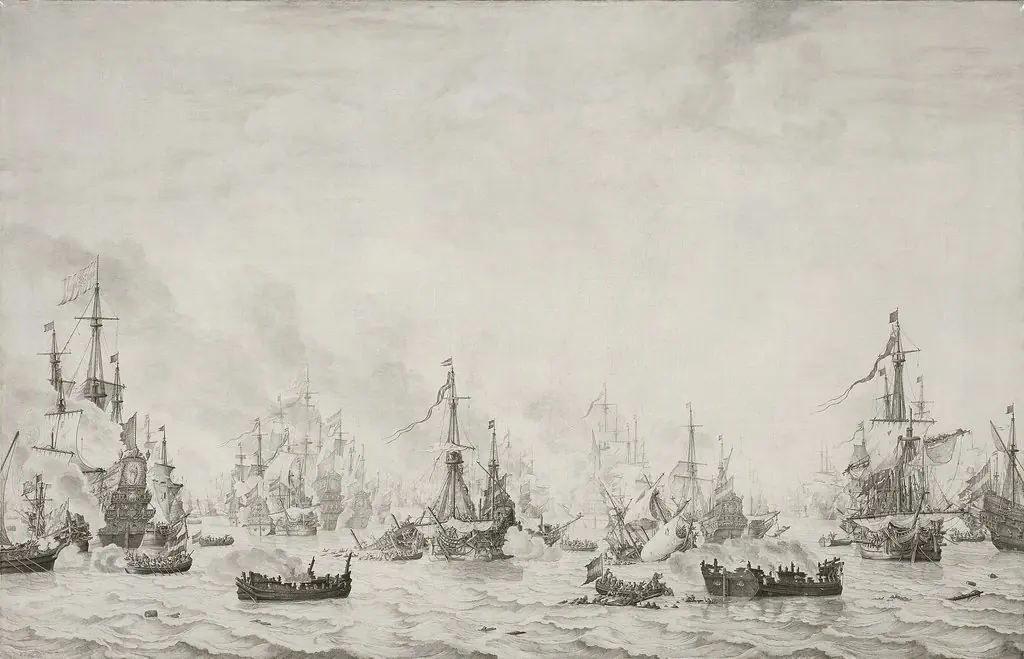 The Battle of the Downs
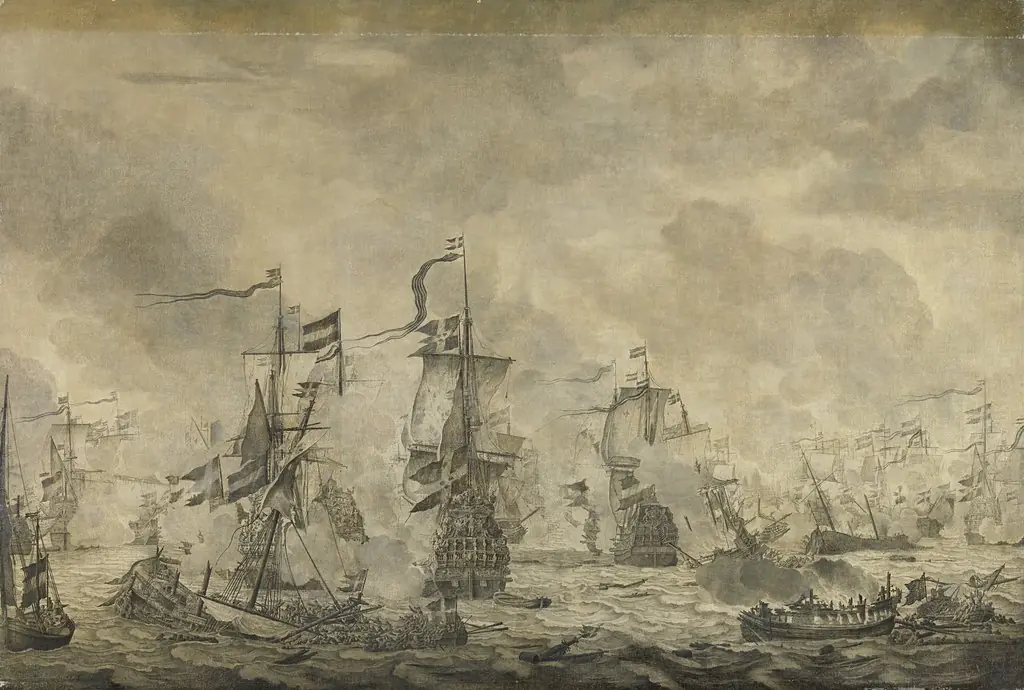 Episode from the Battle of the Sound between the Dutch and the Swedish fleets, 8 November 1658
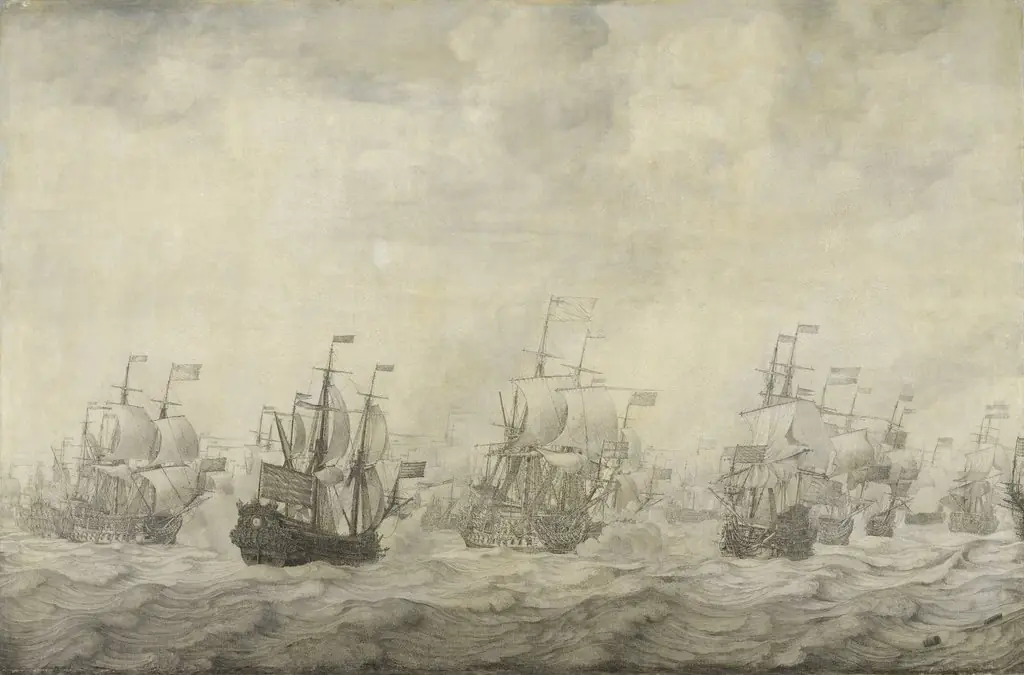 Episode from the Four Days Battle at Sea, 11-14 June 1666, in the Second Anglo-Dutch War (1665-67)
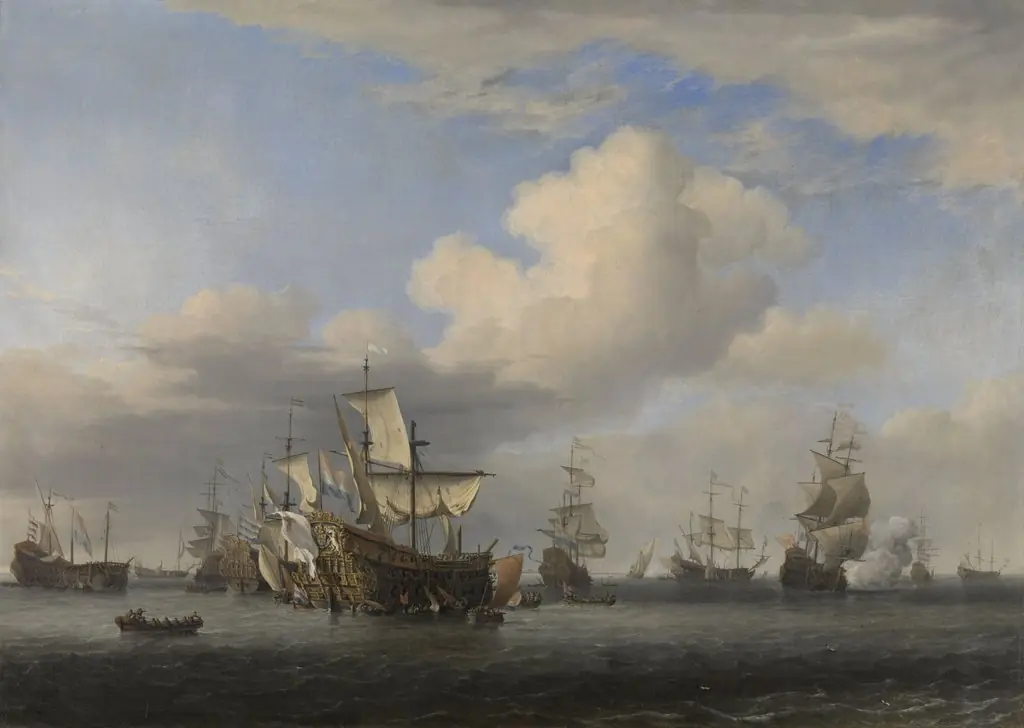 Captured English Ships after the Four Days’ Battle
 The skirmish of Michiel Adriaensz de Ruyter against the duke of York, commanding the 'Royal Prince'during the Battle of Solebay, 7 June 1672: episode from the Third Anglo-Dutch War (1672-74)