Artwork
Episode from the Four Days Battle at Sea, 11-14 June 1666, in the Second Anglo-Dutch War (1665-67)
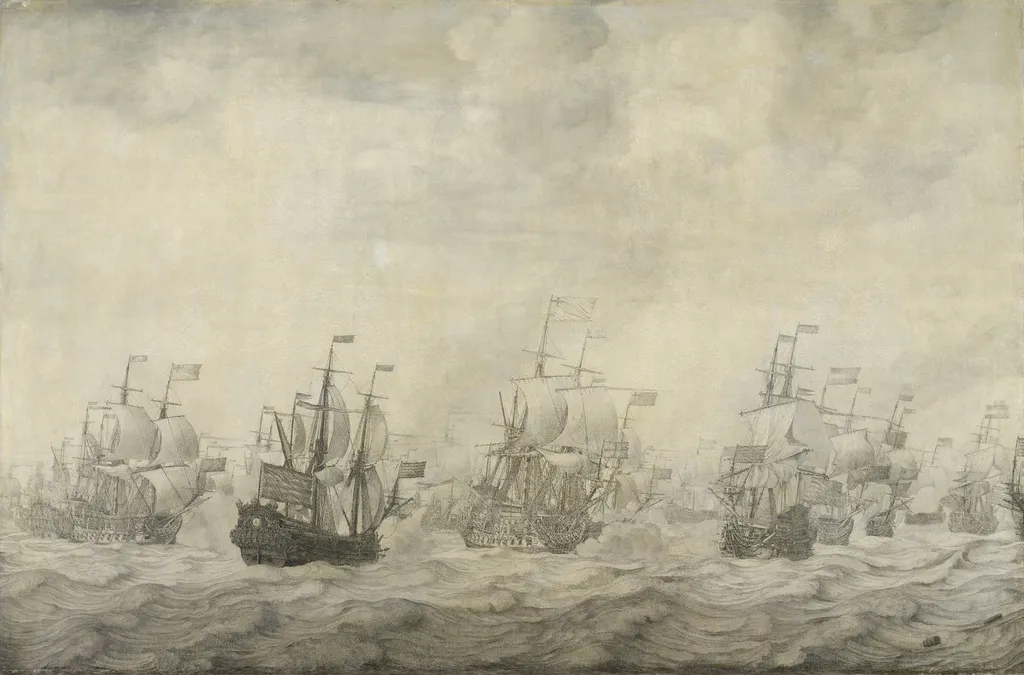
Episode from the Four Days Battle at Sea, 11-14 June 1666, in the Second Anglo-Dutch War (1665-67) is an oil painting by the Dutch Golden Age artist Willem van de Velde the elder. It dates from 1668 and is held in the collection of the Rijksmuseum.
About this work
Overview
Willem van de Velde the Elder’s oil on canvas, completed in 1668, portrays a segment of the Four Days’ Battle (11–14 June 1666), a major naval clash of the Second Anglo‑Dutch War. The composition gathers a dense fleet of tall, fully‑rigged ships amid a rough sea, their masts and flags tangled in smoke and haze, conveying the disorder of the engagement.
Subject & Meaning
The work records a moment of intense combat, with cannon fire and billowing sails dominating the scene. By emphasizing the tangled rigging and crowded decks, van de Velde underscores the chaos and danger inherent in 17th‑century line‑of‑battle tactics, offering viewers a documentary‑like glimpse of maritime warfare.
Technique & Style
Executed in oil, the painting combines meticulous ship‑building accuracy with a broader atmospheric palette. Van de Velde renders hulls, rigging and armaments with fine brushwork, while the pale, hazy sky and turbulent water are treated more loosely, creating depth and a sense of distance that balances detail with overall drama.
History & Provenance
Created two years after the actual encounter, the canvas reflects van de Velde’s reputation for precise naval depictions. It entered the Rijksmuseum’s collection, where it remains part of the institution’s holdings of Dutch Golden Age history paintings, illustrating the period’s interest in documenting contemporary military events.
Context
The Four Days’ Battle was one of the longest and bloodiest sea actions of the Second Anglo‑Dutch War, influencing subsequent naval tactics and ship design. Van de Velde’s depiction serves both as a visual record and as a testament to the Dutch Republic’s maritime confidence during a time of intense rivalry with England.
Own this work as a print
Artist & collection
Artist
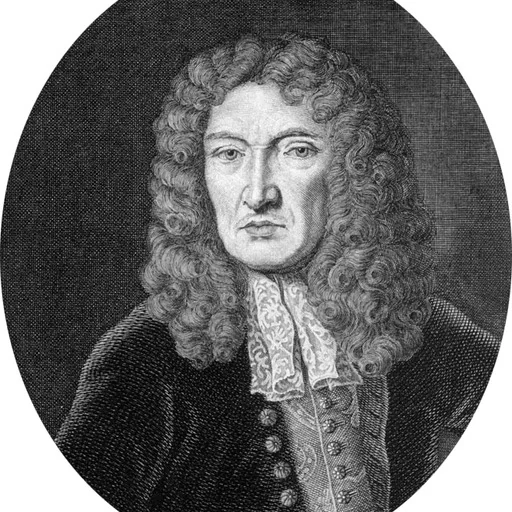
Willem van de Velde the Elder (1610/11 – 13 December 1693) was a Dutch Golden Age seascape painter, who produced many precise drawings of ships and ink paintings of fleets, but later learned to use oil paints like his son.

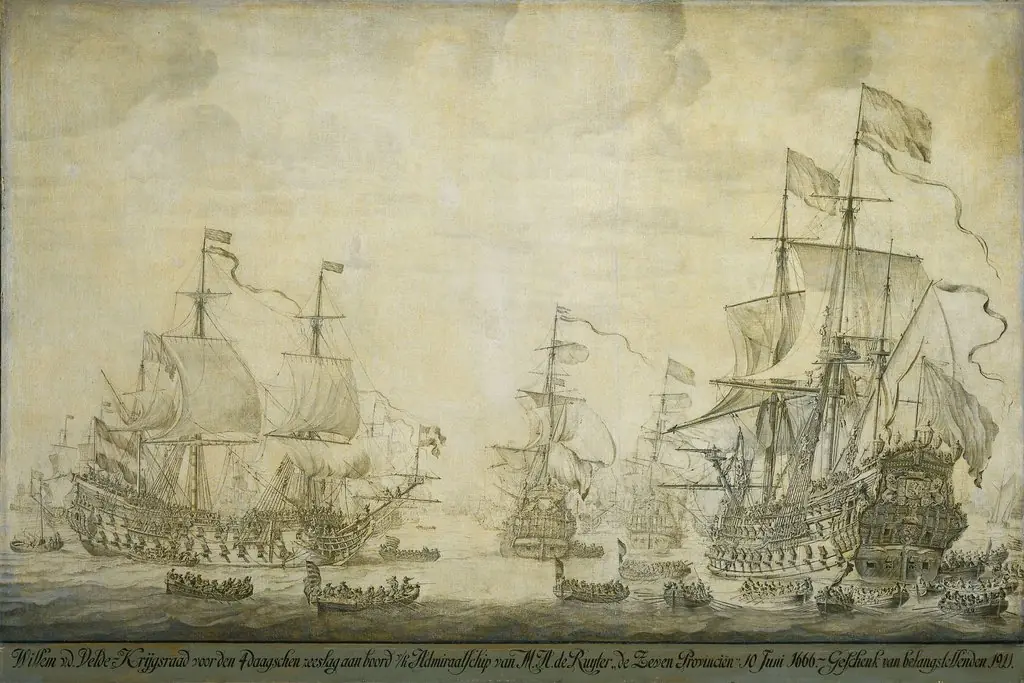 "Council of War aboard 'The Seven Provinces' the Flagship of Michiel Adriaensz de Ruyter, 10 June 1666, preceding the Four Days' Battle
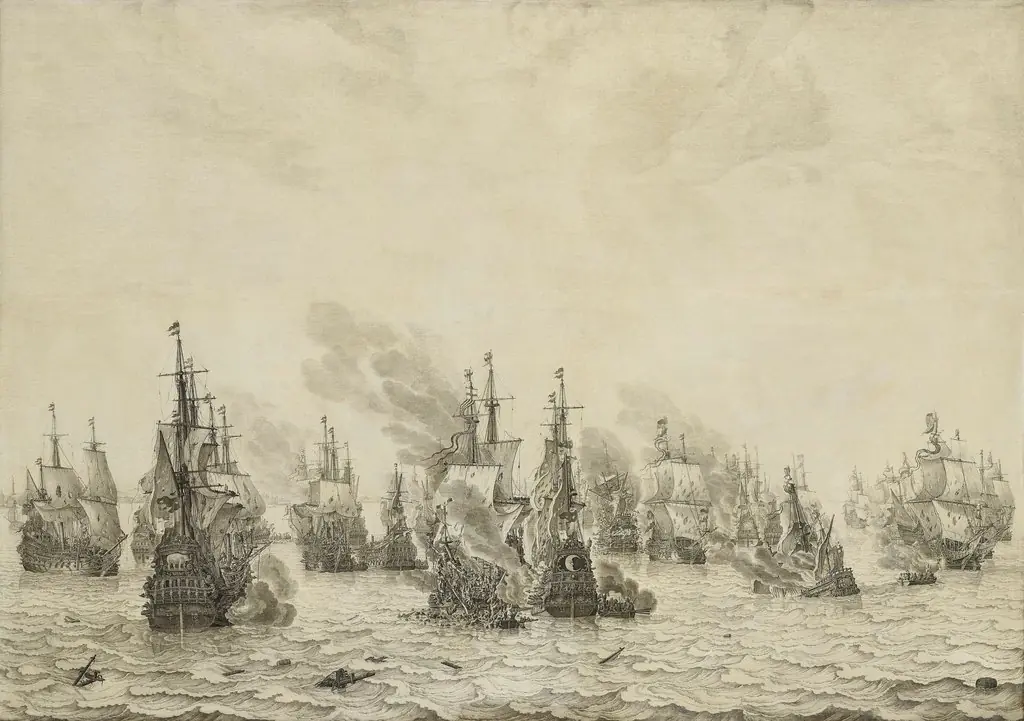 The Batlle of Livorno, 14 March 1653: episode from the First Anglo-Dutch War (1652-54)
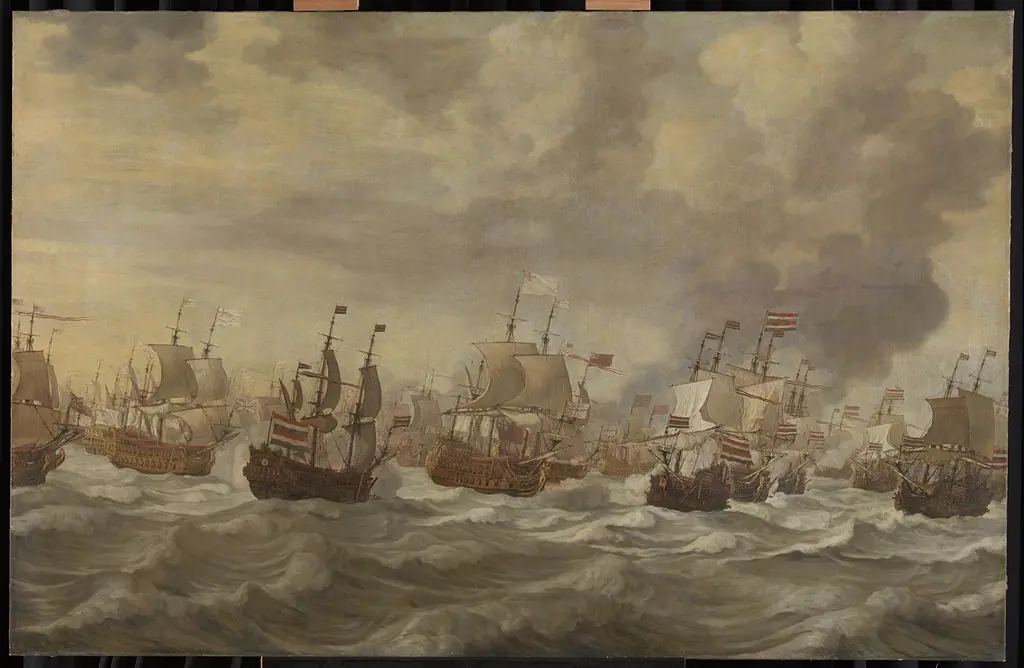 Episode from the Four Day Battle at Sea, 11-14 June 1666, in the second Anglo-Dutch War (1665-67)
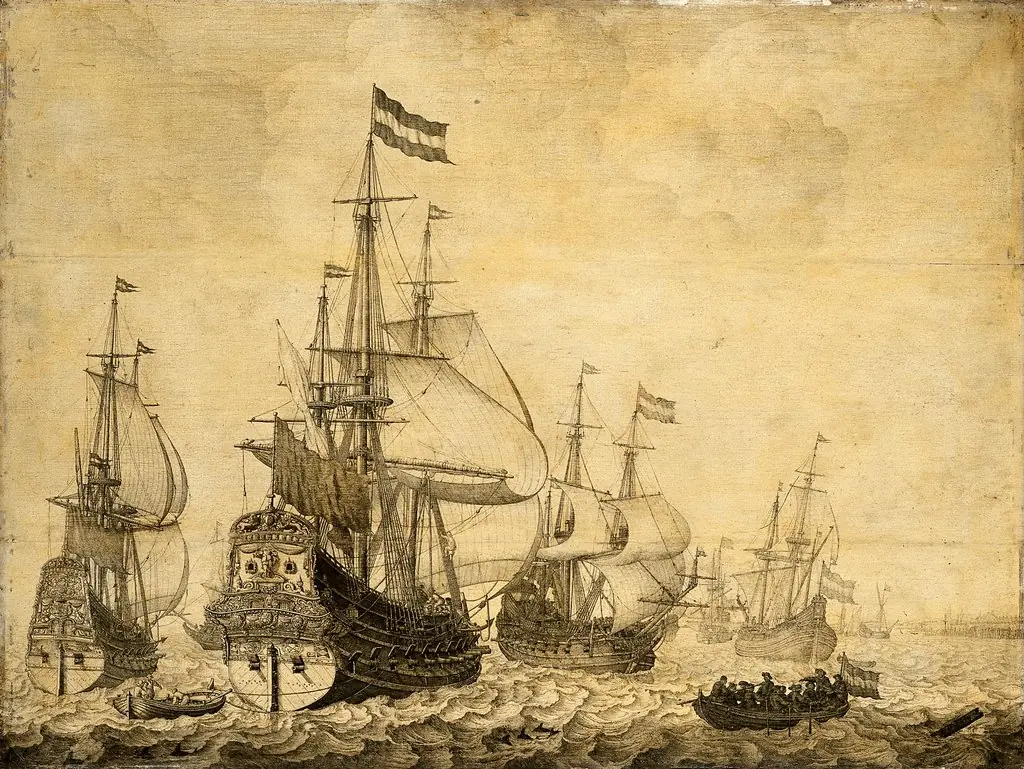 Seascape with Dutch men-of-war
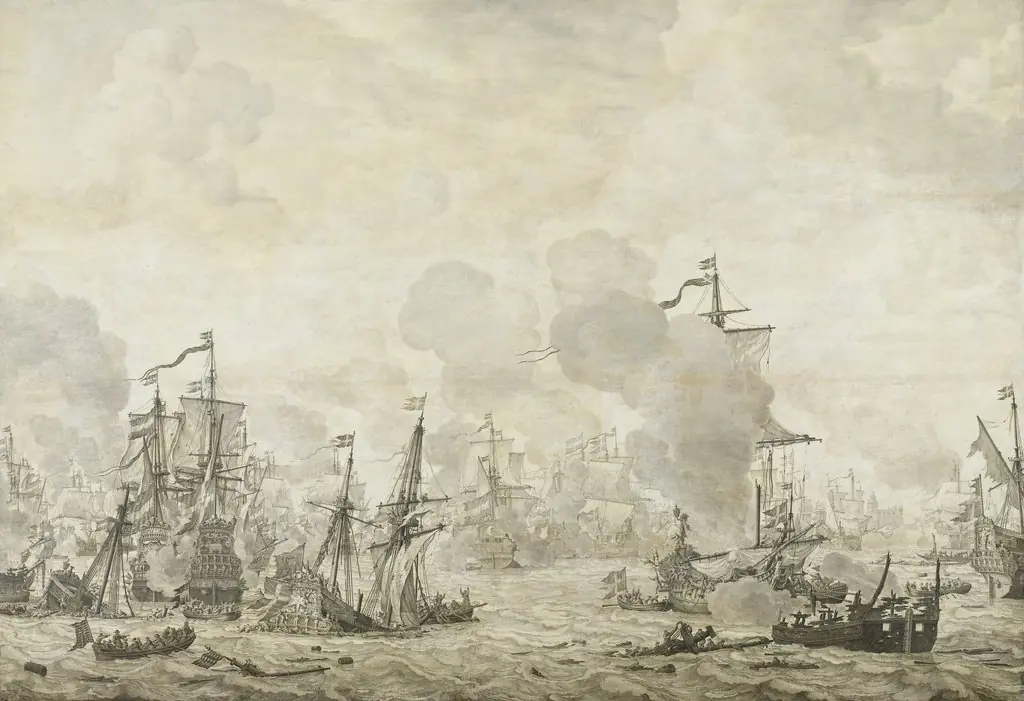 Episode from the Battle of the Sound between the Dutch and Swedish fleets, 8 November 1658
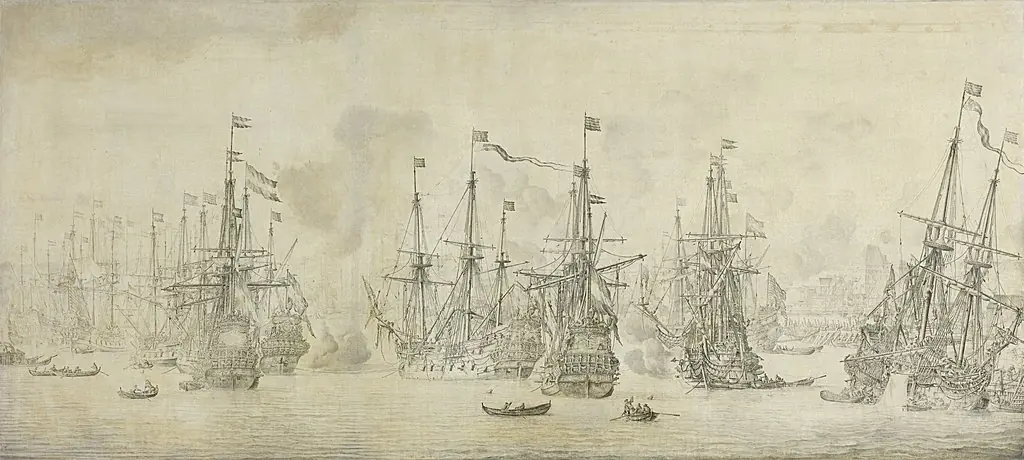 The unsuccessful English attack against the returning Dutch fleet in the harbor of Bergen, Norway, 12 August 1665: episode from the Second Anglo-Dutch War (1665-67)
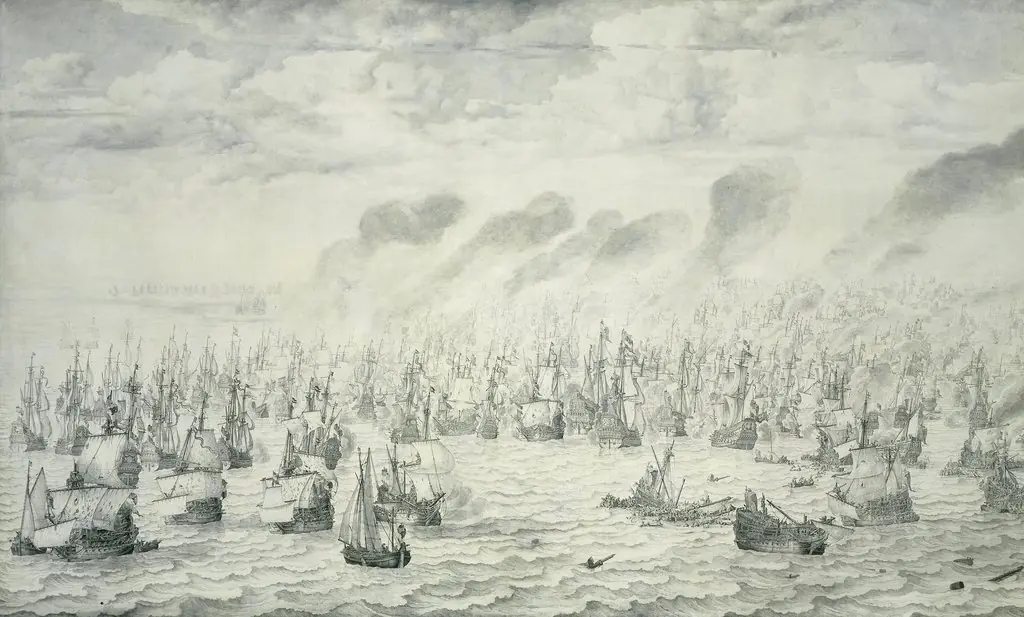 The Battle of Terheide
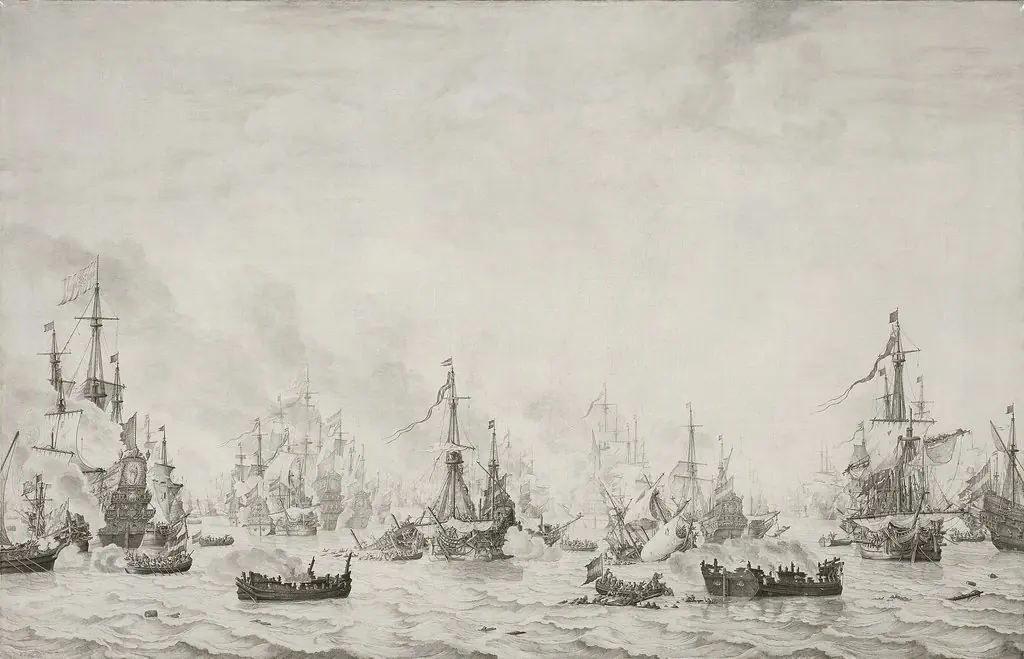 The Battle of the Downs
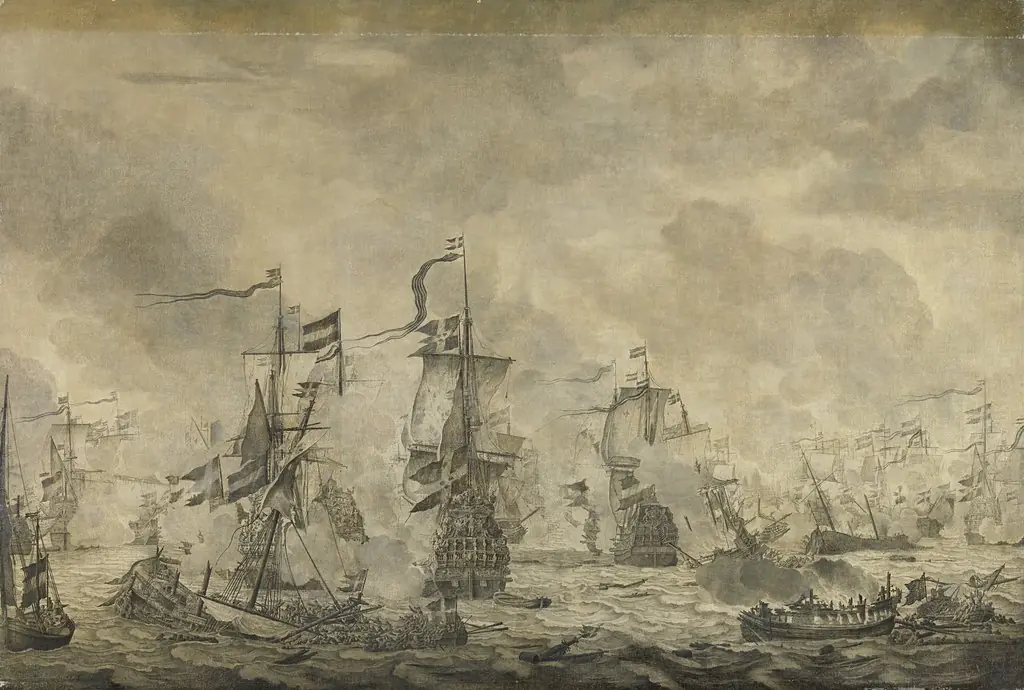 Episode from the Battle of the Sound between the Dutch and the Swedish fleets, 8 November 1658
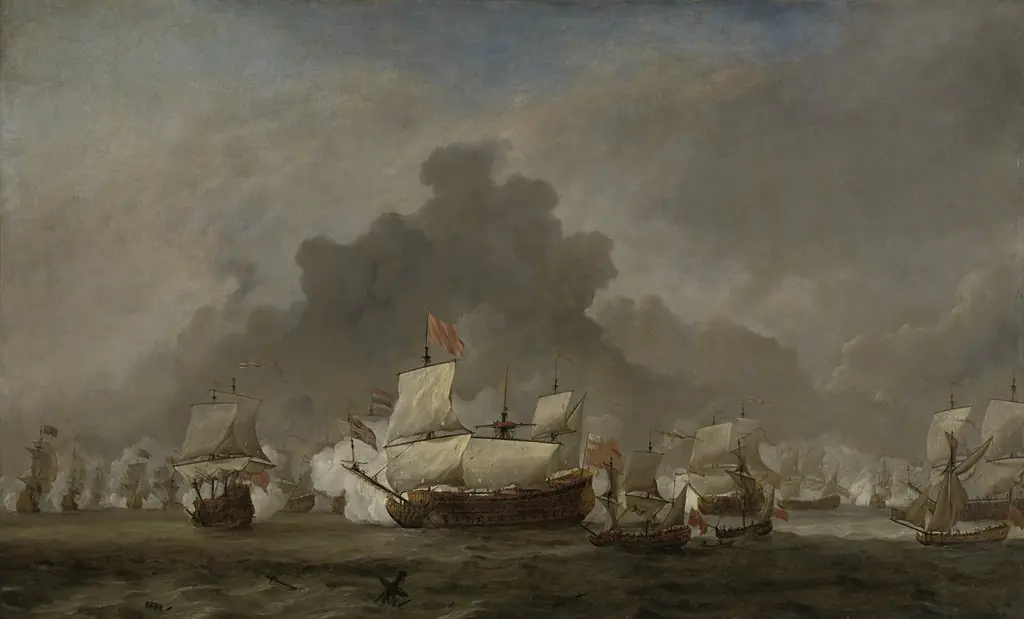 The skirmish of Michiel Adriaensz de Ruyter against the duke of York, commanding the 'Royal Prince'during the Battle of Solebay, 7 June 1672: episode from the Third Anglo-Dutch War (1672-74)
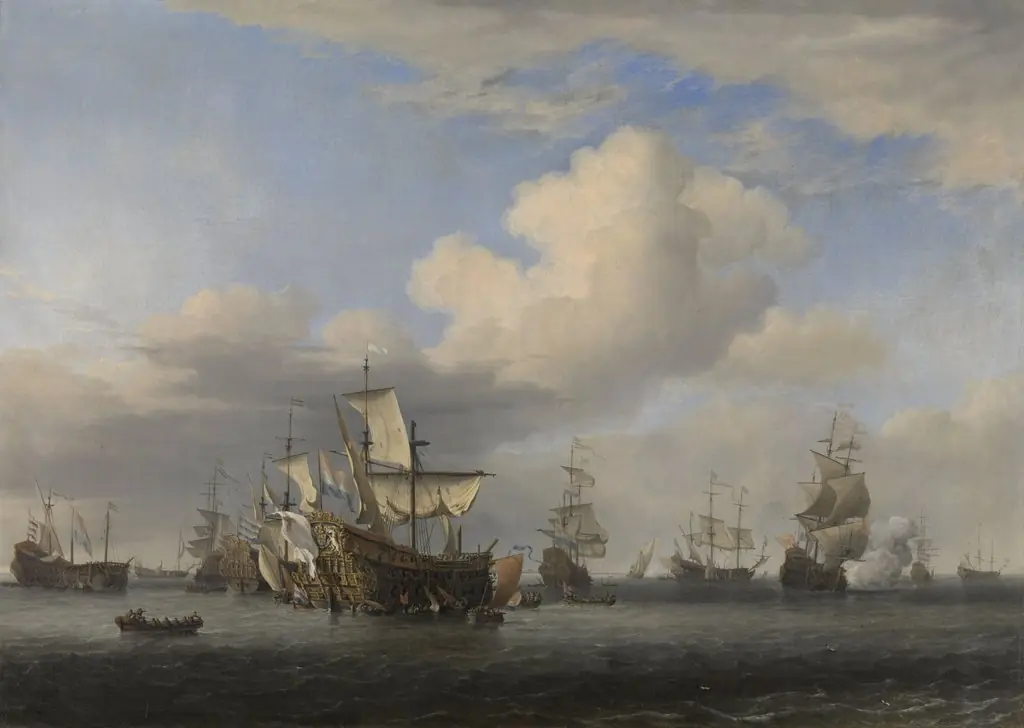 Captured English Ships after the Four Days’ Battle
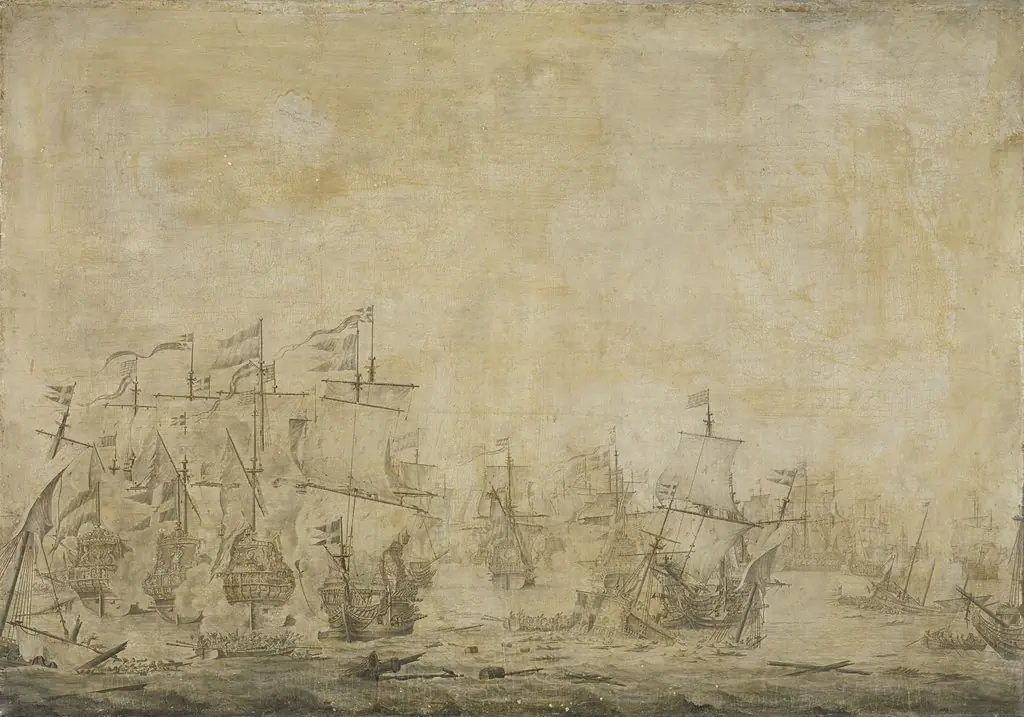 Episode from the Battle of the Sound between the Dutch and Swedish fleets, 8 November 1658