Artwork
Coat of Arms of Jan van Reyersbergh with its eight quarterings
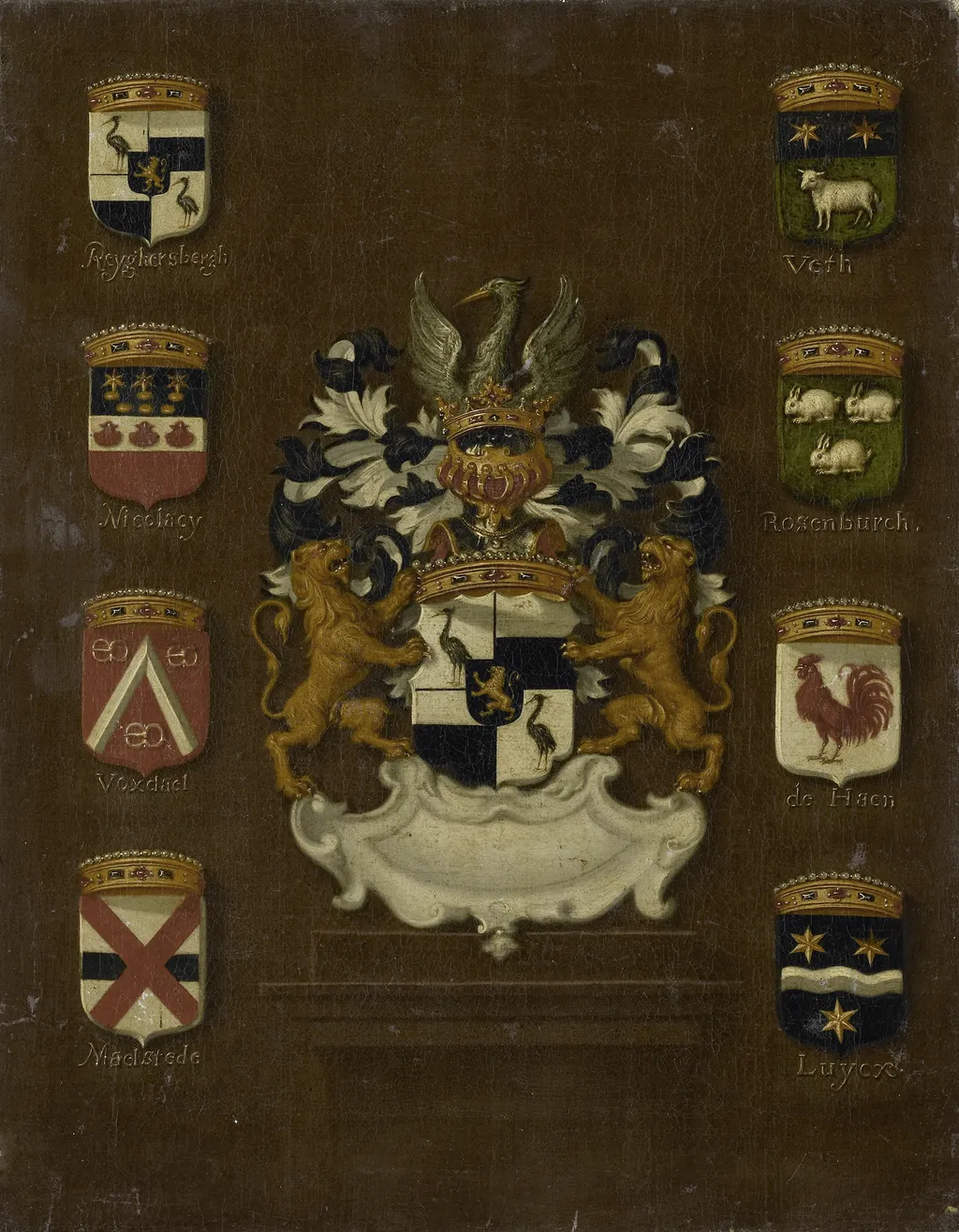
Coat of Arms of Jan van Reyersbergh with its eight quarterings is an oil painting by the Flemish Baroque painting artist Unknown. It dates from 1650 and is held in the collection of the Rijksmuseum.
About this work
Overview
The work presents a heraldic composition rendered in oil, centered on a shield divided into four colored fields and flanked by two gold lions supporting a crest crowned with feathers. Encircling the central device are eight subsidiary shields, each bearing distinct emblems such as a rooster, a rabbit, and various stars, all set against a deep brown backdrop that heightens the vivid tinctures.
Subject & Meaning
The central shield displays the family arms of Jan van Reyersbergh, whose lineage is signified by the lion supporters and the crowned crest. The surrounding quarterings represent allied families—names such as Veth and de Haan appear on the subsidiary shields—illustrating marital connections and inherited rights within the genealogical network of the Dutch patriciate.
Technique & Style
Executed in oil on panel, the artist employs a flat, decorative approach typical of 17th‑century heraldic painting. Precise brushwork defines the heraldic charges, while the limited palette of gold, red, blue, and white is juxtaposed with the sombre brown ground, creating a clear visual hierarchy between the primary arms and the ancillary quarterings.
History & Provenance
The piece was created as a personal emblem for Jan van Reyersbergh, a merchant of the Dutch Golden Age, likely commissioned to affirm his social standing. It later entered a private collection before being acquired by a museum specializing in heraldic artifacts, where it remains documented as an example of familial identity in early modern Netherlandish art.
Context
Heraldic panels such as this served both decorative and documentary functions, often displayed in homes or civic buildings to assert lineage and alliances. The inclusion of eight quarterings reflects the complex web of intermarriage among affluent families in the Low Countries, a practice that reinforced economic and political networks during the 1600s.
Legacy
As a visual record of genealogical ties, the painting offers scholars insight into the symbolism and social strategies of Dutch patrician families. Its preservation contributes to the broader understanding of how heraldry operated as a language of status and identity in early modern Europe.
Artist & collection

 Domestic Scene
 Giacomo and Cardinal Marco, investing Andrea, Abbot of San Zeno, with his Benefice
 The Nymph of Fontainebleau
 Portrait of a Woman
 Madonna and Child with Saints in the Enclosed Garden
 Venus and Minerva
 Family Group of Four on Sofa
 Wall painting from Room H of the Villa of P. Fannius Synistor at Boscoreale
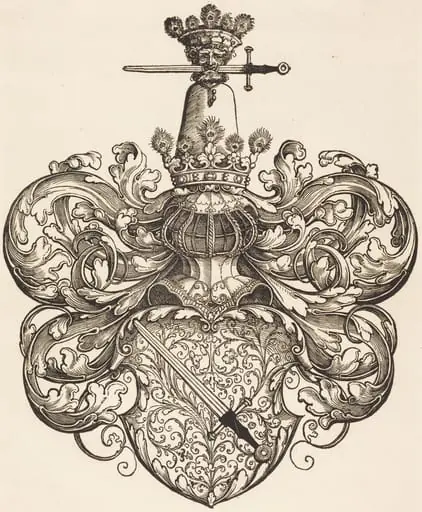 Coat of Arms of the Kress von Kressenstein Family
![Crested Coat of Arms [reverse], by Antwerp 16th Century](https://artifactworldgallery.com/img/antwerp-16th-century--crested-coat-of-arms-reverse--635f462b0f763a94-w320.webp) Crested Coat of Arms [reverse]
Crested Coat of Arms [reverse]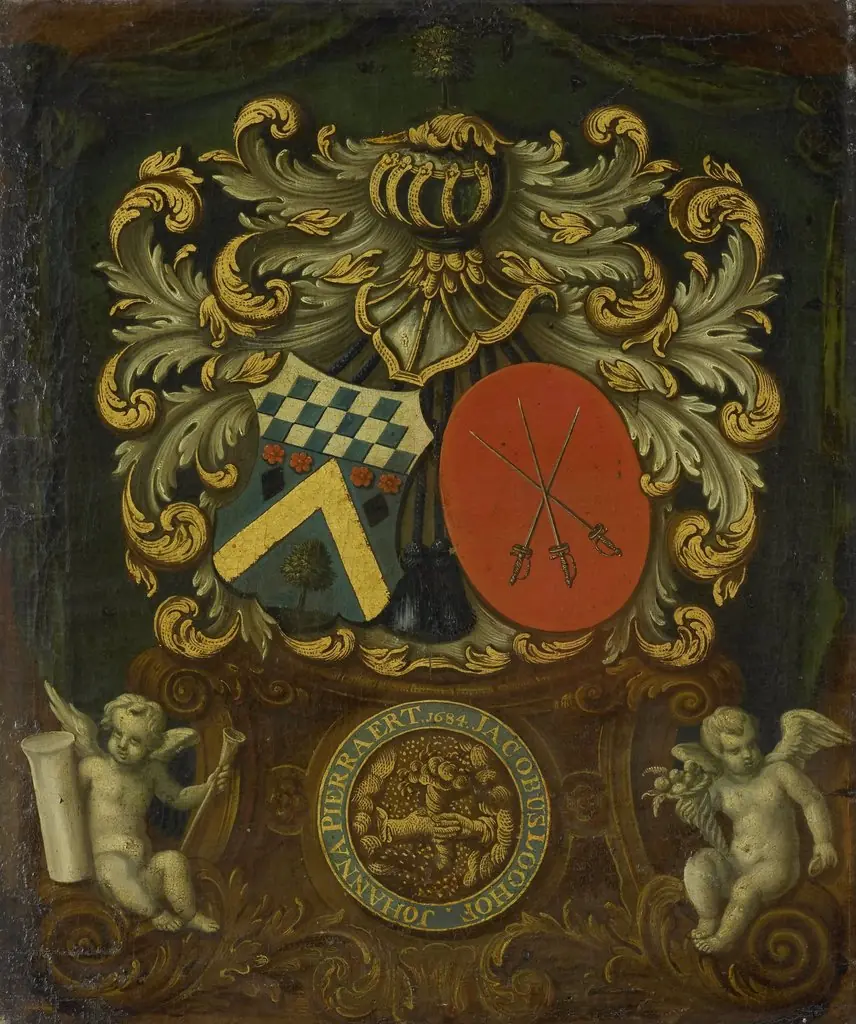 The family shields of Jacobus Loohoff and Johanna Pierraert, 1684
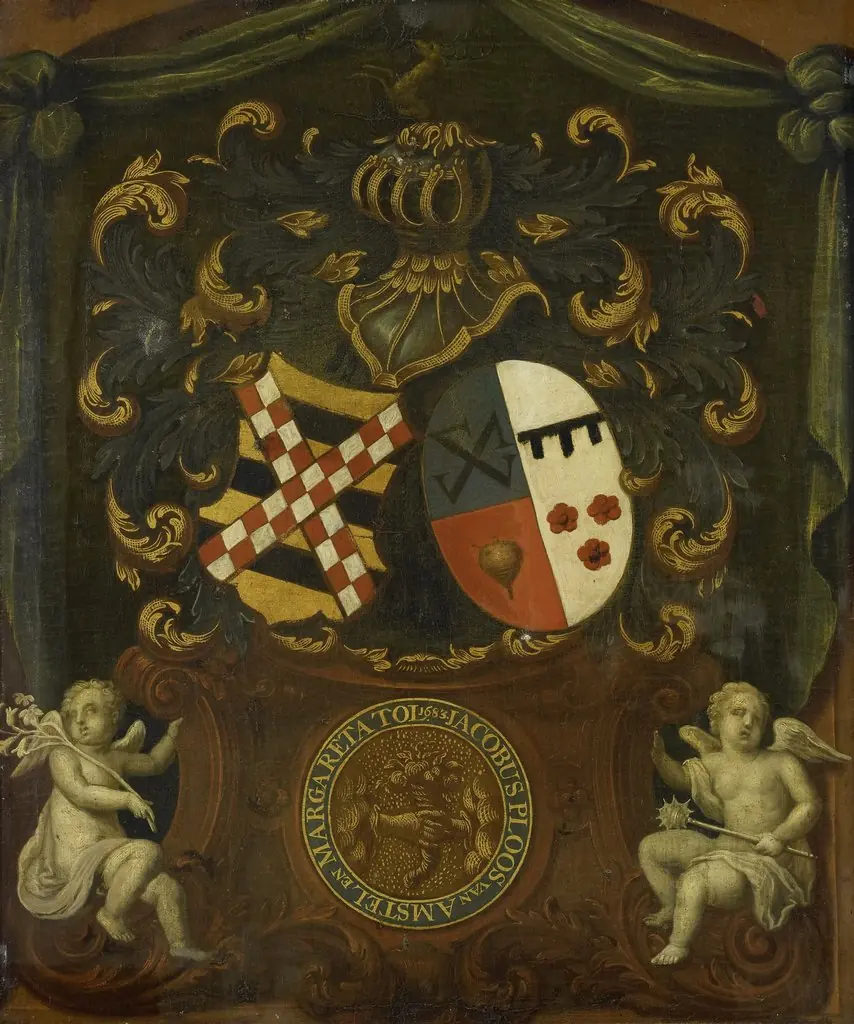 The family shields of Jacob Ploos van Amstel and Margareta Tol
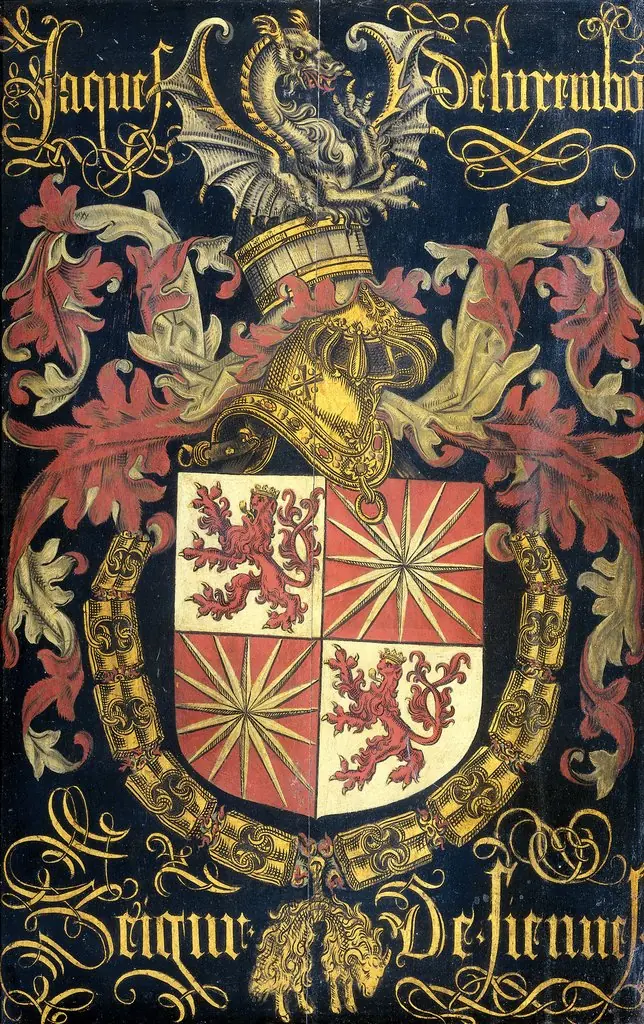 Shield of Jacob of Luxemburg (after 1441-1488), Lord of Fiennes, in his capacity as knight of the Order of the Golden Fleece
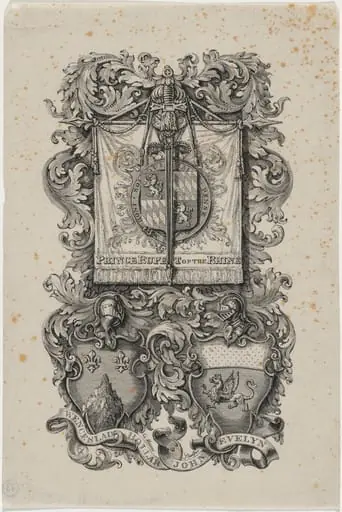 Coat of Arms of Prince Rupert, Hollar and Evelyn
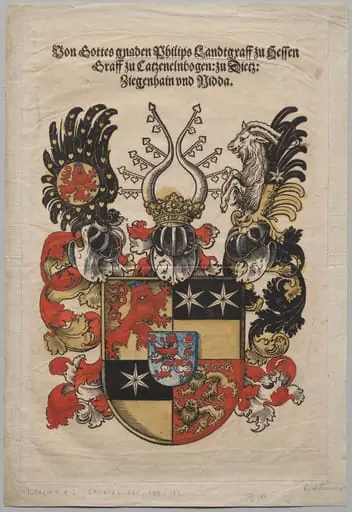 Coat of Arms of Philip, Landgrave of Hesse