Artwork
The Idolatry of Solomon
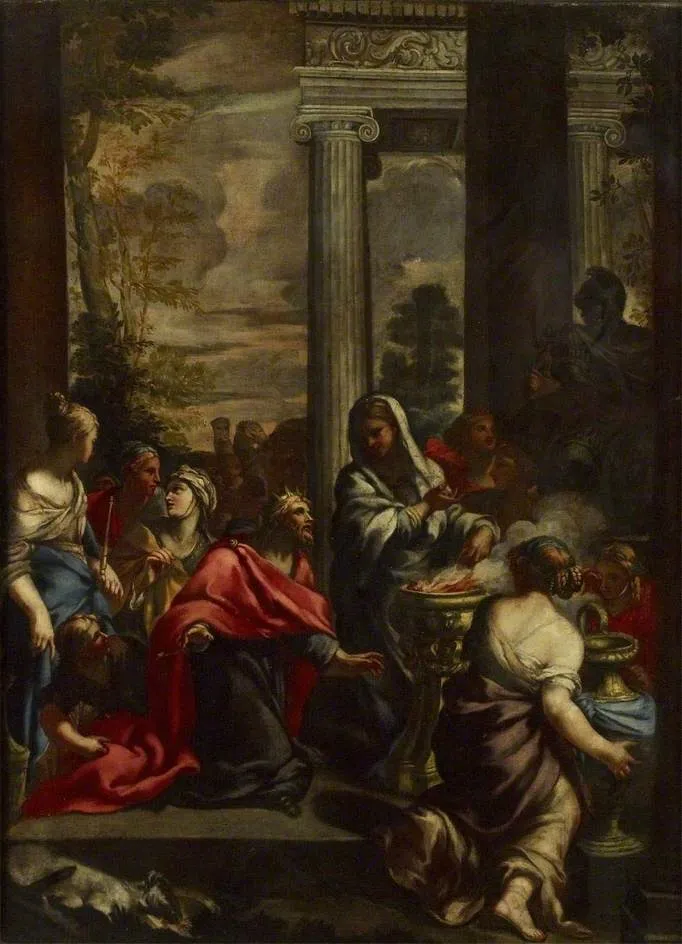
The Idolatry of Solomon is an oil painting by the Spanish Baroque Tenebrist artist Unknown. It dates from 1693 and is held in the collection of the Ashmolean Museum.
About this work
Overview
The work titled The Idolatry of Solomon is an oil painting that depicts a gathering of robed figures surrounding an elaborate central object. Set against a backdrop of trees, sky and distant columns, the composition balances illuminated and shadowed forms, giving the scene a pronounced sense of depth. The palette includes striking reds, whites and blues, emphasizing the ceremonial atmosphere.
Subject & Meaning
The scene appears to reference the biblical narrative of King Solomon’s worship of foreign deities, with the ornate object suggesting an idol or altar. The participants’ upward gazes and varied postures convey a collective reverence, while the contrast of light and darkness may hint at the moral tension between devotion and transgression inherent in the story.
Technique & Style
The use of vivid primary colors for the robes creates visual emphasis, and the inclusion of architectural elements in the background adds spatial complexity.
Rendered in oil on canvas, the artist employs chiaroscuro to model the figures, allowing light to strike select bodies while others recede into shadow. The use of vivid primary colors for the robes creates visual emphasis, and the inclusion of architectural elements in the background adds spatial complexity. Brushwork appears smooth in the central forms, with looser handling in the surrounding landscape.
History & Provenance
The painting’s title and subject place it within a tradition of 19th‑century historical and religious genre works, though specific details about its creator, date of execution, or ownership trail are not provided in the available record.
Context
The Idolatry of Solomon aligns with a broader artistic interest in biblical episodes that explore themes of faith, power, and moral ambiguity. Such works often served both didactic and decorative purposes, reflecting contemporary fascination with antiquity and the moral lessons drawn from scriptural narratives.
Legacy
While the painting’s influence on later artists is not documented, its engagement with a well‑known biblical episode situates it within ongoing dialogues about religious representation in visual art, offering a visual entry point for viewers to contemplate the complexities of devotion and idolatry.
Artist & collection

 Domestic Scene
 Giacomo and Cardinal Marco, investing Andrea, Abbot of San Zeno, with his Benefice
 The Nymph of Fontainebleau
 Portrait of a Woman
 Madonna and Child with Saints in the Enclosed Garden
 Venus and Minerva
 Family Group of Four on Sofa
 Wall painting from Room H of the Villa of P. Fannius Synistor at Boscoreale
 Marriage of the Virgin
 The Anointing of David
 Paul and Barnabas at Lystra
 Vestalinnenopfer
 Rebecca at the Well
 Moses Striking the Rock
 La Presentación de la Virgen en el Templo
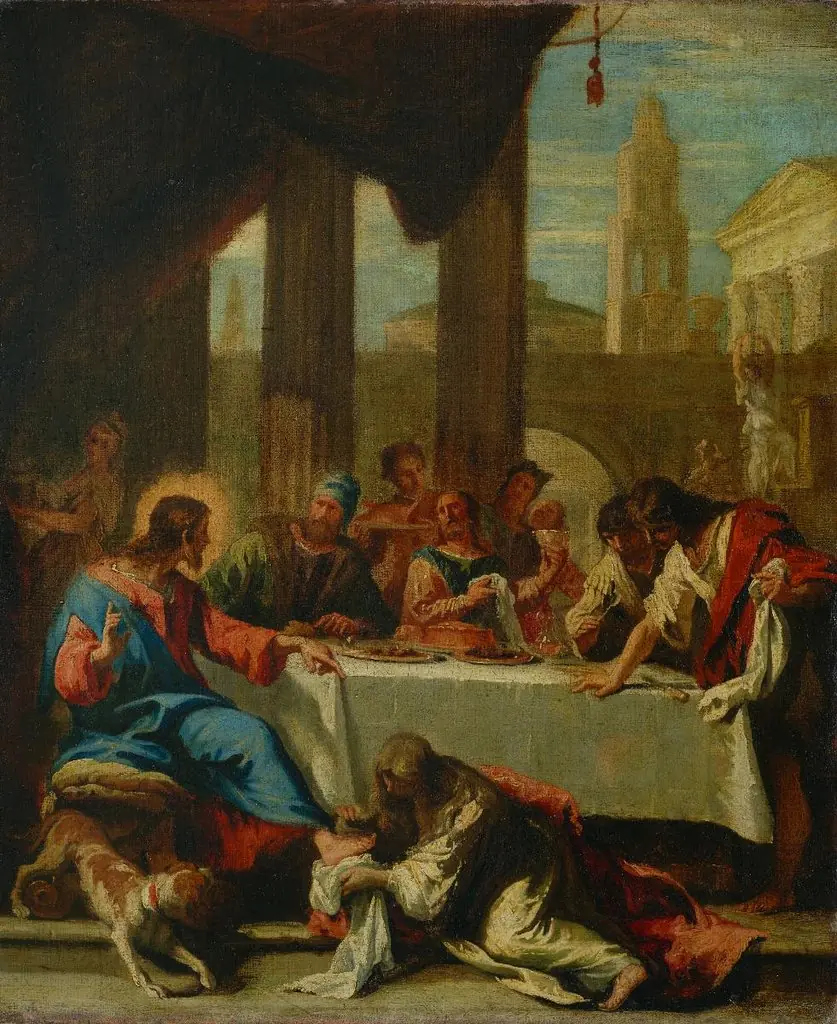 La cena in casa di Simone
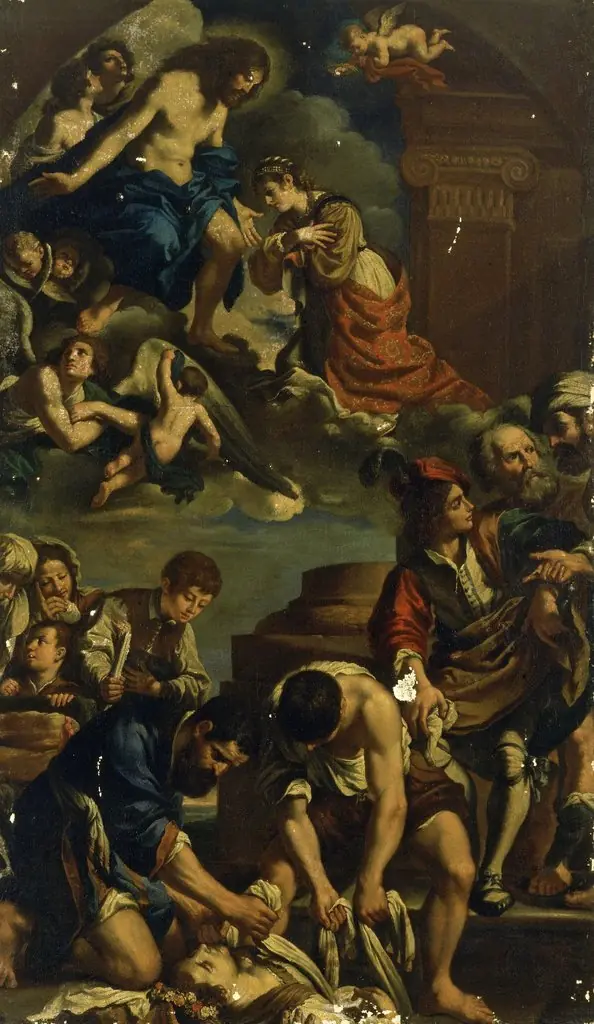 Burial of St Petronilla
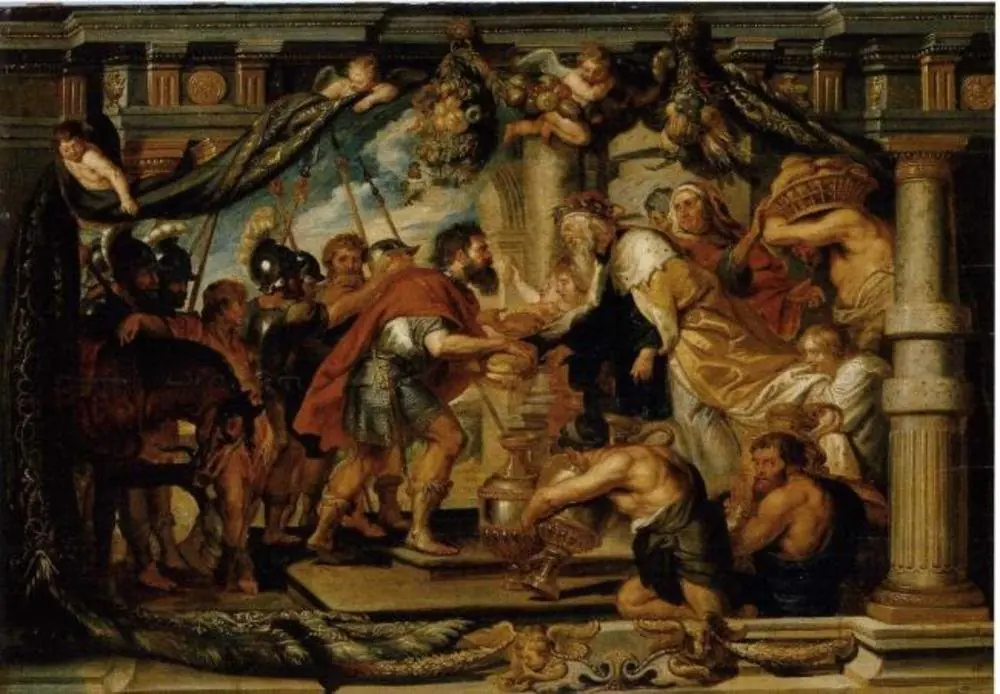 Meeting of Abraham and Melchizedek
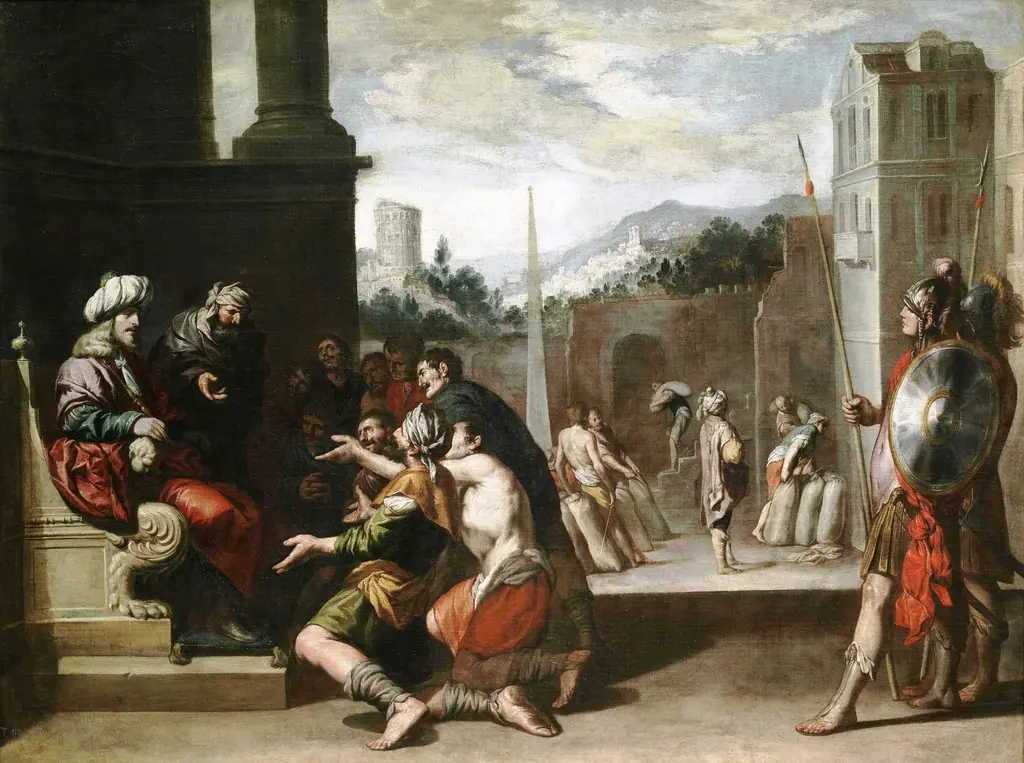 Joseph orders Simeon’s Imprisonment
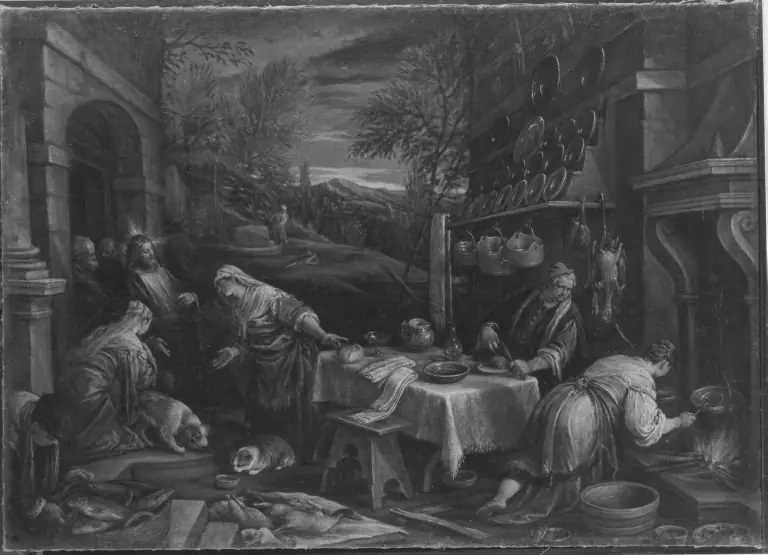 Christus bei Maria und Martha (Werkstatt)