Artwork
Marriage of the Virgin
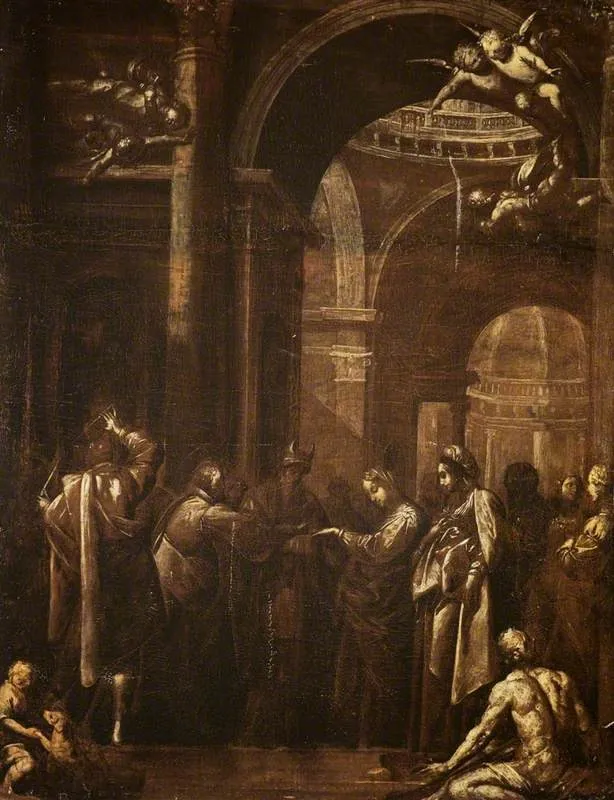
Marriage of the Virgin is an oil painting by the Early Baroque Italian artist Pier Francesco Mazzucchelli. It dates from 1612 and is held in the collection of the National Galleries Scotland.
About this work
Overview
Executed during the early Baroque period in northern Italy, it reflects the artist’s engagement with religious narrative and monumental composition.
Painted in 1612 by Pier Francesco Mazzucchelli, known as il Morazzone, this oil on canvas work portrays the ceremonial marriage of the Virgin Mary and Saint Joseph. Executed during the early Baroque period in northern Italy, it reflects the artist’s engagement with religious narrative and monumental composition. Mazzucchelli, primarily active in Milan, was known for his contributions to sacred art in both panel and fresco formats.
Subject & Meaning
The scene captures the moment of the sacred union between Mary and Joseph, presided over by a priest within an architectural setting that suggests divine order. The figures are arranged symmetrically, emphasizing ritual and solemnity. The presence of a cherub above underscores the spiritual significance of the event, aligning the earthly ceremony with heavenly approval, a common theological motif in Counter-Reformation devotional imagery.
Technique & Style
Mazzucchelli employs chiaroscuro to model the figures and architecture with strong contrasts of light and shadow, lending volume and spatial coherence. The robes of the central figures are rendered with careful attention to fabric weight and fold, while the arched structure behind them recedes into depth through subtle perspective. The palette remains restrained, favoring muted tones that enhance the ceremonial gravity of the moment.
History & Provenance
Created during Mazzucchelli’s mature period, the painting likely originated as an altarpiece for a Lombard church or chapel. Though its early ownership is undocumented, its style aligns with other religious commissions from Milanese workshops of the time. It remained within regional collections until entering its current institutional holding, where it is preserved as an example of early 17th-century Lombard devotional painting.
Context
In early 17th-century Lombardy, religious imagery was shaped by the Counter-Reformation’s emphasis on clarity, emotional resonance, and doctrinal accuracy. Mazzucchelli’s work responds to these demands through its legible narrative and controlled drama. His training under artists influenced by Caravaggio and the Bolognese school is evident in the naturalism and lighting, though his approach remains more restrained than the dramatic intensity of Roman Baroque.
Legacy
Though less widely known than contemporaries like Caravaggio or Guido Reni, Mazzucchelli’s contributions to Lombard religious art helped define a regional Baroque idiom. His use of chiaroscuro and architectural framing in works like this one influenced later altarpiece design in northern Italy. The painting endures as a quiet but precise example of how sacred stories were visually codified in post-Tridentine Italy.
Artist & collection
Artist
Pier Francesco Mazzucchelli (commonly known as il Morazzone; 29 July 1573 – 1626) was an Italian painter and draughtsman who was active in Milan.

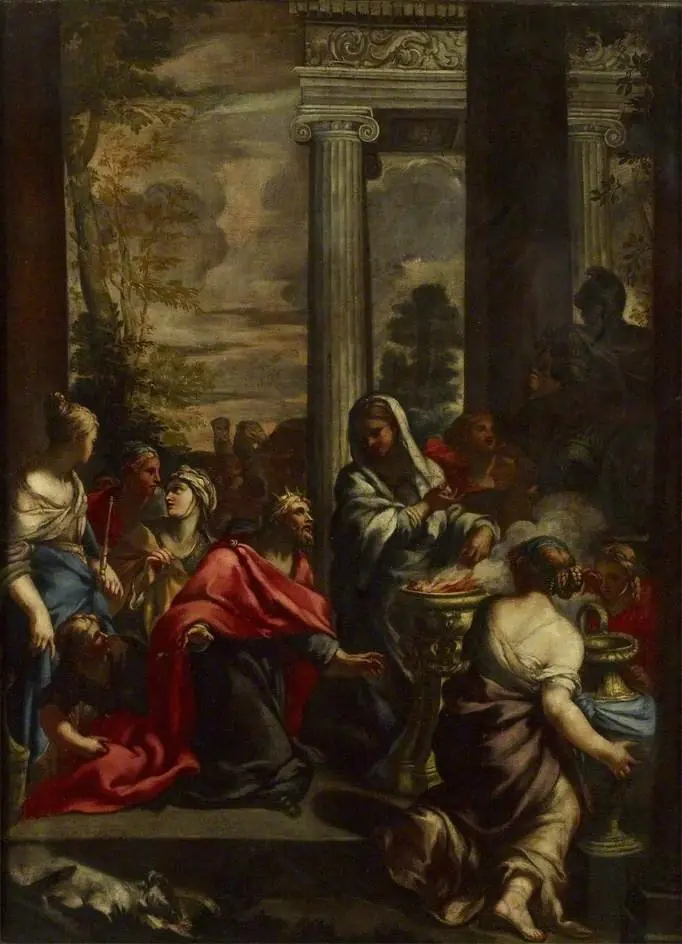 The Idolatry of Solomon
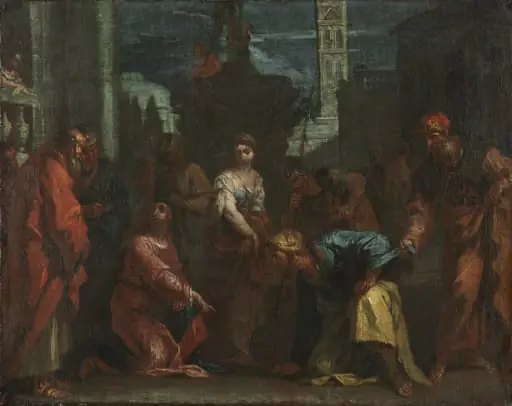 Christ and the Woman Taken in Adultery
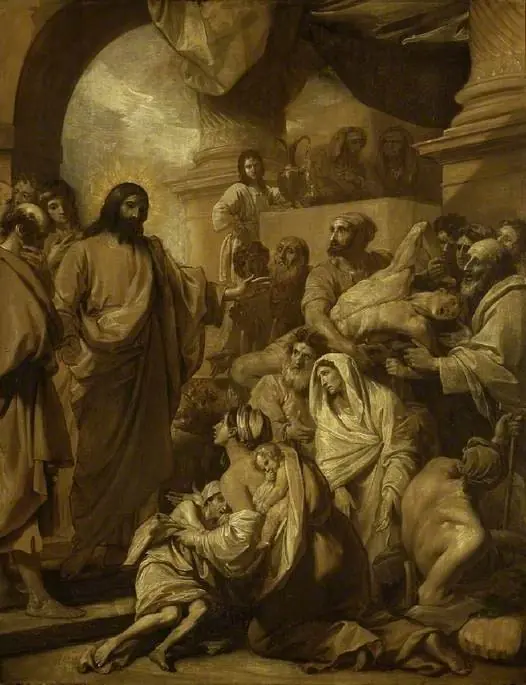 Christ healing the sick in the temple
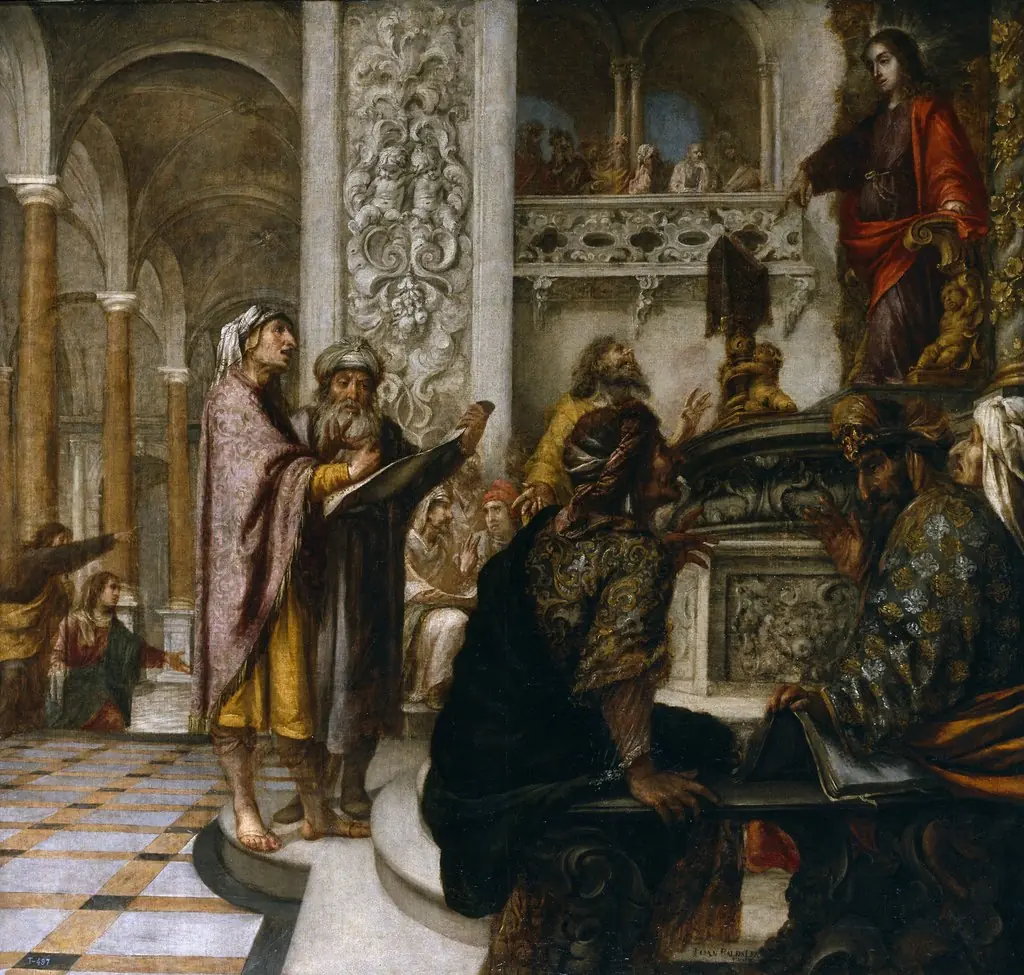 Christ disputing with the Doctors
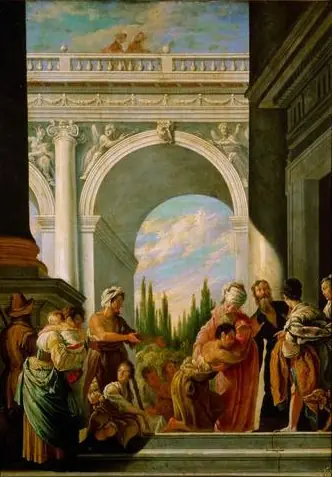 Gleichnis vom verlorenen Sohn
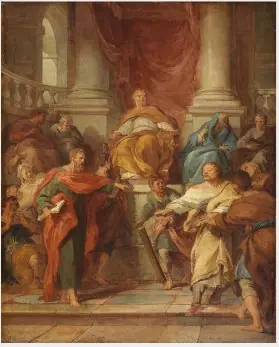 Elymas the Sorcerer Struck with Blindness, sketch
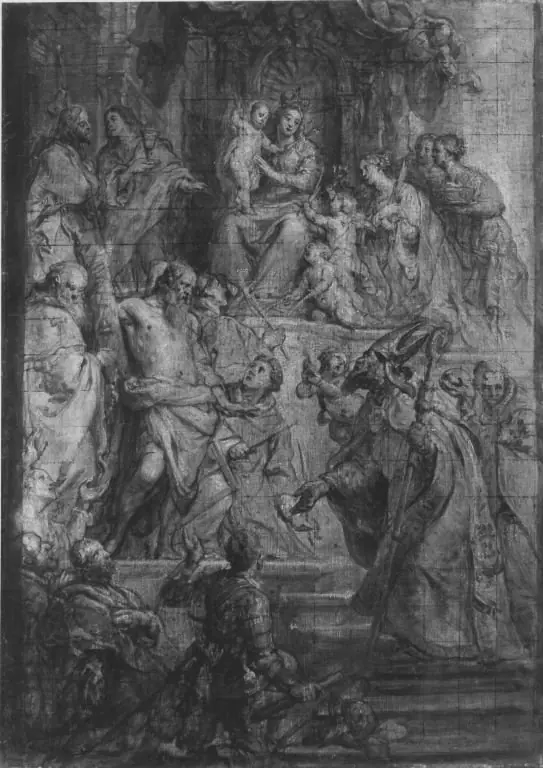 Verehrung Mariae durch Heilige
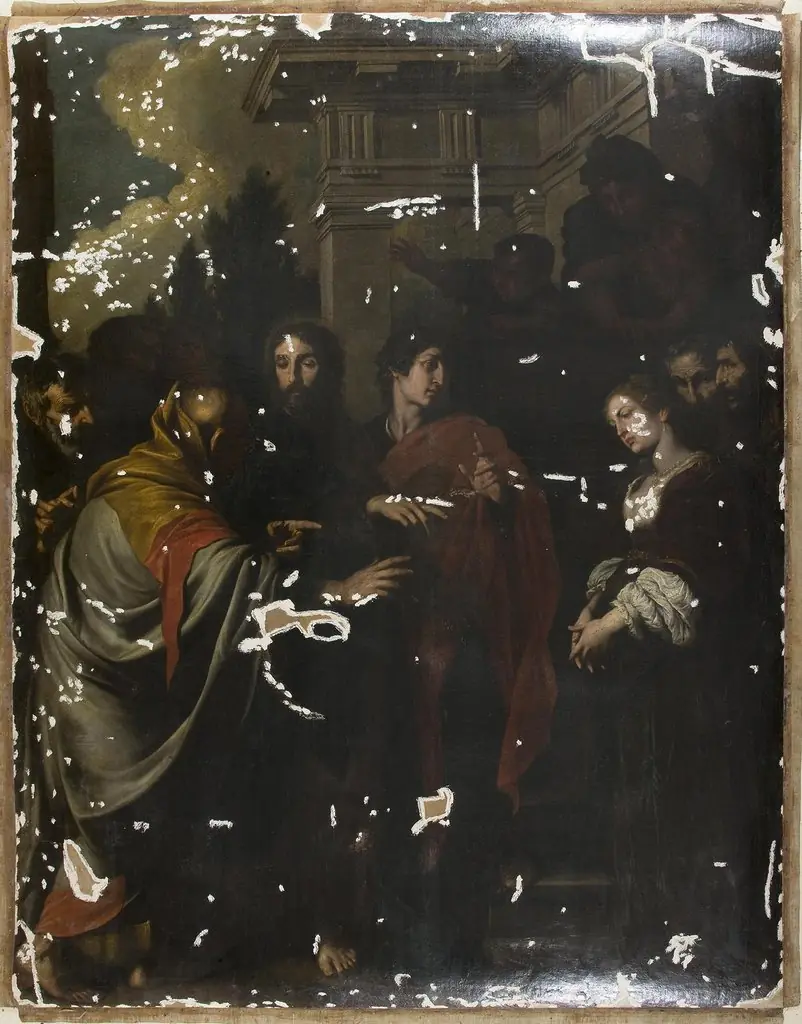 Christ and the Woman Taken in Adultery
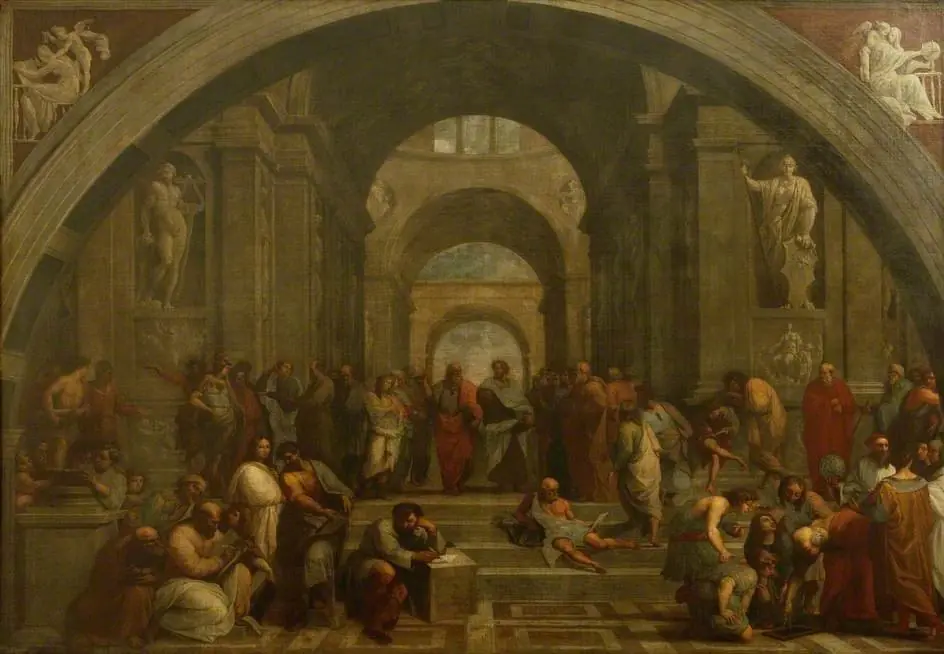 The School of Athens
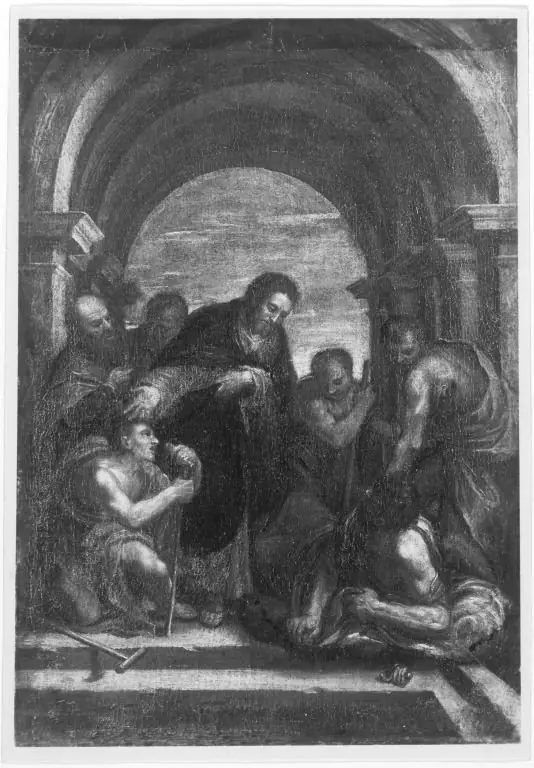 Heilung des Gichtbrüchigen
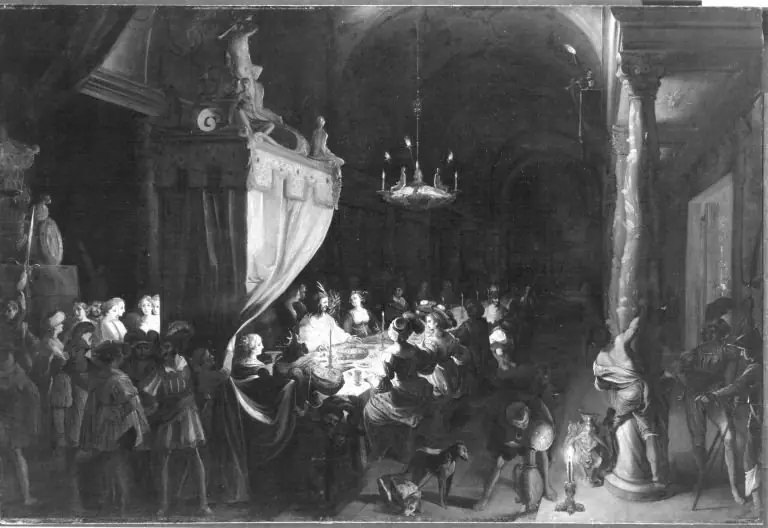 Das Gastmahl des Belsazar (zugeschrieben)
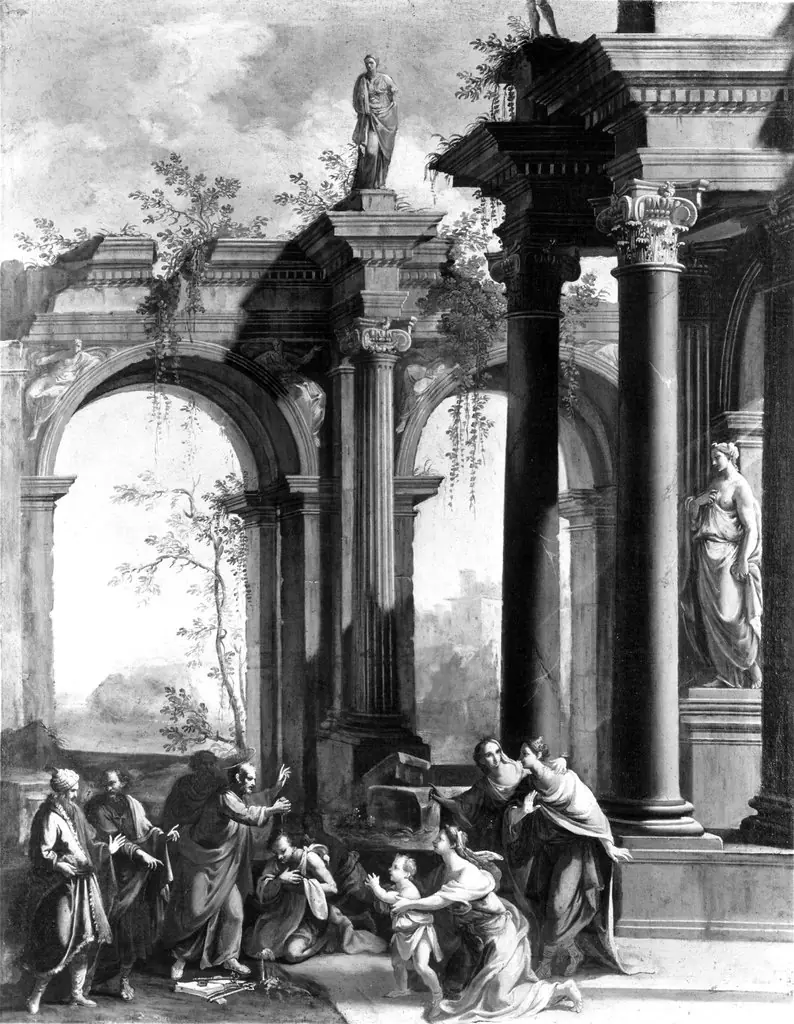 St. Peter Baptizing the Centurion, Cornelius