Artwork
Landskap
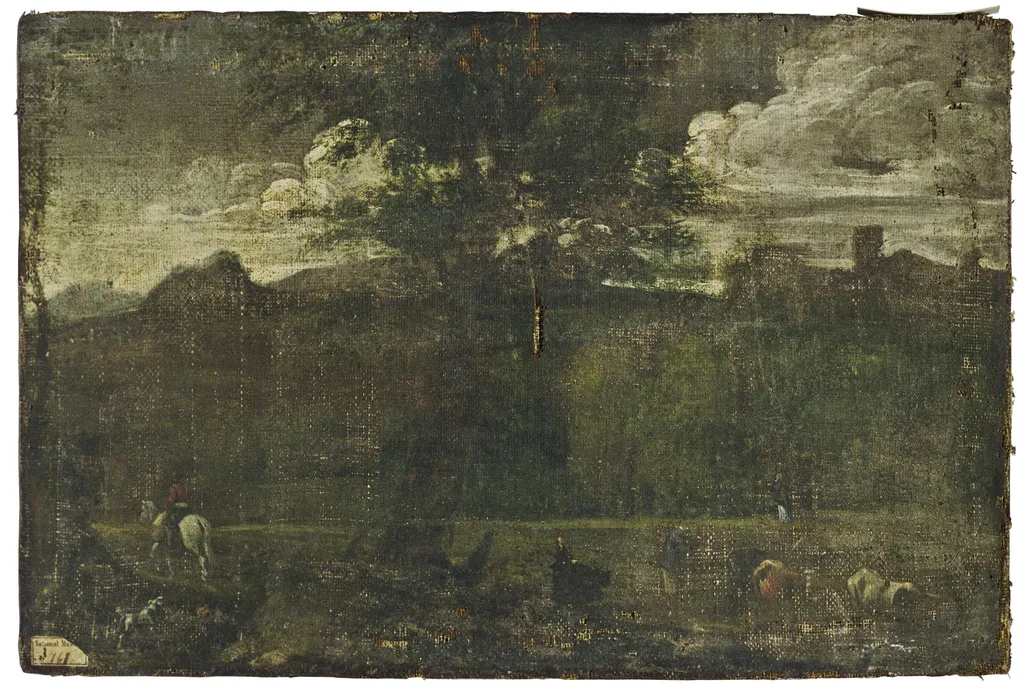
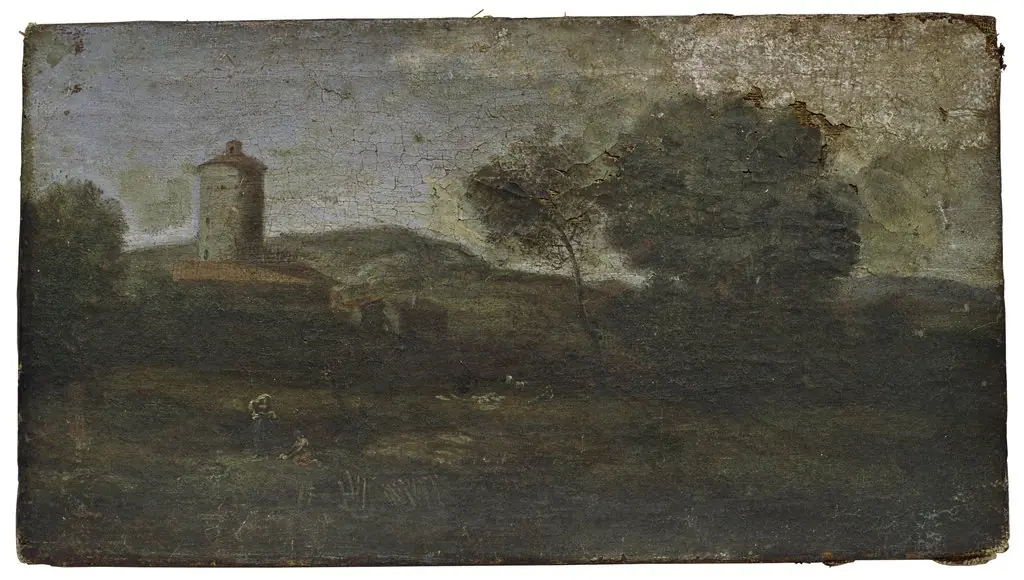
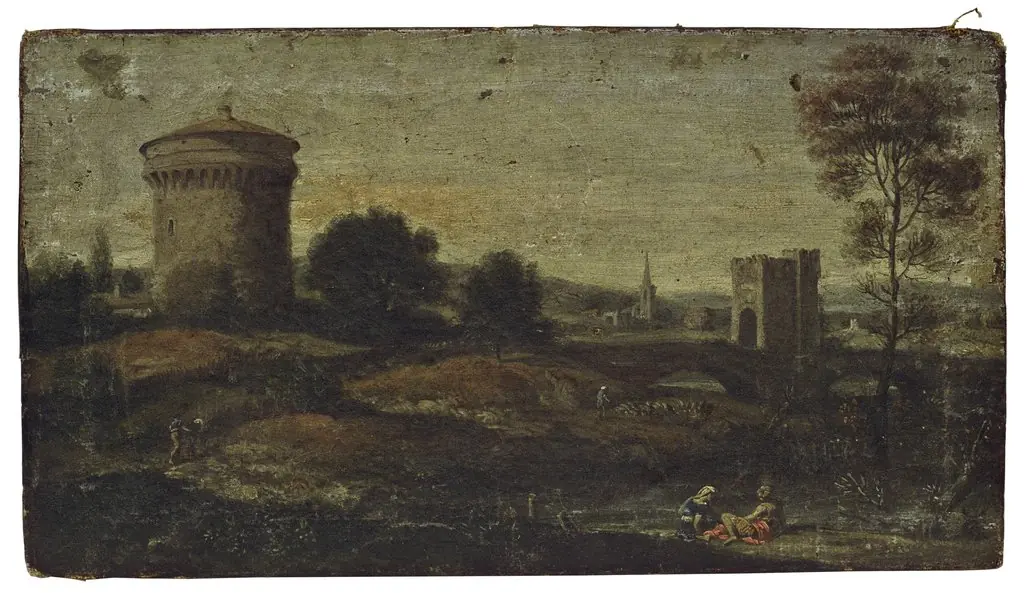
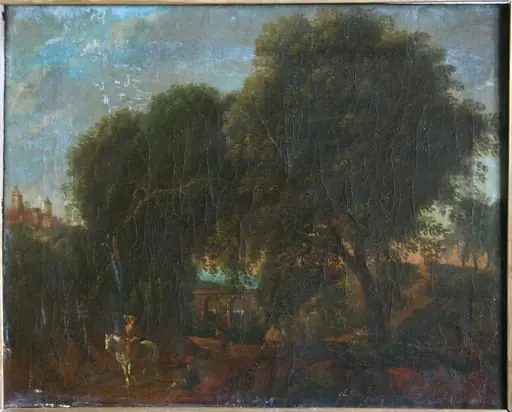
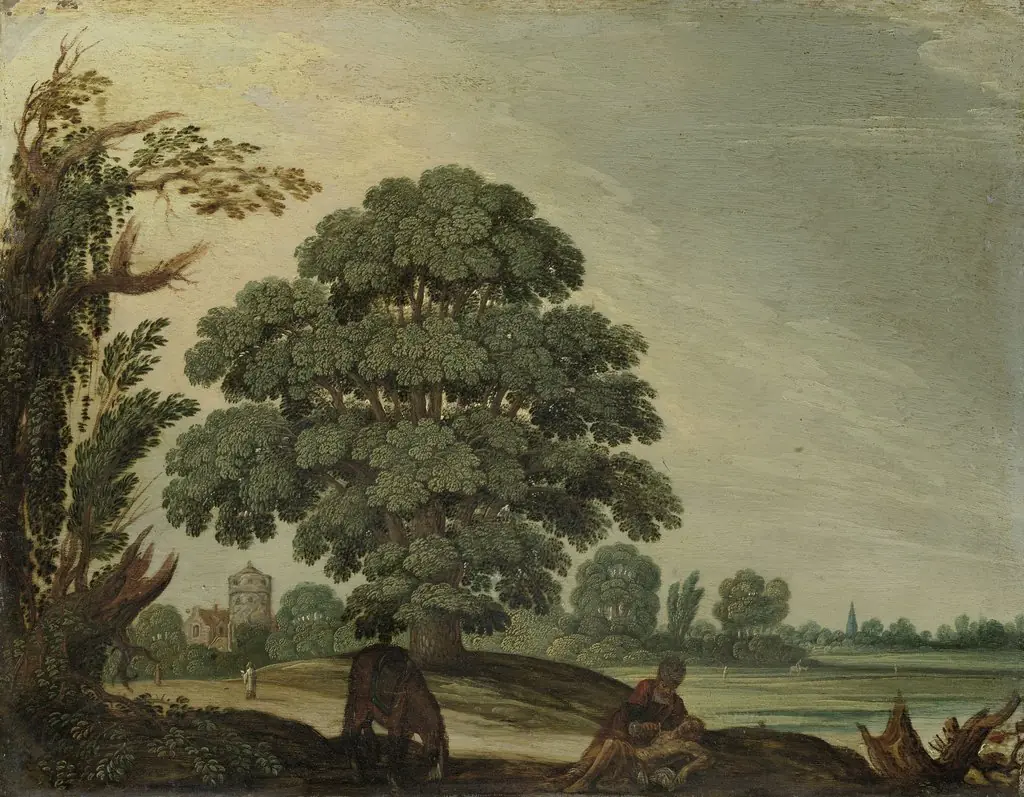
Landskap is an oil painting by Unknown. It is held in the collection of the Nationalmuseum. This oil painting depicts a quiet rural landscape, populated by a rider on horseback, a pedestrian, a dog, and a cow.
About this work
Overview
This oil painting depicts a quiet rural landscape, populated by a rider on horseback, a pedestrian, a dog, and a cow. The composition is grounded in naturalistic observation, with no overt narrative or dramatic event. The muted tones of green, brown, and gray unify the scene, while subtle shifts in light suggest the passage of time and the presence of an overcast sky.
Subject & Meaning
The figures and animals appear engaged in ordinary rural activities, suggesting a focus on daily life rather than idealized or symbolic content. Their placement within the landscape implies harmony with the environment, without drawing attention to individual identity or social status. The absence of architectural elements reinforces a sense of untouched, pastoral continuity.
Technique & Style
The artist employs chiaroscuro to model forms and suggest spatial depth, particularly in the rolling hills and tree canopies. Brushwork is restrained, favoring soft transitions between tones over sharp definition. The limited palette enhances the subdued mood, while the careful layering of paint gives texture to earth, foliage, and sky without overt stylization.
History & Provenance
The painting’s origin and early ownership are not documented in available records. It lacks inscriptions, signatures, or exhibition histories that would anchor it to a specific artist or period. Its style suggests a regional tradition of landscape painting, possibly from the late 18th or early 19th century, but no definitive attribution has been established.
Context
This work aligns with a broader European trend of depicting rural scenes with quiet realism, emerging as industrialization reshaped perceptions of nature. Unlike grand Romantic landscapes, it avoids theatricality, instead offering a contemplative view of agrarian life. Its modest scale and tone reflect an audience interested in the ordinary rather than the monumental.
Legacy
The painting contributes to a quiet lineage of observational landscape art, valued for its restraint and attention to natural light. Though not widely exhibited or studied, it remains a representative example of non-idealized rural imagery from its era. Its preservation underscores the cultural interest in everyday environments during a time of rapid social change.
Artist & collection

 Domestic Scene
 Giacomo and Cardinal Marco, investing Andrea, Abbot of San Zeno, with his Benefice
 The Nymph of Fontainebleau
 Portrait of a Woman
 Madonna and Child with Saints in the Enclosed Garden
 Venus and Minerva
 Family Group of Four on Sofa
 Wall painting from Room H of the Villa of P. Fannius Synistor at Boscoreale