Artwork
Christ in Majesty with the Symbols of the Evangelists
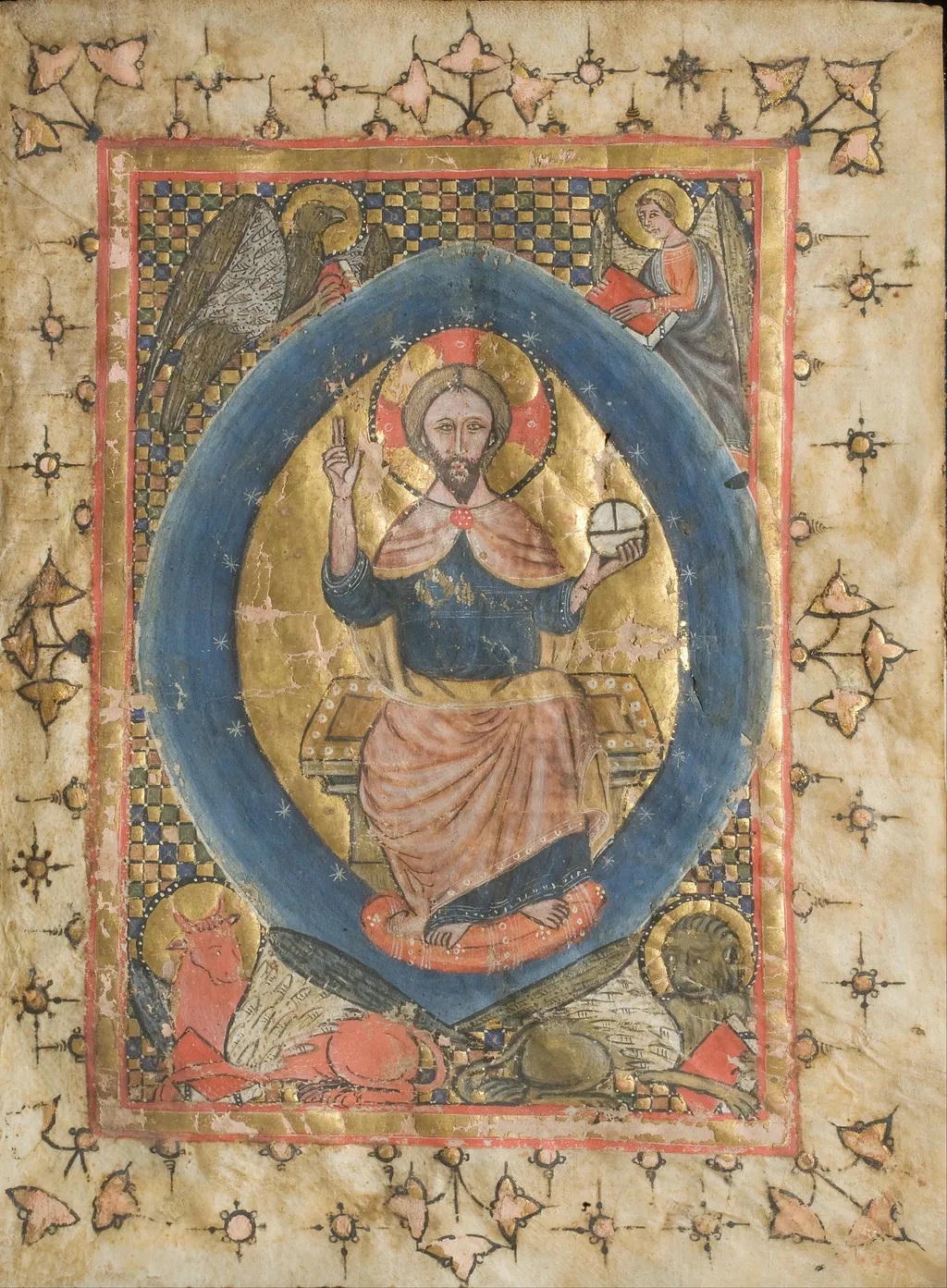
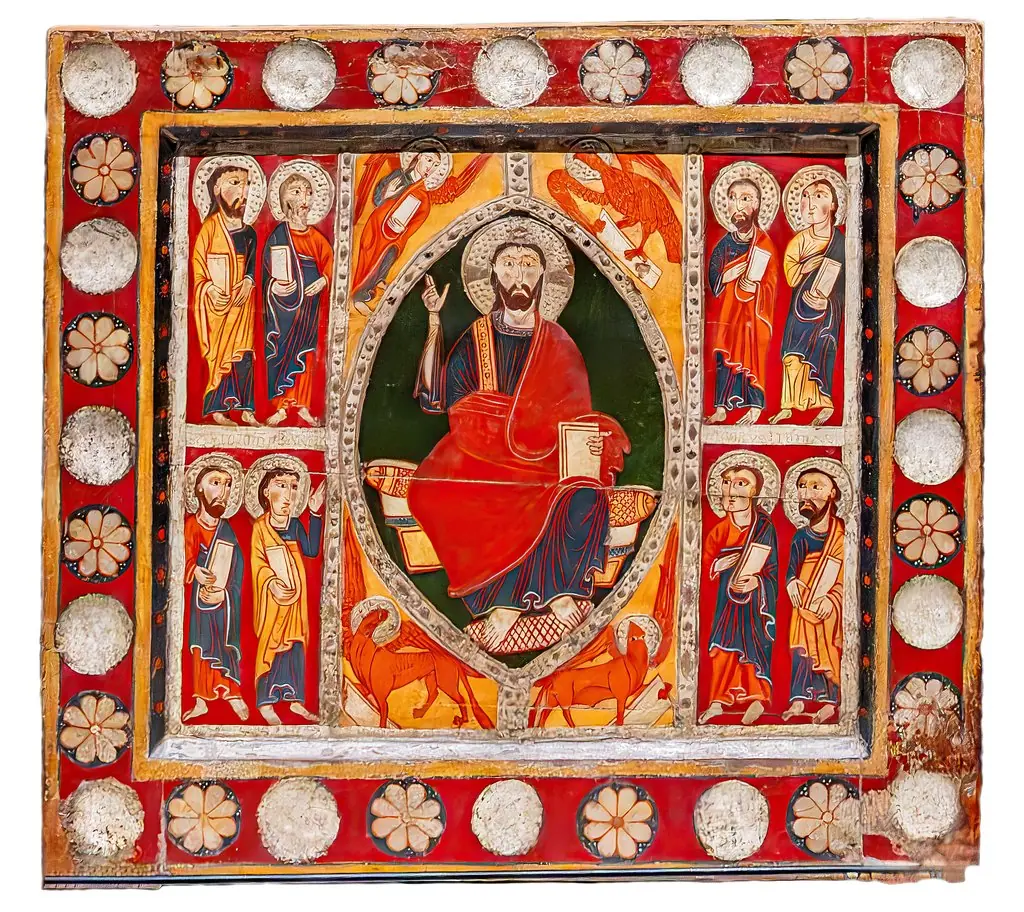
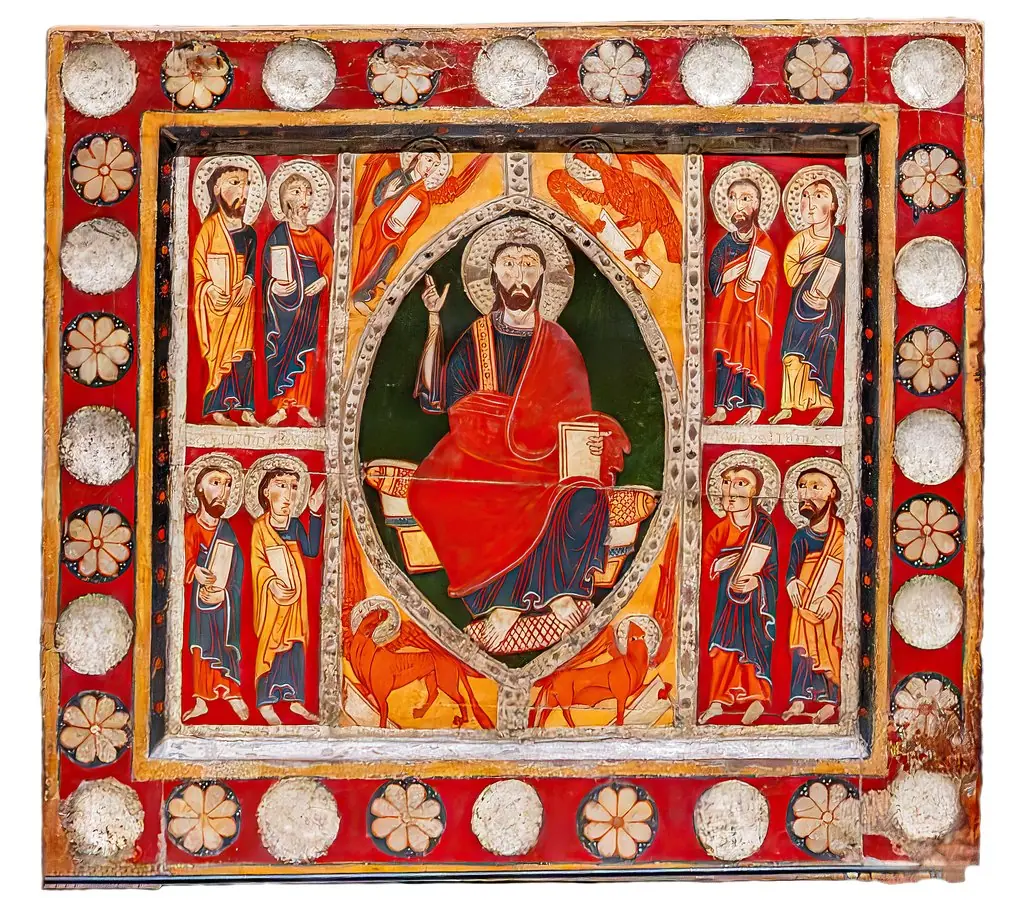
Christ in Majesty with the Symbols of the Evangelists is an unspecified painting by Unknown. It is held in the collection of the Museu Nacional d'Art de Catalunya. This medieval panel painting presents Christ seated in majesty, flanked by the symbolic creatures representing the Four Evangelists.
About this work
Overview
This medieval panel painting presents Christ seated in majesty, flanked by the symbolic creatures representing the Four Evangelists.
This medieval panel painting presents Christ seated in majesty, flanked by the symbolic creatures representing the Four Evangelists. The composition is formal and hierarchical, with Christ as the central, dominant figure. Gold leaf accents and a geometric checkered background enhance the sacred atmosphere, while the border’s ornamental motifs frame the scene with ritual precision, reflecting liturgical conventions of the time.
Subject & Meaning
Christ is depicted as the divine ruler, holding an open book symbolizing divine wisdom and blessing with his right hand. Surrounding him are the traditional symbols of the Evangelists: a man, a lion, an ox, and an eagle. These figures, drawn from the Book of Revelation, affirm Christ’s authority over the Gospels and the Church. The imagery serves as a visual theology, reinforcing doctrinal unity and celestial order for worshippers.
Technique & Style
The painting employs flat, stylized forms typical of Byzantine and Romanesque traditions, with little attempt at naturalistic depth. Gold leaf highlights halos, garments, and borders, emphasizing spiritual radiance. The checkered background and rigidly arranged figures prioritize symbolic clarity over spatial realism. Brushwork is precise, and color is limited to a restrained palette, reinforcing the image’s devotional function rather than aesthetic experimentation.
History & Provenance
Though the artist remains unidentified, the style suggests production in a monastic workshop during the 12th or 13th century, likely in southern Europe. Such panels were often created for altarpieces or devotional use in churches. The preservation of gold leaf and intact border indicates careful handling, possibly as part of a larger liturgical ensemble now dispersed or lost.
Context
This work emerged during a period when visual imagery in churches served as a primary means of conveying scripture to largely illiterate congregations. The iconography of Christ in Majesty was standard in Romanesque art, reinforcing theological authority through repetition and symmetry. Its placement above altars or in apses directed focus toward the divine, aligning worship with celestial hierarchy.
Legacy
The painting exemplifies the enduring influence of Byzantine iconography on Western medieval art. While later Renaissance artists moved toward naturalism, this work preserved a symbolic language that continued to inform ecclesiastical art for centuries. Its formal structure and spiritual intent remain instructive for understanding how religious authority was visually constructed in the pre-modern era.
Artist & collection

 Domestic Scene
 Giacomo and Cardinal Marco, investing Andrea, Abbot of San Zeno, with his Benefice
 The Nymph of Fontainebleau
 Portrait of a Woman
 Madonna and Child with Saints in the Enclosed Garden
 Venus and Minerva
 Family Group of Four on Sofa
 Wall painting from Room H of the Villa of P. Fannius Synistor at Boscoreale
![The Crucifixion [verso], by French 12th Century](https://artifactworldgallery.com/img/french-12th-century--the-crucifixion-verso--cef697082a2df4f0-w320.webp)