Artwork
The Crucifixion
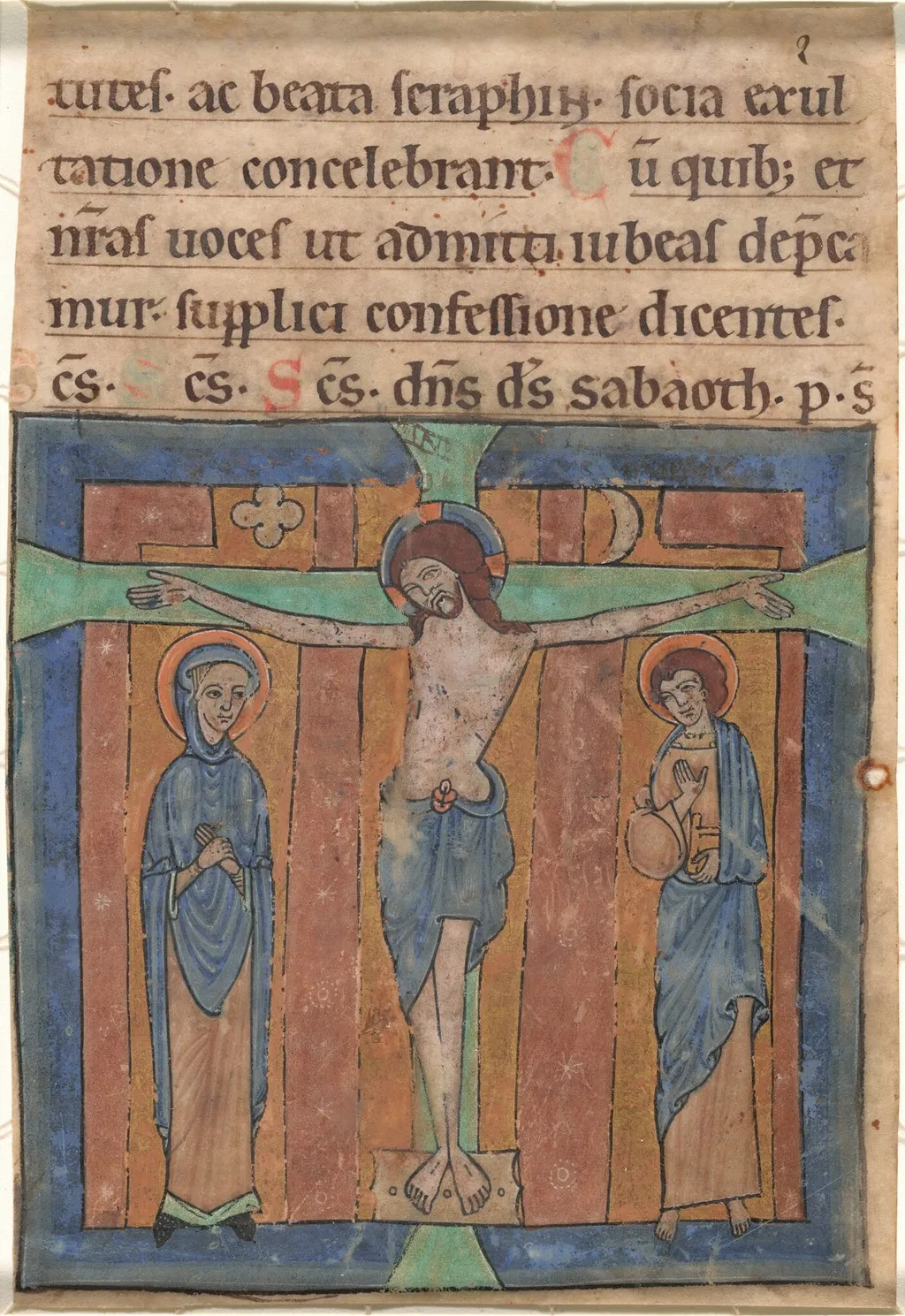
The Crucifixion is a drawing by German 12th Century. It dates from 1101 and is held in the collection of the National Gallery of Art.
About this work
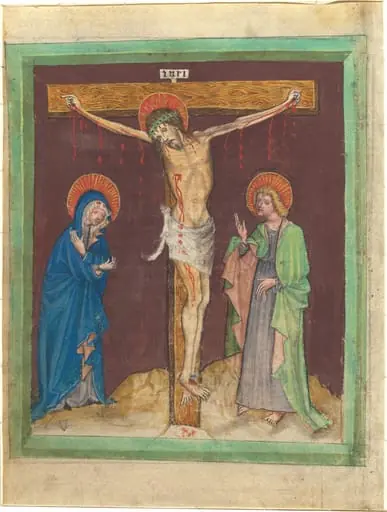
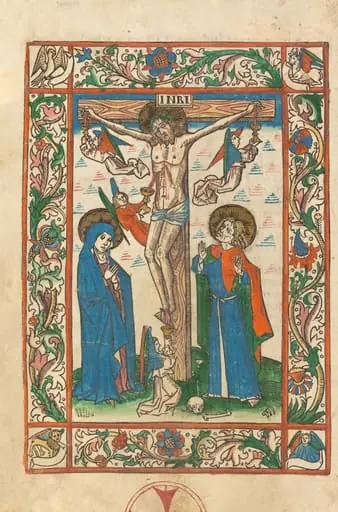
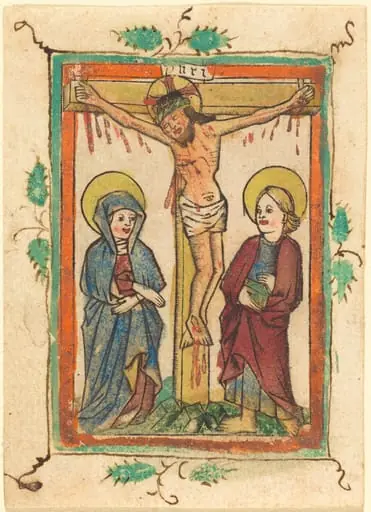
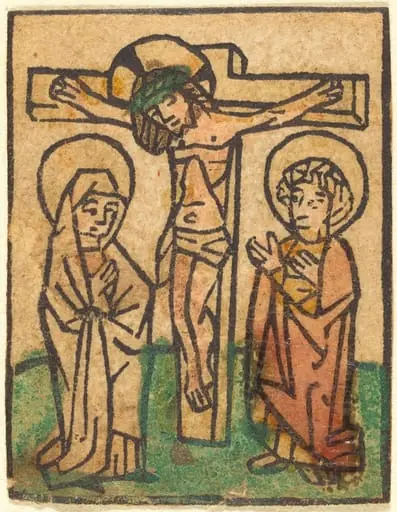
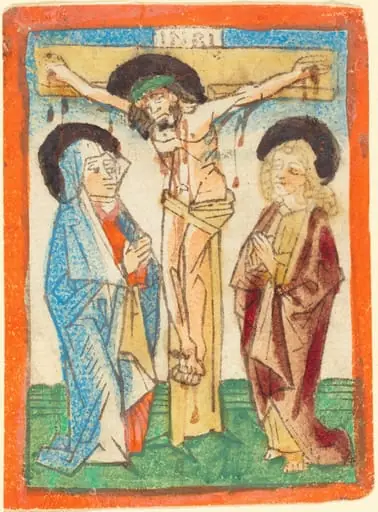
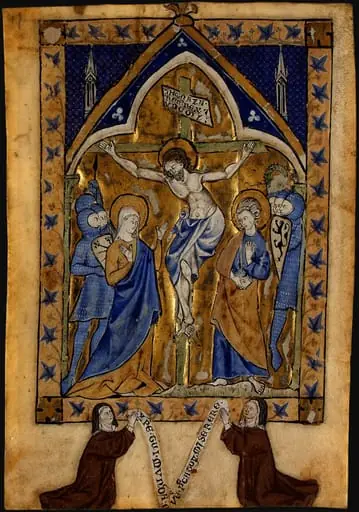
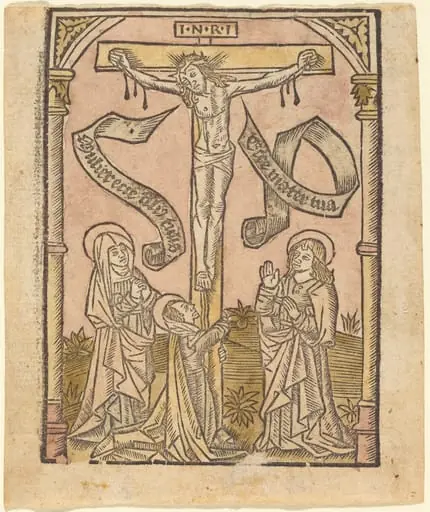
This painting shows a simple but solemn scene: a figure nailed to a cross, arms spread wide, standing out against a flat red background.
This painting shows a simple but solemn scene: a figure nailed to a cross, arms spread wide, standing out against a flat red background. Two people in blue robes stand on either side, looking up at him with folded hands. The colors are bold—bright blues, reds, and golds—with sharp lines and no shadows.
The text above looks like Latin, which was common in religious art of this time. The figures are stiff and stylized, not trying to look real.
If you like this kind of early religious art, check out more works from the German 12th Century.
Overview
This miniature drawing on vellum depicts the crucifixion of Christ, rendered in a stark composition against a uniformly red field. The central figure is nailed to a cross with arms outstretched, flanked by two attendants in blue garments whose hands are clasped in prayer. The work employs vivid primary colors and flat, unmodulated surfaces, emphasizing symbolic over naturalistic representation.
Subject & Meaning
The scene presents the canonical Christian narrative of Christ’s death, focusing on his sacrificial posture and the reverent response of the surrounding figures. The upward gazes and folded hands of the attendants convey devotion and intercession, reflecting the devotional practices of medieval worship and the theological emphasis on Christ’s redemptive suffering.
Technique & Style
Executed in miniature on vellum, the piece utilizes bold pigments—bright blues, reds, and gold—applied in flat washes without chiaroscuro. The figures are rendered with rigid, stylized outlines, characteristic of early medieval iconography, where emphasis lies on symbolic clarity rather than anatomical realism.
History & Provenance
The drawing originates from the German artistic milieu of the 12th century, a period marked by the production of devotional manuscripts and liturgical art. Its use of Latin inscriptions aligns with contemporary ecclesiastical conventions, indicating its likely function as a portable object for private or communal prayer.
Context
During the High Middle Ages, religious imagery served both instructional and meditative purposes. This work reflects the broader trend of Germanic manuscript illumination, where vivid color schemes and simplified forms were employed to convey theological messages to a largely illiterate audience.
Legacy
The piece exemplifies early medieval approaches to crucifixion iconography, influencing subsequent generations of devotional art in the region. Its stylistic traits—flat color fields, stylized figures, and textual integration—provide insight into the visual language that shaped later Gothic and Renaissance interpretations of the Passion.
Artist & collection

Artist
These 12th-century German artists painted tiny, glowing scenes on animal skin. Their brushes traced saints in gold-streaked robes and dramatic moments like Jesus on the cross. Every inch bristles with detail—swirling…

![The Crucifixion [verso], by French 12th Century](https://artifactworldgallery.com/img/french-12th-century--the-crucifixion-verso--cef697082a2df4f0-w320.webp)