Artwork
Legend of Durga
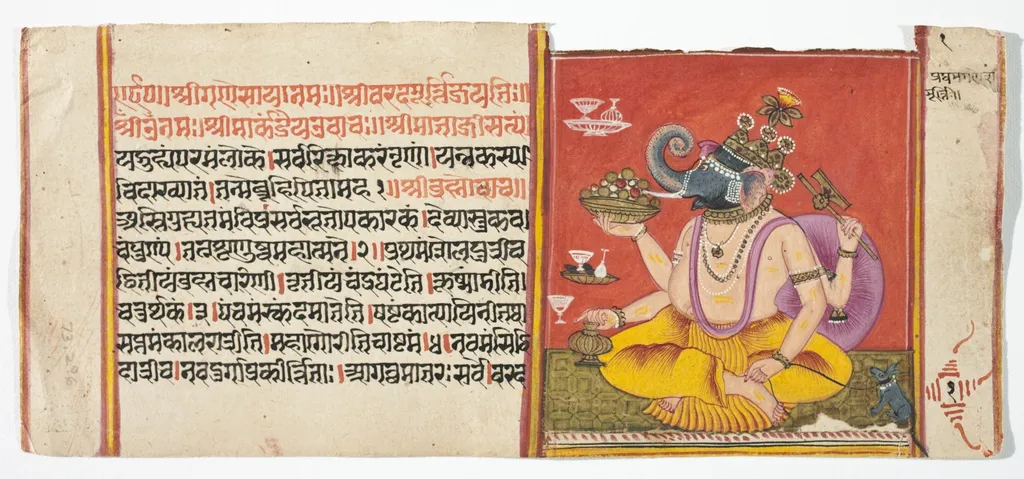
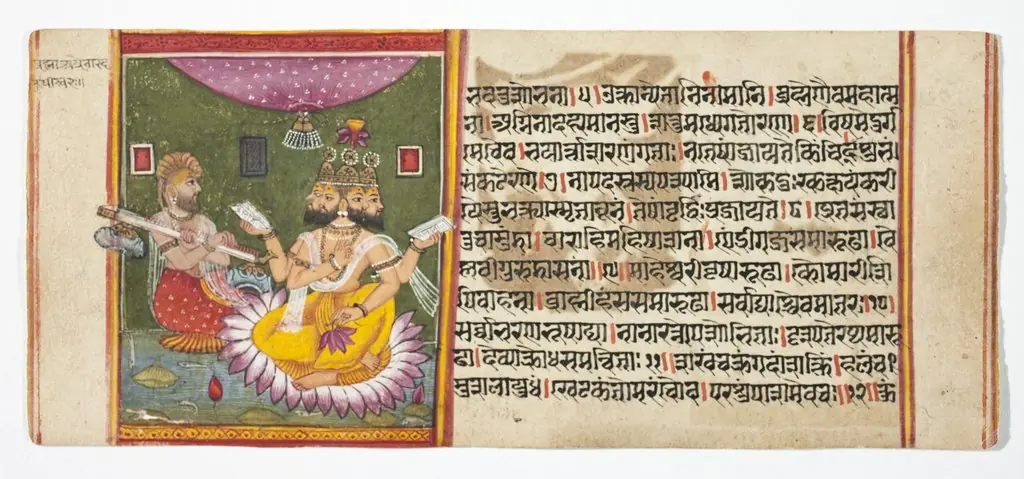
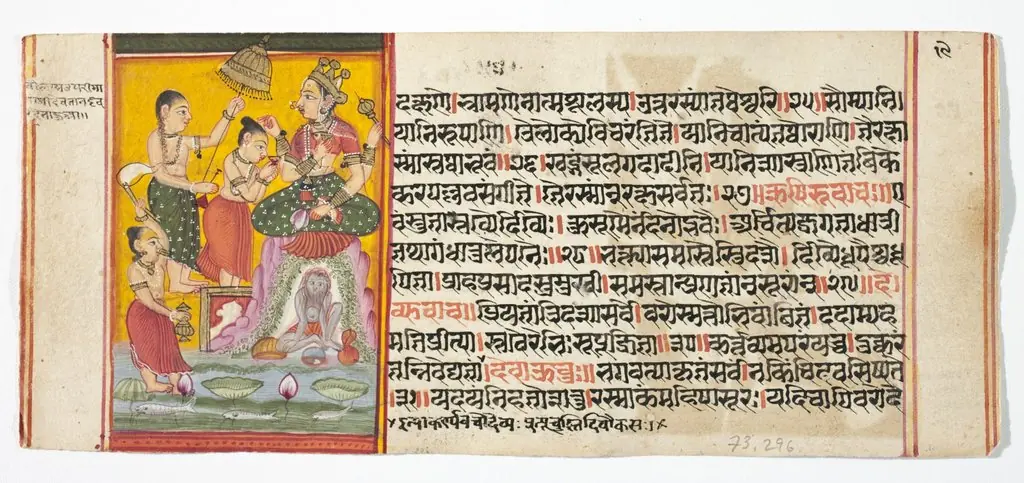
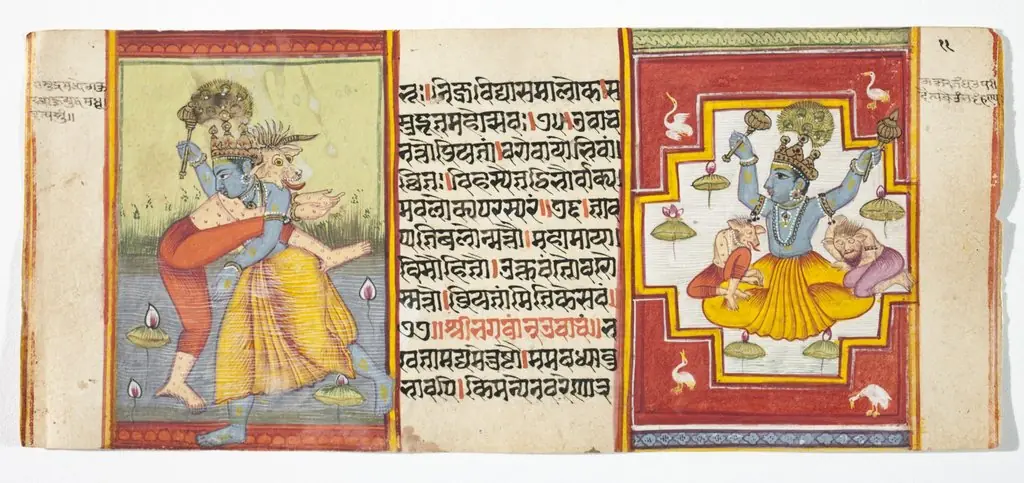
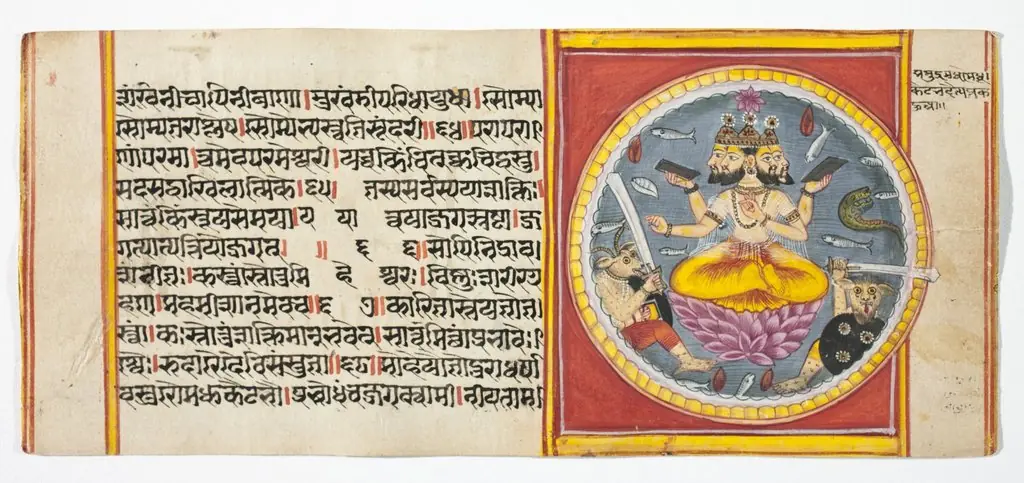
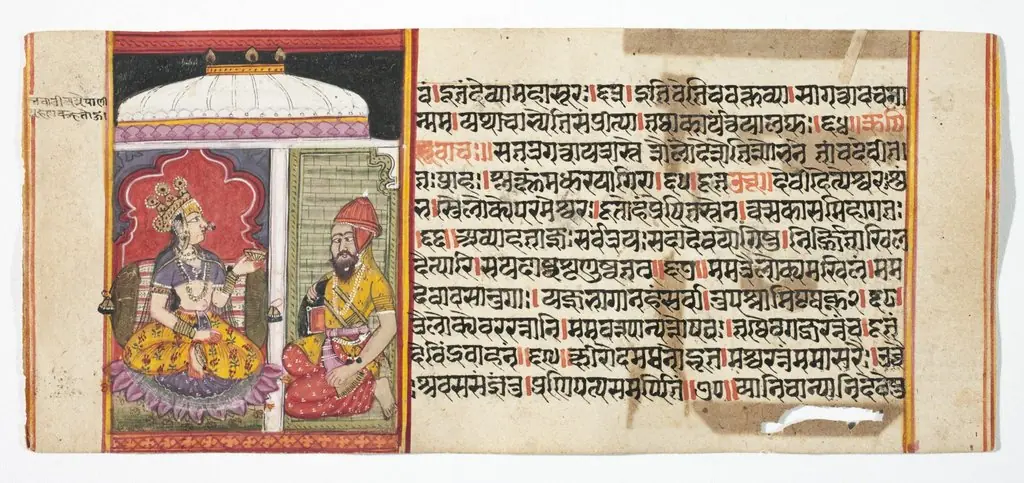
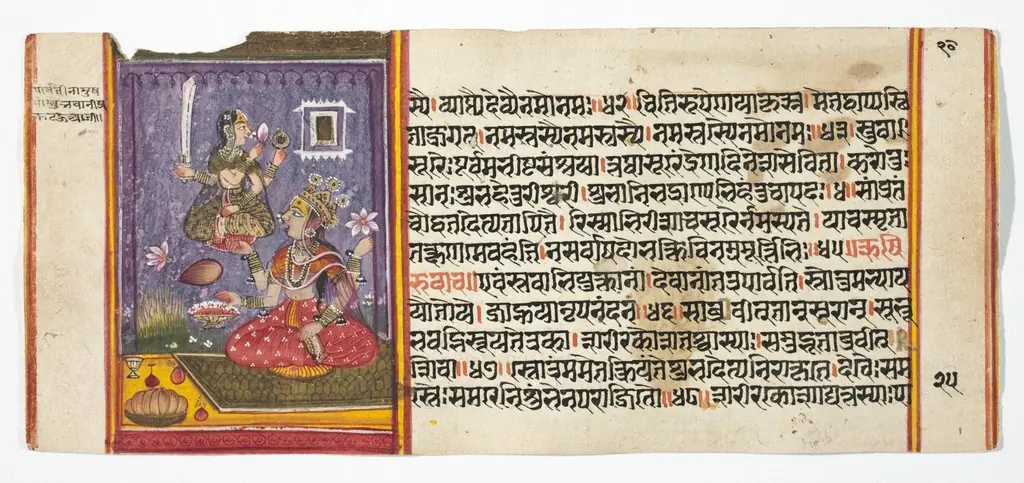
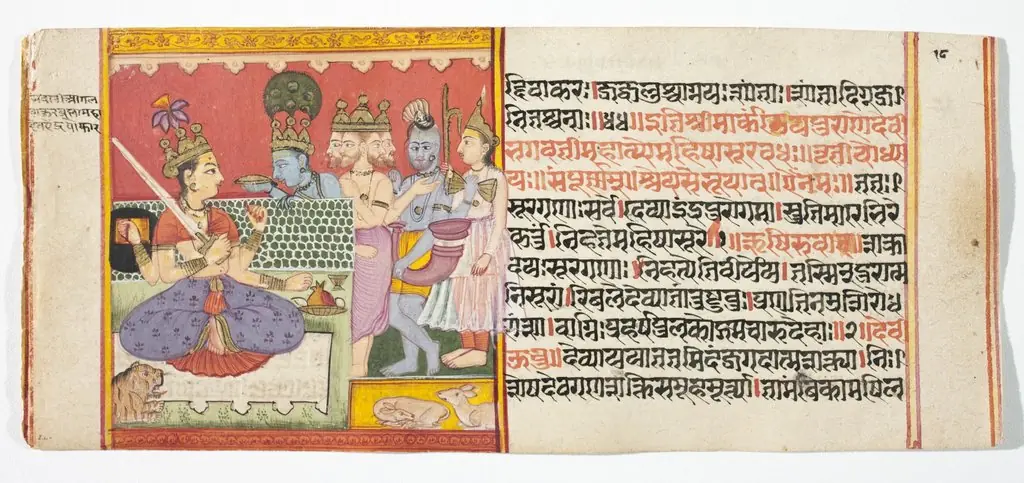
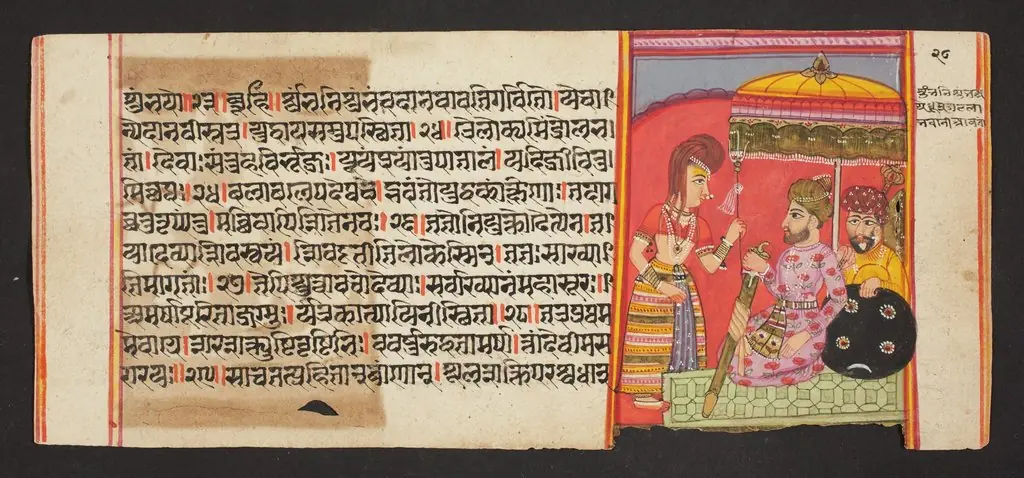
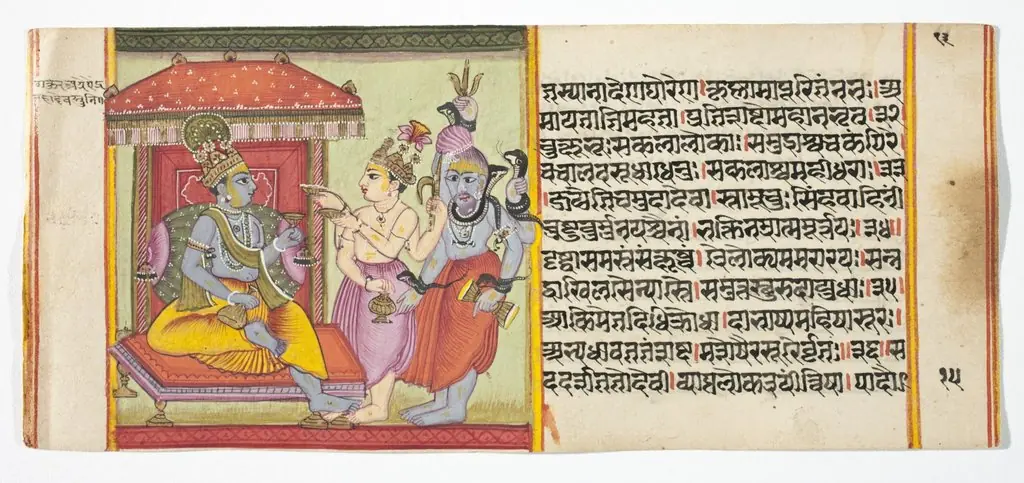
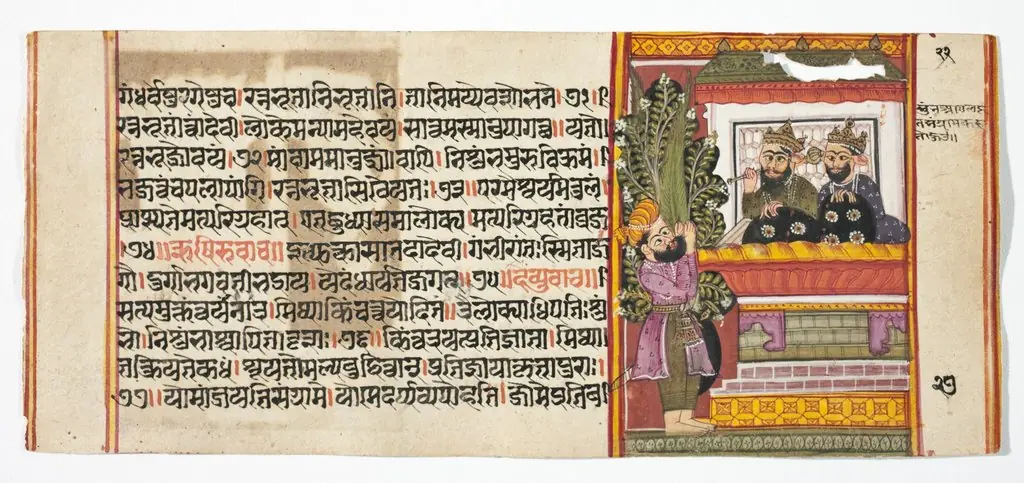
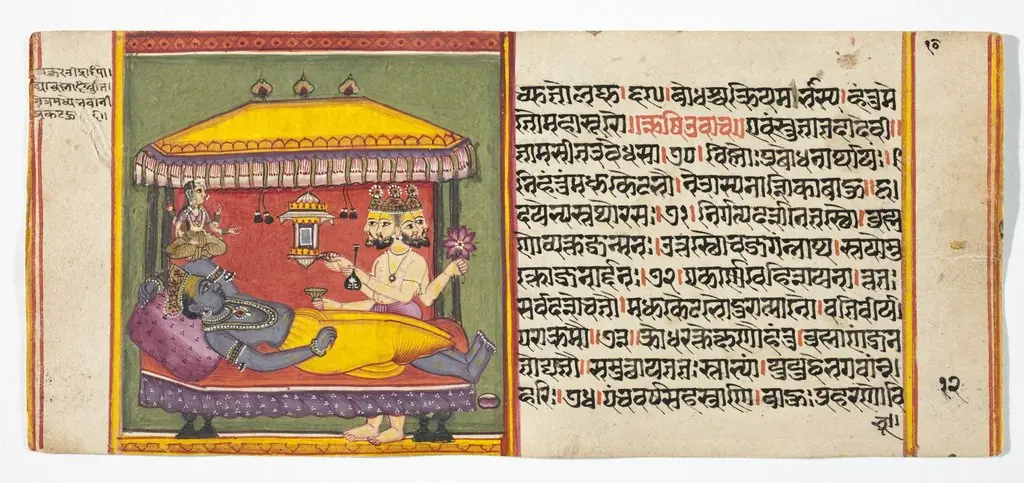
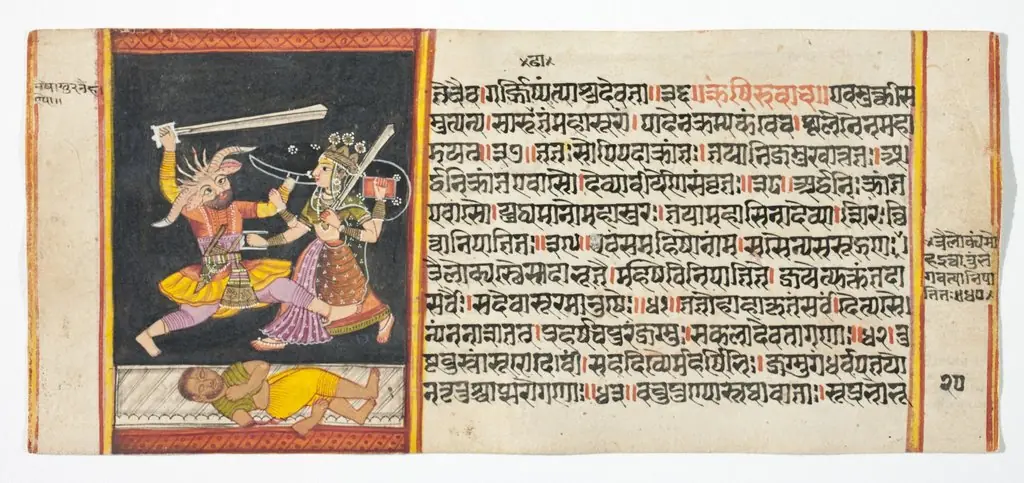
Legend of Durga is an unspecified painting by Unknown. It is held in the collection of the Detroit Institute of Arts. This painting illustrates a Hindu deity seated on a stone platform, accompanied by a mouse and surrounded by ritual objects.
About this work
Overview
Though labeled as Durga, the iconography more closely aligns with Ganesha, suggesting a possible misattribution in the title.
This painting illustrates a Hindu deity seated on a stone platform, accompanied by a mouse and surrounded by ritual objects. Rendered in a traditional Indian style, it features bold outlines and vivid pigments against a deep red background. The figure's attire includes a purple shawl and a yellow dhoti, creating strong chromatic contrast. Though labeled as Durga, the iconography more closely aligns with Ganesha, suggesting a possible misattribution in the title.
Subject & Meaning
The seated figure, identified by the mouse at his feet and the bowl of fruit, is likely Ganesha, the elephant-headed god of wisdom and remover of obstacles. The hammer may symbolize the destruction of ego or obstacles, while the fruit represents abundance. The shell and flower denote purity and devotion, common in devotional imagery. The composition reflects a domestic or temple setting, emphasizing accessibility and divine presence in daily life.
Technique & Style
The painting employs flat planes of saturated color and thick, confident outlines typical of Indian miniature and folk traditions. The deep red background enhances the luminosity of the deity’s garments and skin tone. Details are rendered with precision, particularly in the jewelry and textile patterns, though spatial depth is minimized. The style prioritizes symbolic clarity over naturalism, aligning with devotional artistic conventions.
History & Provenance
The work’s origin is not documented, but its stylistic features suggest it may derive from a regional Indian school, possibly Rajasthan or Pahari, active in the 18th to 19th centuries. Such paintings were often created for private worship or as offerings in household shrines. The condition and materials indicate it was not part of a royal collection but likely produced for a local patron or temple community.
Context
In Hindu devotional practice, images of Ganesha serve as focal points for daily rituals and seasonal festivals. This painting’s intimate scale and rich symbolism reflect its role in personal worship rather than public display. The inclusion of ritual objects—shell, flower, bowl—mirrors the arrangement of puja altars, reinforcing the painting’s function as a sacred aid rather than purely decorative art.
Legacy
While not widely exhibited or studied, the painting exemplifies the enduring tradition of regional Indian devotional art. Its iconographic accuracy, despite the title’s error, underscores how local interpretations of deities can diverge from textual norms. Such works remain vital to understanding how religious imagery evolves within community practice, outside elite or canonical frameworks.
Artist & collection

 Domestic Scene
 Giacomo and Cardinal Marco, investing Andrea, Abbot of San Zeno, with his Benefice
 The Nymph of Fontainebleau
 Portrait of a Woman
 Madonna and Child with Saints in the Enclosed Garden
 Venus and Minerva
 Family Group of Four on Sofa
 Wall painting from Room H of the Villa of P. Fannius Synistor at Boscoreale