Artwork
Legend of Durga
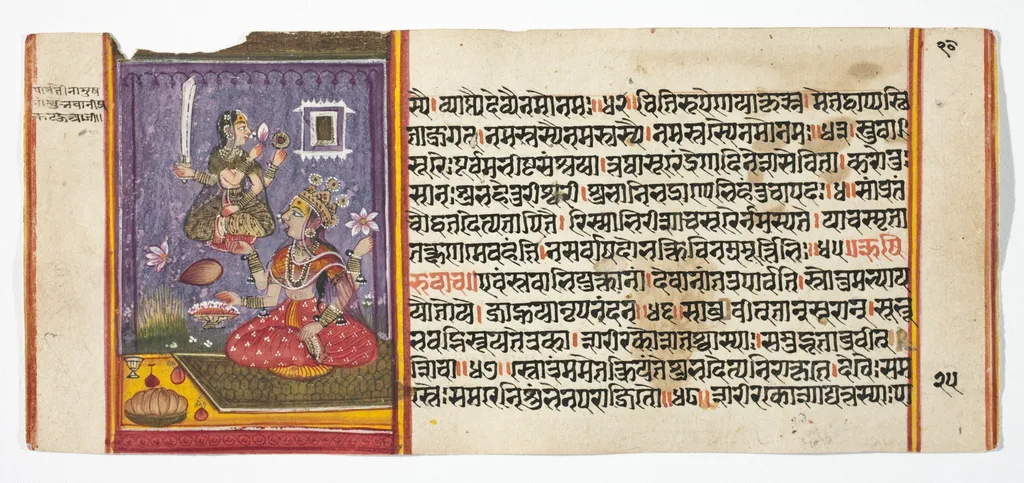
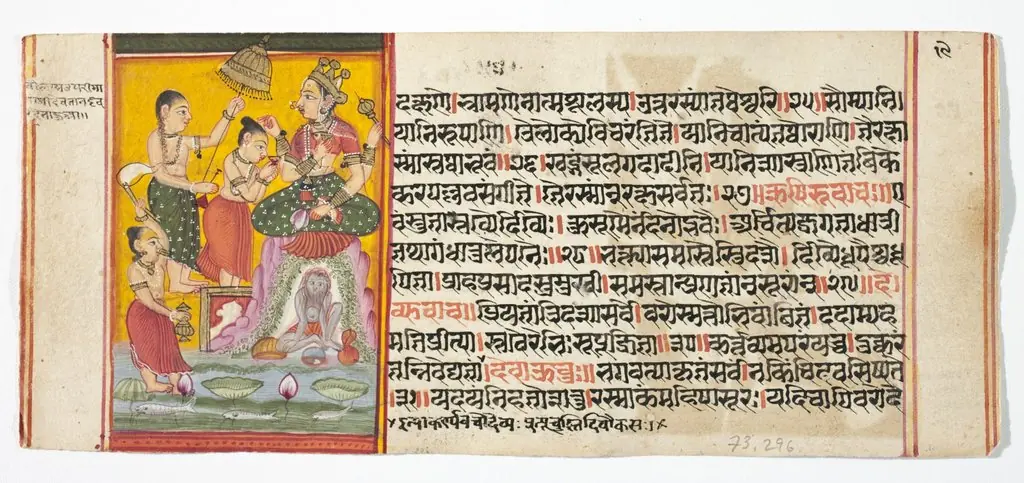
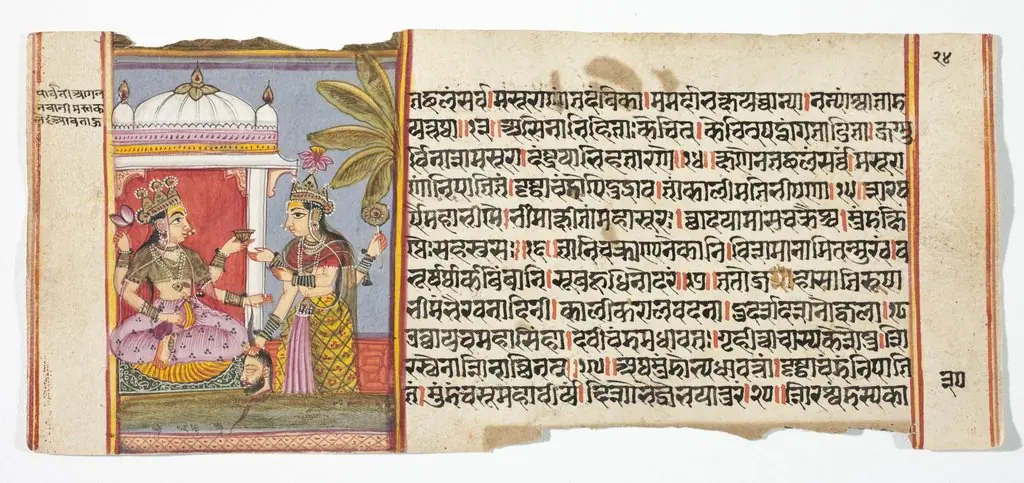
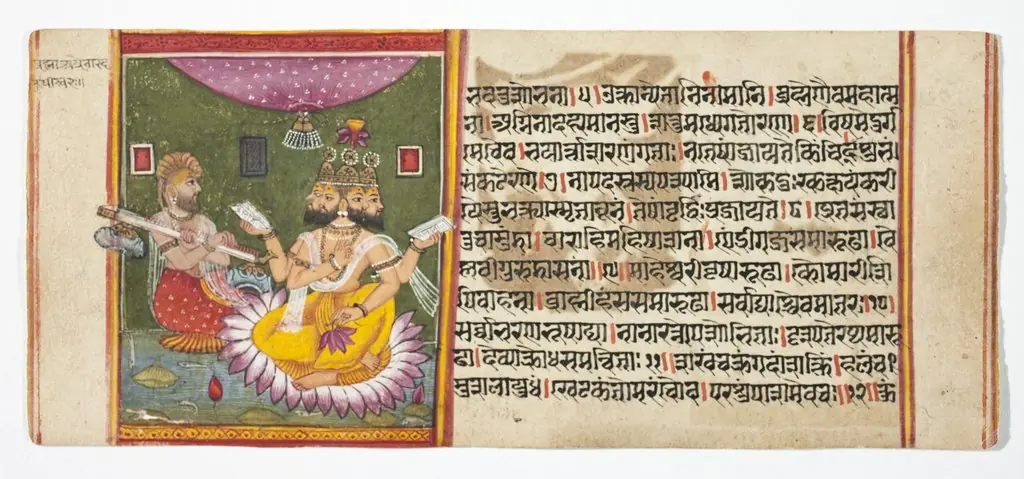
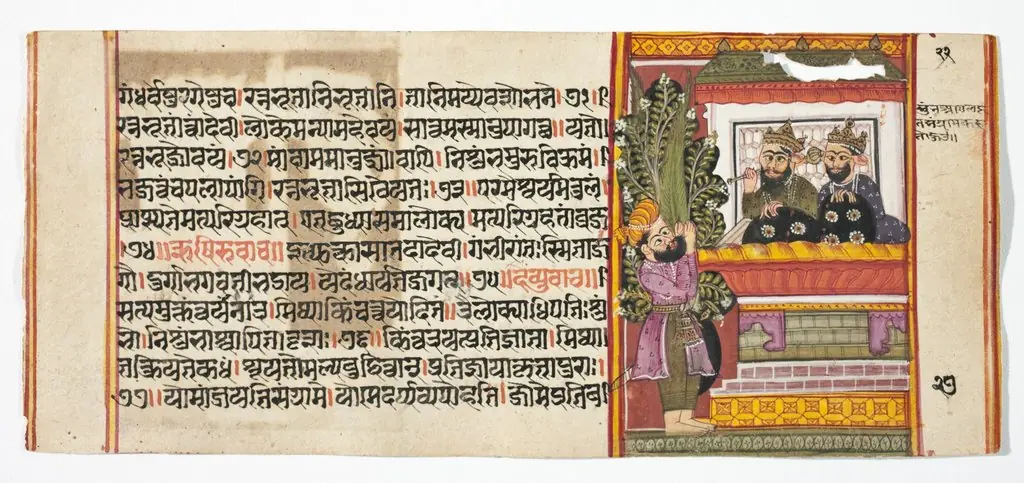
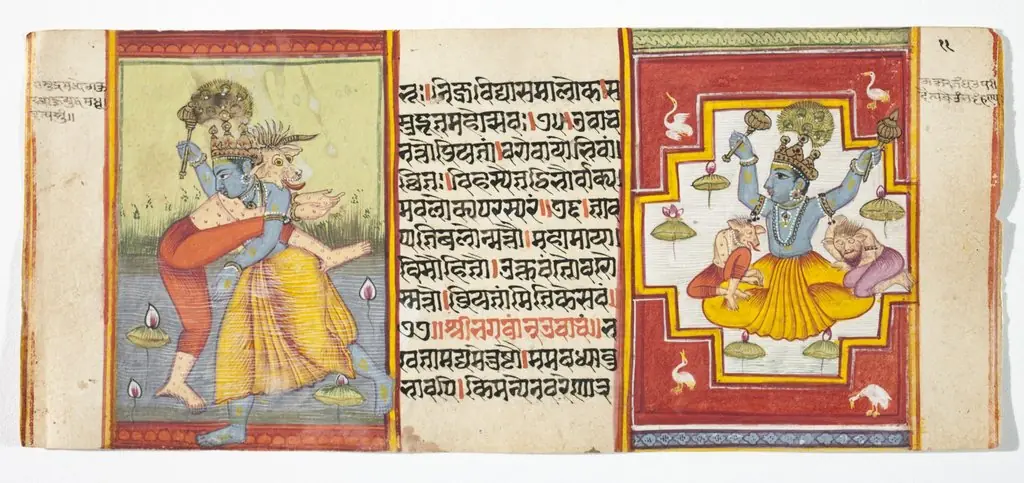
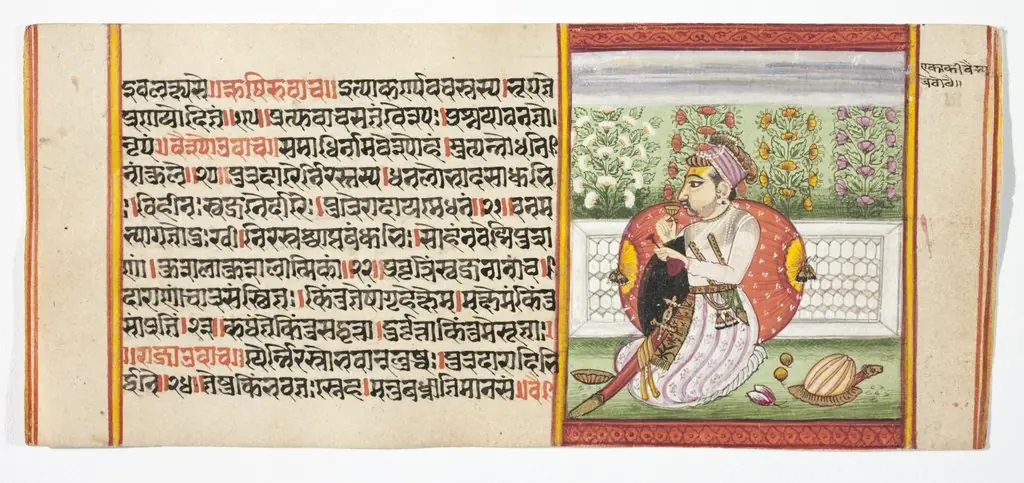
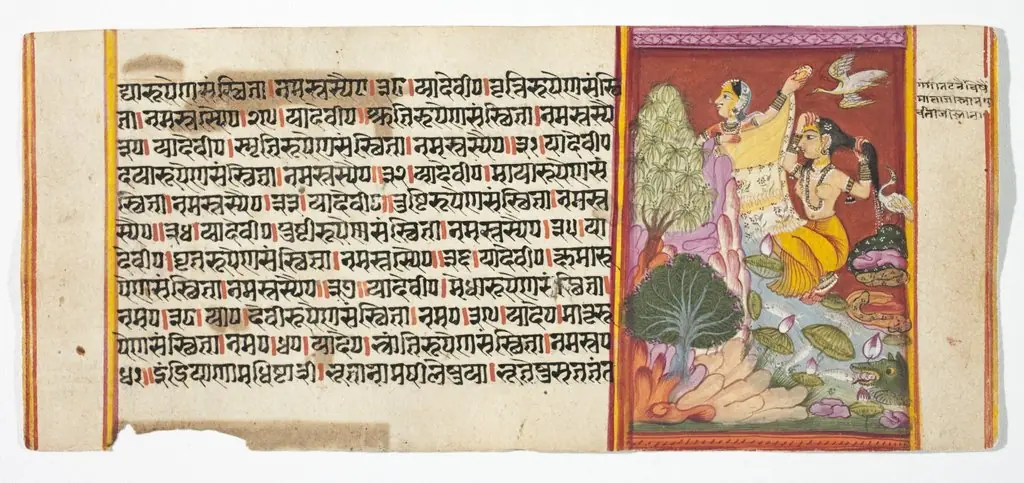
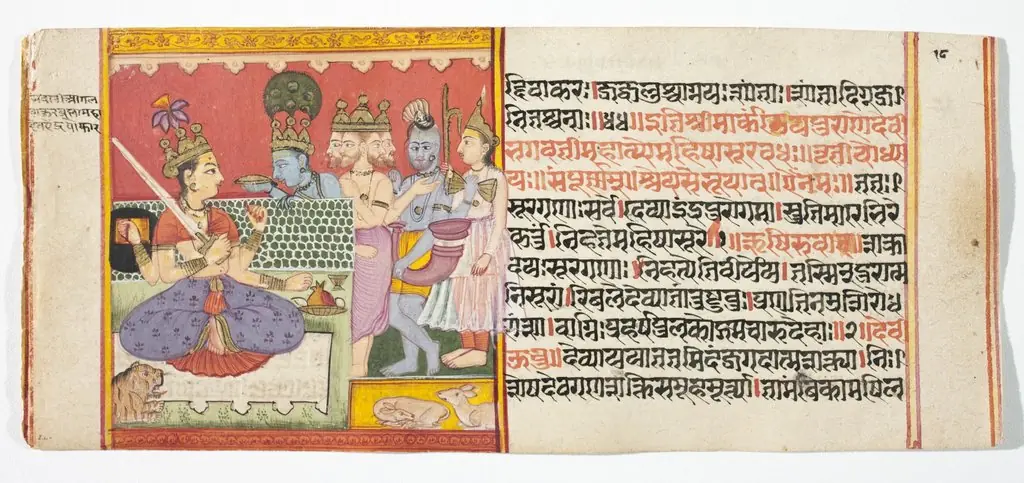
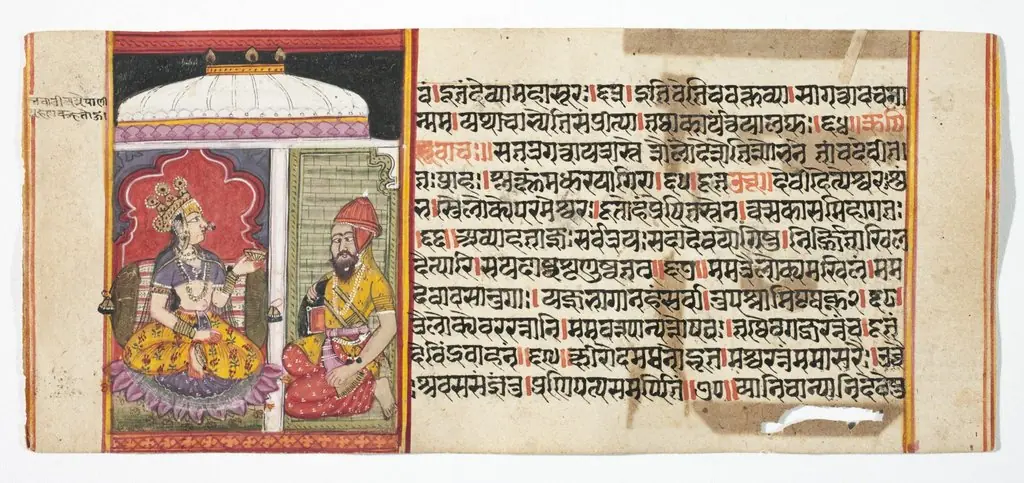
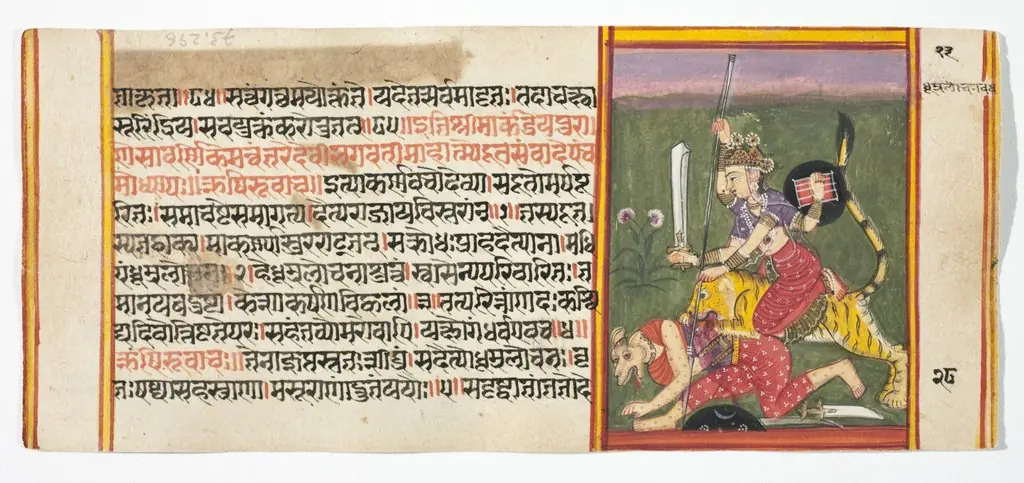
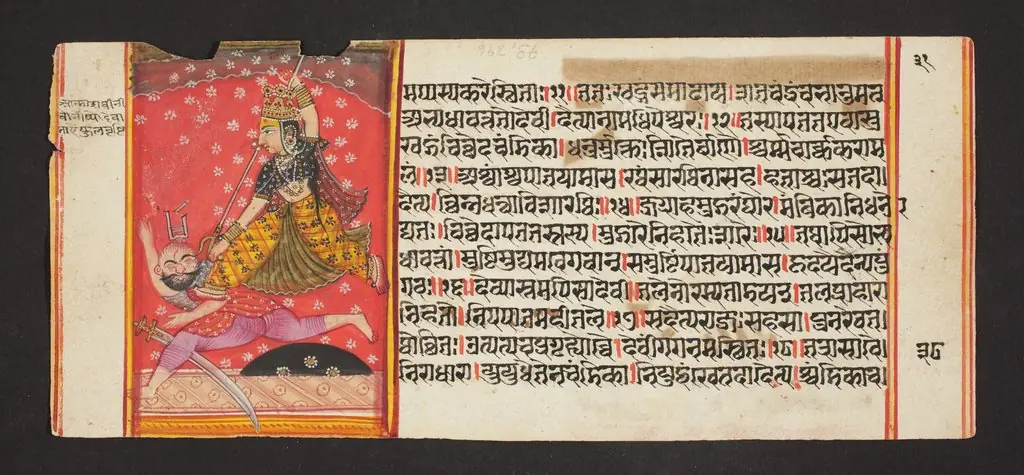
Legend of Durga is an unspecified painting by Unknown. It is held in the collection of the Detroit Institute of Arts. This painting illustrates a scene from the Durga legend, rendered in a traditional Indian aesthetic.
About this work
Overview
The background is a deep purple, framed by a narrow yellow border, suggesting a devotional or ceremonial context.
This painting illustrates a scene from the Durga legend, rendered in a traditional Indian aesthetic. Two female figures are centrally positioned, each adorned in richly colored garments and holding symbolic items. The background is a deep purple, framed by a narrow yellow border, suggesting a devotional or ceremonial context. The composition emphasizes stillness and ritual presence over narrative action.
Subject & Meaning
The figures likely represent the goddess Durga and a companion or devotee, drawn from Hindu iconography. The sword symbolizes divine power and the destruction of evil, while the flower signifies purity and devotion. The contrasting colors—green and red—may reflect dual aspects of the divine: nurturing and fierce. The absence of mythological creatures or battle scenes narrows the focus to spiritual presence rather than epic conflict.
Technique & Style
The painting employs flat, decorative color fields with minimal shading, typical of regional Indian miniature or devotional painting traditions. Details in the garments, such as gold embellishments, suggest hand-applied metallic pigments. The uniform background and bordered frame indicate a structured, possibly manuscript-inspired format, prioritizing symbolic clarity over spatial depth or realism.
History & Provenance
The work’s style and iconography point to a 19th- or early 20th-century origin in northern or eastern India, possibly from a temple or royal atelier. Its preservation in a framed format suggests it was created for private worship or collector use rather than public ritual. No documented provenance is available, but similar works are found in collections of Pahari or Bengali devotional art.
Context
Depictions of Durga in static, contemplative poses emerged alongside increased devotional practices in colonial India, where traditional iconography was adapted for domestic spaces. This painting reflects a shift from large-scale temple murals to intimate, portable images meant for personal veneration. The use of gold and rich hues aligns with regional tastes for opulent, sacred imagery during a period of cultural reassertion.
Legacy
Though not widely known outside regional collections, this painting exemplifies how Hindu iconography was preserved and reinterpreted in domestic settings during colonial times. Its restrained composition and symbolic clarity continue to inform contemporary devotional art in South Asia, where traditional forms remain vital in spiritual practice.
Artist & collection

 Domestic Scene
 Giacomo and Cardinal Marco, investing Andrea, Abbot of San Zeno, with his Benefice
 The Nymph of Fontainebleau
 Portrait of a Woman
 Madonna and Child with Saints in the Enclosed Garden
 Venus and Minerva
 Family Group of Four on Sofa
 Wall painting from Room H of the Villa of P. Fannius Synistor at Boscoreale